
Arc B580 vs Arc Pro B50 and B60: What Intel's Reported Production Shift Means for Your Next GPU
Conclusion first: no decision has been announced, but the price signal has already arrived. A leak that started circulating on 3 November 2026 suggests Intel may put its best consumer graphics card on an end-of-life list and hand the same silicon to its workstation line. Both companies named in the story have not confirmed it, and neither has the retailer standing in front of you with a card priced far above launch. So the useful question for a buyer is not "is the card dead?" but "what does the rumour change about value, support and timing?" Below, the consumer card is compared side by side with the professional models it allegedly feeds, followed by a buy-wait-switch checklist.
What the leak actually claims — and where it stops
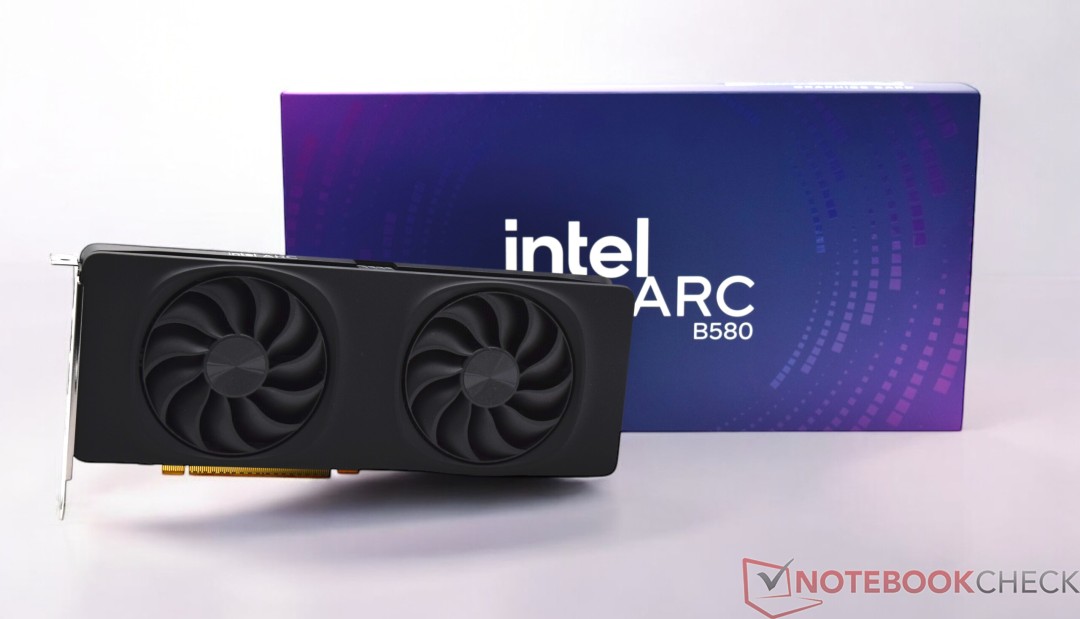
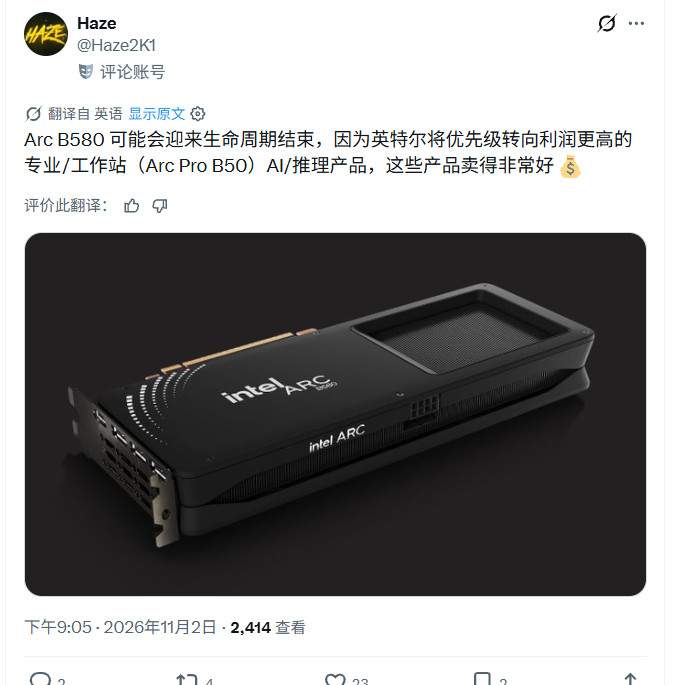
The claim comes from leaker Haze (@Haze2K1), who says Intel may list the Arc B580 as a discontinued product and move resources into the Arc Pro series. The tip singles out the Arc Pro B50 and argues that Intel's professional GPUs are enjoying strong demand in AI inference workloads. The technical spine of the argument is the die itself: the Arc B580 is built on Intel's BMG-G21 chip, and the same chip serves professional parts such as the Arc Pro B50 and B60. On paper the consumer card carries 20 Xe cores and 12GB GDDR6; the B60 keeps the same 20 Xe cores but doubles memory to 24GB, while board partners such as Maxsun and Sparkle offer versions with up to 48GB of memory.
What the leak does not supply is equally important: there is no Intel statement, no discontinuation document, and no detail on the rest of the Battlemage gaming lineup. That gap is exactly where a buying decision can go wrong.
NVIDIA is running the same playbook, and the receipts are public
The Intel story lands on familiar ground. Multiple reports have claimed NVIDIA is redirecting the GB202 GPU that was originally destined for the GeForce RTX 5090 toward higher-margin RTX Pro cards; a board partner was then reported to be unable to pre-order RTX 5090 kits, which looked like corroboration. NVIDIA has denied it, insisting the RTX 5090 has not been discontinued and will continue shipping.
The economics explain why the rumour is believable. Tom's Hardware tracked NVIDIA's flagship workstation SKU, the RTX Pro 6000 Blackwell, at an official price of $13,250 — roughly a 55% increase over its original launch level of about $8,565. No gaming flagship sustains that kind of markup. When professional SKUs can absorb price rises of that size, allocating scarce wafers and, above all, scarce memory to them is not a rumour; it is arithmetic that any supplier will eventually act on.
Same silicon, different price tags: the comparison table
| Card | Silicon | Cores & memory | Original positioning | Real-world status now |
|---|---|---|---|---|
| Arc B580 | BMG-G21 | 20 Xe cores, 12GB GDDR6 | Launched in December 2024, priced at $249, positioned as an under-$300 card with RTX xx60-xx70 class performance | Out of stock at most retailers; about $330 on Newegg, with some UK models near 500 GBP |
| Arc Pro B50 | BMG-G21 | 16GB GDDR6 (pro configuration) | Entry professional / AI inference card; AEC Magazine's launch coverage put it in the low-three-hundred-dollar bracket | The model the leaker names as demand-driven |
| Arc Pro B60 | BMG-G21 | 20 Xe cores, 24GB memory | Workstation and local inference card; TechPowerUp lists a $499 launch price in September 2025 | VideoCardz reported Sparkle's consumer-facing B60 edition reaching $799, roughly three times the B580's launch price on the same silicon family |
| Maxsun / Sparkle pro variants | BMG-G21 | up to 48GB | Multi-model inference, CAD and visualisation | Where the higher margin is reported to sit |
| GeForce RTX 5090 | GB202 GPU | Consumer flagship | Highest-tier gaming card | Reported supply squeeze; NVIDIA denies discontinuation and says shipments continue |
Read the table as a margin ladder rather than a product lineup. One chip design now spans a card that launched at $249 and pro variants that retail at two or three times that figure. That gap is the entire rumour in a single row.
Three common misconceptions about an "EOL" headline
- "EOL means the drivers die." Not automatically. Intel's Arc graphics driver download centre was still publishing Game On drivers for Battlemage hardware as recently as October 2026 (driver branch 32.0.101.9150). The real risk is subtler: Intel's own support documentation notes that older or end-of-life product support files, including drivers, may be withdrawn over time. Plan for a support tail, not a cliff.
- "A leak is a confirmation." Here, the leaker himself frames the Arc B580 case as a possibility. Treat unverified EOL chatter as a supply warning, not a product obituary.
- "12GB is useless for local AI and modern games." In raster benchmarks the card was never an automatic winner — Gamers Nexus' launch review measured the RTX 4060 roughly 13% ahead at 1080p — but the 12GB buffer versus 8GB on near-price rivals is exactly why the card keeps climbing in price during a memory crunch. VRAM headroom is the durability argument.
Which buyer are you? Four scenarios
- 1080p/1440p gamer who still has an older card: you lose nothing by waiting. Rumoured EOL plus genuine stock shortages usually means seller-hiked prices, which is the worst time to pay a premium over a $249 launch price.
- Builder who needs a card this month: if the asking price drifts far past the US street level of about $330, the value case collapses; compare the remaining Battlemage gaming option and AMD and NVIDIA models in the same bracket instead.
- Hobbyist who wants local AI inference: the 12GB limit, not the discontinuation, decides for you. If your workload genuinely needs 24GB, buy the professional tier — that is the demand Intel is reportedly chasing.
- Current Arc B580 owner: nothing changes today. Keep receipts, keep the driver branch current, and note that reported scarcity has been pushing used-market asking prices up, not down.
How to verify a discontinuation claim yourself in two minutes
- Search Intel's Product Change Notifications collection for a Product Discontinuance Notice naming the model — Intel's support article on finding end-of-life dates describes exactly this route; no notice means no official change.
- Check Intel's Arc graphics driver download page for the most recent Battlemage driver date; a current branch is a strong signal that software support is alive.
- Watch board-partner listings (Maxsun, Sparkle and others) rather than only retailer stock — partner line-ups are where EOL shows up first.
- Track price versus launch price, not just availability: a card that "sold out" at 249 USD and now trades near $330 is telling you about allocation, not about retirement.
Action recommendations
- Set a ceiling before you shop: any price well above the roughly $330 US street level is a speculation tax, not a market rate.
- Do not buy on fear of an unconfirmed rumour; buy on a documented notice or on your own build schedule.
- If you need memory capacity for AI work, budget for the professional tier deliberately instead of stretching a gaming card past its design point.
- Re-check listings from the same retailer across several days before paying — UK asking prices around 500 GBP for a card that launched at $249 show how quickly regional pricing diverges.
- Keep your existing card's driver branch updated; support continuity matters more to resale value than the EOL label does.
FAQ
Has Intel confirmed that the Arc B580 is being discontinued?
No. The claim originates from Haze (@Haze2K1) and was picked up by tech media on 3 November 2026; Intel has issued no official notice, and no discontinuation document for the card has surfaced.
Why would a chipmaker retire a gaming card that sells out?
Because the same BMG-G21 design underpins workstation and AI-inference models that carry substantially higher prices and margins. With memory supply tight, boards of the same silicon go to whichever SKU returns the most.
Does the same logic apply to NVIDIA?
That is the parallel being drawn: reports say GB202 capacity is being steered from the GeForce RTX 5090 toward RTX Pro products, but NVIDIA has denied any discontinuation of the RTX 5090.
Will my B580 stop working or stop being supported?
No. Drivers for Battlemage hardware have continued to be released, though Intel's documentation warns that support files for older or end-of-life products may eventually be removed.
The takeaway: the Arc B580 rumour is best read as a supply-chain story rather than a product announcement. Intel's card and NVIDIA's flagship are both caught in the same squeeze — scarce memory, richer professional SKUs, and consumers asked to pay well above launch price for hardware that was never the outright performance leader in its bracket. Verify through official notices, refuse to pay the panic premium, and let workload memory requirements rather than headlines pick your next card.