
ItInsightsWorld General Review: iPhone Duo Teardown Shows Repair Gains, Hinge Risk Persists
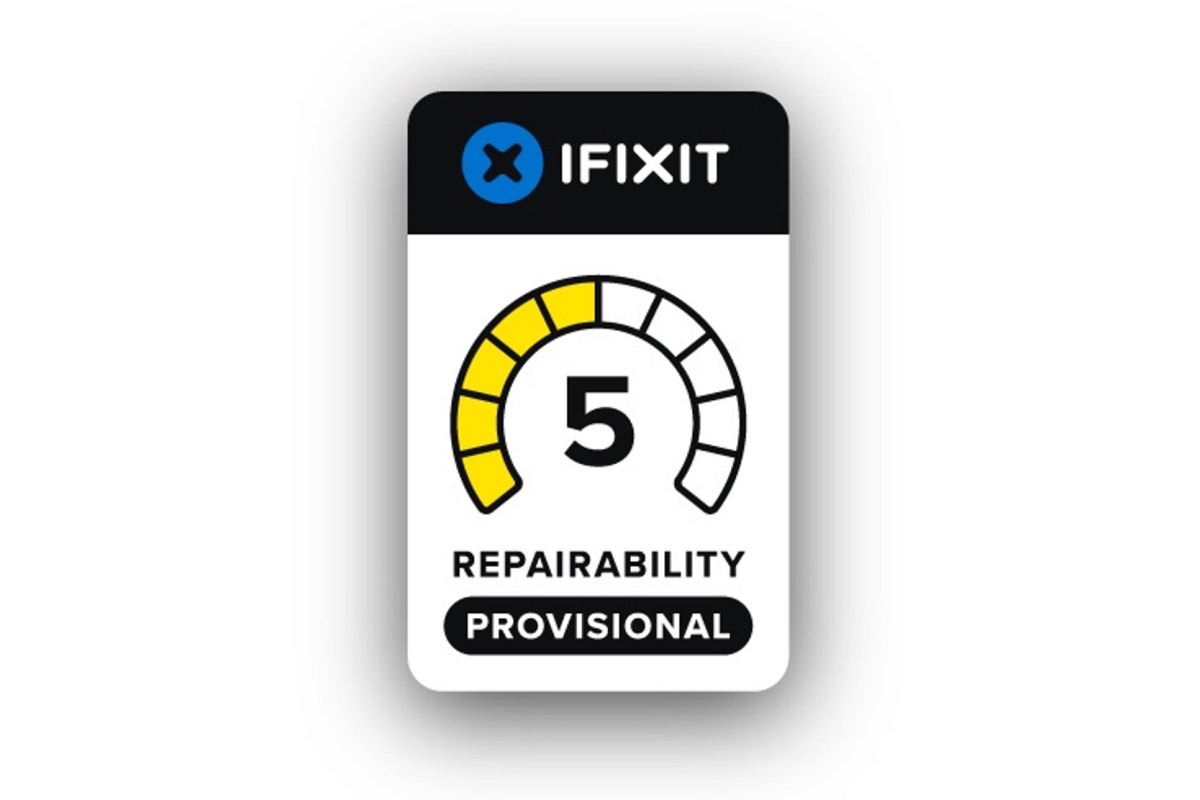
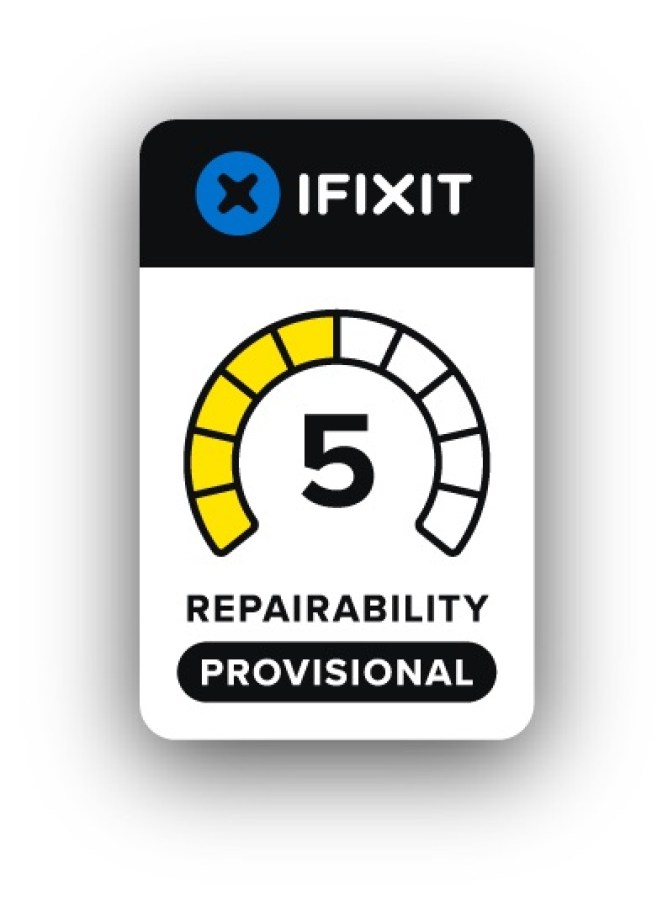
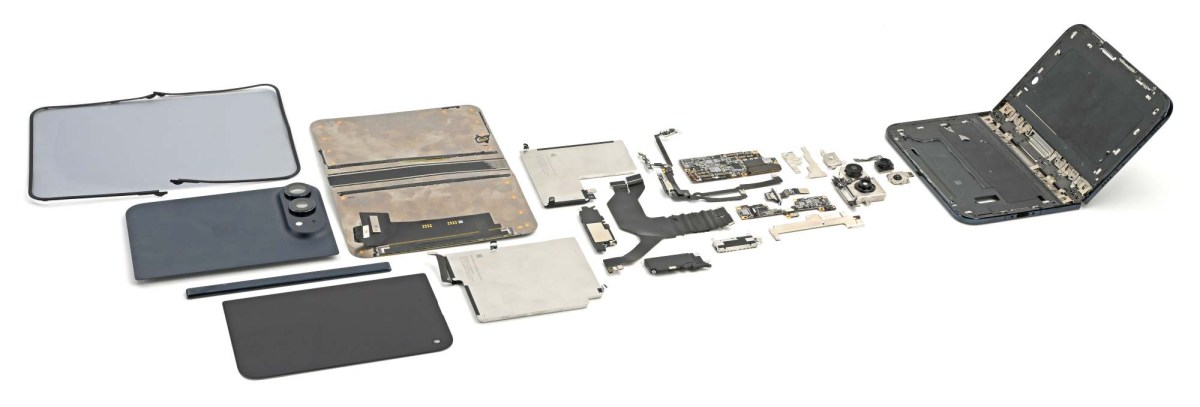
After the iPhone Duo officially launched, a teardown assessment by iFixit shows how Apple's first foldable smartphone is built and how it compares with earlier foldable phones. In that review, iPhone Duo received a repairability score of 5 on a 10-point scale; Samsung Galaxy Z Fold8 received 4, while the earlier Galaxy Z Fold received 3. Foldable phones still have more complex internals than conventional non-foldable phones, but the score indicates Apple made component placement and disassembly paths easier to handle.
| Model | Repairability score (out of 10) |
|---|---|
| iPhone Duo | 5 |
| Samsung Galaxy Z Fold8 | 4 |
| Galaxy Z Fold | 3 |
Easier steps for some parts
Teardown video shows external display removal requires fewer preliminary steps. With common tools such as a suction cup clamp and a pry tool, the outer screen can be detached without opening much of the phone first. This can simplify certain repairs and reduce the chance that nearby components are damaged during outer screen replacement.
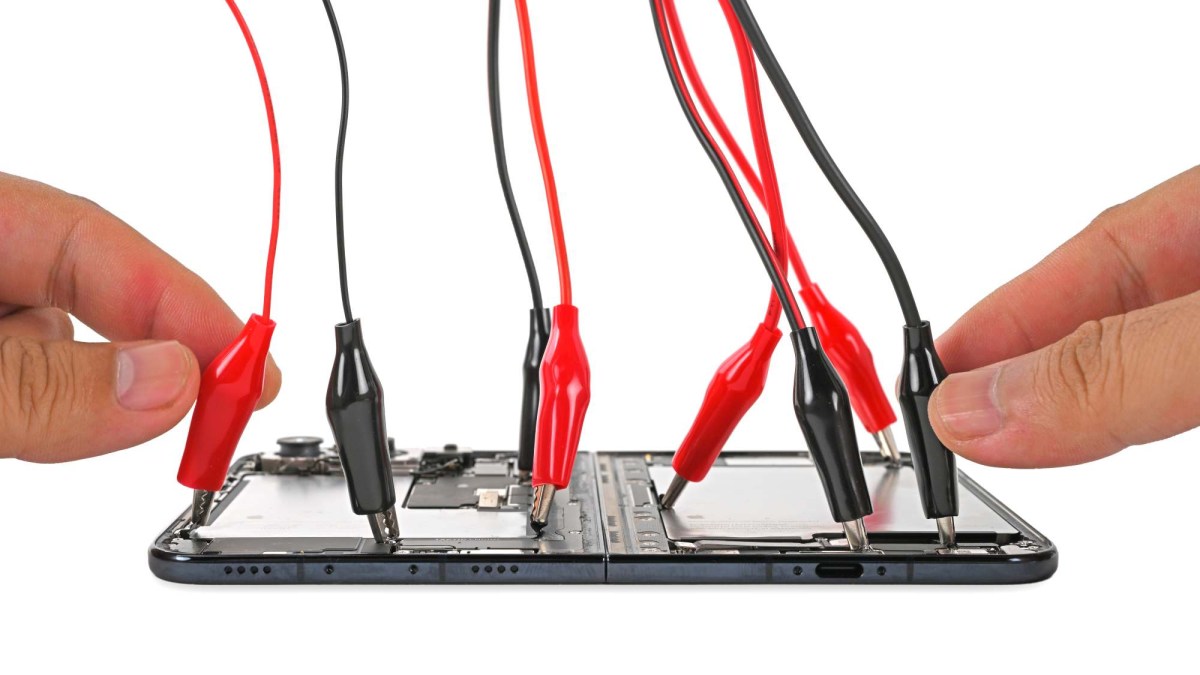
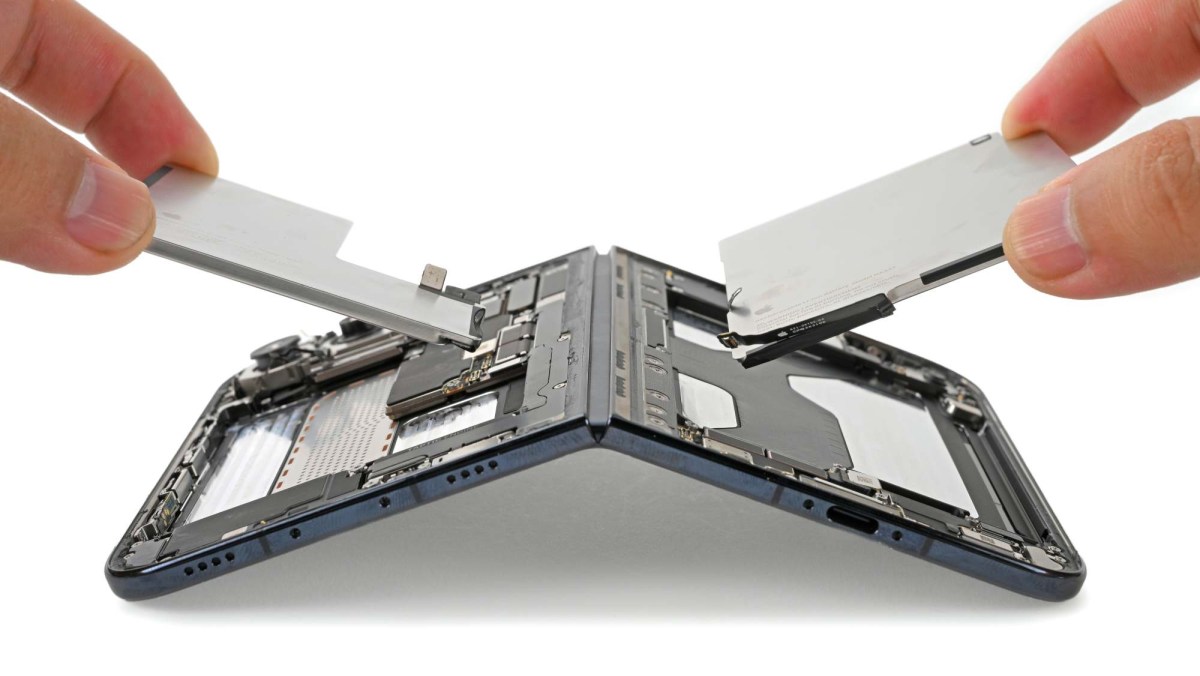
Battery handling also improved the review's outlook. iPhone Duo uses a dual-battery structure, with two batteries placed in different areas of the chassis to fit the folding form factor. Unlike designs that depend on strong adhesive, the batteries can be released through an anodic separation process triggered by a low-voltage power supply, helping them detach from the fixing structure.
In the demonstration, iFixit connected a low-voltage power source similar to a 9-volt battery to metal tabs on the battery cells. The electrochemical process loosens the fastening, reducing the need for service technicians to pry directly against the cells and lowering risks such as puncture, short circuit, or thermal runaway. Still, ordinary users should not treat this as a safe self-repair path; actual battery service should follow proper procedures.
Inner display, crease optics, and images
The inner display was another focus. Apple placed a nano-textured matte covering layer over the folding area and paired it with an OLED subpixel layout intended to reduce reflections and make the central crease less noticeable during normal use.
Microscope images reveal numerous tiny protrusions on the covering material. These structures scatter incoming light in different directions, lowering mirror-like reflection at certain angles. The RGB subpixels on the inner screen are arranged at different angles, further helping conceal visual traces in the fold area.
Hinge concerns remain the main risk
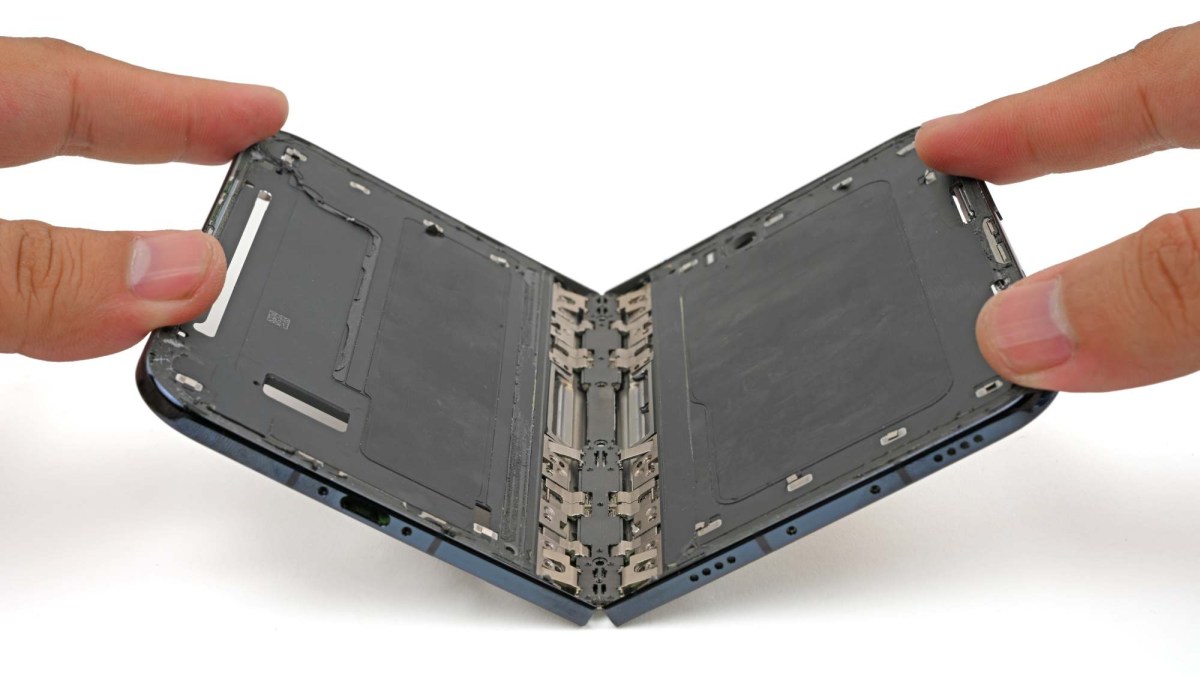
The hinge mechanism was the most concerning part of the teardown. Recently, some early users reported abnormal resistance when opening the phone, requiring more force to continue unfolding. They also said cracking sounds could follow, after which the inner screen showed permanent vertical lines and horizontal lines.
User reports place failure timing differently: some devices developed problems hours after purchase, while others failed after days of use. Affected users said they had not performed unusual operations. Apple reportedly offered a replacement plan to some users, but limited supply in the initial launch period meant some could not get a replacement immediately.
Existing information is not enough to prove all failures share one cause, nor to confirm the share of affected devices. Still, multiple reports show a similar pattern: abnormal hinge resistance first, followed by noise, then inner screen damage. That pattern makes the hinge the focus of investigation.
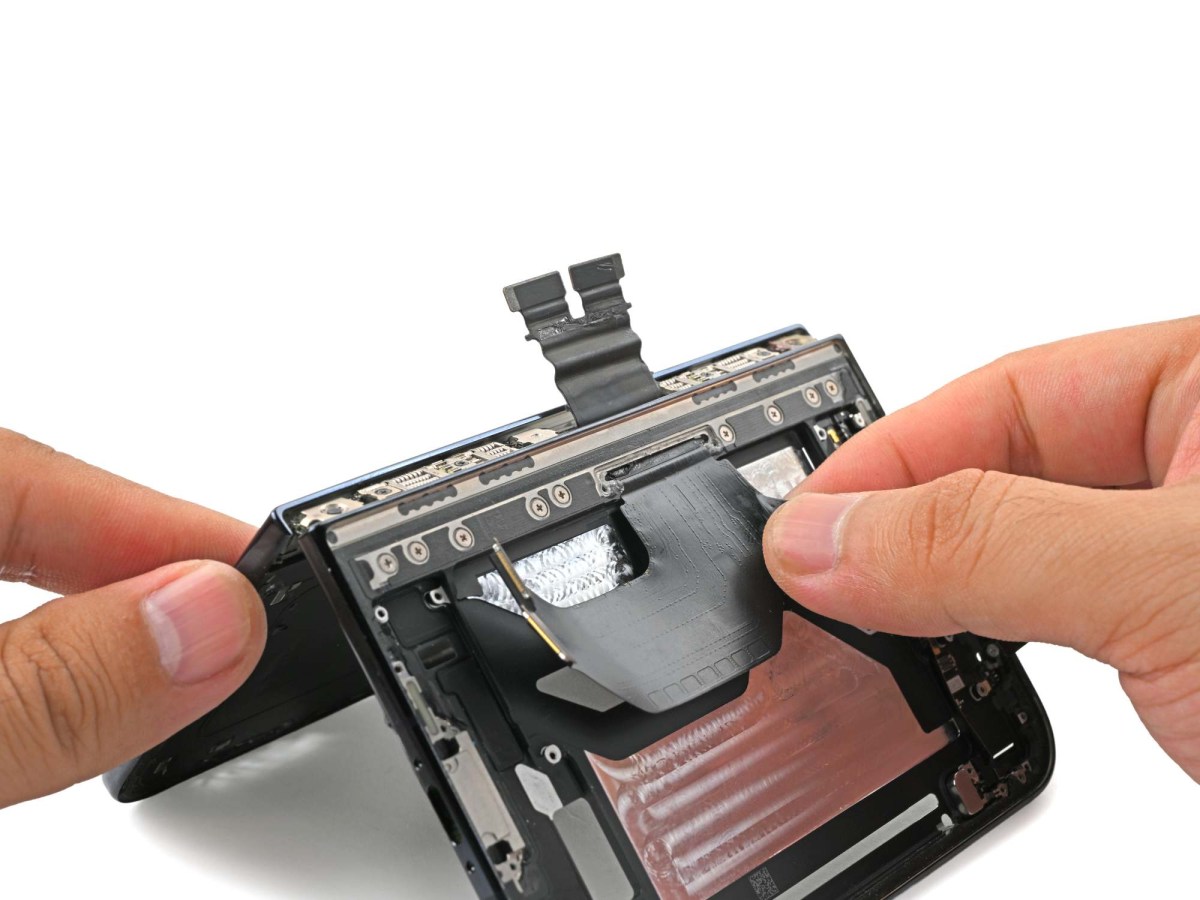
One possible explanation is that some moving parts inside the hinge do not behave as expected and may catch during opening. Another design detail worth watching is the folded flexible circuit that runs through the hinge. It must bend repeatedly in a narrow space; if it is pinched, pulled, or exposed to abnormal mechanical stress, device reliability could be affected.
Repairability and durability are two different issues
Teardown observations can help identify potential risks, but they cannot alone establish a specific failure cause. The question may involve assembly variation in individual parts, hinge moving mechanism design, or interaction between the flexible circuit and other components; further investigation is needed.
For a high-priced foldable phone, ease of repair and structural durability are two different issues. Removable components can make repairs simpler after a fault, but if a key mechanical part has reliability problems, friendlier repair procedures cannot prevent failures during normal use.
iPhone Duo's score of 5 on a 10-point scale suggests progress in internal layout and some service steps. The complex hinge remains the area that must withstand time. With more units in use, longer-term feedback over the coming months will help determine whether current reports are isolated to early batches or reveal a wider design risk.