
ItInsightsWorld iPhone Duo Teardown Notes: Hinge Clues, 5/10 Repair Score and Channel Price Shift
Recent coverage of the iPhone Duo teardown has placed three threads side by side: where screen faults appear, how serviceable the folding design is, and how quickly early channel premiums moved. The following review pulls the reported findings into one place.
Reported screen fault patterns
User reports show visually similar symptoms: a vertical black line or crack near the middle of the screen close to the hinge, while a horizontal bright line appears on the right half.
Hinge architecture and the area where anomalies cluster
iPhone Duo uses a waterdrop-style folding structure. Gears, springs and several interconnected metal joints bend the display; curved rails inside the hinge guide the joints along set paths, which reduces stretching and compression on the folding screen.
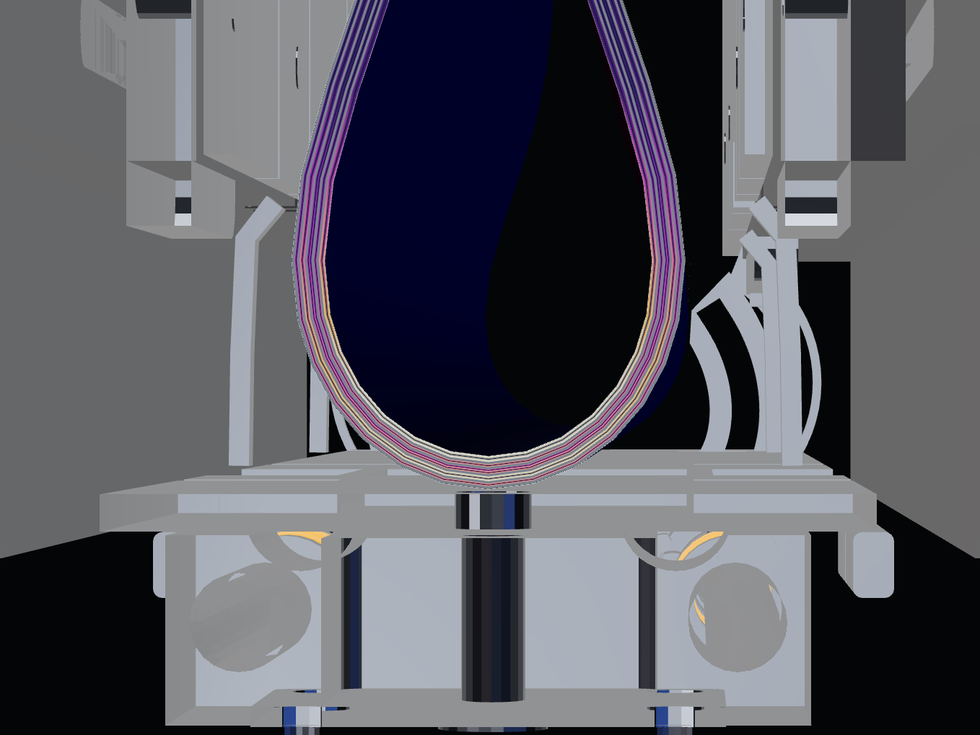
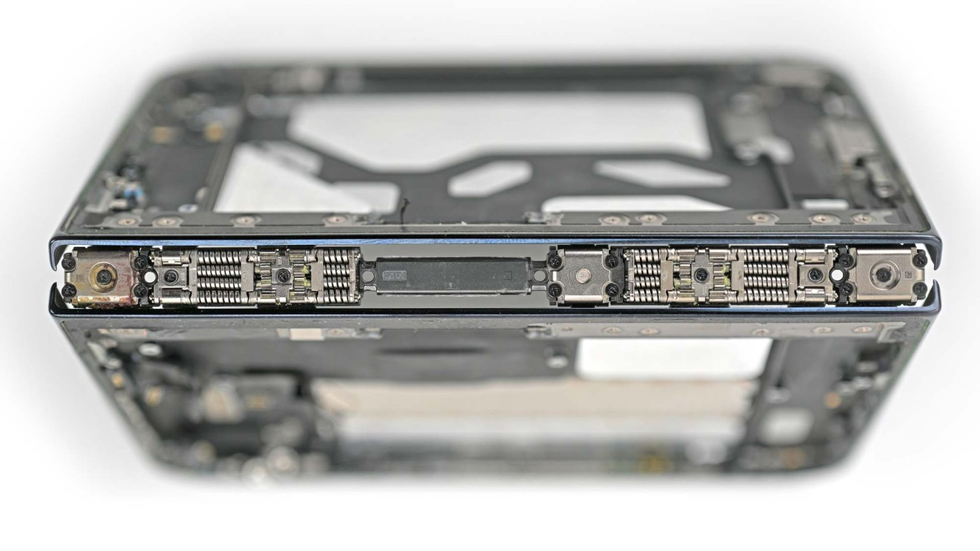
When consumer fault photos were overlaid with the hinge 3D model, several display abnormalities fell in the lower-center area of the hinge, close to the flexible ribbon channel connecting the two bodies and the junction of the central support structure.
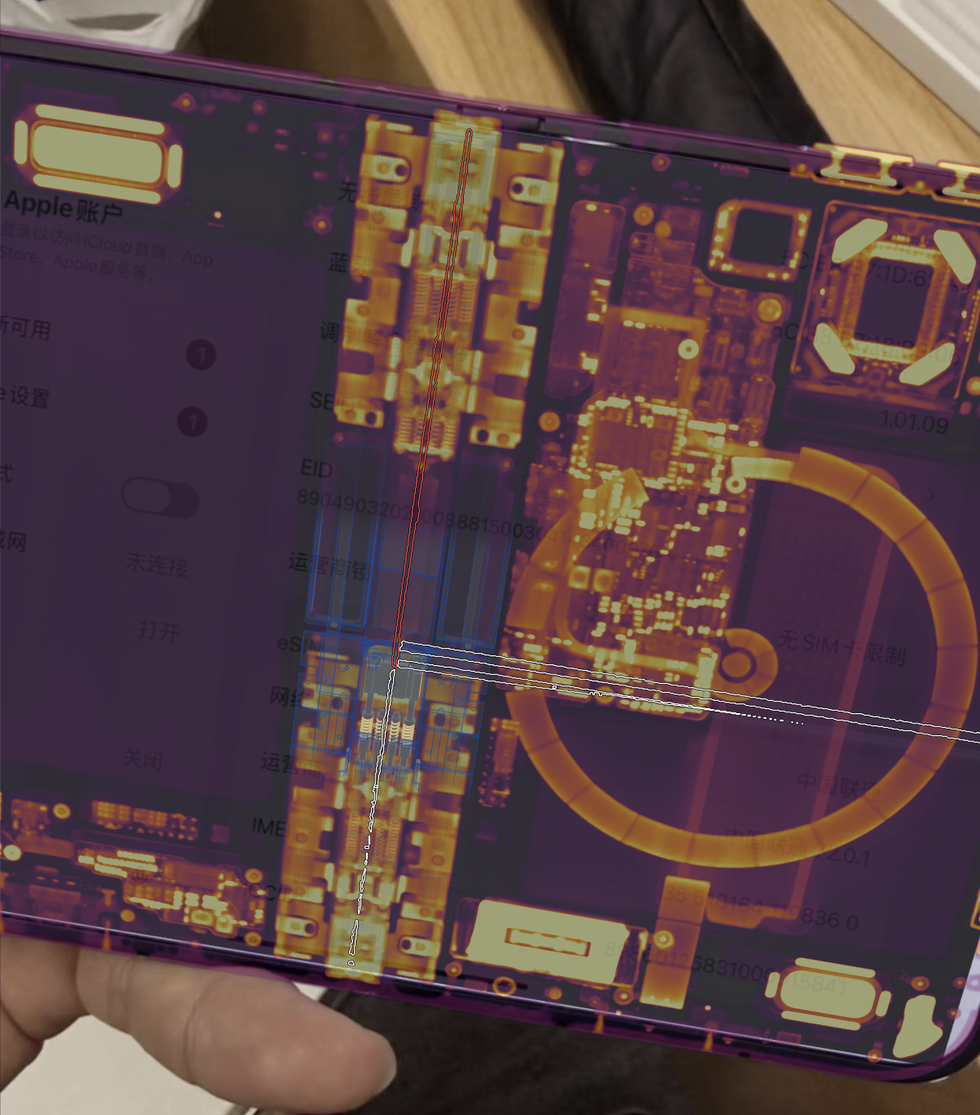
Multiple structural edges meet in that area, so the display receives changing support during a fold. iFixit said the cause may not be single. The central pivot differs from other hinge parts; iFixit suspects the central pivot or nearby moving parts may jam during opening and closing.
Another possible mechanism is that the central support rod does not sink enough when the phone is closed, creating localized pressure on the bent screen, stress concentration near the fault area, and compression of display cabling.
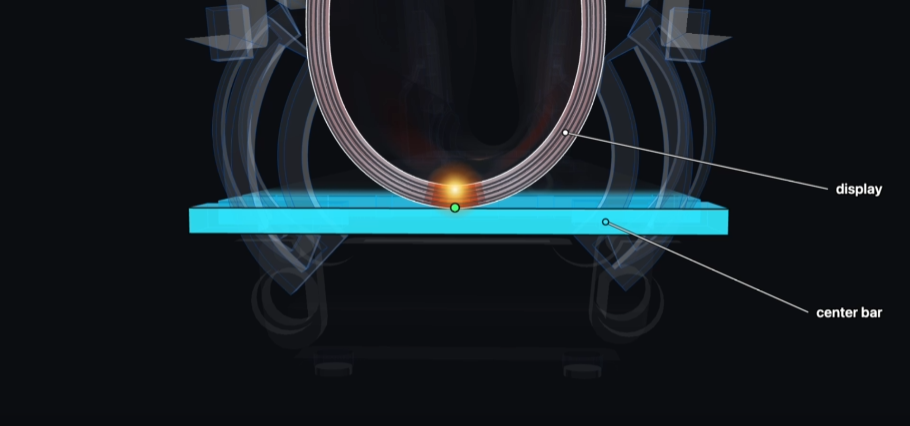
iFixit has not confirmed the exact fault cause. It noted that the actual damaged zone may be smaller than the visible display anomaly, because a local failure at a tiny electrical connection can affect an entire row or column of pixels.
Repairability score and quoted service costs
The teardown group assigned iPhone Duo a tentative score of 5, with a full score of 10, the highest repairability score it has given a folding-phone design so far.
Compared with other folding phones, the inner display is relatively accessible: the outer screen can be removed completely; clips around the inner-screen bezel reduce damage during disassembly; and the nano-texture protective layer on the inner display can be replaced separately without replacing the OLED panel beneath it. Replacing the full inner screen remains complex because of multiple adhesive layers and precise display installation. Hinge repair requires removing the flexible display and its support structure, the main deduction in the score.
| Repair item | Apple China website estimate | After AppleCare+ |
|---|---|---|
| Inner screen damage | 7998 yuan | 628 yuan |
| Outer screen damage | 3198 yuan | 188 yuan |
The 7998 yuan figure is close to half of the 15999 yuan starting price, and AppleCare+ lowered the fees for the two repairs to 628 yuan and 188 yuan, respectively.
Early pricing behavior and delivery waits
In the early stage after launch, the market signal arrived quickly. Only three days after release, sale prices and buyback prices at some third-party channels broke below issue prices.
- On Pinduoduo, the 256GB version had an official price of 15999 yuan and a subsidized price of 15799 yuan; the 512GB version was listed after subsidy at 17799 yuan, each 200 yuan lower than official pricing.
- On Dewu, the earlier high launch premium narrowed. Starlight White 256GB units were seen at 16238 yuan, only 239 yuan above the official price.
- A merchant quote obtained by Blue Whale News showed a 512GB buyback price of 17950 yuan, 49 yuan below the official price, while other models carried buyback premiums around 200 yuan.
At the same time, some orders on Apple's official site still had to wait until January 2027 for delivery, and supply-chain reports indicated a large production increase.
On October 26, Taiwan's Economic Daily cited supply-chain information that Apple asked suppliers to speed production because initial stock was insufficient, with rumors of adding 30% orders. The report said this year's preparation volume was expected to rise from about 6 million units to 8 million to 10 million units, and 2027 shipments could reach 33 million units.
The report also identified pivot-related component supply and high assembly difficulty as current capacity bottlenecks; future output depends on easing those constraints.
On the same day, Apple customer service said third-party channels might have platform subsidies or store discounts, while Apple website prices remained relatively stable. Customer service also said some third-party channels had sufficient supply but fewer buyers, which could lower prices.
For long waits on official-site orders, customer service gave two ways delivery could speed up: more capacity, or earlier queued consumers canceling orders. It said many customers have canceled.
These points frame the current picture: the display issue is still under investigation, but the hinge layout, repairability score, and cost table set a reference for what service may involve, while early channel pricing and official delivery terms show that the first demand rush was already being tested by supply and order cancellations.