
Google's First Data Center Satellite Goes Live After Roughly Three Weeks of On-Orbit Tuning — and Its AI Composes a Haiku
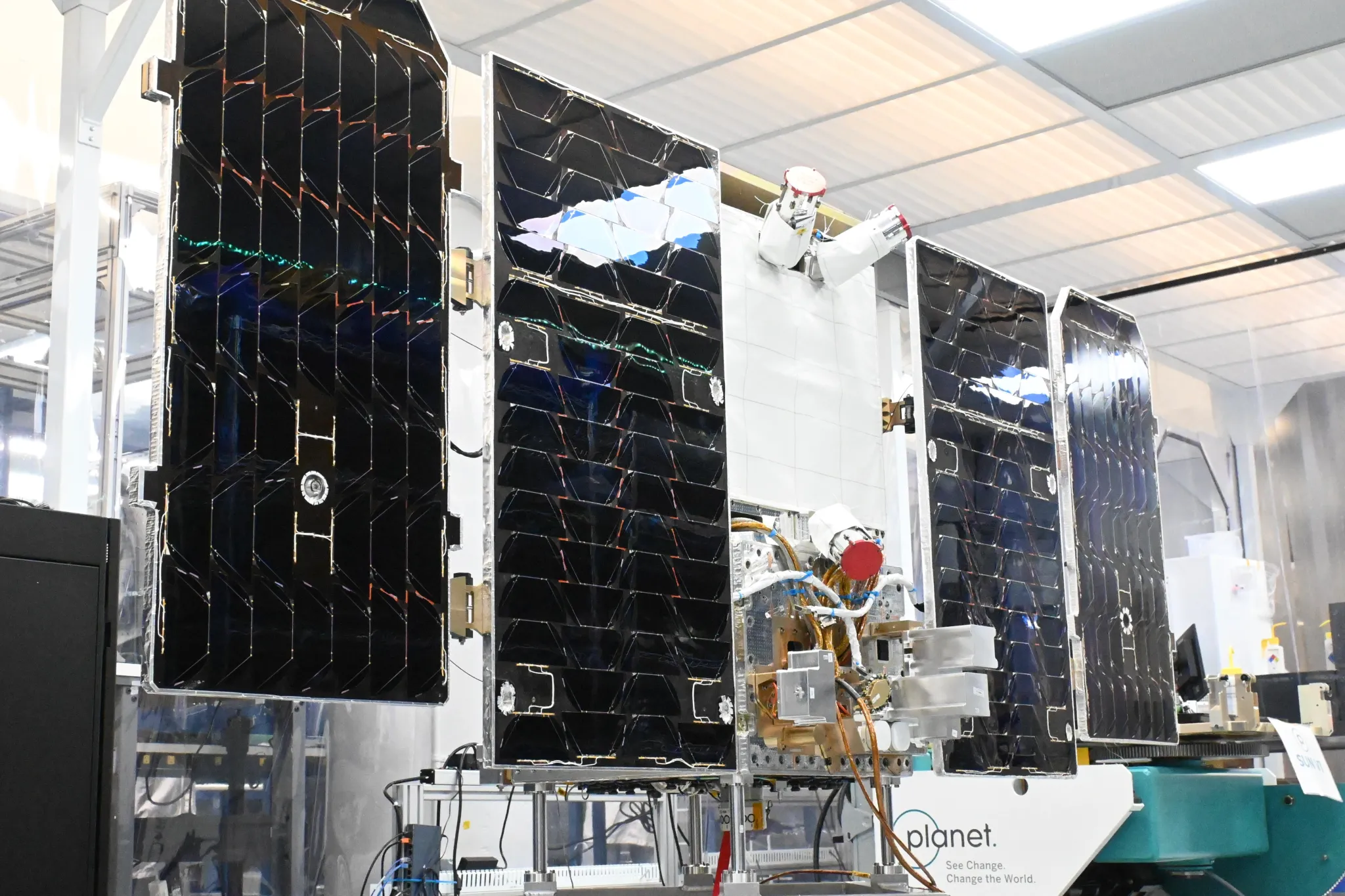
Machine-learning hardware is now doing real work above the atmosphere. Google has shifted its first data center satellite from the validation phase into routine service, a handover completed only after approximately three weeks of in-orbit testing and system calibration. The verse generated on board is the eye-catching part; the operational milestone behind it is what engineers were actually testing for.
The architecture this mission is meant to enable
The spacecraft carries a Google Tensor Processing Unit (TPU) accelerator and can produce up to about 1 kilowatt of electrical power. Its stated purpose is groundwork for an orbital data center network — a constellation concept made up of multiple satellites flying in close coordination, so that large AI inference workloads can be executed in space instead of being routed back to terrestrial facilities.
Hard limits that still shape operations
The engineering reality imposes constraints that a poem cannot hide:
- Power draw. The TPU consumes heavily, so a single chip activation window is capped at roughly 20 minutes.
- Link complexity. Short compute windows make the already demanding space-to-ground communication chain harder to manage.
- Extended checkout. Formal operation began only after about three weeks of on-orbit testing and calibration.
A functional test dressed up as poetry
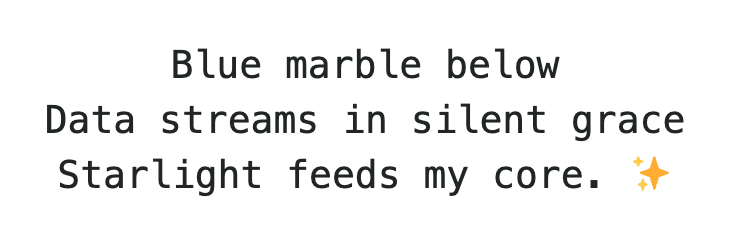
This week, Google engineers uplinked a prompt to the preinstalled Google DeepMind Gemma 4 model and asked it to write a haiku about space. The returned verse, in essence, reads: “the blue planet glows quietly below, data streams pass peacefully through, starlight feeds my core.”
Telemetry and current system health
The model is not limited to literary output. Google also uses it to collect and report information about the orbital environment around the spacecraft. A spokesperson said the satellite is operating normally and that all systems continue to behave as expected.
What comes next: durability in an unforgiving setting
The evaluation priority now moves to how the TPU chip holds up in extreme space conditions, particularly the thermal stress produced by temperature swings and the cumulative effect of cosmic radiation on the hardware. Google had already run extensive TPU exposure tests in ground-based particle accelerators, but long-term behavior in an actual orbital environment still requires confirmation.
The bit-flip question
Attention focuses on radiation-induced “bit flip” events, in which a stored data bit is unintentionally altered after a strike by a high-energy particle. Such a change can corrupt data, and ordinary monitoring systems do not necessarily catch it promptly.
Earlier ground experiments suggested that radiation affects AI inference tasks only modestly, while model training could suffer more noticeable disruption. With the satellite now in service, those inferences can be checked against real flight data rather than laboratory simulation alone.
Follow-on hardware and an inter-satellite mesh
If this mission establishes that a TPU can run dependably in orbit, Google plans to launch two follow-on satellites in 2027, built on more advanced chips. The next generation is expected to deliver greater power generation capability and to demonstrate optical communication links between satellites.
| Approach | Communication and coordination characteristics |
|---|---|
| Google's concept | High-speed inter-satellite links in orbit, allowing several spacecraft to process one shared workload together |
| Some competing designs | Laser communication is also planned, but the larger distance between satellites makes efficient coordinated computing difficult |
Rising demand for compute and energy is pushing operators to look beyond the ground, and the Suncatcher satellite's successful operation turns a long-discussed idea into a demonstrated capability. For IT Insights readers following infrastructure trends, the takeaway is procedural rather than poetic: an orbital AI compute layer is moving from whiteboard sketches toward measured, repeatable operation.