
AI Mode Ads Expand Across 10 Markets as Google Tests Multiturn Advertising in the United States
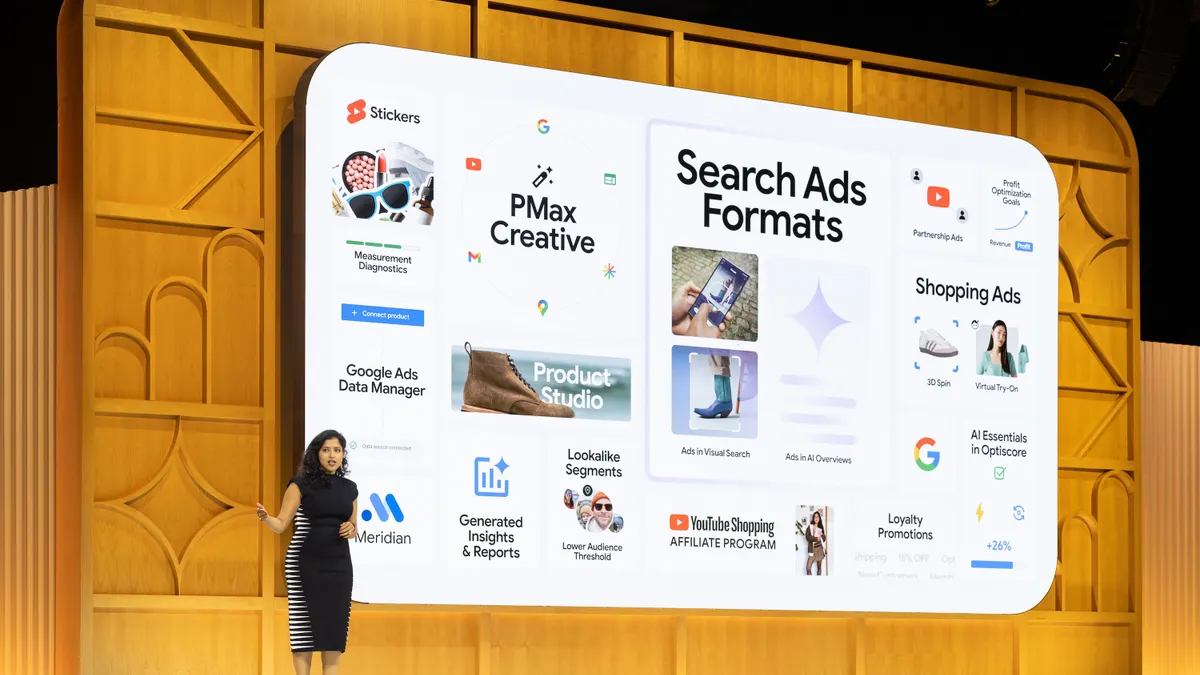
Search ads move from the first query into the follow-up
The commercial center of gravity for search advertising is moving from the first query box into the follow-up exchanges users have with AI. Under Google’s newly announced plan, AI Mode advertising will appear in Australia, Canada, India, Kenya, Malaysia, New Zealand, Nigeria, Pakistan, the Philippines, and Singapore, totaling 10 markets; Brazil, Mexico, and the United Kingdom are scheduled for the next expansion in the fourth quarter of 2026.
In the United States, Google will introduce multiturn ads. These ads are not tied only to the question typed at the start. As users add conditions, clarify needs, or change priorities during an AI Mode conversation, the system can use the updated context to show related products or services.
Executives connect ad rollout with changing search behavior
Philipp Schindler said during the earnings call that high-quality advertising inside AI Overviews and AI Mode is reaching more users and more types of search requests. With the international rollout, Google is also making the first large-scale move to commercialize AI Mode advertising outside the United States.
Sundar Pichai said year-over-year growth in search queries reached the highest level in the past five years. Users are not only using AI features more often; they are also asking more complex questions and relying on multi-turn exchanges to refine what they need. Pichai added that the average AI Mode query length is about three times that of traditional search, and that about one-fifth of AI Mode searches globally include multimodal input, such as voice, image, or document uploads. Google also said it handles more than 50 billion monthly visual searches.
These patterns change the shape of intent. Instead of entering a few keywords and scanning a list of links, a user may describe budget, scenario, preference, and constraints to an AI system, then narrow the answer through follow-up questions. For advertisers, that fuller expression can in theory identify what a user may actually want to buy and make ads more relevant.
Early signals are promising, but the evidence is bounded
- Sponsored product listings in AI Mode have achieved a click-through rate close to that of organic product listings.
- User research suggests consumers view the ads as relevant to their search needs.
- The evidence comes from Google’s own tests and studies, so it does not yet prove the same result across every market, industry, or user group.
Earnings context: slower search growth, faster cloud demand
| Segment or metric | Latest reported figure | Year-over-year change | Comparison and context |
|---|---|---|---|
| Alphabet total revenue | third quarter, $127.6 billion | +25% | reported while investors watched slowing traditional search ad growth |
| Google Search and related businesses | third-quarter revenue | +12% | lower than second quarter’s 17% and first quarter’s 19% |
| Google Services | third quarter, $96.3 billion | +11% | includes search, YouTube, and other consumer-facing services |
| Google Cloud | $30.7 billion | +103% | shows continued enterprise demand for AI computing infrastructure and cloud services |
Search remains a growth business, but the slowing pace across three quarters shows why Google needs a new commercialization path as user behavior and advertising competition change.
Why AI advertising is still being proved
Google’s own executives acknowledged that AI Mode advertising does not yet monetize as well as some mature search ad formats. If users receive a complete answer inside the AI interface, they may stop clicking through to multiple webpages, which can weaken the display and click mechanisms that have historically supported search advertising.
Traditional search ads usually start from clear commercial keywords: a product, a service, or a brand. Advertisers bid against queries that often signal purchase intent. In AI search, the first question can be broader — for example, comparing product categories, then adding budget, performance, or scenario constraints — and the purchase intent may only emerge late in the conversation.
Google sees a new opportunity here: AI can interpret the user’s real need across a longer decision process, and ads can surface relevant information as the dialogue changes. That is the purpose of multiturn ads, which are not limited to the initial keyword.
Guardrails and campaign mechanics
Too many ads, or recommendations that do not match the request, could reduce trust in AI-generated results. Google said ads in AI Mode will be clearly labeled as Sponsored content and that it continues testing formats to keep ads relevant to user needs.
Advertisers are not required to build separate AI Mode campaigns for this rollout. Some existing Search, Shopping, and Performance Max campaigns can be eligible, depending on campaign settings, matching, and system judgment. This lets Google incorporate AI search traffic into its ad system without forcing large changes to advertiser workflows.
Competitive and regulatory pressure
The shift also brings pressure from competitors and regulators. Generative AI search changes how people access internet content; some users may read the generated answer instead of visiting the original site. That affects website traffic models as well as ad inventory. Google has previously said AI features can still send substantial visits to websites, but the industry still debates whether AI answers reduce clicks and whether revenue can keep pace with query growth.
The third-quarter results underline the core uncertainty: more frequent use of AI search does not automatically translate into matching ad revenue. Google now needs to demonstrate that AI Mode can keep attracting users while producing a durable revenue stream. That requires the system to understand complex questions well and to place ads in a way that does not harm the usefulness or credibility of search results.
What decides the next revenue engine
By moving AI Mode advertising into 10 new markets and testing multiturn ads in the United States, Google is accelerating the global rollout of a business model that sits between conversational search and traditional ad delivery. Whether it becomes a new revenue engine will depend on advertising conversion performance, user acceptance, and the company’s ability to balance monetization with search experience.