
ItInsightsWorld General: Google Genie 4 Turns AI Scenes Into Real-Time Editable Worlds
ItInsightsWorld summarizes a Google Oct. 27 announcement: Genie 4 is a world model intended to move beyond generating pictures or clips by producing virtual settings that users can enter, manipulate, and change in real time. The company frames the update around interactive environments, with possible relevance for games, film and robotics simulation.
Four upgrades, longer sessions
The new release introduces four upgrades: more convincing virtual environments, natural-language scene edits during play or exploration, automatic audio for generated settings, and the use of GoogleGemini 3.8 Flash to assist the simulation process. Google also says interactive sessions can now last about two minutes, which is twice the duration supported by Genie 3.
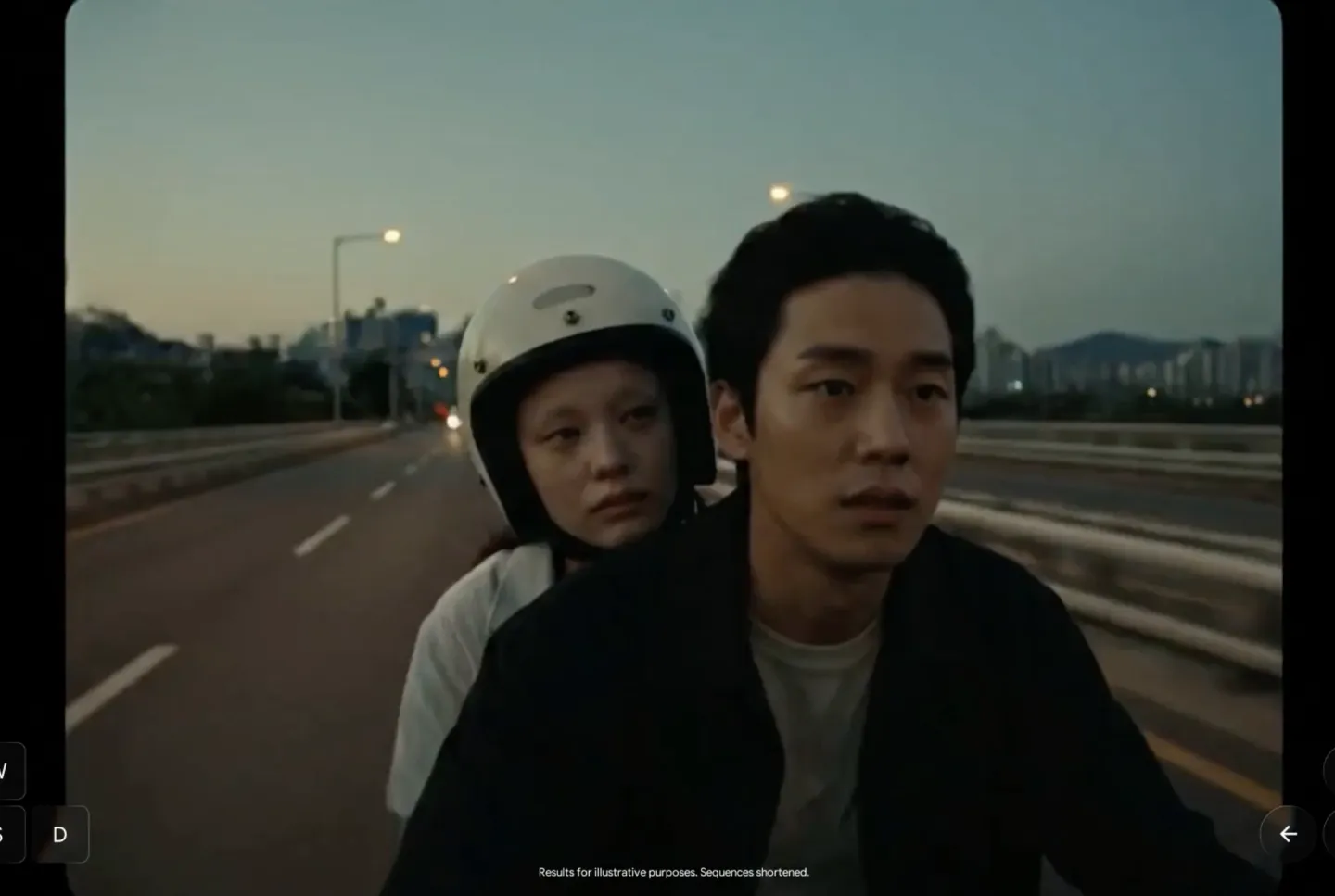
Why world models differ from ordinary generative AI
Conventional generative AI usually receives a prompt and returns an image, video or text. A world model attempts to learn spatial relationships, object motion, and cause-and-effect patterns so that output is not merely displayed but changes when a user acts. In such a setting, a person can move an avatar, turn the viewpoint, or interact with objects; the model must continue generating coherent scenes from those actions. That requirement matters for games, robotics simulation and training in complex environments.
Real-time scene rewriting and creative workflows
One notable change is that users can modify a virtual world mid-session without leaving the scene, rewriting the prompt, and starting over. By asking the model to alter specific elements, creators can iterate on layout, style, and interaction quickly. The feature may be useful for game designers and production teams that need rough prototypes before committing resources. For filmmaking, it could also support previsualization, helping teams try camera paths, character movement and environmental effects before building physical sets or polished 3D assets.
Audio, robotics testing and remaining limits
Genie 4 can also add sound to generated scenes, a capability earlier world models did not emphasize. Audio can make an environment feel more complete and may help prototype mood or basic effects. Google cautions against treating this as full replacement for professional sound design: rhythm, spatial placement, dialogue, and tight synchronization with action still need human adjustment and specialized tools.
Google additionally positions Genie 4 as a way to create training scenarios for robots. Real-world robot testing can involve equipment cost, limited space, and safety risks. A simulated interactive environment may let researchers test navigation, object grasping and responses to different conditions. The harder requirement is not visual realism alone, but credible physics: spatial relations, movement laws, and action consequences must reflect real constraints closely enough for learned strategies to transfer to hardware.
Architecture, duration, and consistency pressure
Architecturally, Google states that Gemini 3.8 Flash assists the simulation, aiming for better logical continuity and interaction. However, limited technical metrics have been disclosed, making it difficult to quantify overall improvement over Genie 3. The session length also changes from about one minute in Genie 3 to about two minutes in Genie 4. That remains short for full games or complex simulations, but it gives more room for quick prototypes and brief interactive experiences.
Google also acknowledges that longer simulations can still produce inconsistencies. Scene details may drift, and objects may not keep their positions or states. A convincing frame is not enough; the model must maintain a stable world over time. If an object disappears when out of view or reappears in a different place, the experience can become unreliable. Object persistence, spatial memory, and long-term state consistency therefore remain central engineering challenges.
Rollout, uncertainty, and industry direction
Genie 4 is initially available as a research preview to selected testers. Google says broader access is planned for Google AI Ultra subscribers, and an application waitlist is open for people who want to try the model through Project Genie. Independent evaluation is still unavailable: official demos do not yet reveal actual user experience, long-session behavior, or stability in complex scenes.
In a broader sense, Genie 4 signals that generative AI is moving from producing static or linear content toward constructing explorable, modifiable environments. A future system may generate not only an image or a clip, but a space that users can explore and reshape. Still, practical adoption in games, film, or robotics depends on progress in consistency, physical accuracy, response speed, and generation cost. At this stage, Genie 4 appears to be an important experimental step rather than a mature replacement for game engines or professional 3D pipelines.