
This Week's Gen Z Playbook: Coca-Cola's Digital Exit, a Kawaii FigJam Takeover and POP MART's Fandom Math | ItInsightsWorld General
Treat this Friday's industry roundup as a working checklist rather than watercooler news. A departing digital director, a character-stuffed collaboration whiteboard and a collectibles executive's definition of fandom each map onto a decision marketing and product teams make this quarter. Every signal below has an owner, a date and a metric that can be set before the next planning cycle.
The source edition is MARKETING-INTERACTIVE's Gen Z Perspectives, the weekly feature that reads the industry's top stories through the eyes of Gen Z. This week's instalment, compiled around DMA Singapore 2026 in Singapore, covers a leadership change at The Coca-Cola Company, a Figma partnership with Sanrio, and a podcast conversation about POP MART. The facts are simple; the useful question is what an operating team should do differently on Monday. This guide reorders the same three stories into steps, checklists and failure modes.
What happened, in three signals
One theme runs through all three items: attention is assembled from people, play and fandom, not from a single campaign. The record first.
- People. Andrew Hill, senior director of digital acceleration strategy and enablement at The Coca-Cola Company, leaves after four years, closing a stretch in which he led digital initiatives and strategic partnerships across the region. He posted his own summary on LinkedIn.
- Play. Figma teamed up with Sanrio to place 12 of the studio's characters inside FigJam, its collaborative whiteboard, for a limited run from 1 to 8 November.
- Fandom. On the DMA 2026 Podcast, recorded at Digital Marketing Asia 2026, Jeremy Lee, head of Middle East and South Asia at POP MART, explained how collectible characters from Labubu to Crybaby stay wanted.
The original edition also carried separate headlines: Chris Lee exits, memes return and Instagram goes long; Kimberly-Clark appoints Anindya Dasgupta to lead enterprise growth markets; and what Malaysia's media players see in store for 2027.
Why a "kawaii" whiteboard is a product decision, not decoration
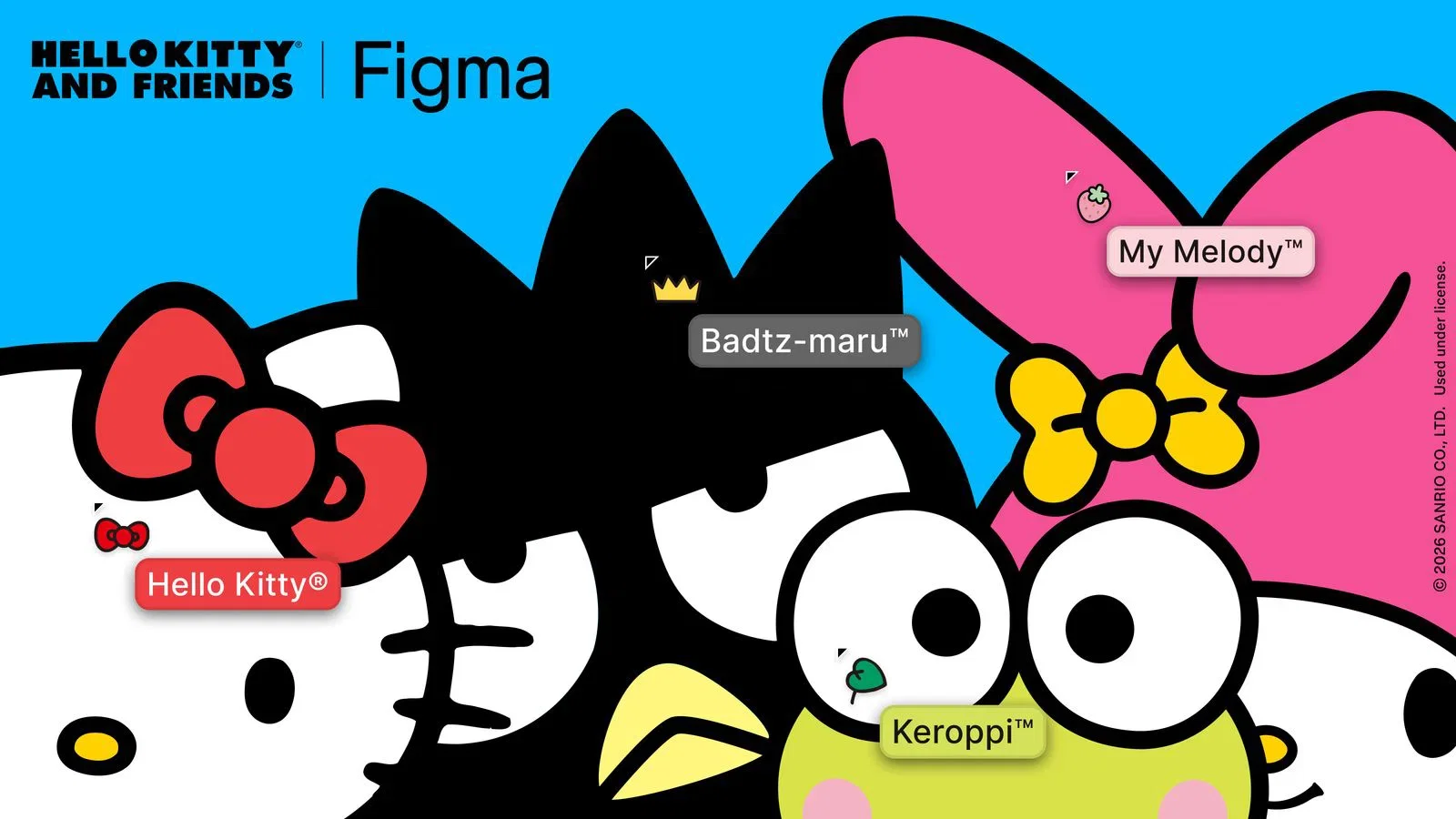
Short answer: Figma is buying habit. The FigJam set marks Sanrio's first integration with Figma, and the run was timed to Hello Kitty's birthday on 1 November.
The mechanics matter more than the mascot list. Hello Kitty, Kuromi, My Melody, Cinnamoroll, Pompompurin and Pochacco appear as selectable characters on the canvas; Figma's own write-up describes a signature bow icon in the toolbar that opens the picker, with each character carrying its own theme, a free New York pop-up on 6–8 November, and community files such as slide templates and colouring books. The team rebuilt Sanrio's artwork as scalable vector assets inside the product before anything shipped.
Two lessons follow for anyone copying the play. First, the IP has to live inside an artefact people already create together, not beside it. Second, the calendar is the constraint: a limited window manufactures urgency, and it also invalidates any metric that assumes permanence.
Six steps to run a time-boxed character or IP collaboration
- Test audience fit before creative. Write one sentence naming the work moment the character improves. If the honest answer is "none, it only photographs well", you are planning an advert, not a feature.
- Lock rights and asset specifications in week one. Character lists, territories, usage dates and vector delivery requirements come from the licensor's guidelines, not from a designer's memory.
- Place the IP inside the workflow. Canvas cursors, stickers and board themes behave like product; a landing page behaves like a campaign.
- Ship a shareable template. Community files carry reach at almost no marginal cost and keep the partnership alive after the activation ends.
- Instrument participation, not applause. Track boards created, characters selected per team and whether those boards are reopened the following week.
- Design the off-ramp before you start the timer. State publicly what survives the window: exported assets, archived boards, a permanent template library.
What a four-year digital leadership exit signals to your own team

Hill joined The Coca-Cola Company to help build digital partnerships and left with responsibility spanning markets, functions and regional teams. That builder-to-enablement trajectory is exactly the profile enterprises mismanage when one person departs.
Context first: at this seniority the timing is normal, not alarming. Spencer Stuart's CMO tenure research, summarised by Behind the CMO, puts average S&P 500 marketing leadership tenure at roughly 4.1 years against about 5.0 years for the wider C-suite. Four years inside an operation as distributed as Coca-Cola sits close to that pattern.
The avoidable loss is undocumented context. A practical handover checklist for any named leader:
- a partnership map listing counterparties, contacts and renewal dates;
- a decision log explaining why legacy platforms, vendors and data flows were chosen;
- successors named for budget authority and regional sign-off, not for titles;
- a 30-day joint working window while the departing executive is still reachable;
- an agreed external narrative — in Hill's case, the LinkedIn post is now the public record of that four-year chapter.
Does POP MART's fandom argument survive its own numbers
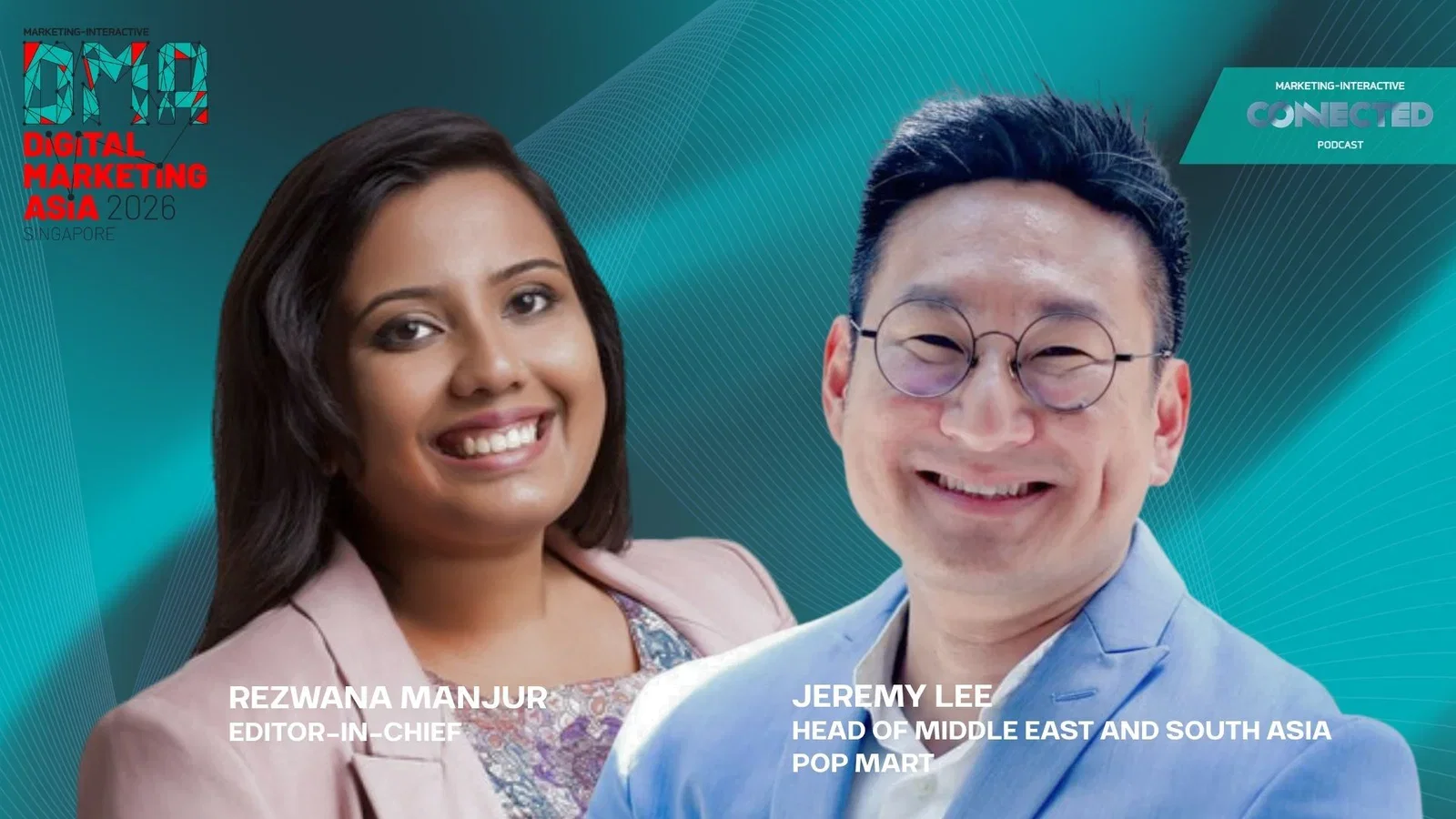
"I see fandom as something that you build over time," Jeremy Lee told Rezwana Manjur, editor-in-chief at MARKETING-INTERACTIVE, on Marketing Connected's podcast at Digital Marketing Asia 2026. Artist engagement, social listening and collaborations, he argued, are what keep intellectual property relevant as consumer attention shifts. That claim is testable, and the test makes it stronger.
POP MART's first half of 2026 results, reported by The Wall Street Journal on 21 August 2026, show revenue up about 24% to RMB 17.17 billion yet below analyst expectations, with The Monsters family that houses Labubu at RMB 4.45 billion, some 26% of total revenue, down from 34.7% a year earlier. A single hit IP is a liability even while it is printing money.
Demand has not evaporated: the Art Basel and UBS Survey of Global Collecting 2026 records Gen Z collectors reporting the highest average spending of any generation, with roughly 40% entering collecting through family influence. Fandom is therefore the mechanism that converts one spike into a base — and a widening artist roster, not the last viral figure, is the hedge.
Three routes to younger consumers, side by side
| Route | Example from this roundup | Cost shape | Time to signal | Primary metric | Main failure mode |
|---|---|---|---|---|---|
| Character or IP collaboration | Figma with Sanrio in FigJam | Fixed licence plus engineering | Days | Active sessions inside the window | Decoration with no workflow role |
| Fandom and community building | POP MART artist IPs | Recurring, artist-led | Years | Repeat purchase and IP concentration | One hero product masking churn |
| Digital capability and leadership | Coca-Cola enablement role | Salary plus transition cost | Quarters | Days to documented handover | Knowledge leaving with the person |
Common mistakes when teams copy these plays
- Marketing a limited feature as if it were permanent, then going quiet when the licence expires on 8 November.
- Counting earned media instead of reuse: a theme picker nobody opens twice is a press release, not a product.
- Treating Gen Z as one audience. Nostalgia only works where the character already carries meaning, and the same buyer can be a collector in one category and a bargain hunter in the next.
- Exposing internal work while chasing buzz. Teams that publish brainstorm boards to anyone holding a link should read our trade-off review of public iCloud links versus private sharing before an IP partner's guidelines make it a compliance issue.
- Reading a leader's departure as a hiring story rather than a documentation test.
- Assuming one viral product equals fandom. The POP MART revenue mix above is the counter-example.
Quick answers for busy readers
Is the Sanrio set still available in FigJam?
No. The collaboration ran from 1 to 8 November. Plan any re-use around the community files that remain, not around the timed character layer.
Should a B2B or enterprise team run a playful collaboration at all?
Yes, if it changes something the user already produces together — boards, documents, design files. No, if it only changes the colour of the login screen.
How much does one senior digital departure really cost?
Rarely the salary. The cost is re-learning: partner terms, undocumented architecture decisions and regional relationships that were never written down.
How do you tell fandom from a short-lived fad?
Watch repeat purchase and revenue concentration across IPs. Falling concentration with stable growth signals a community; rising concentration with slowing growth signals a trend that has not been diversified yet.
A 30-day action plan
- Week 1: list the workflows that could host a partner asset, and pull every licence window into one calendar with named owners.
- Week 2: for each visible leader in your digital stack, capture the partnership map and decision log while they are still in seat.
- Week 3: pick one fandom metric — repeat purchase rate or team-level board retention — and baseline it before the next campaign.
- Week 4: run a kill-or-keep review on every limited-time feature so nothing disappears without an off-ramp.
Editorial note: this guide is published in the General channel on ItInsightsWorld, where market news is reframed as decision support for technology and marketing leaders. Queries: contact@itinsights.com.
Sources consulted
- MARKETING-INTERACTIVE, Gen Z Perspectives weekly roundup — https://www.marketing-interactive.com/gen-z-perspectives-people-moves-kawaii-collabs-and-conversations-from-dma
- Figma, "How we brought Hello Kitty and Friends to Figma" — https://www.figma.com/blog/hello-kitty-and-friends-in-figma/
- The Wall Street Journal, POP MART first-half 2026 results, 21 August 2026 — https://www.wsj.com/business/earnings/labubu-makers-revenue-momentum-slows-after-explosive-growth-7d32c266
- Art Basel and UBS Survey of Global Collecting 2026 — https://www.ubs.com/global/de/media/display-page-ndp/en-20261008-art-basel-ubs-survey.html
- Behind the CMO, summary of Spencer Stuart CMO tenure data — https://www.behindthecmo.com/resources/cmo-tenure-statistics/