
Engineers of Change: A Practical Playbook for Greenville's $4.5 million Hands-On STEM Push | ItInsightsWorld
Want one honest signal about where the energy workforce is heading? Don't read the job boards — look at who is now funding engineering classes for teenagers outside school hours. This fall, the GE Vernova Foundation opened Engineers of Change in Greenville, and the design logic behind it is worth borrowing even if you live nowhere near South Carolina: hands-on engineering for young people is being treated like infrastructure, with a defined age ladder, named university and nonprofit delivery partners, and a multi-year budget attached.
Below is the practical breakdown our editorial team at ItInsightsWorld uses when a reader asks "is this worth my child's, my school's or my district's attention?" — background, mechanism, a six-step playbook, a commitment checklist, the misconceptions we keep seeing, and an FAQ.
What actually launched, and on what clock
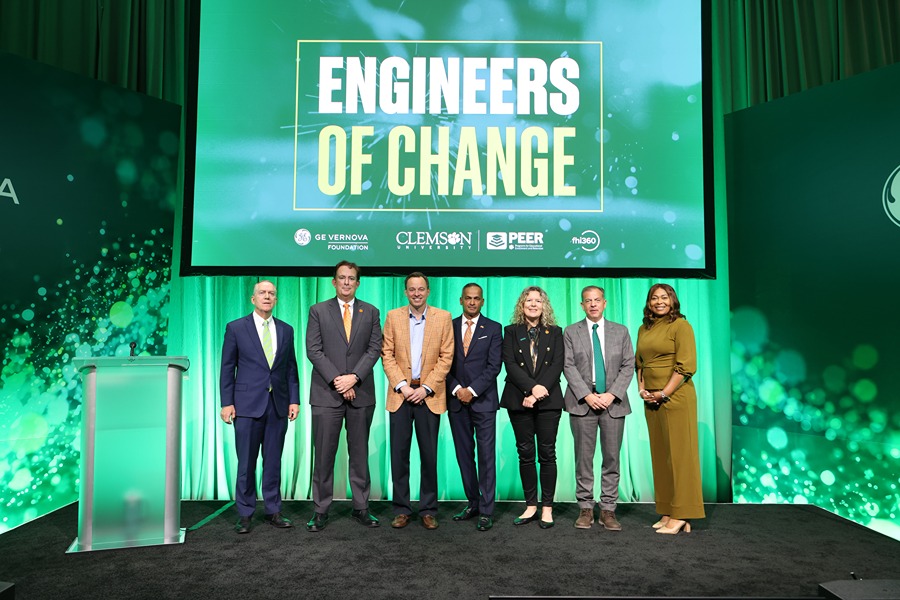
Engineers of Change was first announced in April 2026; this fall is when the first students began programming, and the opening event gathered GE Vernova leaders, local government representatives, Clemson University partners and community figures to make the case that initiatives like this can form a pipeline of future innovators for a more sustainable energy future.
The numbers are specific, and that specificity is the point. The initiative is a three-year, $4.5 million effort in two locations — Greenville, South Carolina and Staffordshire, UK — and in Greenville alone it aims to reach 3,000 students. The method is stated plainly: hands-on learning, real-world design challenges and direct mentorship from industry professionals, used to bring engineering to life and ignite curiosity and confidence in students ages 13–18.
Even the venue carried a message. The launch was held at the Advanced Manufacturing Works (AMW) facility, where a panel discussion involving industry experts and educators was paired with live engineering demonstrations rather than ribbon-cutting photos. Translation for families: this is being run out of a working manufacturing space, not a lecture hall.
The mechanism: two core components, split by development stage
The program focuses on two core components, and the split is by age band rather than by school grade — which tells you the curriculum was built around how teenagers actually learn, not around a timetable.
| Dimension | Engineering Spark | Engineering Catalyst |
|---|---|---|
| Who it is for | Students ages 13–14 | Students ages 15–18 |
| Format | Foundational engineering concepts delivered through dynamic, hands-on learning | An immersive, two-year program built on design challenges plus career readiness workshops |
| Main output | Curiosity, confidence, a first real taste of making things work | Skills to pursue engineering, and a clearer picture of the career path |
| Commitment feel | Low-friction entry point; easy to trial | Longer runway; needs calendar and family planning |
| Best fit | A younger teen who has never touched a workshop, lab or build kit | A teen already leaning toward technical study or apprenticeship |
Read the table as a sequence, not a menu. Spark is the on-ramp; Catalyst is the highway. A student who skips the on-ramp can still join later, but the mentorship relationships and design-challenge habits that the two-year structure assumes are harder to build in a hurry.
Who operates it — and why that matters more than the brand
Delivery of Engineers of Change is carried out with the PEER program at Clemson University and the global nonprofit FHI 360, helping ensure that programming is aligned with local workforce needs. Through this collaboration, the GE Vernova Foundation continues to put its purpose, The Energy to Change the World, into practice.
Here is the evaluation lesson. Funder names get the headlines; delivery partners decide what a teenager experiences on a Tuesday afternoon. Clemson's own programme description frames PEER as bridging the gap between high school and college STEM education through targeted programs that develop technical skills, college readiness and career preparation — which is exactly the transition most school STEM clubs never cover (source: clemson.edu/cecas/departments/peer). On the UK side, GE Vernova's October 2026 release names the Staffordshire-based Inspirational Learning Group as the local delivery partner working alongside FHI 360 (source: gevernova.com). Same money, two different local operators — that is what "aligned with local workforce needs" looks like in practice.
Why the timing matters: the labour math behind the classroom
This programme is not charity optics; it is a response to a demographic squeeze. The International Energy Agency's world energy employment analysis published in December 2025 estimates that in advanced economies roughly 2.4 energy workers are near retirement for every entrant under 25, and that the sector needs close to 40% more qualified new entrants to stop the skills gap widening before 2030 — an investment the IEA puts at about $2.6 billion a year, less than 0.1% of global education spending. The agency also reports that around 60% of surveyed energy companies already see labour shortages pushing project timelines and costs (source: iea.org).
The UK end of the picture explains the Staffordshire half of the spend. The Royal Academy of Engineering's Engineers 2030 final report, published in November 2025, describes a chronic and growing shortfall in UK engineering skills capacity, drawing on labour-market projections from Skills England (source: raeng.org.uk). When a funder opens cohorts in Greenville and Staffordshire at the same time, it is chasing the same shortage across two labour markets with the same age-pipeline problem. Earlier UK youth engineering activity in that region — funded well before the current programme, going back to 2021-era investment — is part of why local partners were ready on day one.
The support stack around the classroom
One reason to take the Greenville model seriously is that the engineering classes sit on top of a longer-standing education and community layer. GE Vernova and the GE Vernova Foundation keep investing heavily in the future of Greenville, creating impact through education and community-building. Since 2021, the company and the Foundation have together granted nearly 300 scholarships — including the John Lammas Annual Scholarship for engineering students and GE Vernova STAR Scholarships supporting employees' children — while also funding skilled trades and technical programs, such as granting $100,000 for Future of Energy Skills scholarships in Greenville.
There is also a civic-physics argument here that most STEM coverage misses. The 2026 opening of the GE Vernova Park in Greenville marked a major milestone in creating vibrant, connected communities: as the home pitch for Greenville Triumph SC and Greenville Liberty SC, the venue welcomed over 45,000 fans in its inaugural season while doubling as a year-round hub for soccer clinics, yoga, and World Cup watch parties. Shared volunteer efforts such as Hands On Greenville Day, together with programs like the Triumph initiative "Read to Score" — which rewarded 2,703 students for literacy — show that GE Vernova is proud to invest in the social, physical, and educational well-being of the Upstate region.
Why include the stadium in a STEM explainer? Because teenagers do not join engineering programmes in a vacuum. They join where they already feel belonging, and literacy games, clinics and match days are how a region builds that default trust.
A six-step playbook if you want to replicate or join this
- Map the age band first. Confirm the student falls into ages 13–14 (Engineering Spark) or ages 15–18 (Engineering Catalyst) before looking at anything else; the entry track determines the whole experience.
- Ask who delivers, not who funds. Request the local operator's name — in Greenville that is the PEER program at Clemson University with FHI 360 — and check whether that operator already runs school-time or college-transition programmes.
- Inspect the mentor source. A real programme names where mentors come from (site engineers, machinists, technicians) and how often they show up. "Industry professionals" without a roster is marketing.
- Book the two-year runway. For Catalyst, put the commitment in the family or school calendar against exams, sports seasons and summer work before you apply.
- Stack the funding. Look for the scholarship ladder around the programme — the John Lammas Annual Scholarship, GE Vernova STAR Scholarships and the Future of Energy Skills scholarships are the local examples; your region will have equivalents.
- Measure the right outcome. Track whether the student can explain a failed build and try a second fix. Curiosity and confidence, as stated in the programme design, come before certificates.
Commitment checklist: sign up only if these are true
- Transport is solved for every session, including demo days held at facilities such as AMW.
- The student gets at least one hands-on build per cycle, not one per term.
- There is a named adult contact who is neither the funder nor the venue host.
- Attendance data is shared back with families or the school, so drop-off is caught early.
- There is a clear next step after the programme: apprenticeship info session, college pathway talk or portfolio review.
Common misconceptions (and the corrections)
- "One programme fixes the skills gap." It does not. The IEA estimate of needing roughly 40% more qualified entrants is a system-level target; a single $4.5 million cohort is one working part of it.
- "This is coding camp for older kids." The stated content is design challenges, mentorship and career readiness — mechanical, electrical and trade-adjacent exposure included, not only screens.
- "Only top students benefit." The stated goal is curiosity and confidence across the 13 to 18 band; the on-ramp exists precisely for students who have never built anything.
- "Big numbers mean big reach." Reach only counts if the two-year track keeps its participants; retention, not enrolment, is the honest metric.
FAQ
How many students does Engineers of Change target in Greenville?
3,000 students, within a three-year, $4.5 million initiative running in two locations — Greenville, South Carolina and Staffordshire, UK.
What ages is it built for?
Students ages 13–18, split into two core components: Engineering Spark for ages 13–14 and Engineering Catalyst, an immersive two-year program, for ages 15–18.
Who actually runs the sessions?
In Greenville, delivery is with the PEER program at Clemson University and the global nonprofit FHI 360; in Staffordshire, the announced local partner works alongside FHI 360.
Is there a scholarship path after the programme?
There is a scholarship stack in the same region: nearly 300 scholarships granted since 2021 by the company and the Foundation, including the John Lammas Annual Scholarship, GE Vernova STAR Scholarships, and a $100,000 grant for Future of Energy Skills scholarships in Greenville.
What should a school outside Greenville copy?
Three things: the age-banded design, the university-plus-nonprofit delivery pairing, and the use of a working industrial site such as AMW as the classroom. Budget can scale; structure should not be diluted.
Bottom line
Treat this launch as a template rather than a press release. Announced in April 2026 and live from this fall, Engineers of Change shows what a credible youth engineering pipeline looks like: money with a three-year clock, a split by ages 13–18, real facilities, named delivery partners, and a scholarship ladder underneath. For parents, the action is a single phone call to the local delivery partner this term. For school leaders, the action is to copy the age-band structure before chasing the funding figure.
Written by James Hartley, ItInsightsWorld — General desk. Questions or corrections: contact@itinsights.com.