
Fedora 45 Set for Tuesday, November 3, 2026, as KMSCON, Stratis and Snapdragon X Updates Shape Release
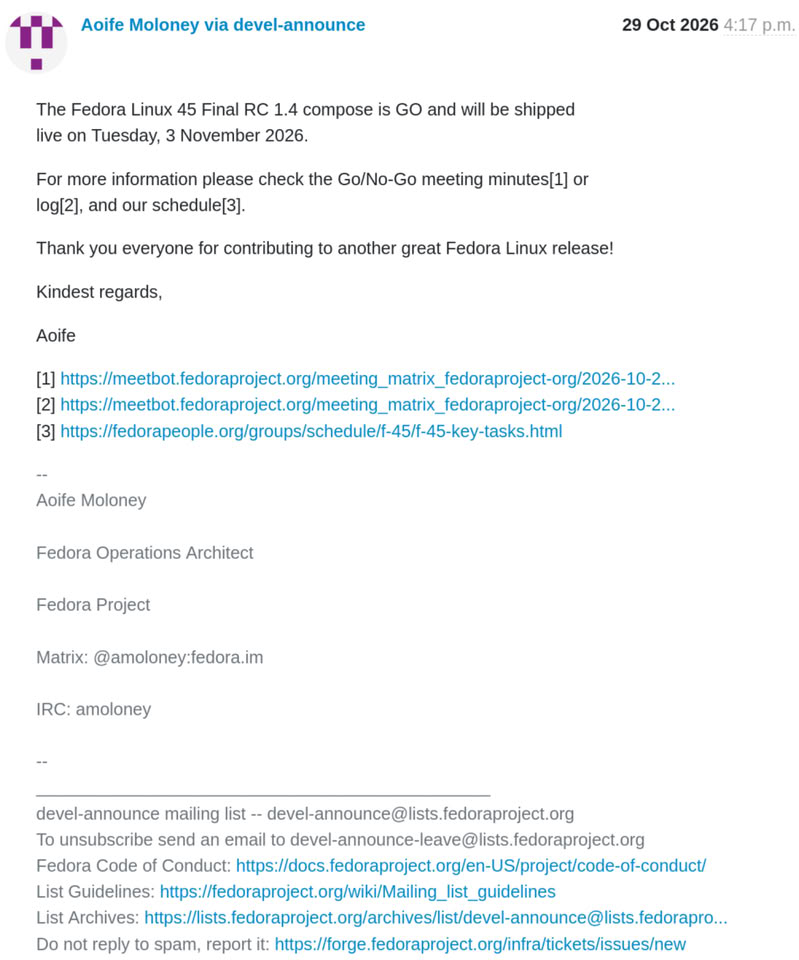
Before a final schedule was announced, Fedora 45 slipped from its intended launch dates on two consecutive occasions: the Release Candidate had not been finished, and unresolved flaws capable of blocking a release remained. The Fedora project team cleared those conditions in the past week and has now fixed the public release of the Linux distribution for Tuesday, November 3, 2026.
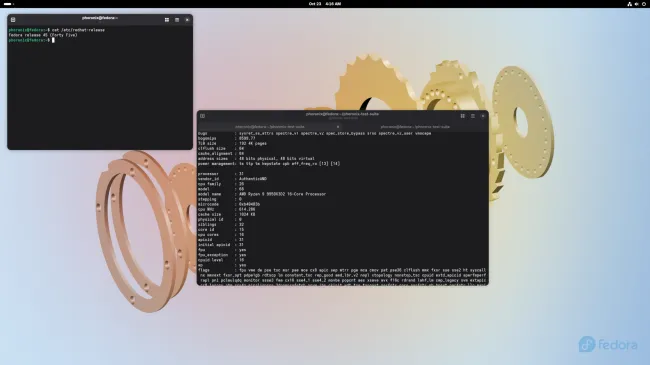
Fedora 45 Release Candidate 1.4 is currently recognized as stable. Users who want to move before the formal debut can download and install that release candidate now; it is also the image set that will be sent to mirrors when November 3 arrives.
Core system changes
KMSCON is one of the central lower-level updates in Fedora 45, as it replaces the traditional console implementation inside Linux. KMSCON, a userspace console stack built on Linux kernel mode setting, or KMS, handles terminal display through modern graphics interfaces. The shift changes how the project treats the kernel console and leaves more flexible ground for future graphics and terminal management.
At the installer stage, Anaconda has improved support for Stratis, a modern Linux storage-management option that simplifies pools, file systems and volume administration. The integration makes Stratis environments easier to configure during operating-system installation, helping setups that require advanced storage layouts.
Hardware support and security defaults
Laptops built around Qualcomm Snapdragon X processors receive targeted work in Fedora 45. As the ARM architecture Windows notebook market expands, the Linux community has been improving hardware compatibility for Qualcomm platforms; this edition continues that effort for Snapdragon X notebooks and is expected to lift their usability under Linux.
Security defaults are also tightened. Fedora 45 limits ptrace by default. ptrace is an important Linux mechanism for tracing and debugging processes: developers can inspect process state with it, but malicious programs may also abuse it. The stricter default is intended to reduce risks from unauthorized access and debugging between processes.
The distribution will also enforce package signature checks by default. Signatures help a system confirm origin and integrity, reducing the chance that malicious or tampered packages enter the installation process.
Build transparency, fault diagnosis and toolchain refresh
Fedora 45 continues to push reproducible package builds. When identical source code, build environment and parameters are used, a reproducible build should produce consistent output, supporting supply-chain verification, detection of abnormal builds and greater transparency across the distribution.
Kernel problem reporting gains the DRM Panic front end. If the Linux kernel graphics display subsystem suffers a severe failure, it presents clearer and friendlier error information than conventional kernel crash text, helping users understand the fault.
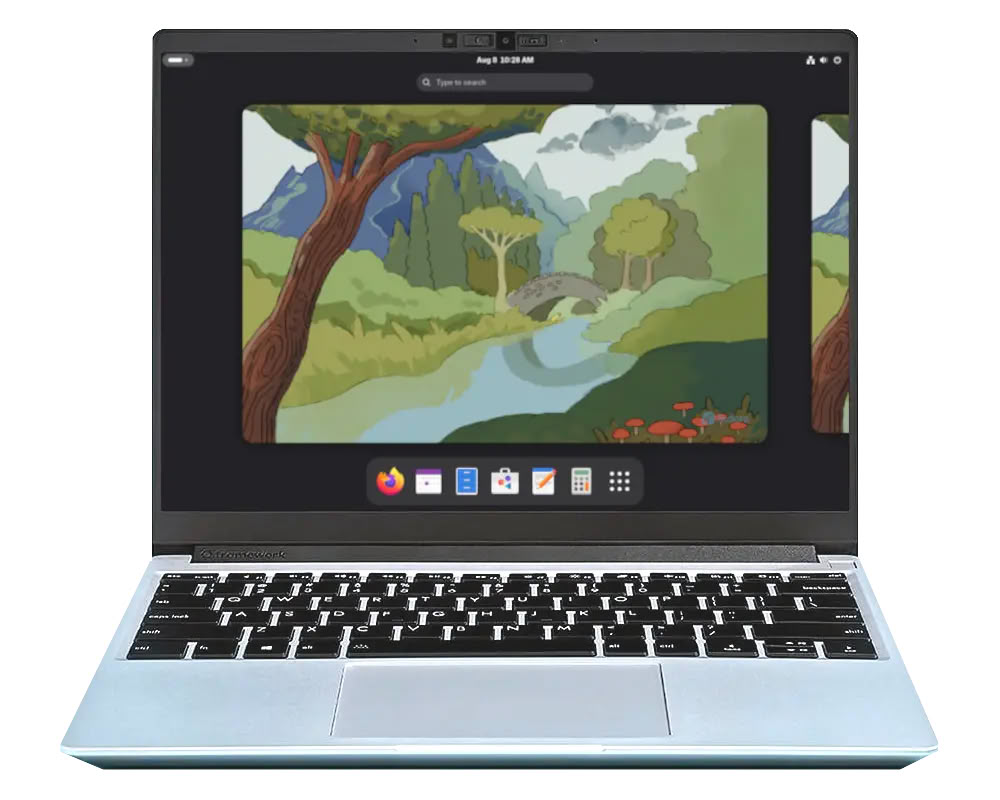
Desktop and development software receive broad updates. Fedora Workstation 45 will ship GNOME 51, along with many system base components and development tools, including Go 1.27, Python 3.15, GCC 16.2, Glibc 2.44, LLVM 23 and RPM 6.1.
GCC 16.2 and LLVM 23 bring newer compiler and toolchain support to developers; Glibc 2.44 keeps refreshing the core Linux runtime library; RPM 6.1 affects the infrastructure behind Fedora package management, with implications for package building, administration and release processes.
Direction of the release
As a whole, Fedora 45 reads as a system-level revision rather than a desktop-only update: it reshapes console handling, storage installation, Qualcomm laptop support, process-debugging guards, package verification and the surrounding development stack. Those decisions track modern Linux hardware and security expectations, and the finished edition is scheduled to reach users through Fedora's official channels on November 3.