
General Briefing on ItInsightsWorld: The Fed Holds Rates, GE Vernova Bets $9 billion on the Grid, and Startups Rush Congress for Permits
Interest rates are frozen, factories are sold out, approvals are slow, and buyers are starting to write first contracts for products that barely exist at scale. That is the entire story behind five headlines that most readers file under unrelated topics. Money is the least of today's constraints; hardware and calendar are what a household, a small business or a city actually feels — which is why the same week produced a rate hold, a $9 billion equipment purchase, a lobbying letter, a municipal financing proposal and a certificate deal.
Once you arrange the events as a chain — financing, physical kit, permission, local capital, demand signal — the noise drops away. Each link explains a bill, a job, a rent increase or a blackout. The sections below take one link at a time, then close with what to do about it.
How do the week's five storylines line up?
| Storyline | What happened | The bottleneck it exposes | Checkpoint to watch |
|---|---|---|---|
| Monetary policy | The Fed left rates untouched on Wednesday | Cost of capital for long-dated projects | Next inflation print and the Committee's own wording |
| Grid hardware | GE Vernova agreed to buy Trench Group | Sold-out high-voltage equipment factories | Deal completion at the end of next year |
| Federal permits | Founders wrote to Congress on the BAAJA bill | Legal review timelines, not technology | Senate floor consideration flagged for November |
| Municipal capital | A report urged NYC to build a green bank | Transaction costs on small public-site projects | City Hall's appetite after the university lab deal |
| Industrial materials | Meta contracted for certificates on low-carbon cement | Missing contracted demand that banks can underwrite | Whether more buyers sign multi-year deals |
Was the Wednesday rate hold good news for anyone who borrows?
Short answer: better than a hike, but no relief arrived. The Fed chose stability over stimulation, declining to move benchmark rates even though inflation readings climbed last month. The Federal Open Market Committee left the federal funds target range between 3.75% and 4%, keeping the quarter percentage-point increase it had delivered last month. "Inflation remains elevated," the statement said, adding: "The accumulation of more information will help the Committee determine the policy stance appropriate to ensure a timely return of inflation to the Committee’s 2% goal." The stated target is 2%.
Why the pause felt necessary becomes clearer when you follow the money into the grid. Reuters reported that the PCE price index rose 3.6% in September, up from 3.4% the month before and far from the year's March low of 2.3%. Economists at the Federal Reserve Bank of Dallas estimated in a March 2026 study that the data center build-out alone adds roughly 0.05 percentage points to headline PCE inflation in 2026, because surging electricity demand lifts power prices. Power-hungry construction has become a monetary-policy variable, and that is exactly why clean-energy developers — whose returns live or die on borrowing costs — watched so closely. A hold keeps long-dated project finance alive; only a cut would accelerate it.
Why did GE Vernova spend $9 billion on grid hardware?
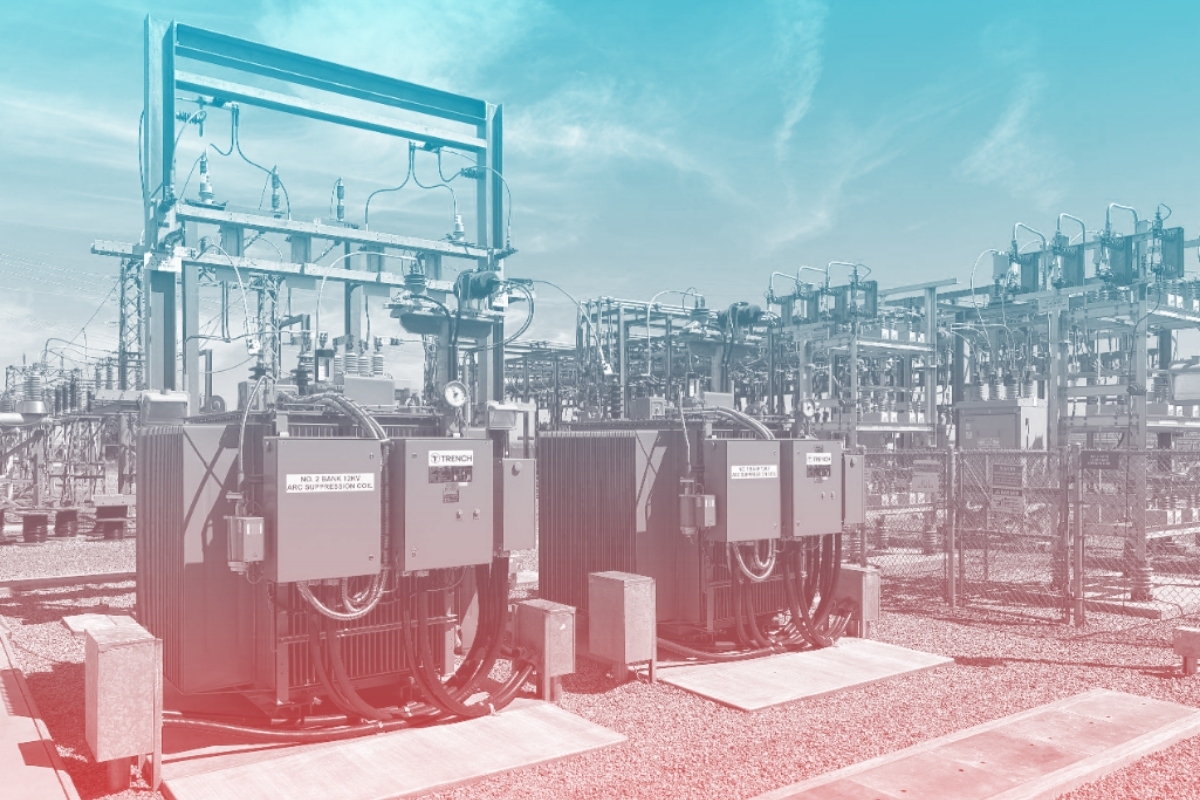
Conclusion first: this was a purchase of capacity and queue position, not of revenue. GE Vernova's gas turbine unit is booming as data centers order new generators, while its nuclear joint venture with Hitachi builds an order book for the 300-megawatt small modular reactor, the BWRX-300. The General Electric spinout announced that it would pay $9 billion for Trench Group, a global maker of high-voltage transmission equipment and grid components, with the deal expected to close at the end of next year. Reuters placed the announcement on Oct. 28 and identified the seller as investment firm Triton Partners.
"Trench’s differentiated high-voltage grid technology, strong execution, and deep customer relationships are key enablers of the modernized, resilient grid required to keep pace with the electricity supercycle," Scott Strazik said in a press release.
The commercial logic only appears once you see the supply picture. Reuters reported in July 2026 that lead times for generator step-up transformers passed 160 weeks in the first quarter of 2026, against an average of 143 weeks in 2024 — a roughly three-year wait for equipment utilities need right now. The demand pressure is not speculative: the International Energy Agency projects global data centre electricity consumption will roughly double to about 945 TWh by 2030. Owning scarce components is therefore worth a premium, and rivals read the same board: Hitachi announced a $1 billion investment in a U.S. transformer factory last year, and a former Tesla executive launched Heron Power to build transformers for data centers and renewables. In recent weeks the Department of Energy has pumped billions of dollars into upgrading the U.S. power grid.
Note the risk side, too: Barchart reported GE Vernova shares slipped on the announcement as investors focused on the cost of expansion, funded through a mix of cash and debt.
Why are founders lobbying Congress while environmental groups push back?
The core argument is speed. More than 40 clean-tech startups asked both parties in Congress to approve permitting reform legislation before the session ends. In a letter published Thursday morning, the founders said the Bipartisan American Affordability and Jobs Act "helps innovators spend more time building and less time waiting." Signatories included Fervo Energy, Quaise, Zanskar, Heirloom, Commonwealth Fusion Systems, and Realta. The measure, they wrote, "restores confidence that American projects can move from concept to construction on predictable timelines."
Opposition is equally specific. The National Association for the Advancement of Colored People issued a statement warning lawmakers against BAAJA, arguing it would "lock in dirty energy for decades" and make it "harder for people to show they are harmed by pollution." Sympathetic audiences inside the Democratic Party will not be hard to find. In remarks obtained by Jael Holzman, John Podesta, the Biden White House's senior climate policy advisor, said at a conference last week that he feared the bill could hand Trump "a loaded Howitzer."
Context that rarely travels with these headlines: the bill was drafted by a four-senator bipartisan group — Martin Heinrich and Sheldon Whitehouse on the Democratic side, Mike Lee and Shelley Moore Capito on the Republican side, according to the Senate Energy and Natural Resources Committee Democrats' announcement — and, as summarised in law-firm analyses published on JD Supra, it would set federal permitting deadlines, tighten judicial review and reshape National Environmental Policy Act procedures, with Senate floor consideration flagged for early November. A Columbia University center on global energy policy has likewise mapped how those provisions touch transmission and grid expansion. In plain terms, the argument is about who can slow a project down and for how long — a procedural question that startups now treat as existential.
Can NYC copy Connecticut's green bank?
Conclusion: possibly, because the Connecticut model is measurable rather than ideological. New York City may learn from Connecticut, the neighboring state that in 2011 created the nation's first green bank. As of this year, that agency has directed more than $3 billion into projects such as solar and storage systems on public housing. "What we saw in Connecticut was a way to get community-scale renewable projects built that markets alone were not delivering," Jason Kowalski, executive director of the Public Renewables Project, said. "With New York City, similarly, we’re looking to fill market gaps."
The bank's own public scorecard, published at ctgreenbank.com, shows the mechanism behind the pitch: $3.11 billion deployed using $545.8 million of the institution's own dollars — close to six private dollars for every public one. That arithmetic, not a subsidy argument, is what a city would be borrowing.
A report released Wednesday by the Public Renewables Project with Public Power NY and the Climate & Community Institute urges NYC to build its own version on Connecticut's experiment. "We’re not thinking about public versus private," Kowalski said. "We’re thinking of public versus nothing. We’re targeting places where nothing is getting built. This is a mechanism for building revenue-positive projects that are not being built because of the transaction costs or because there is no planning function that’s brought in to plan at any scale."
The politics may cooperate. Zohran Mamdani has embraced public venturing in territory government rarely entered since the 1990s: two weeks ago City Hall agreed to put $30 million into New York University's next-generation computing lab in return for 15% of proceeds from technology the facility develops and sells — an arrangement I described at the time as "New Dealism for quantum computing." Public financiers could also help cities fund the expensive retrofits and infrastructure upgrades needed to survive a hotter, more volatile climate. For the international frame, the European Commission this week unveiled climate rules requiring governments to name who is responsible for protecting citizens from climate disasters, Euronews reported; Brussels wants major cities prepared for as much as 3 degrees Celsius of warming above pre-industrial norms, more than double the warming already seen from El Niño.
What does buying certificates for 200,000 tons of cement achieve?
It turns a pilot plant into a financeable company. Cement accounts for roughly 8% of global heat-trapping carbon dioxide emissions — four times the output of airplanes. Decarbonising the wider economy means building a lot of structures, which paradoxically means pouring more cement and adding emissions, so the sector's startups keep engineering lower-carbon chemistries.
Meta, the Facebook owner, agreed to purchase environmental attribute certificates tied to 200,000 tons of low-carbon cement from San Jose-based Fortera — a multi-year commitment, the companies announced via Businesswire. "Agreements of this scale and duration are what unlock financing and move projects from plans to production," Ryan Gilliam, Fortera's CEO, said in a statement. "They also show the market that low-carbon cement is a product that buyers are serious about and planning around for years to come." As Katie Brigham observed in earlier reporting, clean cement has been riding the artificial intelligence wave.
Five misconceptions worth discarding
- A rate hold lowers anyone's borrowing cost. It merely stops a project model from being re-cut; pricing stays where the Committee left it.
- An acquisition adds products next quarter. This one completes at the end of next year, and the value is queue position for scarce gear.
- Permitting reform is left versus right. Its drafters are bipartisan, while the objection is about who must prove harm — a procedural dispute.
- A green bank hands out subsidies. The Connecticut record is about attracting private money alongside public dollars.
- Buying certificates is greenwashing. It is an early-revenue instrument for plants that cannot get loans without contracted demand.
Where the week's storm and mineral headlines fit
They mark the two ends of the same system: physical risk and input risk. Current conditions: the West Coast may be struck by a Pineapple Express — a powerful atmospheric river, not the marijuana strain — while the Southwest faces heavy rain on Halloween. In the Bering Sea, remnant energy from Typhoon Champi is powering a severe storm, and four-foot waves are lapping Alaska's shore. In India, an evacuation of nearly 200,000 people failed to keep Cyclone Arnab from killing at least nine and ruining tens of thousands of acres of crops in Andhra Pradesh.
On the input side, the tail story is a Tajikistan comparison. Antimony, a lustrous silvery-gray metalloid used in solar panel glass and many battery chemistries, is something the U.S. overwhelmingly imports from China and Tajikistan. That dependency may narrow: Alaska's Department of Natural Resource granted final approvals on Wednesday to startup Nova Minerals, a project carrying nearly $45 million from the Department of Defense and targeting first production next year. Nova's own disclosures describe that package as Defense Production Act Title III funding routed to its U.S. subsidiary, Alaska Range Resources — evidence that critical-mineral policy is now written into balance sheets, a shift Mining Technology has flagged.
What should you actually do with all this?
A reader's checklist
- Homeowners and renters: read "Inflation remains elevated" as a planning condition. Before assuming private loans are your only door, check local electrification and resilience grants, because public leverage changes what banks will lend against.
- Small business owners: if your costs track power or grid upgrades, ask suppliers for written equipment lead-time estimates; three-year queues, not price lists, are the binding constraint.
- Investors: separate announced deals from closings — this transaction lands at the end of next year, and the share price already repriced the spending.
- Civic readers: follow the November permitting calendar and any NYC green-bank ordinance; both are procedural stories with everyday price consequences.
FAQ: what readers keep asking
Why would The Fed hold rather than cut when inflation is high?
Because easing into rising price readings risks re-anchoring expectations. The Committee's own language defers the judgment: "The accumulation of more information will help the Committee determine the policy stance appropriate to ensure a timely return of inflation to the Committee’s 2% goal."
Why buy a component supplier instead of simply ordering more equipment?
Because orders cannot beat queues. With step-up transformer waits above 160 weeks, owning the factory is the dependable way to schedule capacity for the electricity supercycle Strazik described.
Is a city-owned green bank a subsidy program?
Not by design. The Connecticut template is public capital that sits behind private money; Kowalski's framing — "We’re thinking of public versus nothing" — targets projects that never appear because transaction costs swallow them.
Do cement certificates replace actual emissions cuts?
They register demand for a lower-carbon product at a specific plant, which lenders then accept as contracted revenue. They are a financing bridge, as Ryan Gilliam's statement emphasises, not a substitute for building clean capacity.
Should ordinary households expect cheaper power soon?
Only where new supply and upgraded lines actually energise. Grid investment and permitting speed set the timing — and heat waves and storms, as this week's weather shows, can push bills the other way.
Bottom line for ItInsightsWorld readers
Looked at as one machine, the week delivered a legible sequence: financing on hold, hardware sold out, approvals contested, local capital being reinvented, and the first firm purchase orders arriving for materials that are not yet mainstream. For a general audience, the practical lesson is the order of operations — money, machines, permission, then proof of demand. Master that sequence and you can read the next round of energy, infrastructure and climate headlines without a specialist's vocabulary.
Edited and published by James Hartley, IT Insights. Corrections, tips and reader questions: contact@itinsights.com.
Reference sources
- Reuters on the GE Vernova–Trench Group agreement: https://www.reuters.com/legal/transactional/ge-vernova-buy-trench-group-triton-partners-9-billion-2026-10-28/
- Reuters on U.S. grid-equipment shortages and transformer lead times: https://www.reuters.com/business/energy/us-power-companies-scramble-secure-equipment-surging-data-center-demand-strains-2026-07-09/
- International Energy Agency, Energy and AI executive summary: https://www.iea.org/reports/energy-and-ai/executive-summary
- Dallas Fed research on data centers and inflation: https://www.dallasfed.org/research/economics/2026/0305-kay-datacenters
- Connecticut Green Bank strategy and impact disclosures: https://www.ctgreenbank.com/strategy-impact/
- Senate Energy and Natural Resources Democrats on the Bipartisan American Affordability and Jobs Act: https://www.energy.senate.gov/press/dem/heinrich-lee-capito-and-whitehouse-introduce-bipartisan-american-affordability-and-jobs-act-of-2026/
- Columbia Center on Global Energy Policy analysis of the permitting bill: https://www.energypolicy.columbia.edu/publications/what-the-bipartisan-american-affordability-and-jobs-act-means-for-the-u-s-energy-system/
- Businesswire on the Fortera–Meta certificate agreement: https://www.businesswire.com/news/home/20261029381188/en/Fortera-Meta-Sign-Multi-Year-Environmental-Attribute-Certificate-EAC-Purchase-Agreement-for-Low-Carbon-Cement
- Nova Minerals disclosure on Defense Production Act Title III funding: https://novaminerals.com.au/wp-content/uploads/2025/10/Print-U.S.-Department-of-War-Awards-43.4M-to-Alaska-Range-Resources-to-Secure-Antimony-Supply.pdf
- Barchart on the share-price reaction to the acquisition: https://www.barchart.com/story/news/8511073/a-9-billion-reason-why-ge-vernova-stock-is-down-today