
ItInsightsWorld: EU Maps Pan-Arctic Subsea Cable Route to Link Greenland with Europe
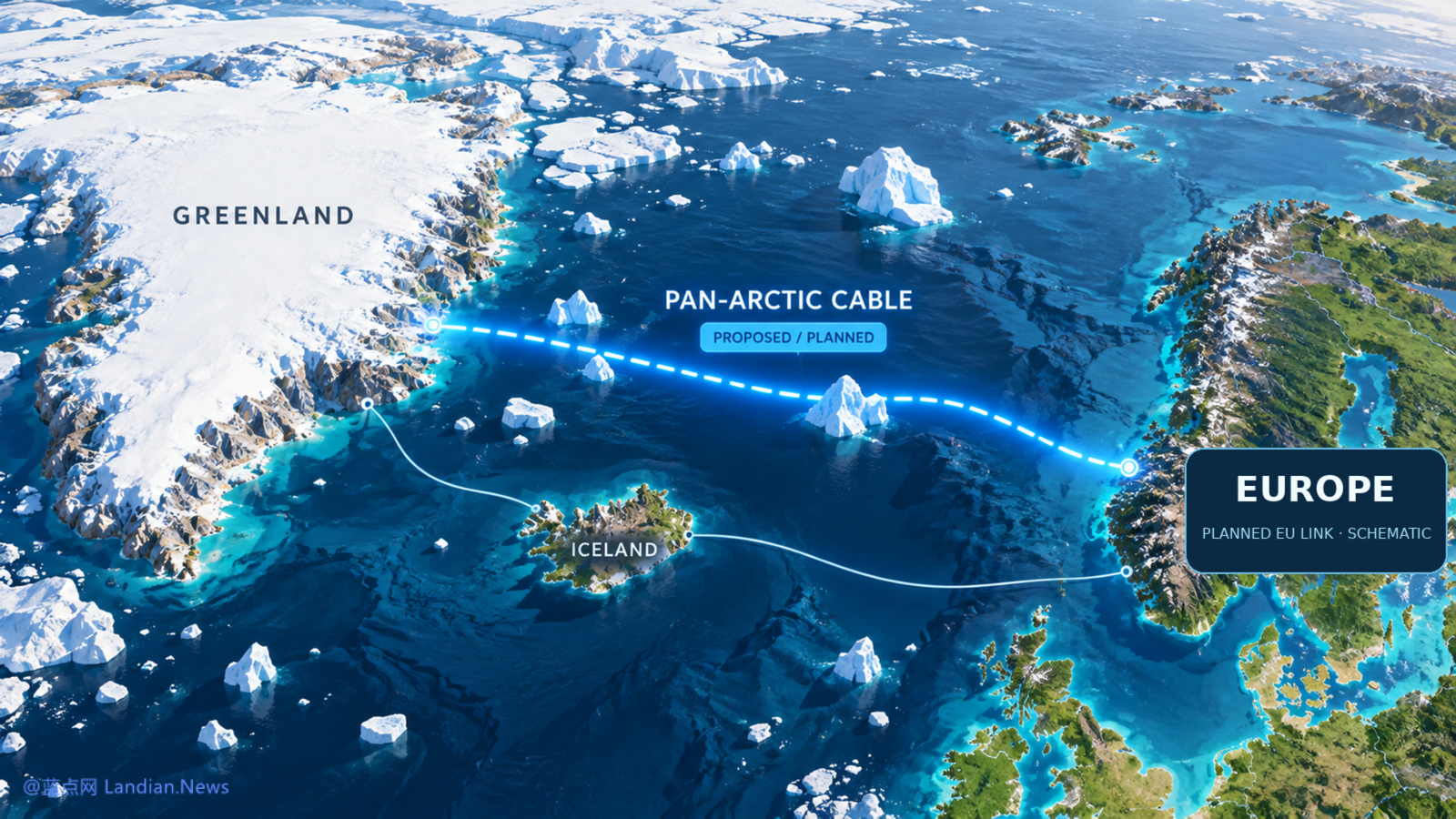
Recent updates to the European Union’s Arctic strategy identify a direct submarine communications cable between the EU and the island of Greenland as a priority. The plan centers on a Pan-Arctic cable that would link Greenland with Europe, strengthen digital connectivity, and increase the safety and resilience of European communications infrastructure.
Greenland is already served by international submarine cables. The Greenland Connect cable has been in operation since 2009 and runs from Newfoundland, Canada, to Greenland, then to Iceland, where onward connections reach continental Europe. Because Iceland is not an EU member state, the proposed Pan-Arctic cable is intended to provide a direct route to the EU, giving Greenland additional routing options and helping maintain communications if existing systems fail or undergo maintenance.
In the strategy, the EU says it will work with Denmark and Greenland to support a secure, reliable direct cable. Longer-term planning considers extending the system toward Canada and then toward the East Asian region, including Japan and South Korea, with onward reach to the Southeast Asian region. If completed, those routes would connect the EU with East Asia and Southeast Asia without having to pass through the Suez Canal or the Middle East and without relying on the United States for links to those regions.
The project also has to contend with difficult environmental conditions. Sea ice, icebergs, and short navigable seasons can complicate seabed surveys, cable installation, and maintenance, while fault response may require more time for repair ships to arrive. To address these constraints, the EU plans to support an Arctic submarine cable center focused on monitoring, protection, and repair for submarine communications in the North Atlantic and the Arctic region.
The European Commission states that feasibility work for the Pan-Arctic route is proceeding, with the exact alignment, financing structure, and construction schedule to be clarified as planning develops.