
Warren Buffett's 48-Year No-Water Claim: A Practical Guide to Separating Celebrity Habit From Real Health Advice
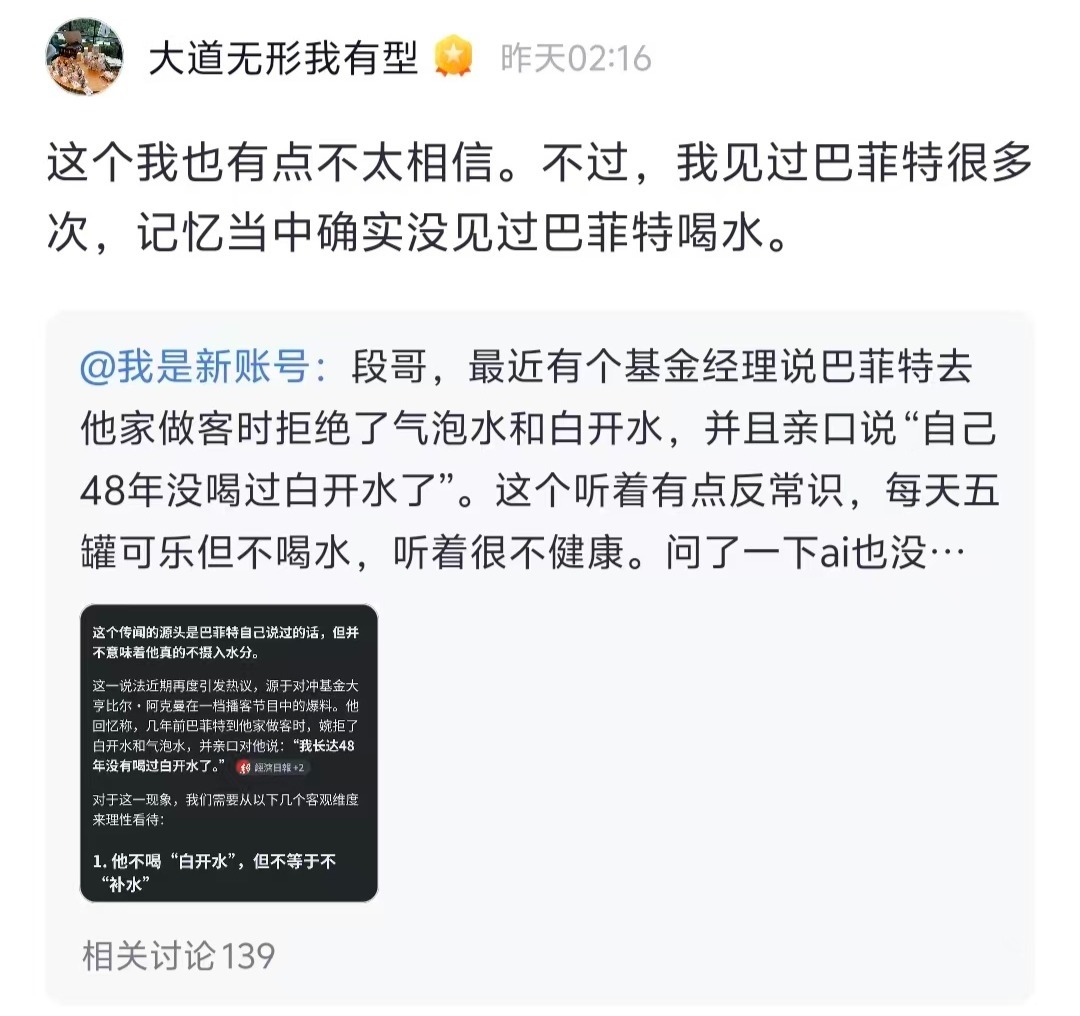
Warren Buffett's report that he had not drunk water for 48 years is a celebrity anecdote, not a health protocol. On November 4, Duan Yongping said he also find it a bit hard to believe, yet has never seen Buffett drink water. Later, he added that Buffett held Coke but took only a sip. Readers should separate story, nutrition facts, and personal hydration needs.
What exactly did the Buffett water story claim?
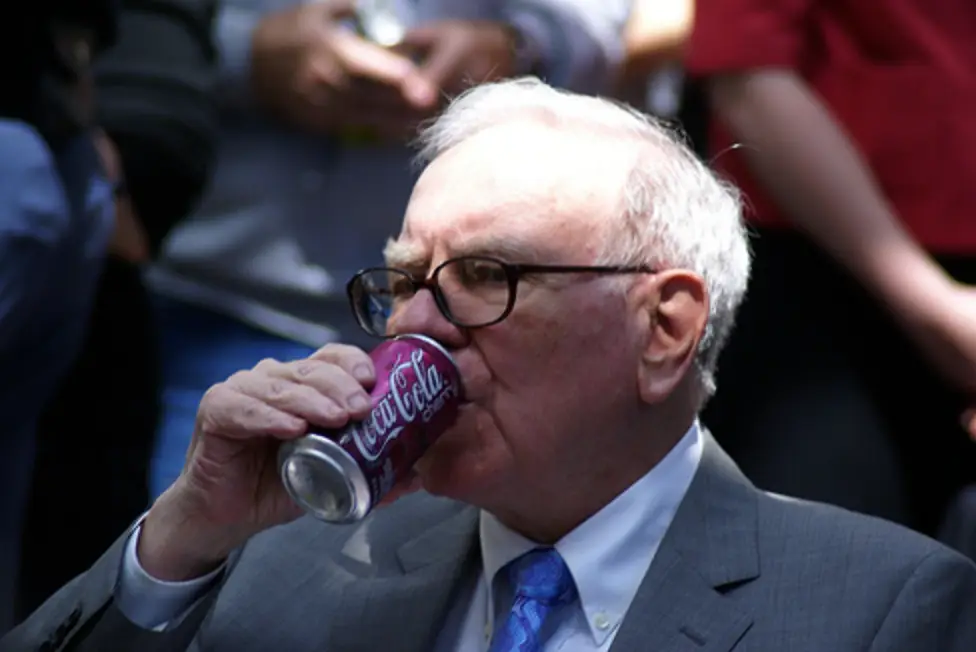
The story starts with Bill Ackman, not a clinic or a study. Ackman said he hosted Buffett years ago and prepared Cherry Coke, the drink Buffett has long favored. At the table, Ackman offered plain or sparkling water. The 96-year-old Buffett declined both and reportedly answered: "Bill, I have not drunk water for 48 years."
That line spread because it is short, extreme and attached to a famous person. But the usable evidence is narrower: one observer's dinner conversation. It does not include a doctor's note, a hydration test or a public record of every drink Buffett took over decades.
What did Duan Yongping add after seeing the claim?
Duan Yongping gave a more careful answer. On November 4, he said: "I also find it a bit hard to believe." At the same time, he said: "I have met Buffett many times, and in my memory I have indeed never seen him drink water."
Hours later, he added context that matters for ordinary readers: in his sight, Buffett was often holding Coke, but did not consume much of it. Duan described the scene as "it seems more like a small sip." The result is not a contradiction, but a limit: people can hold a favorite drink for habit, taste or ceremony without drinking the amount the headline suggests.
Why is the 48-year number easy to overread?
Buffett's own words help separate fact from meme. In 2015, he said that if he eats 2,700 calories a day, one quarter is Coca-Cola. He also joked that his body seemed one quarter Coke. Public reports from the same interview added that he described at least five 12-ounce servings.
That is calorie arithmetic, not proof that water can be replaced by soda. Beverage calories are easy to count because labels list them. Hydration is messier: people take in fluid from food, drinks, exercise conditions, age, climate and health status. A long-lived investor's habit is not a protocol for the public.
A second source of confusion is the repeated use of the number 48. Business Insider reported that during Berkshire Hathaway's 1986 meeting, Buffett joked that after 48 years of allegiance to Pepsi he was switching to Cherry Coke. That brand-loyalty line is not the same as the water claim, but both are easy to fuse into one legend.
Does sugar data change how the story should be read?
Yes. The claim becomes less mysterious and more practical when labels and guidance are placed beside it. The Coca-Cola company's US nutrition FAQ says a 12-ounce regular Coca-Cola has 140 calories and 39 grams of sugar. The American Heart Association recommends most men limit added sugar to no more than 150 calories, or about 36 grams per day, and most women to no more than 100 calories, about 24 grams per day.
With those numbers, five 12-ounce regular colas would be about 700 calories and 195 grams of sugar. That comparison does not judge Buffett's lifespan or personal choices. It gives readers a way to test a viral line: if a habit is built on a sugary drink, sugar intake may be a clearer issue than the number of years someone claims to avoid water.
How should readers evaluate any viral diet anecdote?
- Find the first speaker. Ask who said it and whether the person witnessed the habit or merely repeated it. Ackman's dinner story is primary for the quote; Duan's memory is a second observer.
- Separate words from inference. "Never seen him drink water" is different from "he never drinks water" and very different from "water is unnecessary."
- Check the arithmetic before accepting the headline. If someone says 2,700 calories a day and one quarter comes from soda, compare that with food-label calories, not with vague impressions.
- Look for guidance from health organizations. Labels and public-health bodies give baselines that can be applied to many people, not one famous person.
- Think about the boring variables. Sleep, movement, access to care, family history, medication, diet quality and work stress usually matter more than a single drink.
- Translate the story into a small action. Do not copy extreme celebrity behavior. Use the story to audit your own routine with a clear checklist.
Common misconceptions: what the story does not prove
| Claim element | What it actually supports | What readers should not infer |
|---|---|---|
| "48 years without water" | A striking quote attributed to Buffett in Ackman's account. | That humans can survive without water or that plain water is useless. |
| "Never seen him drink water" | Duan Yongping's personal observation over limited settings. | A complete record of Buffett's daily fluid intake. |
| "One quarter of calories from Coke" | Buffett's 2015 calorie estimate. | A recommended diet or evidence that soda has health benefits. |
| "Cherry Coke and long life" | A memorable celebrity preference. | Cause and effect between cola and lifespan. |
How much fluid does a typical adult need?
Mayo Clinic's general guidance says healthy adults often need about 2.7 liters, or 11.5 cups, for women and 3.7 liters, or 15.5 cups, for men from all fluids and food. These are baseline ranges, not prescriptions. Pregnancy, illness, exercise, heat, age and medications can shift needs. This is why a celebrity habit should never be treated as a medical instruction.
FAQ: the questions readers actually ask
Did Warren Buffett really say he had not drunk water for 48 years?
The claim comes from Bill Ackman's podcast account of a dinner conversation, in which the 96-year-old Buffett reportedly answered: "Bill, I have not drunk water for 48 years." Duan Yongping, who has met Buffett multiple times, said he also find it a bit hard to believe, while noting he had not seen him drink water. The practical takeaway is to treat the quote as a personal anecdote, not a verified health statement.
Is the "one quarter" comment the same as saying a quarter of his body is water?
No. In 2015, Buffett linked the figure to calories: if he eats 2,700 calories a day, one quarter comes from Coca-Cola. He also joked about his body being one quarter Coke. The more useful reading is that he was describing a large share of daily calories coming from a sweetened beverage.
Should ordinary people switch from water to diet soda or regular soda?
No. Diet or zero-sugar products may reduce calories compared with regular soda, but they are not a replacement for hydration guidance from health institutions. If a person enjoys soda, the safer approach is to control portion size, check label sugar, consider drinking occasions and keep plain water or low-sugar fluids as the everyday baseline.
What is the most useful lesson from this story?
Use it as a media-literacy exercise: identify the source, limit the claim, compare nutrition labels and guidance, then apply the lesson to your own risk profile. A viral diet story is not a personal prescription.
Action checklist: what to do after reading stories like this
- Write down the exact claim: who said it, when, where and how many people saw it.
- Ask whether the claim is a quote, an observation, a medical finding or an opinion.
- Look up one official nutrition fact, such as calories and sugar per serving.
- Compare the claim with one health-guidance number, such as added-sugar limits or total fluid ranges.
- Identify your own risk factors: dental health, blood sugar, weight, kidney issues, medication or high caffeine sensitivity.
- Choose a small change, such as one soda per day instead of several, one water bottle with lunch, or swapping a large size for a smaller one.
- Recheck the habit after two weeks instead of making a permanent lifestyle change from one headline.
References
- Business Insider, Warren Buffett water anecdote and 1986 Cherry Coke report
- Fortune, 2015 Buffett interview on 2,700 calories and five 12-ounce Cokes
- Coca-Cola, sugar and calorie content for 12-ounce and 16-ounce servings
- American Heart Association, added-sugar limits for men and women
- Mayo Clinic, general fluid intake ranges for healthy adults
- Phoenix Tech, Duan Yongping comments dated November 4