
ItInsightsWorld General Guide: Mercedes-Benz E-Class L 2026 Launches With Doubao AI Cockpit
A premium sedan can change in three places: the chassis, the powertrain or the software. The 2026 model-year Mercedes-Benz long-wheelbase E-Class L is being discussed today mainly because of the third. On November 2, the vehicle went on sale with a starting price of RMB 423,800, and its headline upgrade is a new AI smart cockpit led and independently developed by the Mercedes-Benz China R&D team. Inside the cockpit, the car's virtual assistant is connected to the Doubao AI large model, while voiceprint recognition moves the cabin closer to a personalized device than a traditional dashboard.
For ItInsightsWorld readers, the useful takeaway is not "a luxury car added AI." The more relevant insight is that cockpit software is becoming a purchase-decision layer. When a system wakes in 0.25 seconds, stores up to 6 voiceprints, uses 11 trigger types and 15 action types, and renders Amap navigation at 60 frames per second, the car begins behaving like a connected assistant that follows household routines.
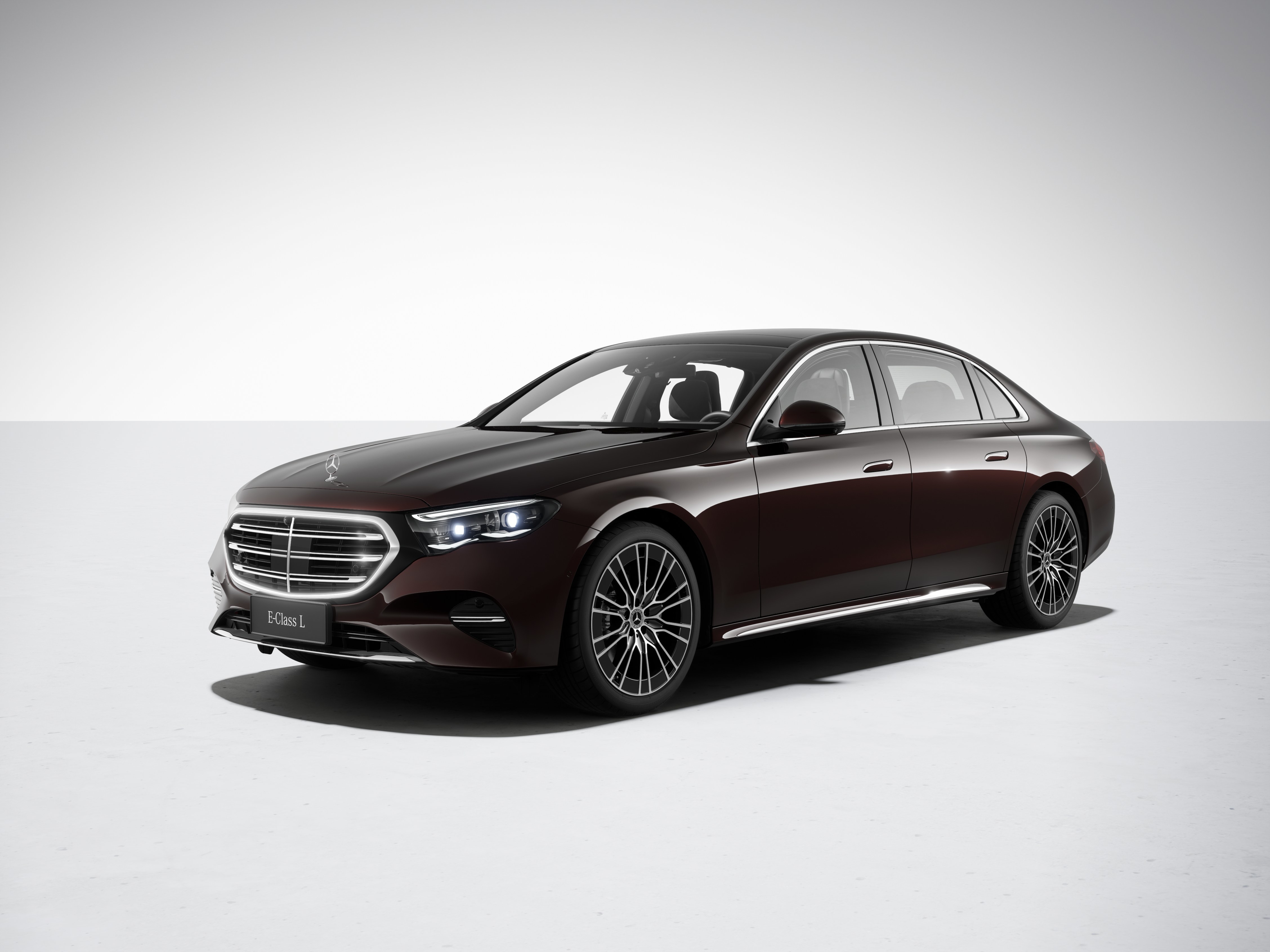
Why this launch matters beyond the badge
Mercedes says the upgraded assistant can operate buttons and text shown on the screen. It can also open or close third-party multimedia applications and search or select audio and video content. That makes the interaction model broader than "call a map" or "change the temperature." The assistant is intended to act as a remote control for the user interface.
The published numbers make the idea more concrete. A wake-up speed as fast as 0.25 seconds reduces the delay between saying a request and seeing a response. Multi-zone interaction recognition with localization accuracy at 98% helps the system distinguish which occupant is speaking. In a family car, those features reduce friction. In an executive sedan, they reduce the need to stop and tap through menus during a short commute.
This also reflects a wider shift in China's automotive market: cockpit intelligence is no longer an optional demo feature. Recent industry analyses have placed intelligent cockpit penetration above 73%, and voice interaction, app connectivity and over-the-air updates are becoming baseline expectations. The E-Class L launch is therefore less a one-off technology story than a sign of how mainstream software priorities are becoming in premium cars.
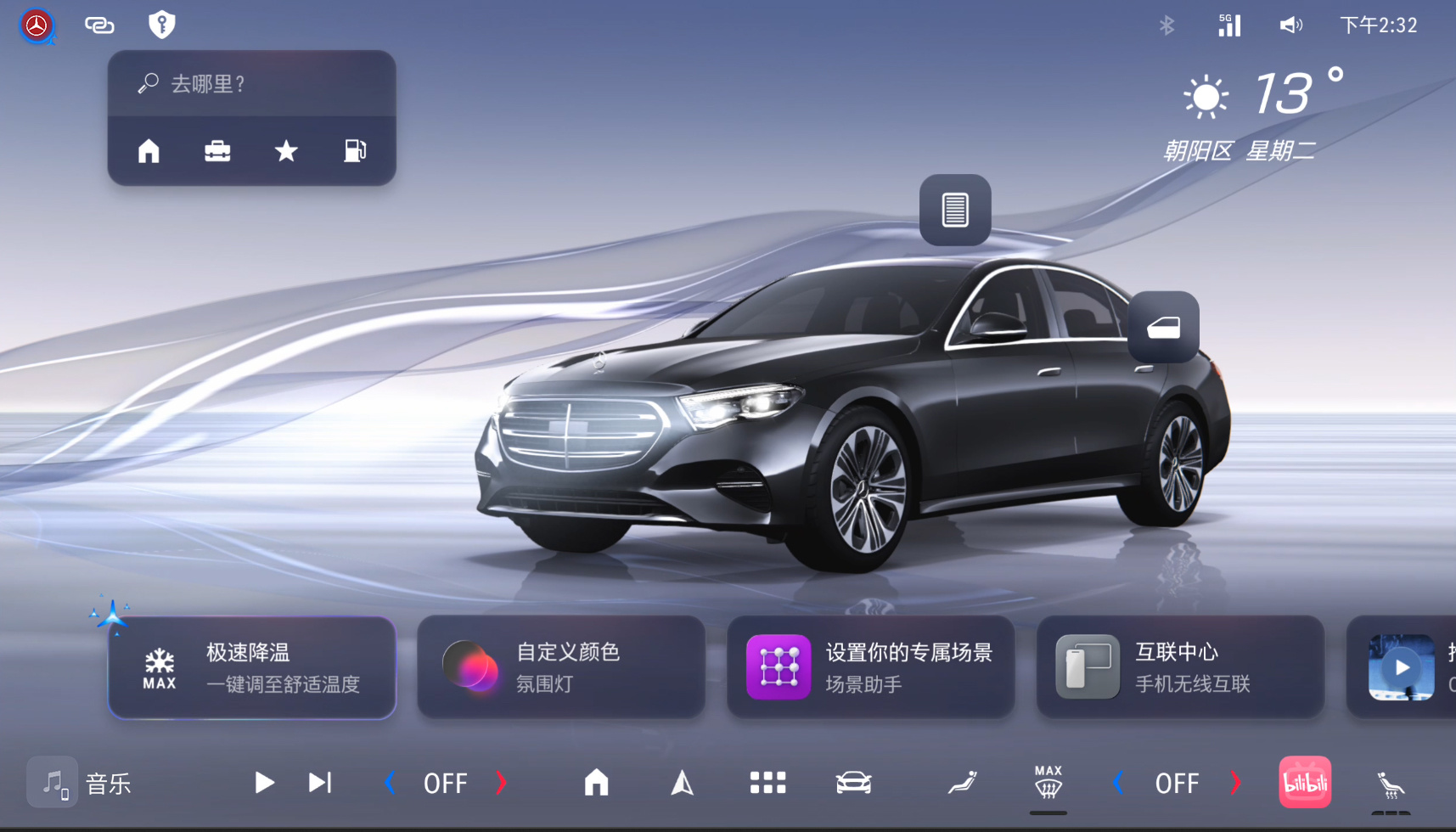
Voiceprint recognition: when a car learns your household
The system can store voiceprints for up to 6 users under one account. The assistant then builds a memory dashboard for each recognized person, recording preferences and combining them with weather and time information to offer recommendations. In practical terms, a driver can expect the car to separate distinct tastes: one person may prefer a specific playlist, another a cabin temperature, and another a recurring weekend route.
This is where the Doubao AI large model becomes more than a branding line. Large models help conversational assistants understand intent, maintain context and generate suggestions. In a car, the value should be measured by how many unnecessary taps it saves, not by how many parameters it has. If voice, app operation, memory and scene automation reduce repeated setup, the cockpit feels less like a menu and more like a shared household tool.
Scene assistant and interface control
The new cockpit includes a scene assistant that allows users to combine 11 trigger types with 15 action types. A trigger might be a time, location or vehicle condition; an action might adjust features inside the cabin. The design gives owners a way to create routines instead of repeating single commands.
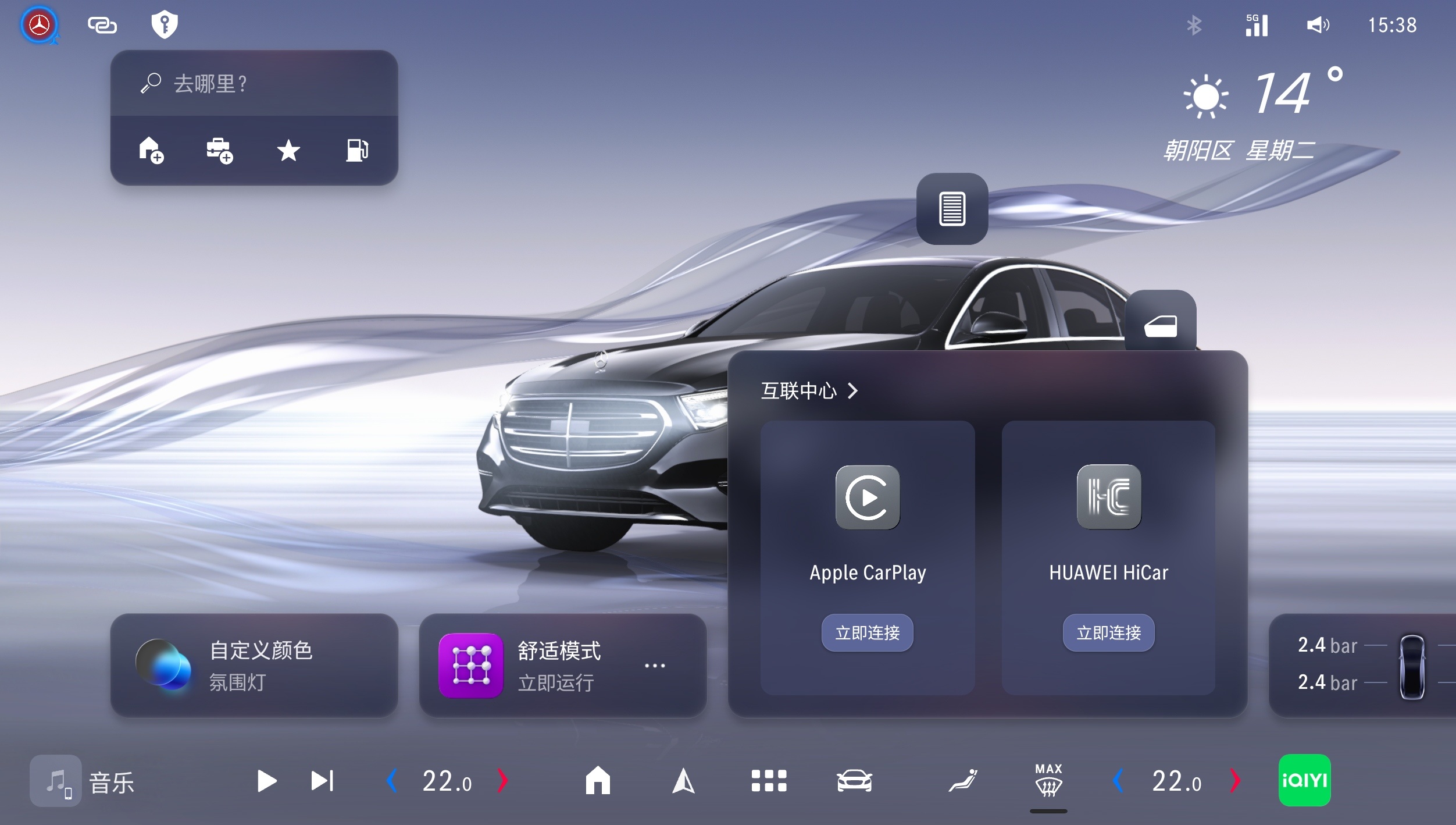
The interface also supports a 3D vehicle model that shows the status of doors, windows and other elements, and can directly control windows and sunshades. Navigation bar cards and shortcut cards can be rearranged, while multimedia and phone calls can appear in small windows. The pattern is familiar from phones and tablets: keep the map visible, keep common tools close, and let users choose what deserves attention.
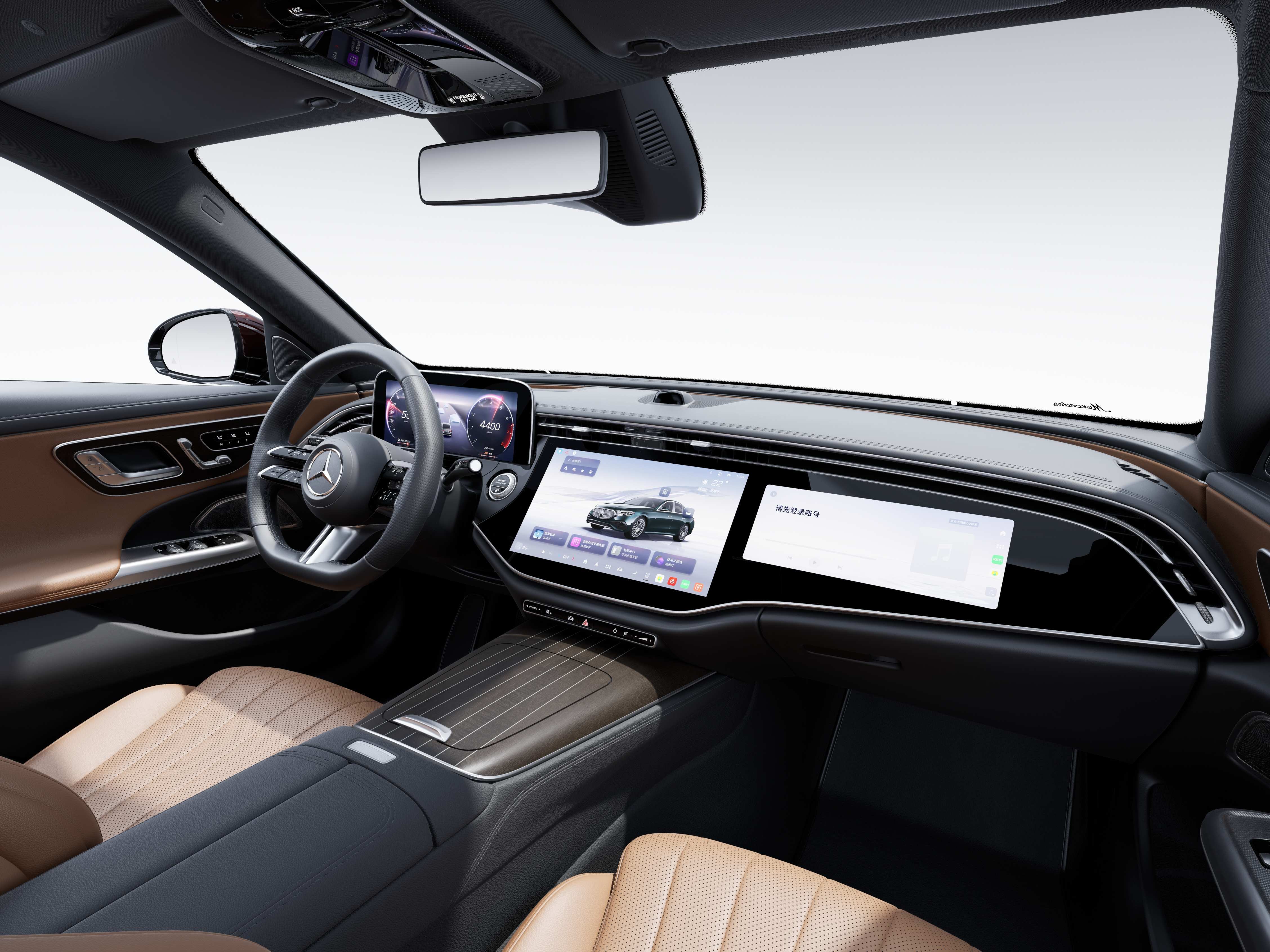
Huawei HiCar, Xiaoyi and smoother navigation
Phone connectivity adds Huawei HiCar. For supported phones, once the first pairing is complete, the system can reconnect automatically when the driver enters the car next time. Users can also use the Xiaoyi voice assistant to operate HiCar applications.
Mercedes also says the in-car Amap navigation display has been increased to 60 frames per second. Map rendering is not about flashy visuals. Higher frame rates make zooming, panning and route updates feel smoother, especially when the driver is checking intersections or changing destinations. For daily use, that is one of the easier upgrades to notice.
Three model choices and how to read the prices
The 2026 long-wheelbase E-Class is offered in three models. The entry point is the E 300 L Huiyin Edition at RMB 423,800. The Liujin Edition is priced at RMB 466,800, and the Xingbo Edition reaches RMB 509,800.
| Model | Price | Best way to interpret it |
|---|---|---|
| E 300 L Huiyin Edition | RMB 423,800 | Entry point for buyers who want the new AI smart cockpit and long-wheelbase positioning without moving to a higher trim. |
| Liujin Edition | RMB 466,800 | Middle choice for buyers who prioritize equipment balance and are willing to pay more than the starting price for additional refinement. |
| Xingbo Edition | RMB 509,800 | Upper version for buyers who treat the car as a mobile office or family flagship. |
Common misconceptions
- It is not an autonomous-driving announcement. The update focuses on cockpit interaction, assistant features and vehicle software.
- Huawei HiCar does not imply every phone will work equally well. The practical experience depends on supported phones and completed pairing.
- Voiceprint recognition is convenient, but a household must decide whose preferences are stored and whose recommendations should be trusted.
- 60 frames per second navigation improves visual smoothness, not automatically route quality or traffic information.
- The cockpit is not limited to gasoline use. Mercedes says the system will extend to more fuel-powered and pure-electric models.
Checklist for readers evaluating the upgrade
- Confirm the exact trim: there are three models, starting at RMB 423,800.
- Test the assistant with real tasks: open a third-party app, search audio, adjust a window and call navigation.
- Set up voiceprints gradually and review each person's memory dashboard.
- Build one routine first, using the 11 trigger types and 15 action types, instead of trying to automate everything on day one.
- If you use Huawei devices, verify HiCar automatic reconnection after the first pairing.
- Ask about OTA schedule: the new AI smart cockpit is described as supporting quarterly major-version upgrades.
FAQ: the launch in quick answers
When did it launch?
The 2026 model-year Mercedes-Benz long-wheelbase E-Class L went on sale today, November 2.
What is the starting price?
The starting price is RMB 423,800.
What AI system is inside?
The virtual assistant is connected to the Doubao AI large model, while the cockpit is called the new AI smart cockpit.
How many voiceprints can be saved?
A single account can store up to 6 users' voiceprints.
What phone connectivity was added?
Huawei HiCar was added, and the Xiaoyi voice assistant can operate HiCar apps.
Final judgment
The launch gives luxury buyers a clearer reason to compare cockpit software alongside comfort and prestige. The strongest case is practical: faster voice response, multi-seat recognition, household memory, scene automation, HiCar connectivity and smoother navigation. The weaker case would be buying only for the idea of a large model. In a car, AI should be judged by how much it reduces taps, how accurately it recognizes voices and whether its updates make the cabin smarter over time. For readers who value those outcomes, the 2026 model-year long-wheelbase E-Class L is worth testing as a software-led purchase decision, not merely a trim-price decision.