
Reaper vs. Herbrich: Can a Dorm-Built 491 mph Drone Turn into a Real Record or a $800,000 Boom Prize?
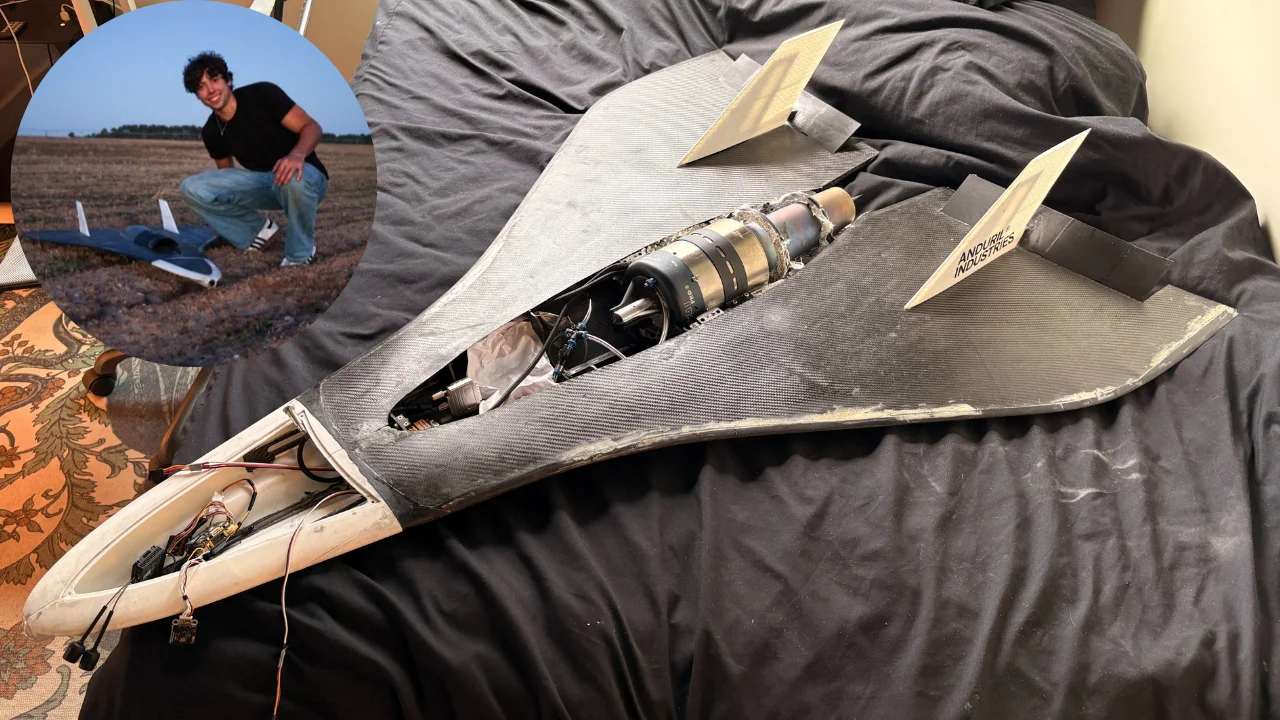
The quickest way to judge this story is to separate three scoreboards: certified record books, self-reported speed tests, and prize-competition requirements. Georgia Institute of Technology aerospace student Tomas Salvo says he assembled Reaper in his dorm and flew it at 491 mph (about 790 km/h) while carrying a 1.2 kg payload. If verified, that number would unofficially beat Niels Herbrich's 465.544 mph (749.221 km/h), a mark set on August 23, 2017, in Rothenburg, Germany, and long protected by Guinness World Records. The bigger editorial question is what kind of win this is: a record that needs proof, or an amateur engineering run aimed at the US$800,000 Boom Prize.
Read the claim as a comparison, not a finished title
Reaper's 491 mph result is still a project figure. The previous benchmark sits in the Guinness World Records category for fastest remote-controlled jet-powered model aircraft; the listing identifies Herbrich, from Germany, and the Rothenburg date. That distinction matters because Guinness certification is a process, not a press-release shortcut. Until Salvo's number passes that process, the honest phrase remains "unofficial record attempt", even though the claimed speed is above the certified baseline. For readers, the practical test is simple: Is the evidence independent, is the measurement method clear, and does the aircraft meet the rule category?
The design choice: light, stiff, and compact enough to move the engine forward
Salvo's package is not just a small fuselage. The project took about US$13,000 and 5 months, and the airframe uses a custom-molded carbon-fiber shell over laser-cut internal structures. The power plant is a 250 N jet engine with a 3D-printed titanium nozzle. The titanium nozzle lets the engine sit farther forward, improving center of gravity placement without nose ballast, while total weight lands at 11 lb (about 5 kg). At the claimed 491 mph speed, the published run description says Reaper can hold that speed for 4 minutes on a full tank, climb to 6500 ft in 20 seconds, and cover 31 miles at full speed. Those are not record-book details alone; they are mission-planning numbers that decide whether a speed attempt is repeatable.
Compare Reaper with the certified baseline and the rival jet drone
| Entry | What it represents | Key numbers | What still needs proof |
|---|---|---|---|
| Herbrich certified baseline | The record Reaper is measured against | 465.544 mph (749.221 km/h), August 23, 2017, Rothenburg, Germany, 9 years old | Already certified by Guinness World Records; serves as the official comparison line |
| Salvo Reaper | A dorm-assembled challenger | 491 mph (about 790 km/h), 1.2 kg payload, 11 lb (about 5 kg), about US$13,000, 5 months, 250 N engine | Needs independent verification if the goal is a Guinness record; also needs proof it can be flown repeatedly, not just once |
| Boom Prize target | A different contest with stricter mission logic | Mach 1, about 767 mph, at least 5 seconds, one aircraft, two flights in one day, US$800,000 (about 5.32 million yuan) | Reaper is still 276 mph short on speed; funding source, safe airspace, data capture, and rule compliance remain open questions |
| Mach Initiative Kingchaser | A rival path using more thrust but weaker first-run evidence | 300 N, 50 N more than Reaper, 273 mph on first flight, 550 mph as an ideal estimate | Needs a better launch environment to confirm the estimate; it is also not eligible for the Boom Prize because the team is outside the United States, though it can pursue Guinness |
Where the Boom Prize changes the contest
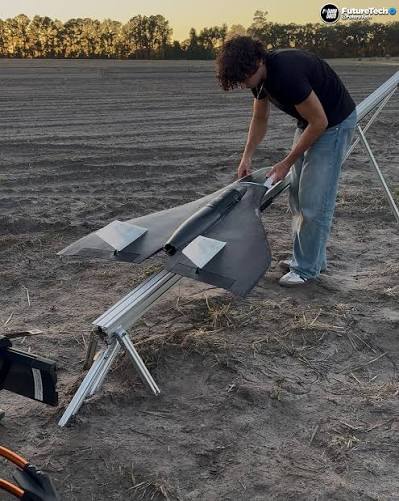
The Boom Prize is not simply "go fast once". The public Boom Prize page frames the task as a remote piloted, air-breathing airplane that exceeds Mach 1 in level flight for at least 5 seconds, lands safely, and then repeats the feat using one aircraft, with two flights completed in one day. The prize is US$800,000, split as US$750,000 cash and US$50,000 in Boom stock, and the contest was established by Boom Supersonic CEO Blake Scholl for amateur entrants rather than corporate or government-backed programs. Independent coverage also shows why logistics matter: Flying Mag reported that entrants choose the test location, while Aviation Week described the challenge as seeking a U.S. amateur team. That means the path to the prize is partly about the aircraft, but also about eligibility, funding source, safe airspace, data capture, and repeatable ground operations.
Common misconceptions readers should avoid
- Myth: 491 mph automatically equals a world record. If the claimed 491 mph speed is confirmed, it exceeds the 465.544 mph certified figure, but it is still unofficial until Guinness certification is completed.
- Myth: a bigger engine guarantees a faster RC jet. Kingchaser uses 300 N, 50 N more than Reaper's 250 N, yet its first flight produced only 273 mph because the acceleration distance was insufficient; the 550 mph figure remains an estimate under ideal conditions.
- Myth: the Boom Prize is just a speed race. It requires Mach 1 at about 767 mph, sustained for at least 5 seconds, landing safely, and completing two flights in one day with one aircraft. The 276 mph gap from 491 mph matters more than the headline number alone.
- Myth: every serious builder can enter. The contest's amateur framing and United States eligibility logic explain why Mach Initiative can chase the record path but cannot simply join the U.S.-oriented Boom Prize without meeting the entry conditions.
Checklist: what to watch next
- Verification status: look for an official Guinness update, independent timing, or formal Boom Prize review evidence rather than project statements alone.
- Repeat performance: a single 491 mph run is interesting, but the published mission claims need repeatable evidence, including holding 4 minutes, reaching 6500 ft in 20 seconds, and covering 31 miles.
- Payload discipline: the 1.2 kg payload is part of the comparison because it changes the test from empty-shell speed into a meaningful flight mission.
- Cost and build logic: about US$13,000 over 5 months suggests a low-funding prototype route, but it also increases the importance of structural reliability and serviceable parts.
- Prize-rule fit: to approach Mach 1, Salvo needs not only speed but stable level flight, safe landing, data proof, a compliant funding path, and two successful flights in one day.
FAQ: the three questions this story raises for general readers
Is Reaper already faster than Herbrich's record?
Based on the project's claim, yes: 491 mph is higher than 465.544 mph. But "higher" is not the same as "certified". Until the Guinness World Records process confirms the run, Reaper remains the unofficial leader in the conversation, not the official record holder.
Can Salvo realistically win the US$800,000 Boom Prize now?
Not from the current claim. The Boom Prize starts at Mach 1, about 767 mph, not at 491 mph, and the gap is 276 mph. A winning attempt would also need at least 5 seconds above Mach 1, a safe landing, one aircraft, and two flights in one day. That is an operational test, not just a throttle-up test.
Why mention Kingchaser if it is not as fast?
Because it shows the trade-off: Mach Initiative's Kingchaser has 300 N, 50 N more thrust than Reaper's 250 N, and an ideal estimate of 550 mph, but its first flight only reached 273 mph due to insufficient acceleration space. More power does not remove the need for the right runway, control system, airframe, and verification method.
Final verdict: useful as an engineering signal, not yet a record headline
For a general audience, the cleanest judgment is this: Reaper's 491 mph (about 790 km/h) is a meaningful engineering data point, not a completed world record. The comparison with Niels Herbrich's 465.544 mph (749.221 km/h) benchmark gives the story its hook, while the Boom Prize requirements give it discipline. The most important line is not "fastest ever"; it is whether the aircraft can move from an impressive self-reported number to certified speed, and then from certified speed to a Mach 1 mission that can land and repeat within one day. Until that happens, the best headline is not a triumph, but a credible challenge.