
Make the holidays magic vs PRADA and Levi’s: A Cost-First Comparison of Three Holiday Campaign Models | ItInsightsWorld
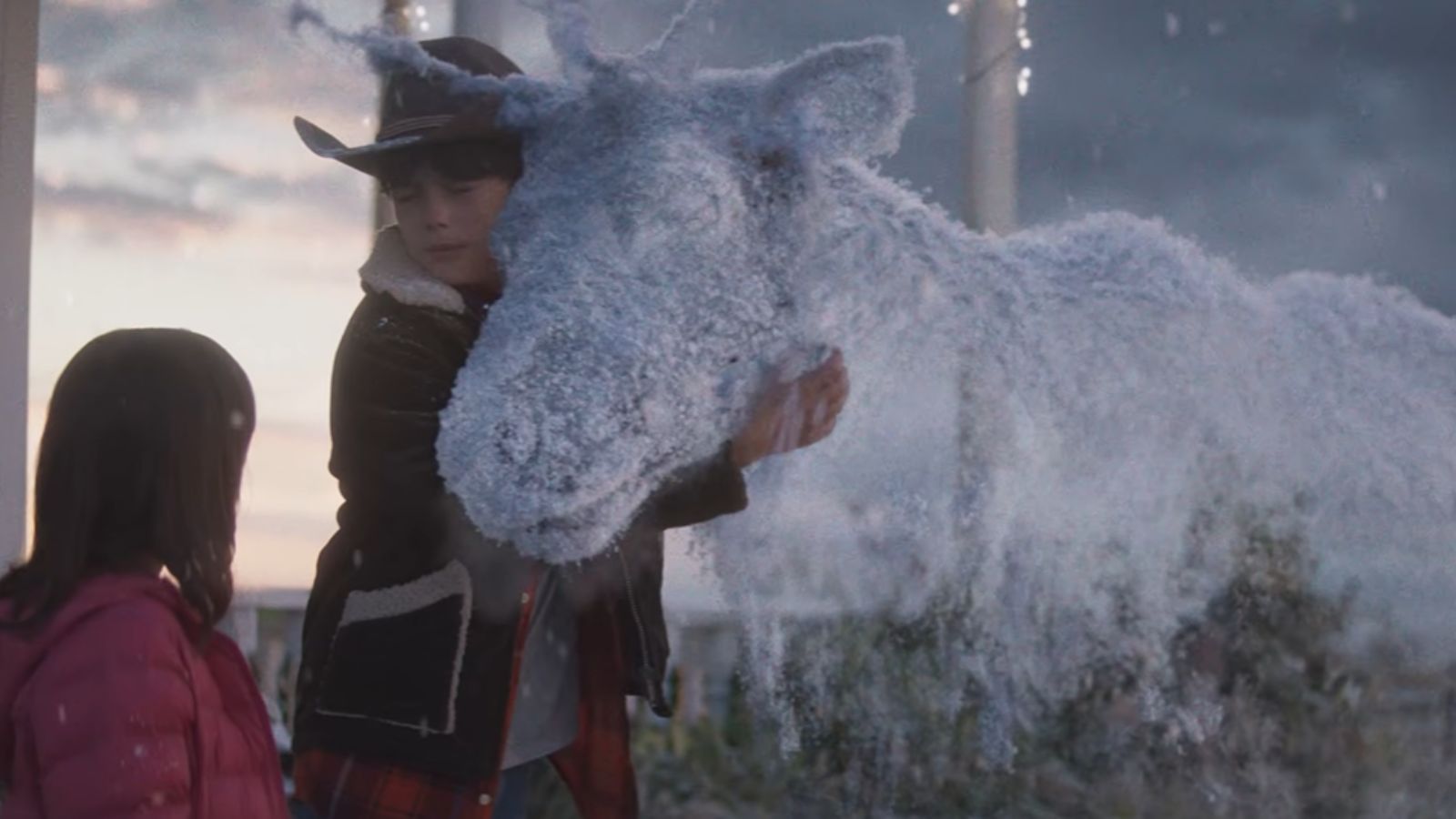
Most marketing teams walk into the festive season with the same two-horned problem: one decent creative idea, and a channel list that stops well short of a theme park. The straight answer is that Disney's Make the holidays magic, launched 9 November, is not an advert you can imitate but an infrastructure play — a short film used as a front door to parks, streaming, shelves and giving. PRADA and Levi’s sell the opposite shape: one hand-made object, no owned network needed. Choose by what you already control, not by what looks magical.
What is Disney actually putting on the table?
Conclusion first: this is not one campaign but several linked ones keyed to a single phrase, and the film is the cheapest part to copy and the most expensive part to make matter.
The one creative object is A Disney holiday short: The invisible horse, directed by Dougal Wilson. It follows Jack, a boy convinced he has left Christmas magic behind, until a mysterious invisible creature pulls him into an adventure that restores his imagination and draws him nearer to his family. Childhood wonder, family connection, a rediscovered season: the story exists to carry tone, not to sell a SKU.
Everything else hangs off it:
- Festive destinations: Mickey's very Merry Christmas party at Walt Disney World Resort, the return of A Christmas fantasy parade at Disneyland Resort, and Disney enchanted Christmas at Disneyland Paris in Paris.
- APAC line-ups: Shanghai Disney Resort in Shanghai brings back Disney winter Frostival, while Tokyo Disney Resort in Tokyo adds festive entertainment including Toys wondrous Christmas!. Selected Disney Cruise Line sailings carry holiday experiences and shows.
- Screens: the campaign runs across Disney+, Hulu, ABC and Freeform with classic Christmas films, new festive releases and seasonal specials.
- Shelves: gifting collections of toys, apparel, accessories, books and collectibles, with Disney Store and Disney Publishing working alongside licensees and retailers including Mattel and Jazwares.
- Giving: partnerships with Make-A-Wish, Blue Star Families, Toys for Tots and other nonprofit organisations, supported by events, performances, talent appearances, toy drives and in-store experiences.
Two packaging details matter more than they look. The film went straight onto first-party surfaces: The Hollywood Reporter reported on 9 November that it was already available on Disney+ and online, so the campaign's entry point asks for almost no media buying. And the format is now annual rather than experimental — last season the company ran a festive push that included a holiday short released on 10 November 2025 and a tour to more than 20 cities, per its own press release. Two consecutive years means the holiday window has its own budget line and its own production muscle, not a December idea.
How does Disney's own leadership frame the bet?
Asad Ayaz, chief marketing and brand officer of The Walt Disney Company, put the logic in tradition language rather than sales language.
“Disney has long been part of the traditions, memories, and moments that make the holiday season so special for families around the world,” said Ayaz.
“This season, we're bringing the best of Disney together to give families more ways to make the holidays magic: a trip they'll talk about for years, a new favorite to watch together, the perfect gift under the tree and, for the children and families who need it most, a wish come true.”
Read as an operating plan, that quote lists four product categories: a trip, a stream, a purchase and a donation. That is the tell. Most brands can quote this sentence honestly only if they can tick at least three of those four boxes.
How do PRADA and Levi’s differ in shape?
Both festive entries this season are craft films, and both succeed precisely because they do not pretend to be a network.
| Decision factor | Make the holidays magic (Disney) | Drawing Prada: Animated by hand (PRADA) | Let’s get fuzzy (Levi’s) |
|---|---|---|---|
| Core asset | One short film plus owned destinations, screens, stores and giving programmes | One film blending live action with illustrated winter scenes | One stop-motion film and one oversized character |
| What you must already own | Parks, cruise, streaming, television, retail, publishing | Nothing but a channel and a drawing team | Nothing but a studio and product to dress |
| Where the money goes | Internal coordination across business units; media mostly first-party | Illustrators, animation direction, ambassador fees | Physical build time and frame-by-frame shooting |
| Reuse after launch | Years: destinations, parades and specials return each season | Low — one aesthetic statement, then archived | Medium — a mascot can be brought back |
| Failure mode | Any activation outside the family-tradition tone reads as a mismatch | Admired as art, disconnected from a purchase path | Craft praised, sweater forgotten |
| Fits a brand that | Sells experiences and screen time | Sells an aesthetic to a narrow audience | Sells texture, comfort and belonging |
PRADA took the 2026 festive slot with Drawing Prada: Animated by hand, moving brand ambassadors between real-life settings and animated worlds. What it really bought was lineage rather than reach: Cartoon Brew reported that animation direction came from John Pomeroy, a veteran of feature animation, and the cast of ambassadors includes Sadie Sink, Maya Hawke and Chen Haoyu. Renting that craft history is a shortcut to warmth that no media plan can purchase.
Levi’s chose the slower road with Let’s get fuzzy, following Fuzzyeti, known as Gus, a larger-than-life character who shifts from feared outsider to welcomed guest, exploring warmth and belonging while showing the brand's sweaters and layered looks. Animation Magazine reported the film was made with London studio Blinkink, and that the directors wrote roughly 14 scripts before the concept was locked.
What does each route cost, and who ends up paying?
Here is the part most coverage skips: the cost structure is not a spectrum, it is two different accounting categories.
- The bundle model is capital expenditure you must already be carrying. Disney's festive campaign looks cheaper per touchpoint because the parks, cruise sailings, Disney+, Hulu, ABC, Freeform and Disney Store already exist on the books. The real bill is management time: getting consumer products, publishing, television, parks and philanthropy to agree on one phrase for one quarter. Most companies are not short of festive ideas; they are short of someone willing to sign off closing the channels that cannot carry the season.
- The craft model is operating expenditure with a hard physical rate. Trade coverage of the Levi’s film (The Stable) put the production at roughly four hours of filming for every finished second, with a six-person build crew logging more than 2,000 hours over about six and a half weeks to dress the set, including three cabin scales and some 400 individually made miniature trees. Multiply that by a broadcast length and you have a seven-figure object that appears once.
- The hybrid cost is recall. Prada's hand-drawn film surfaced in late October and Levi’s landed on 2 November, before the Disney launch on 9 November. Three craft-heavy festive films inside one fortnight means the scarce input is no longer creativity; it is being remembered by the same household on the same weekend.
My reading, and this is analysis rather than disclosed numbers: unless a festive campaign can be amortised across several years of owned destinations, repeat formats or a returnable character, the bundle route is unaffordable and the single film is a brand asset, not a sales tool. Budget accordingly before you brief an agency.
Can the giving module be bought separately?
Of the four pillars in the campaign, the charitable one is the only piece a smaller brand can lift without capex. The Make-A-Wish wish-granting, Blue Star Families support and Toys for Tots gift-giving that sit inside Make the holidays magic cost a mid-size brand nothing in infrastructure: they run on local partners, staff time and a disclosed commitment.
Two cautions. First, giving programmes need a year-round operational story, or they read as seasonal decoration. Second, the reporting standard is the same one enterprise buyers use on any partnership: name the partner, name the beneficiary count, publish the date. Last season's multi-city tour model shows how a company with less than Disney's estate can still make generosity the reason people remember a campaign.
Where do teams go wrong when copying this playbook?
- Treating the film as the strategy. The invisible horse works because a parade, a cruise, a streaming slate and a toy aisle sit behind it. A short film alone is a cost centre with nice reviews.
- Assuming reach is free. Disney's distribution is internal; almost nobody else's is. Price your festive plan on paid reach, not on earned coverage.
- Buying craft without a purchase path. Hand-drawn and stop-motion are credible precisely because they are visibly labour-intensive — but if shoppers cannot find the product in the next 48 hours, that credibility converts nowhere.
- Copying the bundle without the owner. Five departments aligned by a committee is a campaign that ships late and says nothing.
Which model should you pick next season?
Run five questions in this order before any creative briefing:
- Do we own a repeatable consumer moment — a venue, a show, a season pass, a store calendar? If yes, the bundle is defensible.
- Can we name four categories a household can actually buy or do with us? If not, the campaign is one film, and should be budgeted as one film.
- Do we have a reason to be remembered in the same fortnight as everyone else? If not, shift spend to timing, not to production value.
- Can we commit a giving partnership for twelve months and report it? If yes, that is the cheapest credible festive asset available.
- Is there one person who will sign off shutting the channels that do not carry the season? Without that name on the org chart, stop here.
Next step, and it is a small one: before you brief anyone, write down your own version of the four-box sentence — one thing to do, one thing to watch, one thing to buy, one thing to give. If you can fill three boxes with things you control, run a bundle. If you can fill one, fund one excellent film and buy the reach honestly.
FAQ: what readers ask before borrowing a festive playbook
Is Make the holidays magic a Christmas advert or a business plan?
Both readings are incomplete. It launched on 9 November as a global festive campaign whose unit of value is a family tradition, and whose delivery mechanism is a set of company-owned channels plus retail licensees and charitable partners.
Why does Disney spend on a short film instead of product advertising?
Because the product is the destination network. The film supplies the emotional reason to visit parks, subscribe, cruise and gift; the story of Jack and the invisible creature carries tone that a discounted toy spot cannot.
Do hand-made campaigns still work against AI-generated festive content?
The evidence this season says yes, on craft grounds: a hand-drawn winter world directed by an animation veteran, and a stop-motion film shot at four hours per finished second. Visible labour is the differentiator buyers can verify.
What can a small brand legitimately copy?
Three things: a single recurring character, a disclosed giving partnership, and one owned moment it already runs each year. Everything else in the Disney bundle depends on infrastructure.
Sources used in this comparison
- The Walt Disney Company — Make the Holidays Magic campaign announcement
- The Walt Disney Company — prior-season holiday campaign press release
- The Hollywood Reporter — Disney holiday short available on Disney+ and online
- Ad Age — inside Disney's holiday strategy
- Cartoon Brew — Prada hand-drawn holiday campaign and animation direction
- Animation Magazine — Levi’s and Blinkink stop-motion production detail
- The Stable — filming rate per finished second
- Marketing-Interactive — company-wide scope of the festive campaign