
ItInsightsWorld General Guide: A Practical Playbook for Deepavali 2026 Campaigns in Singapore and Malaysia
Deepavali campaigns are most useful when they translate a family feeling into a repeatable communication step. This guide reads the 11 campaigns that MARKETING-INTERACTIVE recorded in 2025 as a practical playbook for Singapore and Malaysia, where Deepavali falls on Sunday, 8 November 2026 and festive storytelling began moving earlier, from 26 October 2026 onward.
Across both markets, the campaigns share a shift away from perfect holiday imagery and toward imperfect moments: a missed photo, a repeated message, a recovery step, a kolam pattern, a video call that saves a portrait. The public holiday calendar amplifies that shift. The Singapore Ministry of Manpower lists Deepavali on 8 November 2026 and explains the Monday, 9 November 2026 public holiday when the rest day falls on the festival day. MARKETING-INTERACTIVE said brands captured that spirit through humour, heartfelt storytelling and technology.
What should readers take from these campaigns?
For general readers, the value is simple: these campaigns show how digital tools, family rituals and public-service messages can either help or interrupt togetherness. For communicators, the value is operational. The useful question is not which film won praise, but which small behaviour can be designed into the next festive campaign with clear expectations, low friction and an honest reason for the brand to be present.
A practical checklist before copying a Deepavali campaign
- Start with one observable family behaviour. gov.sg uses screen checking; MR D.I.Y. uses forwarded messages; CelcomDigi uses the struggle of a perfect photo.
- Put the festival calendar at the centre. A campaign that starts in late October still needs to land before 8 November 2026, when the day itself may be a rest day or the gateway to a holiday weekend.
- Make the technology step small. If participation asks for a photo upload, an app route, or a comment reply, the instructions must be obvious.
- Give culture a reason, not a backdrop. A kolam is not only colour; it is 'decorative floor art' tied to blessings and shared space.
- Test the brand slot. Product visibility should either serve the scene, become a joke, or stay out of the emotional moment.
- Close with a usable action. Watch a film, book within a window, send a greeting, learn a tradition, or put down a phone.
How the campaigns compare in practical value
| Campaign family | Useful signal | Practical risk |
|---|---|---|
| Family presence, comedy | gov.sg and MR D.I.Y. make small digital habits visible. | The message can collapse into phones bad if it does not offer an alternative behaviour. |
| Mental health, recovery | Air Selangor and Petronas give long-form emotion a reason to exist. | Grief and stroke need care; a shallow festive treatment would feel exploitative. |
| Travel and experiential | Madame Tussauds Singapore and MakeMyTrip connect culture, celebrity and booking. | The offer must stay simple when travel plans already involve many steps. |
| App-based personalisation | Maxis turns festive packets into an interactive greeting tool. | App access, photo upload quality and privacy comfort can break momentum. |
| Cultural explanation | ZUS Coffee, TNB and Julie's Biscuits use tradition and family stories to build belonging. | Explanation can sound defensive if the brand did not listen first. |
| Live participation | RHB uses Instagram comments to create a light show. | Real-time mechanics depend on platform moderation and audience willingness. |
The campaign list, rebuilt as lessons
Air Selangor: grief needs a seven-minute bridge
In 'Sinar Rani', Air Selangor returns to Auntie Rani, Auntie Mei and Auntie Salmah from earlier festive work. The seven-minute film follows Rani, played by Sukania Venugopal, after she loses her husband, Krishnan, and plans to spend Deepavali alone. A stray dog leads her to volunteer at an animal shelter; she later adopts it and names it Chellam, meaning 'love'. Under 'Love flows like water', the campaign makes emotional well-being visible without turning grief into a slogan.
CelcomDigi: imperfect portraits need better connectivity
'Inaikkum alaippu', translated as 'The call that connects', follows a family repeatedly interrupted while trying to take a portrait. The solution is not a perfect scene but a video call that puts everyone in frame. The practical reading for Singapore and Malaysia households: connectivity matters most when memory-making is fragile.
gov.sg: a comedy about putting phones down
gov.sg worked with DSTNCT on 'Family assemble!'. In the Tamil-language film, Parameshwari Paatti becomes fed up when the family keeps watching screens, then pretends to spend Deepavali with friends. The device-free family faces tangled fairy lights, failed shopping and a messy attempt at murukku. Directed by S.S. Vikneshwaran, the film later reveals that Paatti secretly recorded the chaos. The lesson is not anti-phone; it is about choosing when a screen becomes presence. The campaign premiered from 26 October 2026, according to MARKETING-INTERACTIVE.
Madame Tussauds Singapore: festive travel needs a clear offer window

Madame Tussauds Singapore partnered with MakeMyTrip for 'Icons of India', an activation that links Deepavali travel to Bollywood fandom. The experience includes wax figures of Deepika Padukone, Varun Dhawan, Shah Rukh Khan and Ranveer Singh, plus a newly unveiled wax figure of Padukone in a red floor-length gown. MakeMyTrip promotes the attraction to Indian travellers visiting Singapore during the festive period, with a ticket offer available for bookings made between 21 October and 15 November 2026. The practical lesson is that experiential campaigns need a booking window, not just a poster.
Maxis: AI-personalised packets are fun only when access is smooth
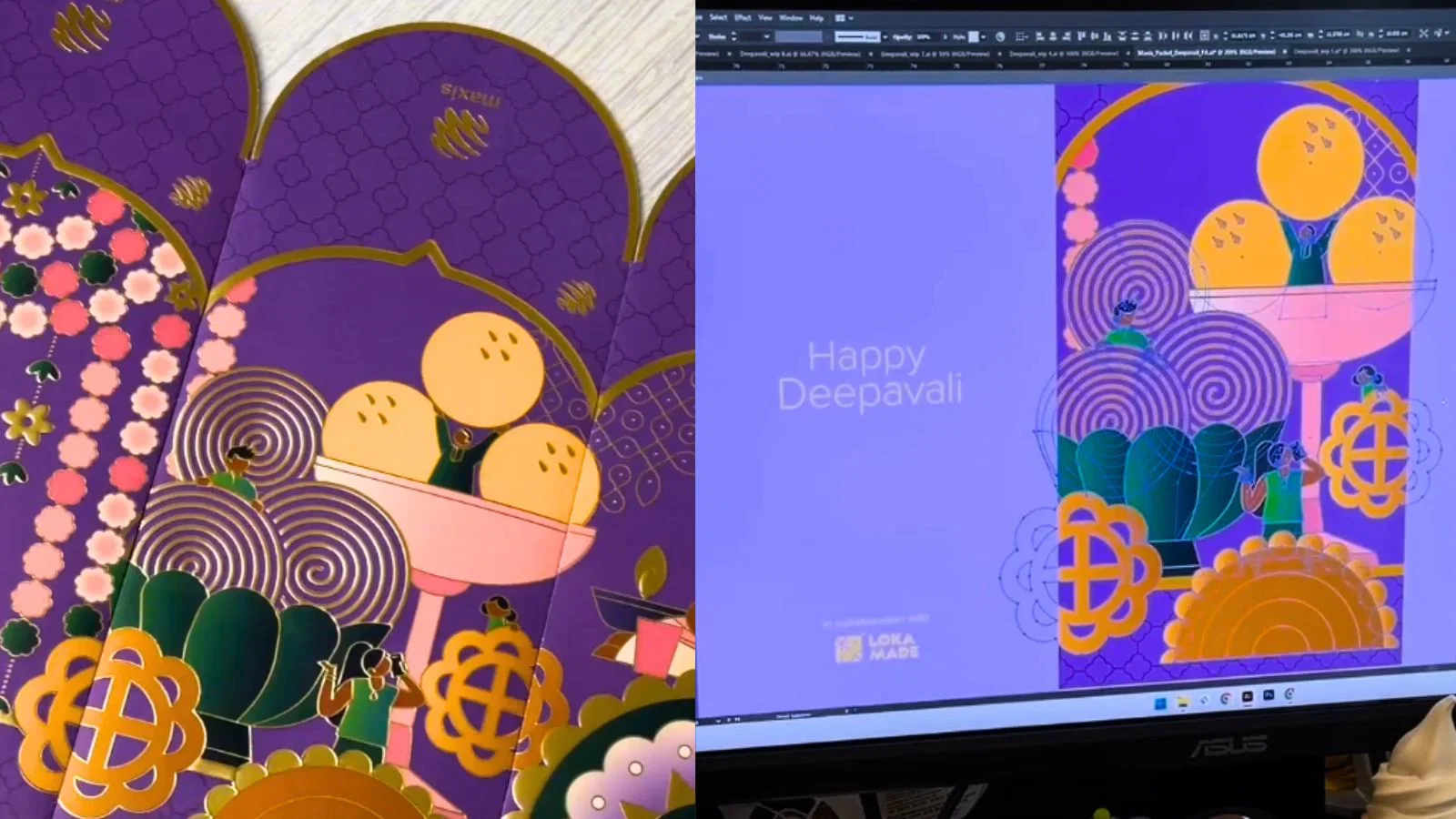
For the third time this year, Maxis worked with Loka Made across five Deepavali packets. Users upload a photo through the Maxis App to generate a personalised greeting. The designs draw from flower garlands, festive treats, kolam patterns and oil lamps. The takeaway is practical: a digital festive gift is only as good as its entry route. If a tool depends on upload, identity or app access, it should be tested the way AI tool access is tested.
MR D.I.Y.: the forwarded message is a care signal
'Two blue ticks' follows Kavya, who finds Paatti's repeated messages annoying. The film reframes a simple 'good morning' greeting as a sign that someone is remembered. When an incident involving Devi changes the household mood, Kavya understands that digital messages can be emotional maintenance. The campaign gives general readers a useful rule: do not judge the content of a family message by its novelty.
Petronas: recovery is told through small steps
'Mekar kembali | Blossom' follows Kamala, a hardworking woman and passionate dancer who learns to walk again after a stroke. The film avoids a simple triumph arc and shows that progress is uneven. Supported by family, she rebuilds her life. The practical lesson is to keep the story at the level of actions, not slogans: resilience is shown through effort, patience and presence.
Tenaga Nasional Berhad: shared culture needs a story bridge
TNB and Chariot tell 'Let amma tell you a story' through Rishen, a boy worried his friends will not value traditional Deepavali food. His mother uses imagined family stories to show how cultures influenced one another in Malaysia. The campaign gives a transferable idea for schools, community groups and brands: pride in roots works better when it explains connection, not difference.
Watsons: humour can survive a visible product slot
'Deepavali Reel-ah? Real-ah?' uses the chaos of a crowded festive morning: bathroom queues, last-minute decoration and small family arguments. Watsons Malaysia lets the cast acknowledge the brand's product placements, using humour to keep the message from feeling too polished. The useful test is simple: if the brand is present in the scene, should the family notice it, ignore it, or joke about it?
ZUS Coffee: a kolam explanation needs a listening step
ZUS Coffee released a video about kolam, called 'decorative floor art', explaining blessings, positivity and togetherness. Staff learn the tradition and create colourful kolam designs that include the brand. The campaign followed criticism on Threads from some Malaysian Indian customers asking why the brand had festive packets for Hari Raya and Chinese New Year but not Deepavali, with comparisons to The Coffee Bean & Tea Leaf. In an Instagram post under ZUS COFFEE®, the brand presented the festive video. The lesson is that festive inclusion should be explained through culture, not only product launch timing.
RHB and Julie's Biscuits: live engagement and family dynamics
RHB turns Instagram comments into a live light show, while Julie's Biscuits uses its first Deepavali short film, 'The Duel', to explore family dynamics. The two cases show different ends of festival engagement: one invites immediate participation, the other builds a story arc. For communicators, the key is to decide whether the objective is visibility, conversation or narrative depth.
Common pitfalls when translating festive campaigns into action
- Mistaking timing for urgency. With Deepavali on Sunday, 8 November 2026 and public holiday arrangements around the weekend, a late festive message may arrive after family plans are set.
- Treating tradition as decoration. A kolam, oil lamp or murukku scene should carry meaning, not merely fill a frame.
- Overloading the participation path. A campaign that needs an app, photo upload, comment and ticket booking must be tested for friction, especially when attention is spent on family.
- Letting product placement outrun emotion. Watsons shows one way to survive it with humour; other brands may simply need less visibility.
Frequently asked questions
Why did small moments matter more than glamour in these campaigns?
Because the festival's emotional core is easier to recognise in a failed photo, a repeated 'good morning' message, or a video call that includes someone who is absent. The films make the ordinary visible, which gives audiences a behaviour to copy rather than a mood to admire.
Are app-based festive greetings risky for ordinary users?
They are useful when the path is simple, but risky when access or identity controls are unclear. Maxis and Loka Made offer a light version: a photo through the Maxis App becomes a personalised greeting. If the entry route fails, the emotional message fails too.
What should a general reader notice first when a brand posts a festive video?
Notice whether the video explains a tradition, invites a specific action, or asks the audience to change a habit. The strongest campaigns in this set do at least two of those: gov.sg asks families to be present, and ZUS Coffee asks viewers to learn why kolam matters.
What is the most practical advice for communicators?
Choose one small behaviour, align it with the holiday calendar, explain any cultural element, and reduce the steps between seeing the message and acting on it. That gives a campaign a fair chance to survive both emotional scrutiny and digital friction.
Action step for the next festive season
Use the campaign set as a filter, not a trophy list: if a brand can explain its cultural reference, keep participation simple, and leave room for family imperfection, its Deepavali message is more likely to become a memory rather than another screen.