
A Case Study in Execution: Pierre Barnabé's Move From Soitec to Dassault Systèmes as COO
By James Hartley — IT Insights, General desk
Leadership announcements are usually read as personnel news. This one is better read as a strategy disclosure. In April 2026, Dassault Systèmes named Pierre Barnabé, 56, chief operating officer, reporting to Pascal Daloz, CEO and chairman of the company. The person chosen was not a product evangelist but a semiconductor-materials chief executive whose track record is measured in margins, factory ramps and orderly handovers. The practical takeaway for anyone who buys or deploys industrial software: platform promises are increasingly underwritten by operations accountability, not roadmap slides.
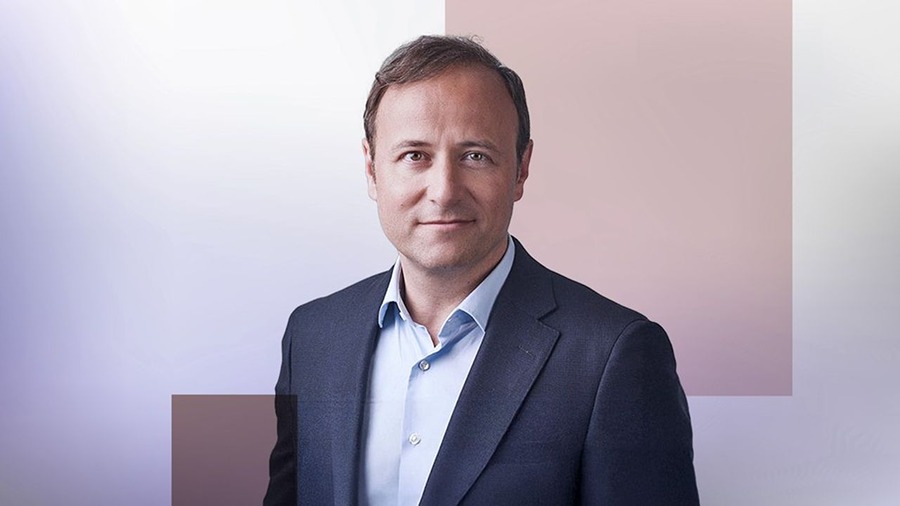
The case at a glance
- Who: Pierre Barnabé, an executive with more than 20 years of experience in the technology sector, including guiding international businesses through transformation, innovation and growth.
- What changed: appointed chief operating officer of Dassault Systèmes in April 2026, reporting to Pascal Daloz.
- Scope of the job: global operations plus the relationship with partners and system integrators around the world.
- Stated mission: strengthen operational performance and speed up the use of the AI-native 3DEXPERIENCE platform and Virtual Twins across industries, so that technological breakthroughs convert into transformative innovation, industrial excellence and new sources of value.
- Coming from: chief executive officer of Soitec, the global semiconductor materials company.
- Earlier stops: senior leadership roles at Bull, Nokia (formerly Alcatel-Lucent) and Thales.
- Outside mandates: sits on the board of directors at Ipsos and Bull; Knight of the French National Order of Merit.
Timeline: the eight months that explain the hire
Read in isolation, the announcement says very little. Read against the calendar, it becomes a case study in how industrial-software vendors are reorganising around execution.
| Date | What happened | Why it matters to outsiders |
|---|---|---|
| 26 July 2022 | Pierre Barnabé took over as chief executive of Soitec, having joined the group in May 2022 (per published biographies on the Ipsos director profile and conference bio pages). | He was already a "turn the plant, not the pitch" operator before this appointment. |
| 1 October 2025 | Soitec announced he would step down for personal reasons, committing to stay until the fiscal year end to secure a smooth handover (WSJ; Soitec release). | CEOs who leave on a scheduled date with a successor named are hired differently: buyers can see a clean exit, not a rescue. |
| 3 February 2026 | Dassault Systèmes and NVIDIA announced a partnership to build an industrial AI platform powering Virtual Twins, described in the company's 3ds.com newsroom as a shared architecture deployable at scale. | Two months later the company hired an operations chief — the roadmap and the operating model were sequenced together. |
| 31 March 2026 | His Soitec mandate ended; Laurent Rémont was named successor effective April 2026 in a board announcement dated 8 January 2026. | The transition into Dassault Systèmes was immediate: no gap, no re-training period. |
| April 2026 | Appointment as chief operating officer announced, reporting to Pascal Daloz. | Investor commentary (SmartKarma, 24 April 2026) framed the move as a focus on improving execution and scaling operations. |
What the COO seat actually controls
Two phrases in the announcement deserve emphasis. The first is "relationship with partners and system integrators around the world". In enterprise software, the integrator channel is where delivery risk quietly lives: a platform can be excellent on paper and still fail in a factory if the firms doing the configuration work are misaligned on incentives, skills or pricing. Putting that channel under an operations chief — rather than under sales or marketing — signals that delivery quality is now a measured obligation.
The second is "speeding up the use" of the AI-native 3DEXPERIENCE platform and Virtual Twins. Adoption speed is an operational metric, not a product one: it depends on data access, licence packaging, onboarding time, and how many validated models an average customer can run per month. Dassault Systèmes describes its platform as serving customers of all sizes and all industries, and its R2026x release extends the 3DEXPERIENCE environment with agentic features such as Virtual Companions. Broader reach plus faster release cadence is precisely the combination that strains an operating model.
Inside the Soitec chapter: what "operational performance" looked like
The most useful evidence about how Pierre Barnabé runs a business comes from the numbers his own company published for fiscal year 2025 (year ended 31 March 2025). Revenue reached €891m, down 9% as the semiconductor cycle squeezed one legacy product line. Yet the same release reported an EBITDA margin of 33.5%, a current EBIT margin of 15.2% and positive free cash flow of €26m while R&D and industrial investment continued. Cash capital spending was then guided down to roughly €150m from about €230m the year before.
Alongside the cost discipline sat a mix shift: in the FY'25 results release, Soitec noted that POI had become its fourth product family generating annual revenue of around $100m or more, reducing dependence on a single technology. Two transferable lessons follow. First, an operator's value shows up in a downturn, when revenue falls and margin still holds. Second, diversification is measured product line by product line, quarter by quarter — the same logic a software COO applies to industry verticals and partner-delivered use cases.
The résumé behind the mandate
Public biographies sketch a career built on sectors that cannot afford vaporware: semiconductors, enterprise computing, telecoms and defence electronics. They place his start in 1994 in Silicon Valley, developing corporate venture activities for Thales, followed by a long stretch at Alcatel and Alcatel-Lucent, senior roles at Bull before and after its 2014 acquisition by Atos, and then the top job at Soitec. Nokia (formerly Alcatel-Lucent) enters the story as the successor group to that telecoms business. Whatever the exact title in each era, the common thread is operating through ownership changes — the same skill a partner ecosystem needs when a platform's architecture changes underneath it.
His formal grounding is in France: he graduated from NEOMA Business School and École Centrale Paris. Board experience at Ipsos and Bull adds measurement and governance literacy; the Knight of the French National Order of Merit decoration is a marker of standing in the French industrial establishment. None of this is decoration for a COO brief. Governance habits travel into how an executive handles reporting lines, audit trails and partner contracts.
Three pressures that make an operations chief the right answer
- Roadmap outrunning deployment. AI-native platform features and agentic tools multiply faster than most customers can re-train their teams, so the bottleneck moves from invention to industrialisation.
- Channel arithmetic. Serving hundreds of thousands of customer organisations across every industry through integrators requires standardised onboarding, quality gates and incentives that no single sales region can police.
- Cost accountability for AI. Compute, data plumbing and validation work have real unit costs; partners such as the February 2026 NVIDIA industrial AI collaboration make that infrastructure visible in the P&L, which is exactly where an operations leader is measured.
Four misconceptions worth clearing up
- "A COO is a deputy CEO on standby." Not here. The brief as stated is operational performance plus the partner channel, not a succession signal — the chairman and CEO role sits with Pascal Daloz.
- "Moving from CEO to COO is a step down." It can be a deliberate narrowing of scope into a company's hardest problem. He left Soitec on a planned date, for personal reasons, with a named successor already in place.
- "Platform vendors grow through features." Features create trials; delivery creates renewals. Adoption speed of the 3DEXPERIENCE platform and Virtual Twins is an execution metric.
- "A materials-industry background is a mismatch." Semiconductor and engineering-intensive businesses share the disciplines that software platforms now need: yield, tolerance, cycle time, validated models.
Buyer's checklist: five things to verify before your next renewal
- Ask your account team who owns delivery operations for your industry, and whether that owner changed in the last twelve months.
- Request named system integrators with documented Virtual Twins deployments in your sector — not generic certification lists.
- Test the adoption path: how long from contract signature to a first usable model, and what data preparation your team must do.
- Ask how AI-native features are governed — model validation, physics and science basis, audit trail — before assuming the label means production-ready.
- Watch release cadence against support capacity: more agentic features per year should come with more, not fewer, named implementation roles.
Platform-led versus operations-led: how the same vendor looks different
| Dimension | Platform-led vendor behaviour | Operations-led vendor behaviour |
|---|---|---|
| Main KPI | Feature releases and demo milestones | Time-to-value, renewal rate, delivery quality per integrator |
| Partner story | Size of the ecosystem | Standardised delivery methods and outcome accountability |
| AI positioning | Model and agent novelty | Validated Virtual Twins running on governed data at predictable cost |
| Risk for the buyer | Pilot that never industrialises | Slower marketing, steadier rollout |
FAQ
Q: When did the appointment take effect?
A: April 2026, as announced by Dassault Systèmes; Pierre Barnabé, 56, reports to Pascal Daloz, CEO and chairman.
Q: What is in his remit?
A: Global operations, the relationship with partners and system integrators worldwide, strengthening operational performance, and accelerating use of the AI-native 3DEXPERIENCE platform and Virtual Twins across industries.
Q: Where did he come from?
A: He was chief executive officer of Soitec, the global semiconductor materials company, after senior leadership roles at Bull, Nokia (formerly Alcatel-Lucent) and Thales.
Q: When did he leave Soitec?
A: Soitec announced on 1 October 2025 that he would step down for personal reasons and stay until 31 March 2026 for a smooth handover; the board named his successor effective April 2026.
Q: Does this change product direction?
A: No product pivot is stated. What changes is accountability for turning the existing roadmap into deployed, value-producing systems.
The reusable lesson
Strip away the corporate announcement language and this case leaves a simple rule for readers who are not software specialists: when a technology supplier suddenly installs an operator at number two, the bottleneck has moved from invention to delivery. For buyers, that is usually good news — pricing, onboarding time and integrator quality become negotiable, measurable things. For everyone else, it is a reminder that the interesting moment in an AI story is not the launch, but the month when somebody is hired to make it work at scale. Additional information is available at 3ds.com; the operational evidence quoted here comes from Soitec's FY 2025 results release (GlobeNewswire, 27 May 2025), Soitec's succession and appointment notices (1 October 2025 and 8 January 2026), The Wall Street Journal, the Dassault Systèmes newsroom partnership announcement of 3 February 2026, and SmartKarma's investor commentary of 24 April 2026. Questions about this analysis: contact@itinsights.com.