
ItInsightsWorld COP30 Climate Summit Analysis: Belém's four-lane Amazon corridor and sustainability claims
Belém's preparations for COP30 now hinge on a disputed transport decision: a four-lane highway is being carved through tens of thousands of acres of protected Amazon rainforest so delegates can reach the city in November. The state government of Pará describes the project as sustainable. Residents and conservationists say it damages the Amazon ecosystem and creates a contradiction with the summit's purpose.
At a glance:
- Officials say the corridor must carry more than 50,000 people, including world leaders, to Belém in November.
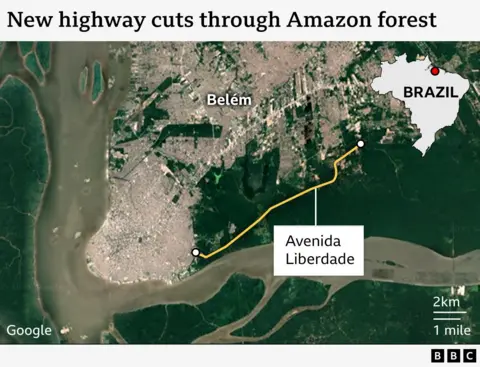
- Along the cleared corridor of more than 13km (8 miles), logs sit beside remaining rainforest, while equipment cuts wetland to form a roadbed inside a protected area.
- The highway splits protected forest into two disconnected areas; scientists warn of fragmented habitat and interrupted wildlife movement.
- Critics question whether building roads through the Amazon for a COP summit undermines the climate goals it is meant to advance.

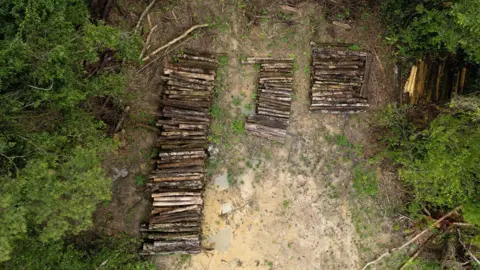 BBC / Paulo Koba
Residents describe losses, not gains
Claudio Verequete, whose home is about 200m from the planned roadway, previously earned a living by harvesting açaí berries from trees in the now-cleared area.
Everything was destroyed, he said, pointing at bare ground. Our harvest has already been cut down. We no longer have that income to support our family.
Verequete says the state government has not provided compensation, so he has relied on savings. He also worries that the road will make the area easier for businesses to reach, inviting further deforestation. He voiced the community's concern: Our fear is that one day someone will come here and say: Here's some money. We need this area to build a gas station, or to build a warehouse. And then we'll have to leave. We were born and raised here in the community. Where are we going to go?
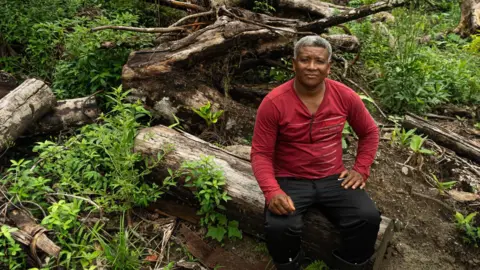 BBC / Paulo Koba
According to Verequete, walls along both sides will keep his community unconnected to the highway. For us who live on the side of the highway, there will be no benefits. There will be benefits for the trucks that will pass through. If someone gets sick, and needs to go to the centre of Belém, we won't be able to use it.
Fragmentation and wildlife rehabilitation
Experts warn the ecosystem will be fragmented and wildlife movement disrupted by the split.
At a university animal hospital opposite the new highway site, Prof Silvia Sardinha, a wildlife vet and researcher, helps rehabilitate injured wild animals, many of them harmed by people or vehicles.
 BBC / Paulo Koba
After treatment, she said, animals are released back into the wild; a highway at the edge of their habitat will make that more difficult. From the moment of deforestation, there is a loss.
We are going to lose an area to release these animals back into the wild, the natural environment of these species, she said. Land animals will no longer be able to cross to the other side too, reducing the areas where they can live and breed.
Summit framing and local voices
Brazil's president and environment minister describe the event as historic, saying the conference is a COP in the Amazon, not a COP about the Amazon. According to the president, the meeting will spotlight the needs of the Amazon, display the forest to the world, and present what the federal government has done to protect it.
Prof Sardinha counters that these conversations will happen at a very high level, among business people and government officials, while people living in the Amazon are not being heard.
Infrastructure revived for COP30
Avenida Liberdade was first promoted by the state government of Pará in 2012, but environmental concerns repeatedly set it aside; it has now returned as part of a series of infrastructure projects revived or approved to ready Belém for the COP summit.
Adler Silveira, the state government's infrastructure secretary, counted the highway among 30 projects underway in the city to prepare and modernise it. He framed the aim as we can have a legacy for the population and, more importantly, serve people for COP30 in the best possible way.
Speaking to BBC, Silveira described the route as a sustainable highway and an important mobility intervention. He said the design would add wildlife crossings, bike lanes and solar lighting. New hotel construction is also under way, while the port is being redeveloped to allow cruise ships to dock there for excess visitors.
Brazil's federal government is committing more than $81m (£62m) to airport expansion, with capacity expected to rise from seven to 14 million passengers. The 500,000 sq-m Parque da Cidade, a new city park, is also under construction, with green spaces, restaurants, a sports complex and other facilities intended for public use afterwards.
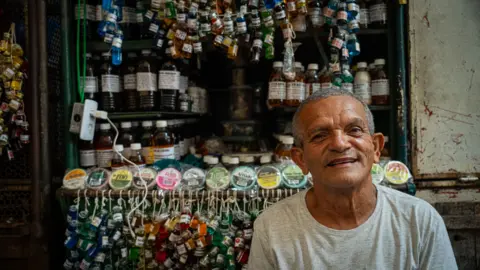 BBC / Paulo Koba
Local businesses see opportunity
At Ver-o-peso market, the city's vast open-air marketplace, some business owners say the development will create opportunities.
Dalci Cardoso da Silva, who runs a leather shoe stall, said The city as a whole is being improved, it is being repaired and a lot of people are visiting from other places. It means I can sell more and earn more.
He argued that change is necessary because, when he was young, Belém was beautiful, well-kept, well cared for, but later became abandoned and neglected, reflecting little interest from the ruling class.
João Alexandre Trindade da Silva, a seller of Amazonian herbal medicines in the market, acknowledges that construction can create problems, but felt the future impact would justify it. We hope the discussions aren't just on paper and become real actions. And the measures, the decisions taken, really are put into practice so that the planet can breathe a little better, so that the population in the future will have a little cleaner air.
For observers tracking the debate, the central tension remains clear: COP30 is meant to highlight Amazon protection, but a four-lane access project cuts through protected forest. Whether flying thousands of them to Belém, and expanding infrastructure to receive them, advances the climate agenda or weakens it is the question the summit cannot avoid.