
iPhone Duo China Variant: Most Spec Gaps Trace to Rules, Not Apple Cuts
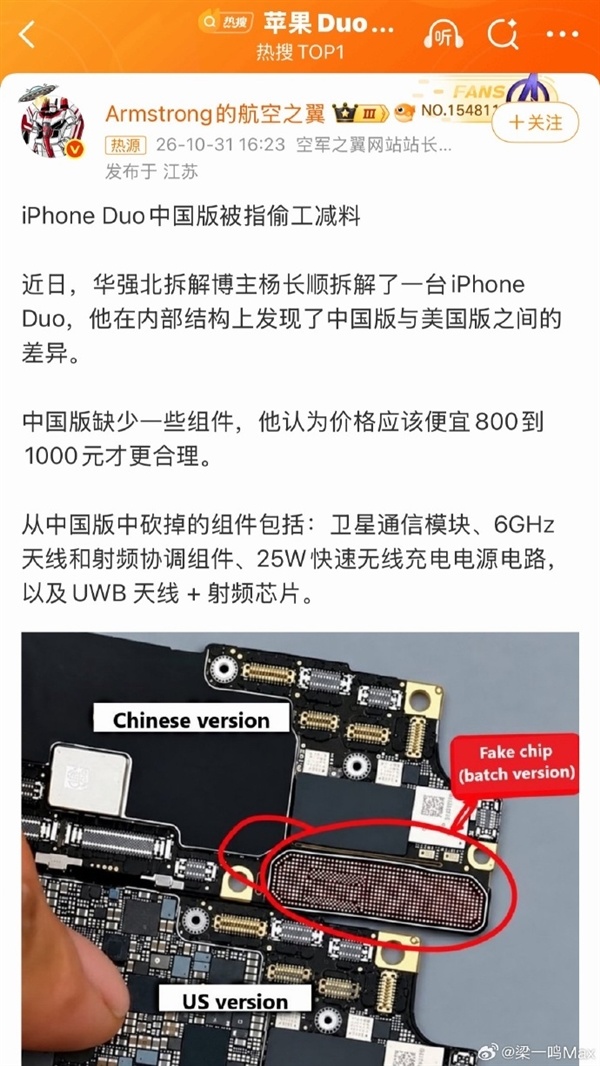
Attention across social platforms grew after a widely shared assessment of the iPhone Duo’s China variant, yet the finer evidence suggests the controversy rests on a misreading. A closer look at published specifications and regional service conditions shows that the main differences do not stem from Apple deliberately removing hardware to save money.
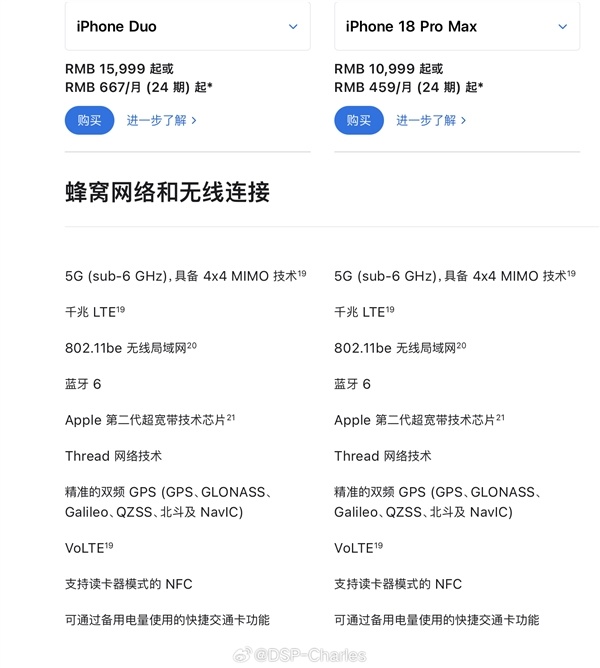
Apple lists second generation ultra-wideband
Apple China official website and Apple official website both list the iPhone Duo with a second generation ultra-wideband chip. That published specification contradicts the widely repeated claim that the China version lacks the component.
Regulatory limits explain the teardown gaps
The differences identified when comparing the China unit with the U.S. unit are mainly tied to binding local rules, rather than to a cost-driven deletion of hardware.
Satellite emergency service: hardware present, use constrained
The U.S. unit can transmit emergency SOS signals and share real-time location where ground carrier coverage is unavailable. The China unit includes the corresponding hardware module, but domestic communications regulations prevent the related service from being activated; the module itself is not omitted.
Wi-Fi band availability: 6GHz is not open
For Wi-Fi in China, the 6GHz band cannot be made available under local radio-management requirements. As a result, Wi-Fi 7 operation is limited to 2.4GHz and 5GHz, which explains why measured wireless transfer performance is lower than that of the U.S. unit operating across its permitted full band set.
MagSafe power ceiling: 15W versus 25W
MagSafe wireless charging in the China edition peaks at 15W, while the U.S. edition can reach 25W. The gap reflects domestic wireless-charging frequency requirements, not an Apple-only reduction of charging hardware for that market.
The evidence therefore separates two questions that were mixed together in the debate: whether a component is missing, and whether local law prevents its use. In the iPhone Duo case, regulation—not hidden cost cutting—accounts for most of the visible differences.