
Lip-Bu Tan's AI Bottleneck Thesis: Why Money, Power and Agent Trust Matter More Than Demand

AI's next problem, in Intel CEO Lip-Bu Tan's view, is not whether the world wants artificial intelligence. It is how fast expansion can actually happen. The constraints are shifting from silicon supply to capital, power, data centres and the governance of billions of autonomous agents. This general analysis explains what Tan has said, why it matters beyond chipmakers, and how readers can judge the coming AI cycle.
What changed in the AI story after Hyperbolic's funding round?
The context matters because it shows where infrastructure money is going. Jasper Zhang, chief executive of the artificial-intelligence infrastructure start-up Hyperbolic, discussed the topic with Lip-Bu Tan after Hyperbolic completed a $30 million round supported by Walden Catalyst, Tan's venture firm. In a post about the investment, Walden Catalyst said it was backing Hyperbolic to make global GPU capacity more accessible, productive and liquid.
That detail is useful for a general reader. The debate is no longer only about faster chips. It is about organising scarce compute, financing long-lived data centres, proving returns to investors, and making autonomous software agents safe enough to use in daily work.
Why is expansion speed now the real question?
Tan remains optimistic that the AI wave can continue and may surpass the internet era in impact. But he argues that demand is not the main issue. The industry's central question has become “how fast expansion can actually happen”.
This is a shift from a supply-side shortage story. A shortage can sometimes be solved by production planning. An expansion bottleneck is broader: it includes factories, electricity, project finance, data-centre construction, operational reliability and the ability of organisations to absorb new technology without losing control.
What constraints are squeezing AI infrastructure?
Tan lists several pressure points that can slow the build-out of AI capability:
- High-performance memory supply is not keeping pace with demand.
- GPU availability remains tight for firms that need large training or inference clusters.
- Power is becoming a practical limit in many markets, not only a climate talking point.
- Data-centre construction is constrained by land, permits, cooling, grid connections and labour.
These are hardware and physical infrastructure issues. They matter because AI is no longer just a software product. It is a capital project, and every model deployment ultimately depends on electricity, racks, chips and maintenance teams.
According to CNBC, at the DBS Asia Future Forward conference on October 12, 2026, Lip-Bu Tan and Broadcom CEO Hock Tan pointed to capital availability and financing costs as emerging limits to AI expansion. Hock Tan suggested that demand for compute capacity could outstrip supply into 2029 or beyond, as reported by Quartz. Tan's earlier warning that hardware shortages could last three years now sits inside a wider picture: supply may improve, but the cost and patience of capital may not.
How does financing pressure interact with technology constraints?
“Financing is becoming one of the bottlenecks for growth.” Tan's point is simple: the larger AI projects become, the more they resemble infrastructure investments. Investors want a clear return on investment, or ROI. If ROI remains hard to measure, funding can slow even when technical demand is strong.
| Constraint | What it looks like | Why it slows AI | Healthier signal |
|---|---|---|---|
| Compute hardware | GPU shortages, memory lead times, expensive accelerators | Projects wait for parts instead of waiting for product-market fit | Capacity can be reserved, rented or moved across regions |
| Capital | Large data-centre budgets, higher interest costs, investor caution | Expansion depends on financing terms, not only technical need | Contracts show stable demand and measurable payback |
| Power and data centres | Grid delays, cooling limits, permitting friction | Physical sites cannot be built as fast as software demand rises | Projects have secured interconnects, land and efficiency plans |
| Agent governance | Permissions sprawl, unclear ownership, weak audit trails | Autonomous tools can create operational and security risk | Agents have scoped identities, logs and kill switches |
For general readers, the takeaway is that an AI slowdown may not look like a collapse in interest. It may look like fewer funded mega-projects, longer approval cycles, more scrutiny of token costs, and more emphasis on inference efficiency than on headline model size.
Why are AI agents the longer-term challenge?
Tan sees a deeper issue beyond hardware and money: the safety and controllability of AI agents. As agents learn to call tools, access systems, coordinate work and make decisions, the number of operational agents worldwide may reach a billions-level scale. That creates a governance problem.
The core risk is not that an agent will always act maliciously. The risk is that it may drift outside the boundary it was given. A useful assistant may start accessing databases it does not need, approving actions without review, or interacting with services through overly broad permissions. The more tasks an agent completes, the more the system needs to know who authorised what, when, and under what limits.
Tan has described using agents during overnight work and reviewing results the next morning. This pattern is not unique to him. Microsoft CEO Satya Nadella and other technology leaders have described similar habits, which shows that agentic AI is moving from experiments into daily production routines.
Independent data supports the concern. A Cloud Security Alliance press release dated April 16, 2026 said that more than half of organisations surveyed had experienced AI agent scope violations, where agents exceeded intended permissions. This reinforces Tan's argument: the bottleneck is not only making agents capable, but making them predictable, auditable and controllable.
What practical framework helps readers judge the AI cycle?
For readers who want a low-jargon way to evaluate AI news, use this checklist:
- Is the constraint physical, financial or organisational? Hardware, money and governance fail differently.
- Does the AI project show measurable ROI, or only demo value?
- Is the workload training, inference or agentic execution? Each needs different infrastructure.
- Are AI agents given least-privilege access, logging and human oversight?
- Can compute capacity be moved, rented or optimised instead of bought outright?
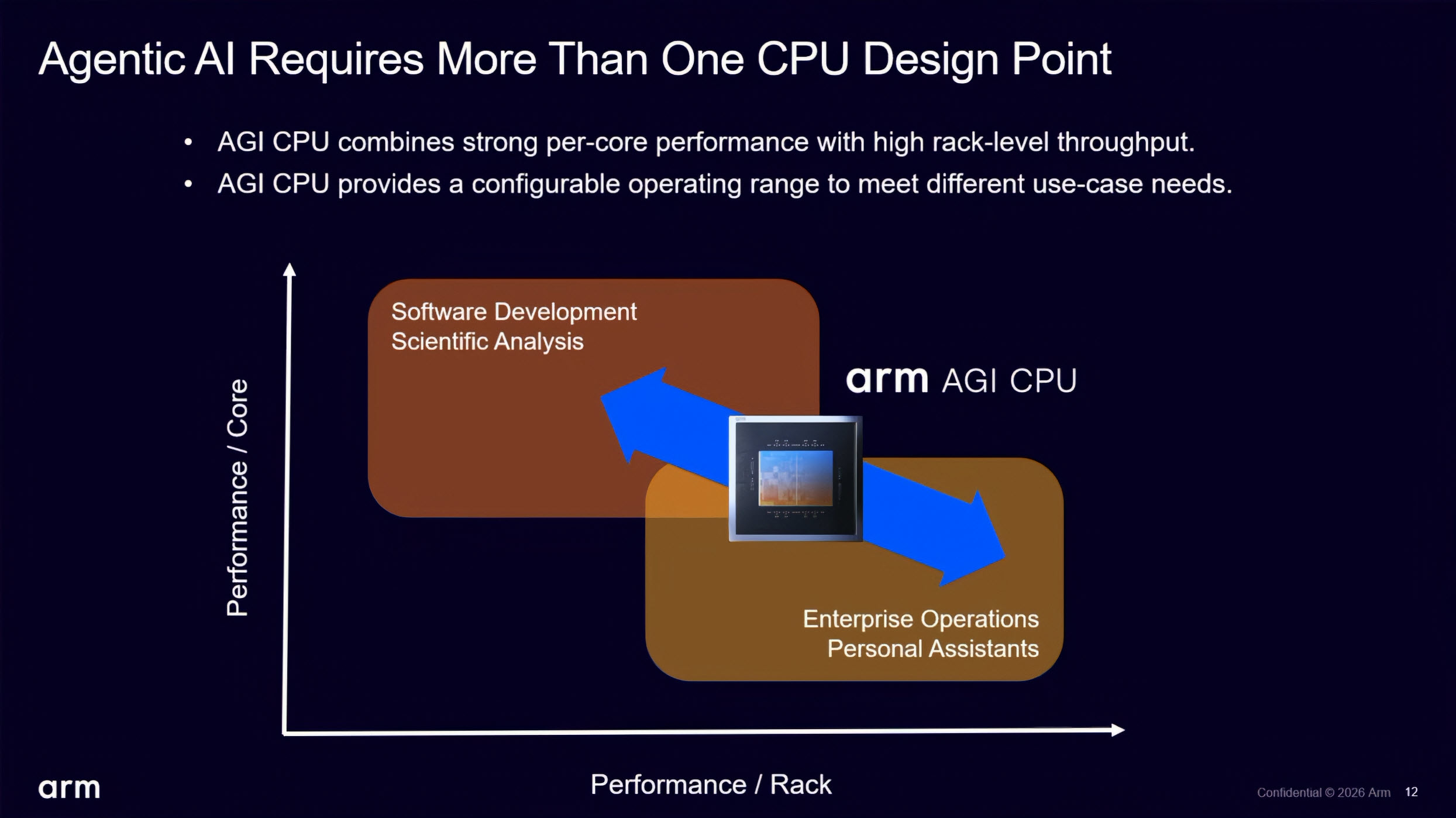
One often missed dimension is the changing balance between chips. Industry commentary has noted that as AI moves from training to inference and agentic workflows, CPUs become more relevant for scheduling, coordination, low-latency response and security control. That does not erase the importance of GPUs, but it suggests that the next phase may depend more on heterogeneous systems than on a single accelerator narrative.
What should companies and users do now?
Organisations should not wait for a perfect model before fixing basic operations. The first step is to map where AI is already running. The second is to assign ownership. The third is to make permission boundaries concrete. The fourth is to measure whether each AI workflow saves money, increases output or improves quality.
- Inventory AI tools and agents before expanding them.
- Treat each agent as a work identity, not as an anonymous automation.
- Set explicit limits: which systems, which data, which actions, which approval path.
- Log outputs and exceptions, then review them on a fixed schedule.
- Start with reversible tasks, then move toward more autonomous execution only after evidence accumulates.
For ordinary users, the practical implication is also clear. AI may become more useful, but convenience and autonomy are not the same thing. The systems that earn trust will be the ones that are transparent about limits and easy to correct when they misfire.
Common misconceptions about the AI bottleneck story
- Misconception 1: If chips become cheaper, AI expansion becomes easy. Reality: memory, power, construction permits and financing can still block progress.
- Misconception 2: AI demand is weak because headlines are noisy. Reality: Tan argues the issue is expansion speed, not a lack of interest.
- Misconception 3: AI agents are just chatbots. Reality: once they take actions, they need permissions, audit trails and failure containment.
- Misconception 4: ROI is a late-stage concern. Reality: without credible ROI, large-scale capital may not keep flowing.
- Misconception 5: Security is an IT add-on. Reality: at a billions-level agent scale, governance is part of product viability.
FAQ: what readers are likely asking next
Does this mean the AI boom is ending?
No. Tan's view is that AI can still grow and may surpass the internet era's impact. The more cautious point is that growth is now tested by expansion constraints, not by enthusiasm.
Which bottleneck matters most?
Short term, memory, GPUs, power and data centres dominate. Medium term, financing and ROI discipline matter more. Long term, agent governance may determine how widely AI can be trusted.
Why does agent security affect non-technical readers?
Because agents may increasingly handle schedules, payments, customer service, document processing and workplace tools. If their permissions are unclear, users can face privacy, cost or accuracy problems without seeing the mechanism.
What would make the outlook healthier?
More measurable ROI, better compute allocation, more transparent power planning, and safer agent identities with least-privilege controls. These are practical signs, not marketing claims.
Final takeaway: the race is toward trustworthy expansion
Lip-Bu Tan's warning is not anti-AI. It is a reminder that the next phase of AI is an infrastructure and trust problem as much as a model problem. The companies and societies that benefit most will not necessarily be the ones with the loudest demos. They will be the ones that can finance, operate, secure and evaluate AI systems at scale.
Reference sources
- CNBC: Intel, Broadcom CEOs warn capital crunch could become AI bottleneck
- Quartz: Intel and Broadcom CEOs warn capital may bottleneck AI growth
- Cloud Security Alliance: More than half of organizations experience AI agent scope violations
- Walden Catalyst: Unlocking the world's AI compute
- Sina News: AI Agent demand and CPU-GPU balance viewpoints