
ItInsightsWorld General Comparison: Teadore Across seven Markets — What CHAGEE's Mascot Bet Really Delivers
A global brand wants one mascot everyone recognises; local teams want a character that looks like their own. CHAGEE's answer across seven markets is Teadore, one green elephant given a different cultural identity in each place. Verdict: it is a clever, low-cost layer of localisation, but its payoff depends on scarcity and on what happens after the ninth anniversary.
That is the real dilemma behind this campaign. CHAGEE is marking its ninth anniversary on 17 November under the theme "One World. One CHAGEE", the first time it celebrates as one global brand across its international markets. The tension is familiar to any brand team: push a single identity and you risk feeling imported; localise too hard and you lose the recognition that makes a mascot worth owning. Teadore is the attempt to have both. It helps that the parent brand has scale — CHAGEE had more than 7,600 stores worldwide as of November 2026, according to a company release distributed via Zawya — so a shared character has a large footprint to travel across.
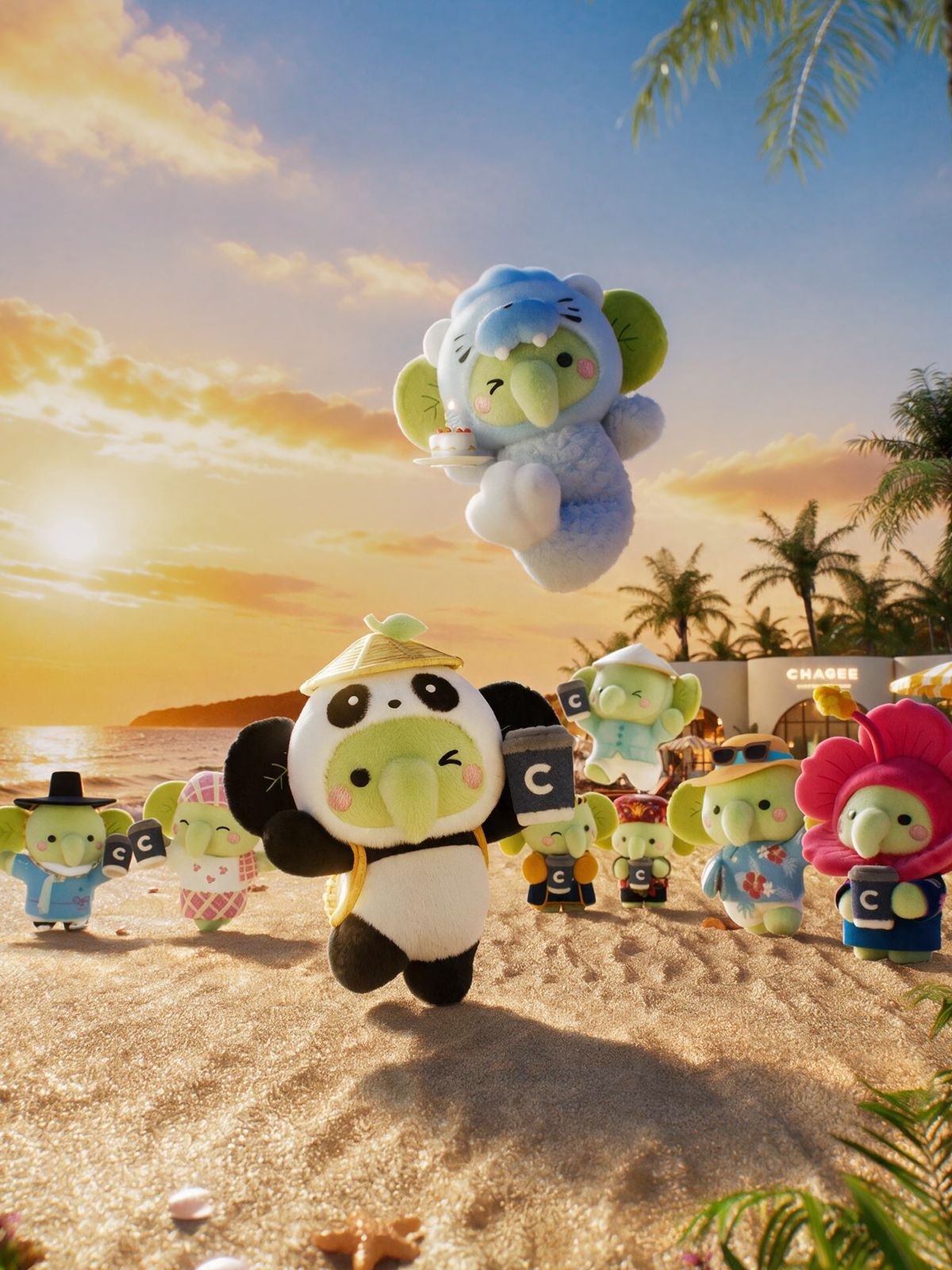
What is Teadore, and why an elephant?
Teadore is a green elephant mascot whose design is built from tea-related cues; the animal is a heritage shortcut, not a random mascot pick.
The character traces back to the Ancient Tea Horse Road, the mountain routes that moved tea from Yunnan across borders over centuries. Founded in Yunnan in 2017, CHAGEE comes from a province that is also home to China's wild Asian elephants, so the animal gave the brand a natural way to tell how tea travelled between communities. The elephant is also a live conservation story: China's wild Asian elephant population has grown from about 150 in the 1980s to nearly 400 today, according to Xinhua reporting carried by People's Daily. That gives the mascot a real-world backdrop rather than a purely decorative one.
In a conversation with MARKETING-INTERACTIVE, Eugene Lee, CMO of CHAGEE APAC, explained the reasoning. "Tea brings people together, but every market has its own culture, traditions and identity. We wanted Teadore to celebrate both," Lee said.
"Teadore stays recognisable as the same green elephant everywhere, but each local design draws on something familiar and meaningful to the people there. That way, Teadore feels like part of each market rather than just a visitor." Lee said.
On the design details: "Teadore’s green colour, leaf-shaped ears and signature CHAGEE ‘C’ all trace back to our roots in tea. The Tea Horse Road brought communities and cultures together through tea, which is what CHAGEE believes tea can still do today," Lee said.
Which market gets which Teadore — and what does each design signal?
Short answer: seven Asia Pacific markets get culture-specific outfits, plus China and the US outside that region; the shared elephant body stays fixed while the dress carries the local meaning.
The differences are best seen side by side.
| Market | Local cue | What it signals |
|---|---|---|
| Singapore | Soft blue, Merlion-inspired design, holding a CHAGEE cup | National icon plus the product itself |
| Malaysia | Kebaya with Bunga Raya details | Traditional dress and the national flower |
| Indonesia | Indonesian look: Jas Demang jacket, kain ujung serong waist cloth and songkok | Traditional attire |
| Thailand | Muay Thai gear | National sport |
| Philippines | Balintawak | Traditional attire |
| Vietnam | áo bà ba | Traditional attire |
| South Korea | Hanbok | Traditional dress |
| China | Panda costume | National icon |
| US | Hawaiian shirt and surfboard | Casual leisure imagery |
The pattern is consistent: where a market has a famous icon or sport, CHAGEE reaches for it; where it does not, traditional dress does the work. Local teams also take part in the process, helping shape and review designs so they resonate with the communities represented. Lee said the method mirrors CHAGEE's store design approach, which is meant to reflect the communities served. In other words, localisation is being treated as a brand-identity input, not a campaign afterthought.
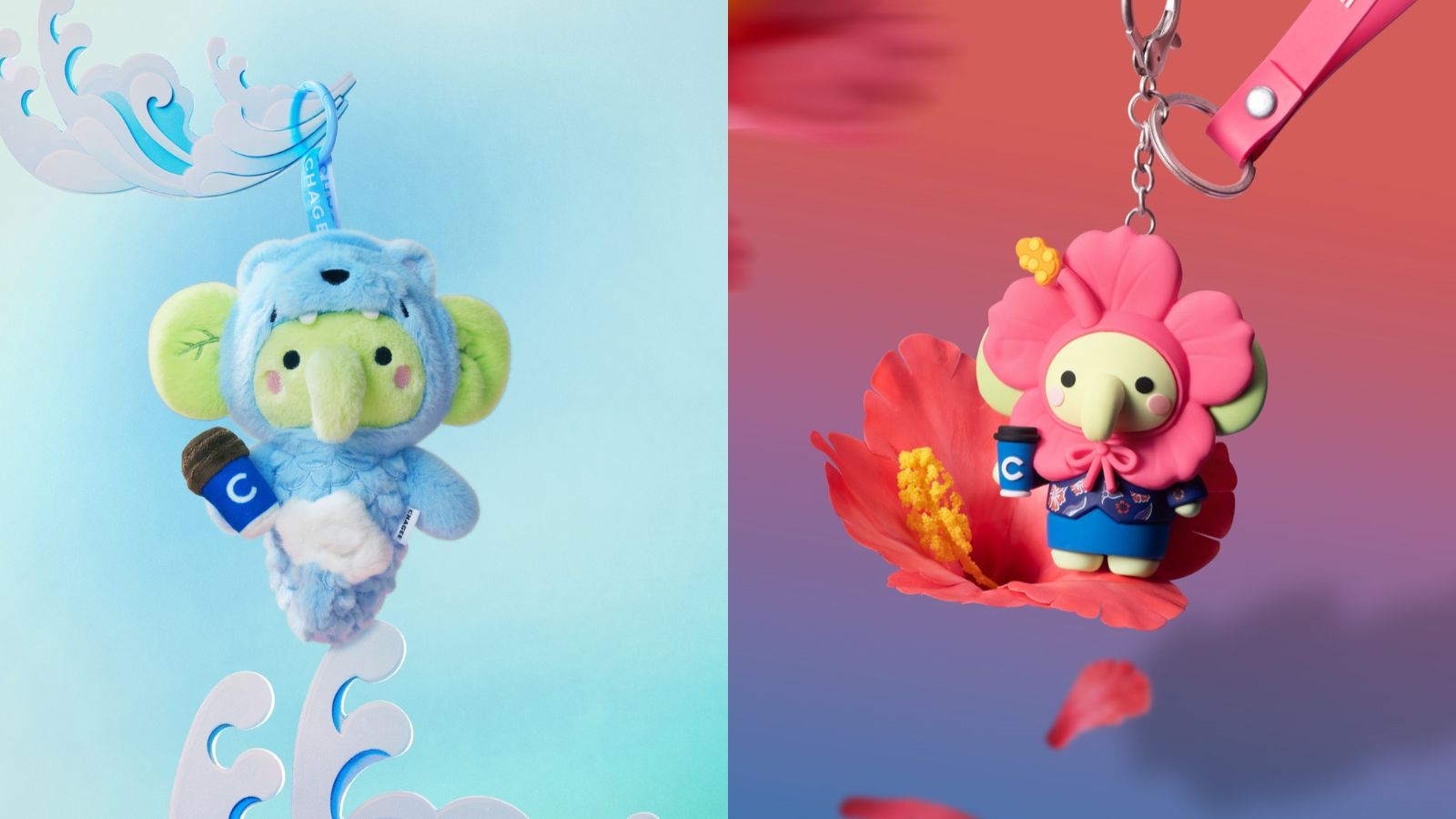
Why is each version locked to a single market?
Because scarcity turns a giveaway into a collectable — and a collectable into a reason to talk across borders.
Each Teadore design will stay exclusive to its own market instead of being made available across CHAGEE's international network. "Each Teadore was designed with one market in mind, so it felt right for it to stay there. That makes each version something local customers can truly call their own," Lee said.
That choice adds a collectable dimension, as CHAGEE hopes consumers will encounter different versions when they visit stores in other markets. "Teadore has travelled the Tea Horse Road to invite everyone to our birthday, and we like the idea of customers following that journey too, spotting a different Teadore whenever they visit CHAGEE in another market," Lee said.
"Over time, we hope fans might swap versions with one another, sparking new conversations between tea lovers across markets." Lee said.
This is where a comparison with other character-led retail drops helps. Our guide to the UNIQLO x Studio Ghibli UT fan journey in Singapore shows the same mechanic — a fixed set of designs, a defined window, and a reason for fans to plan a visit. CHAGEE's twist is geographic: the set is scattered across markets, so the journey is a travel-or-swap story rather than a single-store checklist.
Three common misconceptions about localised mascots
- "Global brand" means identical everywhere. The Teadore rollout argues the opposite: a stable core (the green elephant) plus variable surface (dress) can keep recognition while adding local relevance.
- A mascot is a one-off campaign prop. CHAGEE says it intends Teadore to become part of the wider brand, not a single-anniversary character — though it is letting customer response set the pace.
- Localisation is free once the design is done. Local teams must review each version, and every market-specific SKU adds small operational complexity to stock and merchandise planning.
What is the cost — and does the mascot bet pay?
Short answer: the design layer is cheap next to stores and product; the real cost is governance and endurance, and the upside is brand linkage rather than direct sales.
CHAGEE is expanding fast. It planned about 200 overseas stores in 2026, with 83 net new stores taking that total to 345, according to Jiemian. Against that spend, a set of character illustrations is a small line item. The catch is that a mascot only compounds if it survives beyond the launch window.
Third-party research suggests why the bet gets made. A 2023 Ipsos study, cited by Frontify, found mascot-led campaigns 37% more likely to drive brand linkage and 30% more likely to command attention; a Moving Picture Company figure reported by Loonietimes puts long-term mascot campaigns at a 34% profit lift. These are directional industry findings, not CHAGEE outcomes.
CHAGEE itself is in no hurry. "That will shape what comes next. We definitely see room for Teadore to grow beyond merchandise, but we’d rather let our customers guide that than rush it," Lee said.
What else ships with the anniversary?
Beyond the mascot, the ninth-anniversary programme pairs the character with a product and retail push.
Teadore forms one element of CHAGEE's ninth anniversary celebrations, held on 17 November under the theme "One World. One CHAGEE". In Singapore, the programme also features the BO·YA Mango Jasmine Green series in milk tea and brewed tea forms, together with a nationwide "Tear & Win" activation from 15 to 17 November. Vouchers and merchandise are among the prizes attached to eligible purchases.
CHAGEE is also widening its food offering through nine new artisan bakes, among them Da Hong Pao Mochi Bun, Peach Oolong Choux Puff and White Peach Oolong Butter Rice Cake. Singapore is also the first market outside China to offer Geelato, CHAGEE's freshly handcrafted gelato range made with its signature teas; Lee said the idea was developed to give younger consumers another reason to visit stores by translating familiar tea flavours into a dessert format. Outside Singapore, the BO·YA Mango Jasmine Green series will also be available in Malaysia and Philippines.
Localised, time-boxed promotions like these are a staple across the region; our look at Deepavali campaigns in Singapore and Malaysia shows how festival timing and local emotion do similar work for other brands.
FAQ
Is Teadore available in every CHAGEE market?
No. The designs were built with specific markets in mind and each stays exclusive to its own market; the character appears across seven international markets plus China and the US in this anniversary.
Why did CHAGEE pick an elephant rather than a tea leaf?
The elephant ties to Yunnan, where CHAGEE was founded and where wild Asian elephants live, and to the Ancient Tea Horse Road story of tea moving between communities. Leaf-shaped ears and the CHAGEE 'C' keep the tea link visible.
Will Teadore become a permanent mascot?
CHAGEE says it sees room beyond merchandise but wants customer response — which designs people favour and how they share them — to decide what comes next, rather than rushing an extension.
What can a smaller brand copy from this?
Keep one recognisable core, let local teams own the surface details, and make scarcity meaningful. You do not need seven markets to use the logic; two well-chosen variants can test the same idea.
Next steps: what a brand team should actually do
If you are weighing a similar move, the useful question is not whether to have a mascot but what job it would do.
- Define the fixed core. Decide what never changes — shape, colour, a signature mark — so recognition survives localisation.
- Hand the surface to local teams. Let them choose cues they are proud of, then review for accuracy and respect; CHAGEE's process uses local input for exactly this reason.
- Make exclusivity earn its keep. A market-locked variant only works if people can discover and trade it; plan the discovery path before you produce the SKU.
- Set a review date past the launch. Judge the mascot on repeat behaviour months later, not on anniversary-week buzz.
The pragmatic read: Teadore is a low-risk way for CHAGEE to make a global birthday feel local. Whether it becomes a lasting asset will be decided less by the designs than by what the brand does on the day after the campaign ends.
References
- MARKETING-INTERACTIVE — How CHAGEE is making one brand feel at home everywhere
- Zawya — CHAGEE grows to eight Asia Pacific markets with Brunei entry
- Jiemian — Chagee to add 200 overseas stores in 2026
- People's Daily / Xinhua — China's wild Asian elephant population nears 400
- Frontify — Ipsos findings on mascot-led campaigns