
ItInsightsWorld General Guide: Bundibugyo Ebola in the DRC — What Field Teams and Travellers Should Do Next
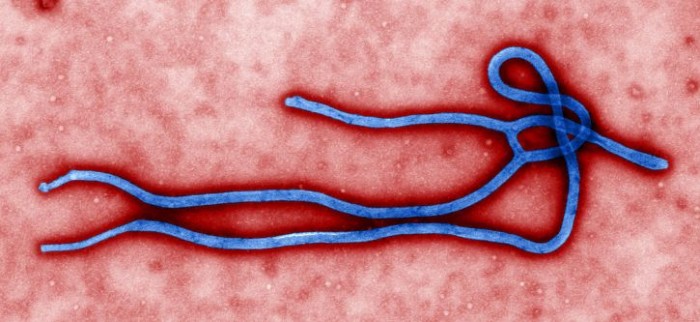
There is no licensed vaccine and no approved drug for Bundibugyo virus, so no single intervention settles this outbreak. What changes outcomes is operational: find cases early, isolate them, trace contacts, handle the dead safely, and keep teams on site long enough to do all four. Read it as an access-and-verification problem, not only a medical one. That distinction explains why response decisions look slow from outside and urgent from inside.
Start with one concrete date. On 22 October 2026, the first participants were vaccinated in Bunia, the capital of Ituri Province, in a platform trial called Tumaini. Nothing in that sentence means protection has arrived. It means the trial is running while the epidemic keeps moving, and the gap between those two facts is where most decisions in this response actually get made.
What is spreading, and where?
Direct answer: an outbreak of Ebola disease caused by Bundibugyo virus, running in the Democratic Republic of the Congo (DRC) since May 2026. The World Health Organization (WHO) declared it a public health emergency of international concern on 17 May 2026, a designation covering the DRC and Uganda. The European Centre for Disease Prevention and Control (ECDC) counts it as the 17th Ebola outbreak recorded in the DRC.
Geography matters more than totals here. Transmission concentrates in Ituri Province and North Kivu Province. Cumulative cases in Ituri Province are close to 70% of the national total, roughly seven-tenths of the country's caseload, while North Kivu has become a main area of new transmission. Frequent population movement and thin health coverage push the virus past the boundaries drawn around it.
Two verified checkpoints show the slope rather than the headline:
- As of 21 August 2026, a CDC field note recorded 5,458 confirmed cases and 2,606 confirmed deaths, about 48% of confirmed cases, spread across six of the DRC's 26 provinces and 57 of 151 health zones inside those provinces.
- By 7 October 2026, WHO's reported figures stood at 8,665 confirmed cases and 4,178 confirmed deaths.
Six and a half weeks between those two points, with roughly 3,200 additional confirmed cases. I read that as a statement about surveillance as much as epidemiology: more districts entered the reporting grid, so more of what was already circulating became visible.
The outbreak is no longer contained to one country. Uganda and Kenya have recorded cross-border transmission, and Nigeria has confirmed imported cases; ECDC has published a separate note on the importation of Bundibugyo virus cases into Kenya and Nigeria. Importation complicates contact tracing and border monitoring, and makes the work multinational by default. It does not, on its own, prove sustained community spread in those countries.
Scale check against 2014 to 2016
| Period or place | What the record shows |
|---|---|
| West Africa, 2014 to 2016 | The most severe Ebola outbreak on record: about 28,000 people infected and more than 11,000 deaths. |
| DRC, 2026 | In the first months after this outbreak began, case and death counts grew at least three times faster than the equivalent stretch of the West Africa epidemic, and this is now the second-largest Ebola outbreak ever recorded. |
The useful part of that comparison is velocity. Totals compare two epidemics that ran on different calendars; growth rate compares what the same response had to absorb each week.
Why is there no off-the-shelf vaccine for this virus?
Because the research pipeline was built for a different target. The largest Ebola outbreaks have most often involved Zaire ebolavirus, so manufacturing, licensing and stockpiling concentrated there. Bundibugyo is uncommon and has historically caused smaller events, which left the specialised toolbox incomplete. That is why the DRC government and international health organizations are running a response without a licensed product aimed at the virus actually circulating.
- Ervebo, the most widely used Ebola vaccine, is licensed against Zaire ebolavirus. In this trial it is evaluated as a mismatched candidate: already manufactured, well characterised, and therefore the fastest option to put in the field.
- On 4 November 2026, WHO announced that two candidate vaccines designed specifically against Bundibugyo virus would join the trial, as treatment research advances in parallel.
- Candidly, there is no published efficacy readout for either approach yet, and I will not guess a date for one.
The trade-off inside that design is worth stating plainly. Testing a mismatched vaccine first buys speed but risks a weak result against the circulating virus. Waiting for a matched product buys relevance but costs months of unopposed transmission. A platform trial is the compromise: one protocol, several candidates, decisions taken as evidence lands.
Why do case counts keep outrunning the response?
Because the binding constraints are not scientific. The DRC government and international health organizations work against access, capacity and trust at the same time, and each one degrades the others.
- Access. Renewed armed conflict in Ituri Province and North Kivu Province, poor roads and unsafe movement mean teams cannot reach some of the worst-hit communities, so testing, isolation and contact tracing start late or not at all.
- Capacity. Hospitals are already stretched, and damaged or threatened treatment facilities cannot hold patients reliably.
- Trust. Misinformation leads some residents to deny the virus exists or to suspect clinics and response staff of hidden aims. There have been multiple attacks on health facilities and on health workers. Staff safety problems and late presentation by patients are one problem seen from two sides.
- Public spaces. In Ituri Province a teacher was infected, disrupting school operations and affecting staff and students. Schools in high-movement, low-resource areas are where surveillance is hardest to run and most needed.
The consequence is a transmission chain that nobody can finish: an undetected case becomes tomorrow's cluster, and a suspected case hidden by the family becomes a contact list that stays incomplete.
If you travel or work in the region, what should you actually do?
WHO's standing advice is against blanket travel and trade restrictions, and the risk is not uniform: ECDC rates national risk in the DRC as very high, risk in neighbouring countries as high, and risk for the rest of Africa and the globe as low. Practical steps for an individual or a field team:
- Get pre-travel medical advice, and write down the nearest testing and treatment facility for every stop on the route before departure, not after.
- Avoid direct contact with blood, vomit, diarrhoea or other body fluids, and avoid contact with bodies or burial practices involving them. Hand hygiene with soap or alcohol rub is the baseline, not the last resort.
- Do not handle or consume bushmeat, and avoid contact with bats and non-human primates in affected areas.
- Self-monitor for 21 days after any possible exposure for fever, fatigue, muscle pain, vomiting, diarrhoea or unexplained bleeding. Call a health authority before going to a clinic so the facility can prepare.
- Register with your embassy and keep independent communications: a local SIM plus satellite messaging. In conflict-affected provinces, communications failure is the ordinary reason duty-of-care decisions stall.
- For employers and NGOs: keep a written isolation, referral and transport procedure for staff, rehearse it once a quarter, and never publish patient identifiers inside situation reports.
Where do teams and readers usually get this wrong?
| Common mistake | What it costs | Better move |
|---|---|---|
| Reading a trial start date as protection arriving | Weeks of precaution are relaxed for a product with no published efficacy data | Separate "candidate exists" from "candidate works", and judge progress on weekly transmission instead |
| Reading rising case counts only as failure | Surveillance gains get mislabelled as outbreak spikes | Check whether new districts joined the reporting grid, as the CDC field note shows for 57 of 151 health zones |
| Treating borders as the firewall | Attention goes to crossings while unfinished contact lists stay inside provinces | Track contact-tracing completeness in Uganda, Kenya and Nigeria, not just case counts |
| Explaining the outbreak with a single cause | Policies fix one constraint and leave two in place | Assume access, capacity and trust bind simultaneously |
| Sharing figures with no date or source | Unverifiable numbers harden into public fact | Keep the source-plus-date habit, and apply the same verification discipline you would to any viral post: our working rule on how to spot a foreign influence post before you share it transfers directly |
Questions readers actually search
Is this the same virus as the 2014 to 2016 West Africa epidemic?
No. Both are Ebola disease, but the West Africa epidemic was driven by Zaire ebolavirus, while this outbreak is caused by Bundibugyo virus. That difference is not cosmetic: it is the reason licensed tools and approved treatments largely miss the target.
Can I get vaccinated before travelling?
Not against this virus. There is no approved Bundibugyo-specific vaccine, and the candidates now being evaluated in the DRC are trial products, not something a travel clinic can administer. WHO also holds that vaccination certificates are not a valid basis for restricting cross-border movement.
How is Bundibugyo virus transmitted?
By direct contact with blood, body fluids or secretions of an infected person, with contaminated objects, and with the body of someone who has died. It is not spread by casual contact at a distance, which is why isolation, safe burial practice and protective equipment carry so much of the load.
Should I expect travel bans?
WHO advises against restricting travel or trade with affected countries, and its interim advice to governments has focused instead on coordination, cross-border cooperation and continuous monitoring. Screenings at points of entry are more likely than closures.
What would change my read of the situation?
Three indicators: the share of deaths occurring outside treatment facilities, contact-tracing completeness against the list of named contacts, and whether candidate vaccines publish efficacy data at all. If those three move, the picture changes. If only the case count moves, it may just be better counting.
A checklist you can reuse
Whether you are preparing a field rotation, briefing a team, or simply deciding how much attention this outbreak deserves from here, the same seven lines work:
- Which species? Bundibugyo here, so Zaire-specific tools are assumptions, not assets.
- Which districts, this week? Province-level totals hide both spread and containment.
- Can teams get there? Access decides whether any plan is real.
- Are contacts complete? An unfinished list is the main engine of new clusters.
- Is care reachable and trusted? Late presentation converts treatable cases into deaths.
- What is the source and date of every number I repeat?
- What am I doing in the next 21 days? Individual risk is managed by behaviour, not by headlines.
Sources
- WHO, "Two new candidate vaccines to join Ebola trial as treatment research advances", 4 November 2026: https://www.who.int/news/item/04-11-2026-two-new-candidate-vaccines-to-join-ebola-trial-as-treatment-research-advances
- CDC, "Notes from the Field" on the 2026 Bundibugyo outbreak in the DRC: https://www.cdc.gov/mmwr/volumes/75/wr/mm7535e1.htm
- CDC, Ebola outbreak situation summary: https://www.cdc.gov/ebola/situation-summary/index.html
- ECDC, "Ebola disease: Multi-country outbreak 2026": https://www.ecdc.europa.eu/en/ebola-disease-multi-country-outbreak-2026
- ECDC, "Importation of Ebola disease cases caused by Bundibugyo virus to Kenya and Nigeria": https://www.ecdc.europa.eu/sites/default/files/documents/importation-ebola-tab.pdf
- CEPI, "First participant vaccinated in pivotal Phase 2/3 Bundibugyo vaccine trial in DRC": https://cepi.net/first-participant-vaccinated-pivotal-phase-23-bundibugyo-vaccine-trial-drc
- ReliefWeb, Central/Eastern Africa Ebola outbreak situation reports: https://reliefweb.int/disaster/ep-2026-000071-cod
- WHO Regional Office for Africa, outbreak page: https://www.afro.who.int/health-topics/ebola-disease/outbreak-drc-26