
Warren Buffett’s 48-Year No-Water Claim: A Practical Guide for General Readers
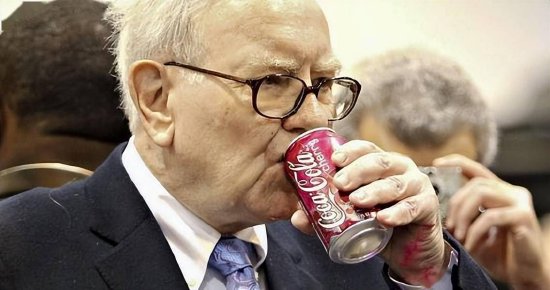
A dinner-table line has become one of the easiest ways to understand why Warren Buffett remains a cultural story as well as an investment story. Bill Ackman, founder and CEO of Pershing Square, recalled that when Buffett came to dinner he had already placed the famous guest’s preferred Cherry Coke within reach. The practical lesson for general readers is not to copy an extreme habit, but to learn how to separate a colorful anecdote from a business signal.
The reported scene
Ackman said he asked Buffett whether he wanted plain water or sparkling water. Buffett politely declined the water and chose soda instead. Ackman recalled the exchange: “I asked him: ‘Don't you drink water?’” Buffett answered, “Buffett said: ‘Bill, I haven't had water in 48 years.’”
The moment works as a media shortcut because it compresses a long-running public persona into one surprising sentence. After the story circulated, reporters reached out to Ackman for more detail on Buffett’s drinking routine, but he did not immediately respond.
What the facts say
- Buffett is known for drinking 5 cans of Coca-Cola a day, and his love of sugary snacks and fast food has lasted decades.
- In 2015, Fortune reported Buffett’s own arithmetic: “If I eat 2,700 calories a day, a quarter of that is Coca-Cola. I drink at least five 12-ounce servings.” He also said Coca-Cola accounted for 25% of his daily calories, and joked that he felt one quarter of his body was Coca-Cola.
- In 1986, at Berkshire Hathaway’s annual meeting, Buffett announced that after following Pepsi for decades he was switching to Cherry Coke and making it the official meeting beverage going forward.
- Buffett led Berkshire for 60 years before stepping down as CEO last December; he then stepped down as chairman this September.
That last point matters because Buffett’s personal brand and Berkshire’s investment brand overlap in public memory. The Cherry Coke story is memorable partly because Coca-Cola is also one of the company’s best-known holdings.
Why the soda habit also became an investment story
| What the anecdote shows | What it does not prove | Useful takeaway |
|---|---|---|
| A repeated personal preference can create public clarity. | That personal behavior is healthy or transferable to ordinary readers. | Treat lifestyle headlines as signals, not instructions. |
| Coca-Cola sits inside a wider Berkshire story, from See’s Candies and Dairy Queen to Kraft Heinz and McDonald’s-centered eating habits. | That affection for a product automatically makes it a good purchase. | Look at durability, pricing power, and cash flow before emotional preference. |
| Berkshire built its Coca-Cola position in the 1990s and held about 9% of the company without reducing it. | That any large holding remains optimal for every investor’s goals. | Long holding periods require evidence of business quality, not celebrity endorsement. |
According to the original account, Berkshire’s Coca-Cola stake cost about $1.3 billion and, by the end of December, was worth about $28 billion, or about 21 times the original cost. That fact gives the dinner anecdote financial weight: the public sees a man who drinks what the company’s portfolio has historically favored. As Business Insider noted in its retelling, the quote travels because it links a billionaire investor, a private dinner, and a health-adjacent shock in a single line.
A practical framework for reading the story
Step 1: Identify the claim
The claim is that Buffett said he had not had water for 48 years. The source is Ackman’s recollection of a private dinner, not a clinical study or a public medical record.
Step 2: Check the supporting pattern
The pattern is consistent: Cherry Coke at Berkshire’s 1986 annual meeting, 5 cans a day, McDonald’s on the way to work, and sweets such as hot dogs, fries, popcorn, cookies, candy, and ice cream.
Step 3: Separate persona from portfolio
Buffett’s habit makes Coca-Cola memorable, but Berkshire’s ownership history is the more useful commercial lesson. The company’s investment record includes Coca-Cola, See’s Candies, Dairy Queen, Kraft Heinz, and a breakfast routine that often includes McDonald’s.
Step 4: Add a risk layer
For readers, the most important guardrail is health. Public nutrition data from Coca-Cola’s official site lists a 12-ounce can of Coca-Cola Original Taste as containing 39 grams of sugar, while the American Heart Association recommends limiting added sugars rather than treating soda as a hydration substitute. The takeaway is simple: admiration for Buffett’s consistency should not override ordinary dietary judgment.
Reader checklist
- Ask who is telling the story, and when. Ackman’s memory was retold years later and became viral because of its brevity.
- Ask what the story is being used to sell: health advice, investment insight, brand loyalty, or clicks.
- Compare behavior with balance-sheet facts. Cherry Coke is a beverage preference; Coca-Cola as an investment is a different question.
- Do not infer longevity from one person’s habits. Buffett’s routine is personal history, not a medical protocol.
- Use the anecdote to study branding consistency: a product, an investor, and a shareholder base can share the same cultural space.
Common misconceptions
- “He must be hydrating with water in disguise.” The reported quote should be read as a memorable statement, not a laboratory measurement.
- “Loving the product makes the stock the right buy.” Berkshire’s about 9% Coca-Cola stake, about $1.3 billion cost, about $28 billion value, and about 21 times return are useful context, but they do not make the holding suitable for everyone.
- “Fast food plus soda explains his business success.” It may explain public attention, but it does not explain underwriting discipline, capital allocation, or long-term ownership patience.
FAQ
Did Buffett really say he had not had water in 48 years?
That is the version Ackman recounted. The line is credible as a reported personal claim because Buffett has long discussed his Coca-Cola preference, including 25% of daily calories from soda and 5 cans a day.
Is the Cherry Coke story about health?
No. For general readers, it is mainly a story about brand consistency, media virality, and how celebrity behavior can blur product preference with investment narrative.
Why does the anecdote keep circulating?
Because it has three rare ingredients: a famous billionaire, a private dinner, and a shocking short sentence. Business Insider’s spread of Ackman’s account shows how easily a small social moment becomes a public lesson.
Action plan
When you see a Buffett lifestyle story, do three things before forming an opinion: confirm the source, trace the business fact, and decide whether the lesson is practical or merely entertaining. If you are reading about Coca-Cola, look at the ownership facts: a position assembled in the 1990s, about 9% ownership, about $1.3 billion cost, about $28 billion market value by the end of December, and about 21 times gain. If you are reading about food habits, pair the story with public guidance, not with blind imitation.
The strongest general-reader lesson is not “drink Cherry Coke.” It is that durable public stories often sit at the intersection of personality, product, and portfolio. Buffett’s 60-year run at Berkshire, his step down as CEO last December, and his exit as chairman this September frame the anecdote; McDonald’s, Cherry Coke, See’s Candies, Dairy Queen, and Kraft Heinz frame the commercial context. The practical move is to read the scene as evidence of consistency, test it against verifiable sources, and leave the medical decisions to qualified advice.