
ItInsightsWorld: Bill Gates on AI’s Jobs Shock — Robots May Do More, But Humans Still Need Purpose
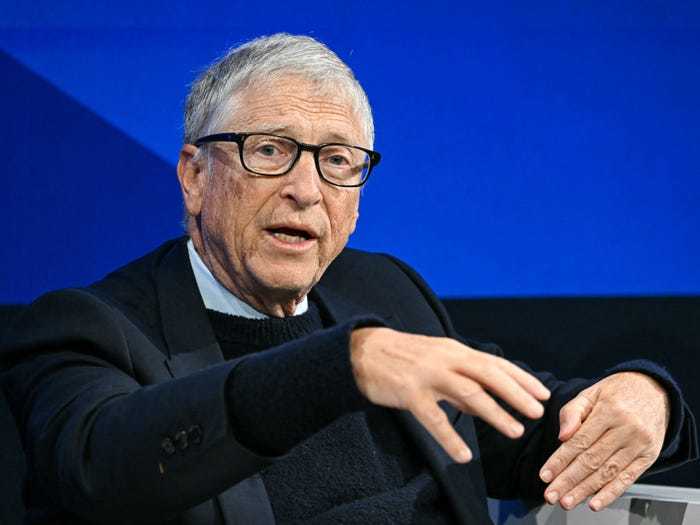
From an ItInsightsWorld sector-watch standpoint, the warning Bill Gates is placing most emphasis on is not a far-off automated world, but the unsettled stretch that could last two decades as artificial intelligence reshapes work.
What makes the twenty-year shift dangerous
Gates describes this 20-year transition period as the point where “there will be winners and losers, and there will be a lot of mess”.
He also addresses the broad concern about white-collar attrition. In his assessment, telemarketing, telephone customer service, and accounting jobs will disappear because AI can complete those jobs in ways that are far cheaper, far faster, and even more accurate.
For blue-collar roles, he points to humanoid robots taking over.
The economic consequence Gates foresees
He says: “If we do not choose to slow down or stop on a large scale, then we will have robots that can build houses, grow food, and perform surgery. Everything that human labor provides to the economy will no longer be necessary for most goods and services.”
That is why, in Gates’s telling, a change of this magnitude can shake even someone with his resources and long record of leading efforts to eliminate malaria and respond to humanitarian crises.
He puts the emotional difficulty plainly: “When AI says to me, ‘No, I am better than you. Go play pickleball; I will come back and handle this’ — that is a little funny, but it is not funny.”
Why work remains central
He repeats his long-standing view that work matters because it provides a sense of purpose, income, a reason to show up each day, a channel for building relationships with colleagues, and a route for creating and solving problems.
Looking ahead, he suggests that art, sports, cooking, and child-rearing could be preserved for humans to do, “even if AI can do them better”.
He also mentions that measures such as earlier retirement and limits on working hours may help sustain some level of human employment.
Other proposed responses
He imagines future voices saying, “Let us be like the Amish and use AI only for some things,” so that people need not give up helping one another or raising distinctive ideas.
The report notes that Amazon founder Jeff Bezos and JPMorgan CEO Jamie Dimon have proposed shortening weekly work hours as a less painful alternative after AI-related job losses.
How other technology leaders frame the risk
Gates is among the technology leaders sounding alarms about AI’s impact on employment. Elon Musk has predicted that the transition will be “bumpy,” and has put forward government checks for everyone as the best way to respond to AI-driven unemployment.
Musk has also said technology could drive production costs so low that everyone can have “anything they want,” while work becomes “optional.” In his view, it will not be worthwhile to save for retirement ten or twenty years from now, because money will no longer matter.
Dario Amodei of Anthropic has said AI is poised to “improve the quality of life for everyone,” while warning that “the scale of the short-term disruption will be unprecedented.”
In May of this year, Sam Altman of OpenAI said that fewer white-collar jobs had been eliminated by AI than he expected, and that he no longer anticipated a “jobs apocalypse.”
The reporting also observes that although Amazon and Meta have carried out high-profile layoffs, nationwide unemployment in the United States did not rise in any material way during the AI boom.