
ItInsightsWorld General Guide: How to Pick an Avengers: Doomsday Brand Tie-In — Formats, Pitfalls and a Cost Checklist
Pick the activation format before you pick the character. Avengers: Doomsday tie-ins tend to work when the mechanism fits your category and budget, not when you simply buy the biggest name on the list. That is the practical read on this campaign wave: a menu of formats, each with its own cost, effort and proof, and a decision to make well before the film reaches cinemas on December 18, 2026.
Picture the standing argument in a brand meeting. The marketing lead wants the glow of The Avengers; finance wants a return nobody can honestly produce before the credits roll. Both sides are half right. A tie-in can move a specific behaviour — an order, a collection, a visit — but an announced prize pool or a long list of partners is not the same as incremental sales. This ItInsightsWorld tracker, building on the campaign file ContentGrip has been keeping, gathers the verified Avengers: Doomsday tie-ins in one place, keeps them separate from broader Marvel collaborations, and then does the less glamorous work of asking what each format costs and what a team must do to make it pay.
Why bother at all? Fandom attention is real but conditional. Amazon Ads' global fan research reports that 55% of fans say they are more likely to consider a brand that sponsors content connected to their fandom, while a separate Fandom study puts 43% more likely to consider buying from a brand linked to a franchise they love. Those are stated intentions, not purchases — a gap this guide keeps returning to.
Which activation format should you choose — a side-by-side comparison?
No single format wins. Each campaign below buys a different consumer behaviour, so the right choice hinges on whether you can change what people order, give them something to keep, or give them somewhere to go. Here is the whole wave at a glance.
| Brand / campaign | Format | Behaviour it buys | Main cost driver |
|---|---|---|---|
| KFC | Themed menu plus collectibles | Order something different | Global supply and packaging |
| Dunkin' | Character drinks and store takeovers | Buy a drink, visit a location | Retail footprint, talent |
| Jack in the Box | Collectible meal set | Complete a set | Moulded items, repeat visits |
| Happy Coffee | Collectible can designs | Pick a character, collect | Print runs, distribution |
| Pop Secret | Movie reward on packs | Buy several qualifying items | Reward liability, fulfilment |
| Smirnoff | Ticket bundle and secret party | Attend an event | Prize inventory, events |
| Jeep | Branded short film | Watch and remember | Production, media |
| Dave & Buster's | Venue takeover | Visit a physical place | Venue fit-out, staffing |
| Grab Malaysia | Ride-to-ticket rewards | Take rides, share a trip | Discount funding, ticketing |
| Hasbro | Licensed figures | Buy merchandise outright | Tooling, licensing |
Collectibles and packaging: KFC, Jack in the Box, Happy Coffee
KFC has the widest reach of the food promotions: a Doctor Doom-themed menu spanning 100 countries, with special food items, packaging and collectibles tied to Avengers: Doomsday. It turns the film's antagonist into something diners meet during an ordinary fast-food visit. KFC's own press release dates the "Doomified" menu from 9 November through January 2027, which tells you the real commitment is supply-chain, not a one-day stunt. A limited menu gives customers a reason to order differently; collectibles give some fans a reason to seek out participating stores. Those are motivations, not confirmed sales.
Jack in the Box built its Avengers: Doomsday Dipping Box around assembling a set — eight collectible magnets and three sauces, with the rollout announced for November 5. A meal is usually eaten and forgotten. A magnet stays on the fridge after the food is gone, giving the tie-in a physical afterlife. Whether that afterlife drives repeat visits is a question for results, not an assumption.
Happy Coffee took the packaged-product route: eight collectible coffee-can designs tied to Avengers: Doomsday. The licensed art sits on the item itself, so the packaging does the talking.
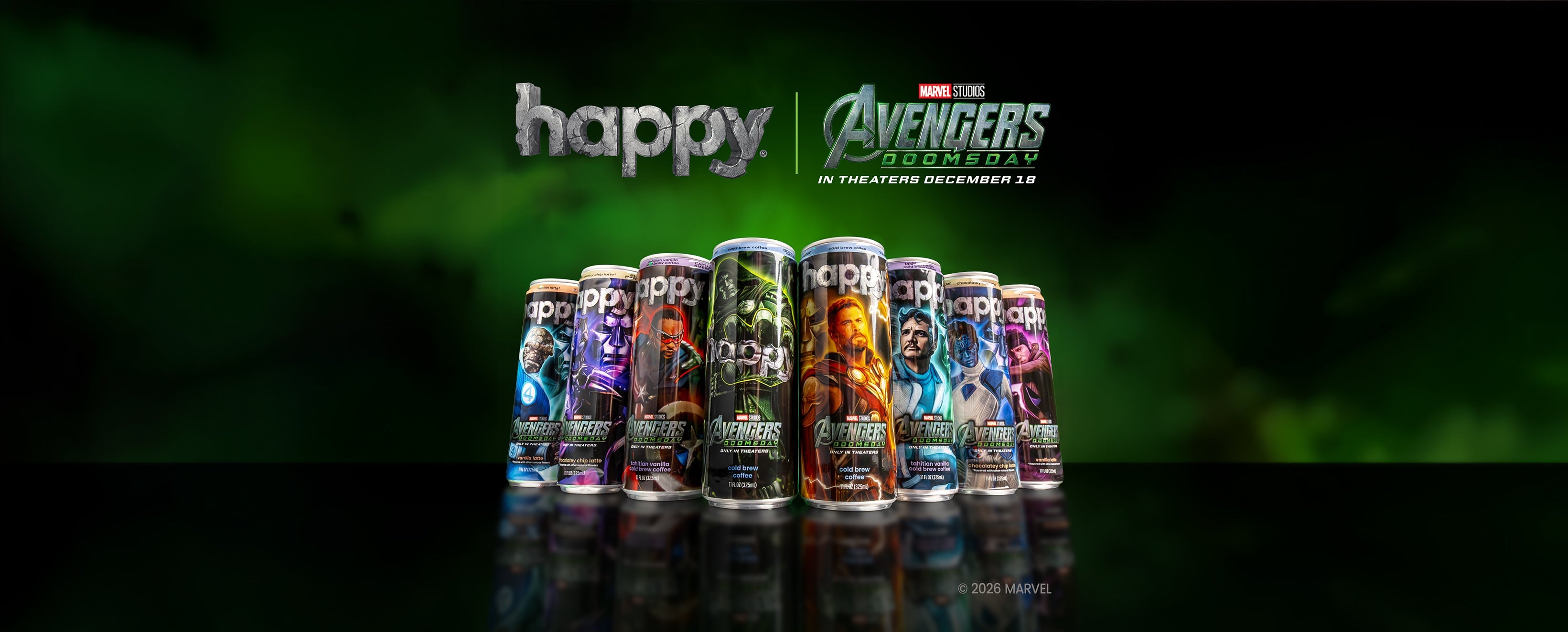
Different designs can make an everyday purchase feel like a choice between characters, or a chance to complete a collection. That is the whole mechanism — not proof that anyone bought eight cans.
Drinks, snacks and experiences: Dunkin', Pop Secret, Smirnoff
Dunkin' handed the coffee run to Gambit, enlisting Channing Tatum, with six themed drinks and four restaurant takeovers planned for Los Angeles, Chicago, New York and Boston. A recognisable character plus a product plus a place to visit is a different proposition from a poster: it gives people something to watch and something to do.
Pop Secret put a movie-ticket incentive at the centre of its Marvel-themed popcorn promotion. Under the offer described in ContentGrip's coverage, a qualifying purchase of three products earns a US$8 movie reward, subject to campaign terms. That makes "snack at home, watch at the cinema" unusually literal, and it gives shoppers a reason to pick up several qualifying items rather than one.
Smirnoff went experiential. Its Assemble Your Night promotion bundles 1,800 Fandango movie tickets with a secret-party concept — attaching the franchise to a social occasion rather than a flavour or a collectible.
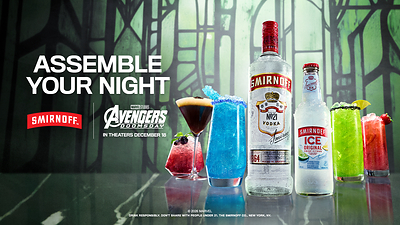
It is a clean piece of positioning, though the brand has not published evidence that the promotion produced incremental purchases.
Disney's own marketing leadership explains the appeal of this pattern. Holly Frank, Disney's Vice President of Global Marketing Partnerships and Promotions, said such activations draw on familiar settings from the Marvel Cinematic Universe while connecting with the festive season around the film, according to Brand Spur's report on the Smirnoff campaign. In plain terms for a brand team: the studio wants reach beyond the cinema, and it is happy to let partners borrow the world as long as the tie-in feels native to the release window.
Places, rides and creative: Jeep, Dave & Buster's, Grab Malaysia
Jeep's film, A Jeep 4x4 for Any Universe, travels through three Marvel universes: the worlds of the Avengers, Fantastic Four and X-Men. Characters such as The Thing and Nightcrawler appear in the creative, which borrows familiar settings to dramatise the vehicle brand's idea of adventure.

This is the closing chapter of a wider yearlong Marvel partnership, not an isolated film tie-in — worth flagging because it is exactly the kind of campaign a "direct Doomsday only" list can mislabel. Where a collectible asks fans to own a small piece of the universe, Jeep uses the universe itself as a fictional landscape for a product.
Through a Doctor Doom-themed arcade takeover, Dave & Buster's becomes Doom & Buster's for a limited run, carrying the villain into an entertainment venue and making games and a shared night out the setting for the film connection. Our earlier breakdown, What The Doom & Buster's Takeover Delivers, looks at dates, terms and costs in more detail.
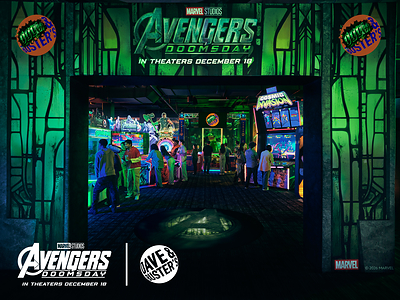
Unlike packaging or a TV spot, a venue takeover gives visitors a physical place to experience the collaboration. The key distinction: the experience is part of the product, not advertising standing beside it.
Grab Malaysia tied Avengers: Doomsday ticket opportunities to two Group Rides, over a promotional period described as November 15 to December 20. Completing at least two Group Rides can unlock a complimentary ticket, subject to the campaign's terms, and savings of up to 40% are advertised under its stated conditions.
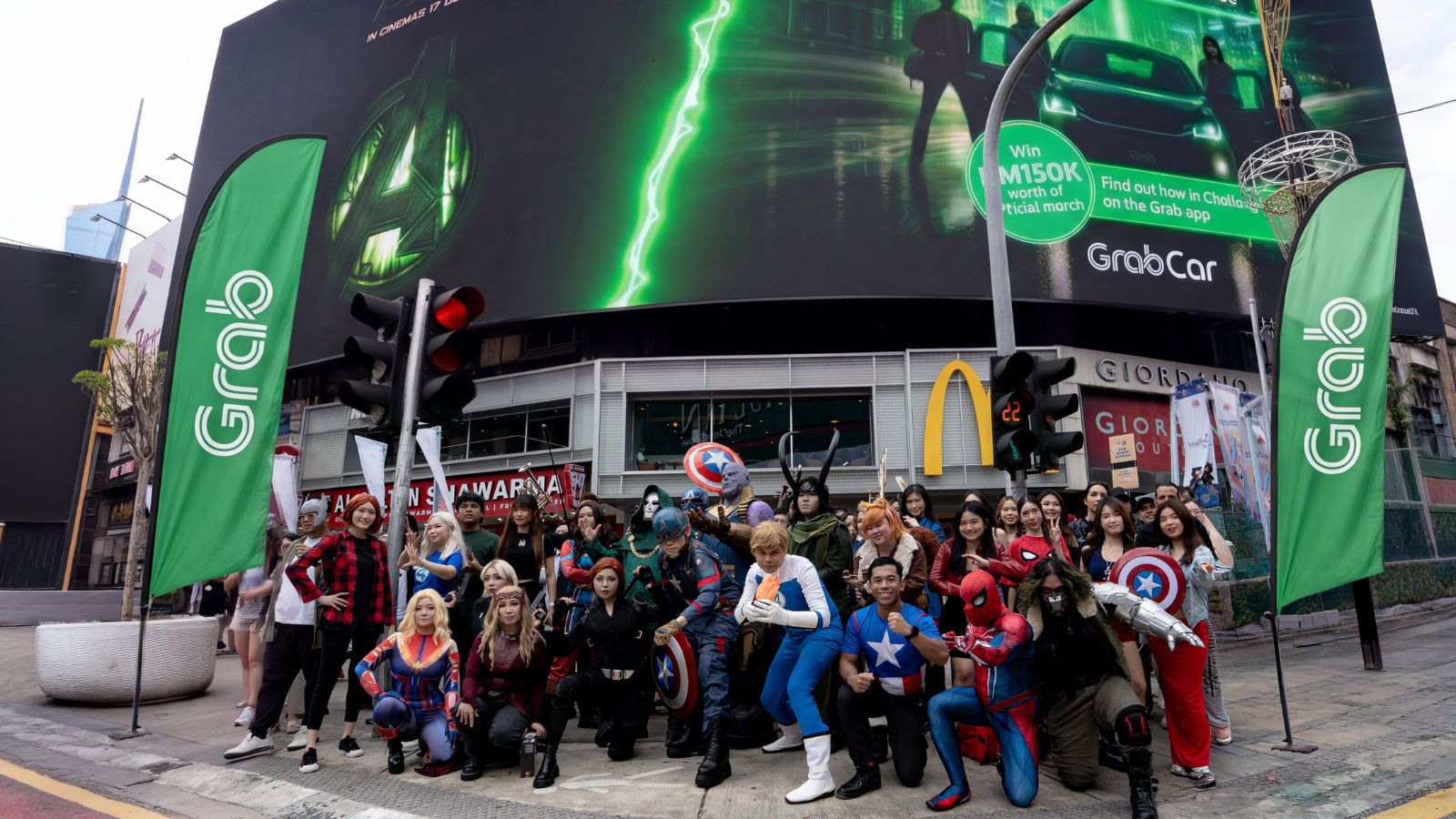
It is a mobility twist on the tie-in: instead of attaching a character to a product, Grab links travel to a shared cinema occasion. For a closer look at how this brand builds campaign-driven discovery, see how Grab Malaysia turned a food trail into a followable dining guide.
Merchandise that stands alone: Hasbro
Hasbro extends the franchise through Marvel Legends action figures. Collectibles fit superhero properties directly, because the characters already carry distinct costumes, accessories and identities that translate into objects. The commercial question differs from the restaurant deals: a figure can be sold as merchandise in its own right, with no meal, event or reward attached. Product-specific detail and availability should be confirmed in ContentGrip's dedicated Hasbro Marvel Legends report.
Where do these campaigns usually go wrong?
The short answer: teams confuse attention with results, and they copy formats that do not fit their category. A themed menu, a collectible, a venue visit and a short film each support different behaviour, and none is automatically right for your brand.
- Confusing scale with impact. Announced country counts, prize quantities and product counts are inputs, not evidence of incremental sales or long-term brand lift.
- Borrowing the wrong character. Gambit suits a character-led spot, while Doctor Doom gives products and physical spaces an instantly recognisable theme.
- Mismatching mechanism and category. Food brands can change what gets ordered; a carmaker may get more from memorable creative than from a collectible incentive.
- Believing the data is fine. Sprinklr's campaign-management research reports that 87% of senior marketers hit performance problems in a year, and that ROI is hard because data is fragmented, not scarce.
- Losing your own brand. When many campaigns draw from the same film, the distinctive part still has to belong to the participating brand.
What is the implementation path, step by step?
Treat this as an operations project, not a creative whim. The sequence below keeps the causal order intact — decide behaviour first, measure last.
- Name the single behaviour you want. Order an item, complete a set, visit a venue, take a ride. If you cannot name it, you are buying logo time.
- Choose the character or world that carries it. Match the property's strengths to the job, as the Gambit-versus-Doctor Doom split shows.
- Match the mechanism to your category. Pick from collectible, drink, reward, event, venue or creative based on what your operations can actually deliver.
- Set the measurement before launch. Define the proof you will accept — repeat visits, units per transaction, search intent — and capture a baseline.
- Keep a brand-owned asset. Make sure something in the activation would not exist without your brand, so the halo does not evaporate when the film does.
What will it cost, and how do you judge the return?
There is no honest public price tag for most of these deals, so judge cost by the operational burden each format creates. Collectibles mean moulds, print runs and stock that can be left over. Venue takeovers mean fit-out and staffing. Ticket rewards carry a fulfilment liability — the US$8 movie reward and the 1,800 Fandango tickets have to be honoured. A short film is mostly production and media.
The return should be read in layers. Stated intent — the 55% and 43% fandom figures above — sets an upper bound on interest, not a forecast. The campaigns covered here are careful, for good reason, to separate what was announced from what was proven. Your own baseline, taken before activation and tracked after, is the only number that survives a finance review. The next move is to pick one behaviour, one format and one metric, then run a small, measurable pilot before the release window closes.
Frequently asked questions
When does Avengers: Doomsday open?
Marvel Studios' film is scheduled for cinemas on December 18, 2026 in the United States, with an earlier UK date. Several tie-ins, including KFC's menu, run into January 2027.
Which brands have official Avengers: Doomsday tie-ins?
Verified direct tie-ins include KFC, Dunkin', Jack in the Box, Happy Coffee, Pop Secret, Smirnoff, Dave & Buster's and Grab Malaysia. Jeep's film and Hasbro's Marvel Legends sit within broader Marvel partnerships.
Do movie tie-ins actually increase sales?
They can shift specific behaviours, but announced scale is not proof of incremental sales. Fandom surveys measure stated intent, which is why a pre-launch baseline matters.
How do I tell a direct Doomsday tie-in from a general Marvel campaign?
Check whether the activation is named for the film. Jeep's A Jeep 4x4 for Any Universe spans three Marvel universes and is part of a yearlong deal, so it should be labelled separately from film-specific offers.
What is the cheapest format to test first?
Packaging-led collectibles, such as Happy Coffee's eight collectible coffee-can designs, are usually the lowest-lift test because they use existing distribution rather than new venues or reward fulfilment.
Reference sources
- KFC — "KFC Brings the Doom" press release
- Amazon Ads — global research on fans and fan engagement
- Fandom — fandom study on entertainment and gaming
- Sprinklr — Campaign Management 101
- Wikipedia — Avengers: Doomsday (release date)
- Brand Spur — Smirnoff partnership report (Holly Frank quote)