
Same Desert, Two Verdicts: Why Arizona Welcomes a Thirsty Chip Fab but Protests a Data Center | ItInsightsWorld
Water, rather than power contracts or zoning, has become the ballot question for the technology build-out in this desert state. Arizona is now running a natural experiment: a semiconductor campus drawing close to 5 million gallons a day has been embraced, while computing campuses planning a small fraction of that volume have met crowds, slogans and a 120-day freeze on new approvals. The two verdicts reveal more about the politics of AI infrastructure than any consumption spreadsheet.
One evening in August this year, that split was visible on a roadside outside Tucson, Arizona, where residents had gathered beside a construction site to oppose a large data center proposed by developer Beale Infrastructure.
The sun had gone down but the heat had not. Organizers kept telling people to drink, and some attendees brought drinks to share. The hand-painted signs kept one demand blunt: the facility would “suck our water dry.”
Water is a subject nobody here can step around. The Verge reported that the state is deep in drought and that its share of the Colorado River will be cut by nearly 30%.
About 70% of Tucson’s supply arrives from that river. For years the city bought security through household conservation and by recharging groundwater. Some residents now argue that the water they saved belongs to their families and to the next generation, not to the expansion plans of technology companies.
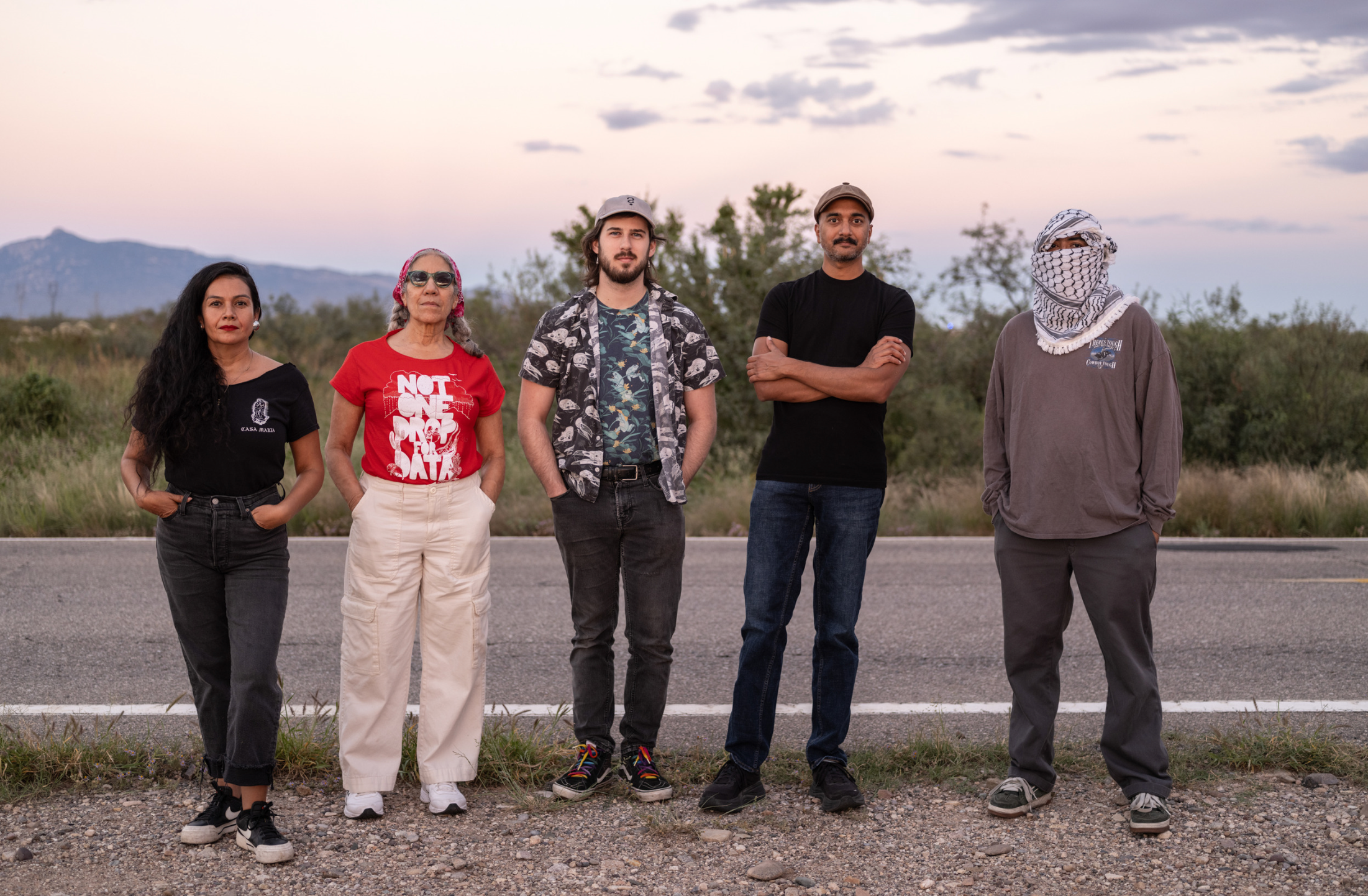
“Not a drop of water for data” — the slogan carried by the No Desert Data Center Coalition.
That slogan belongs to the local opposition group “No Desert Data Center Coalition”. Its message fits on one banner and has proved hard to argue against: the community should not hand its reserves over to computing.
A pipeline promised on paper, wells drilled in the ground
The facility at the center of the Tucson fight is Project Blue, planned on roughly 290 acres in Pima County just outside the city, with a designed capacity of 600 megawatts.
The opening pitch was economic. The developer projected about 3,000 temporary construction jobs, 200 high-paying positions once the site was running, and roughly $152 million in tax revenue over the next ten years.
Disclosure was the first sore point. The local government signed a confidentiality agreement with the developer, so residents could not initially learn which company stood behind Project Blue or how much water it intended to draw.
Protesters also questioned the long-term logic of siting a facility that devours both power and water in the Tucson desert.
In July 2025, Beale held an information session that drew about 200 people. A second meeting brought out more than 1,000; heckling rolled across the room before the developer’s representatives got through their opening.
On the water question, Beale had offered to pay for a pipeline of about 18 miles to bring reclaimed water into the supply system. Under that original scheme the data center would use drinking water only until the pipeline was finished, switch to reclaimed water afterward, and send any surplus back to recharge the aquifer.
That route required Tucson to approve the land and provide water service. As local opposition climbed, the city withheld approval; Beale then took the project to the county for a path forward and abandoned the pipeline plan.
Regulators afterward authorized wells on the site, permitting the project to pump as much as 31 million gallons of groundwater per year, or about 117,000 cubic meters. A Beale spokesperson said that volume is for construction only, and that once operations begin, water use will be limited to restrooms, a staff kitchen, and health and safety needs.
The developer also rewrote its cooling design, dropping water cooling in favor of closed-loop air cooling. That change reportedly pushed Amazon’s cloud computing division, AWS, out as a prospective customer because an air-cooled facility could not meet its requirements; Beale has refused to say whether new customers have been found.
Skeptics answered that air cooling may lift electricity demand, and that generating electricity also consumes water. Beale denies the air-cooled approach raises the project’s overall energy use.
Work has started, and the friction has not. Contractors took water from municipal fire hydrants for dust control, which drew residents’ attention. Local officials then required Beale to provide a corresponding water allocation to compensate for the roughly 650,000 gallons of drinking water used during construction. Beale said the contractor had obtained a temporary use permit through the normal procedure.
In September this year, the Pima County Board of Supervisors imposed a 120-day pause on permitting for new data center projects. The measure left the already-advanced Project Blue untouched.
The opposition that rewired party lines
About 20 miles northwest of Tucson, in the town of Marana, the same argument is playing out.
Beale plans a data center campus there covering roughly 600 acres, part of it farmland until recently. The developer estimates the site could generate $407 million in taxes over the next ten years, with more than a third of that flowing directly to the town.
Marana had already written limits into its rules: data centers may not use the town’s water supply for cooling, and must satisfy design, noise and power requirements. Beale says the finished Marana campus would use about 6.6 million gallons of water a year.
Supporters want the revenue and the work, and several union members spoke at town council meetings on the project’s behalf. Opponents say the campus would alter a small town’s character, spend its resources and deliver limited permanent employment.

Some voters call Jackie Maguire “the pink-haired liberal”: she won a seat on the Marana Town Council on an anti-data-center platform.
Maguire, a cybersecurity analyst by training, is one of those opponents. She moved from California to Marana 15 years ago and raised her children there. She told The Verge she fears the campuses would dismantle the setting that made her want to stay.
She is also uneasy about the long-term risk embedded in the AI investment boom. Her own work runs on cloud computing, she notes, but she does not want an entire town wagering its future on an industry that could swing.
Residents collected about 2,800 signatures seeking a referendum on data centers; the town government turned the effort aside on procedural grounds. Opponents then chose to run for office, and Maguire was elected.
She recounted hearing residents with conservative politics tell her that they would not normally back a pink-haired liberal — but that opposing data centers was reason enough to cast her a vote. The coalition’s slogan, “Not a drop of water for data,” turned out to travel across the political spectrum.
Why a bigger drinker gets a warmer reception
While computing campuses were being resisted, another technology operation with far heavier water demand was being largely welcomed in Arizona.
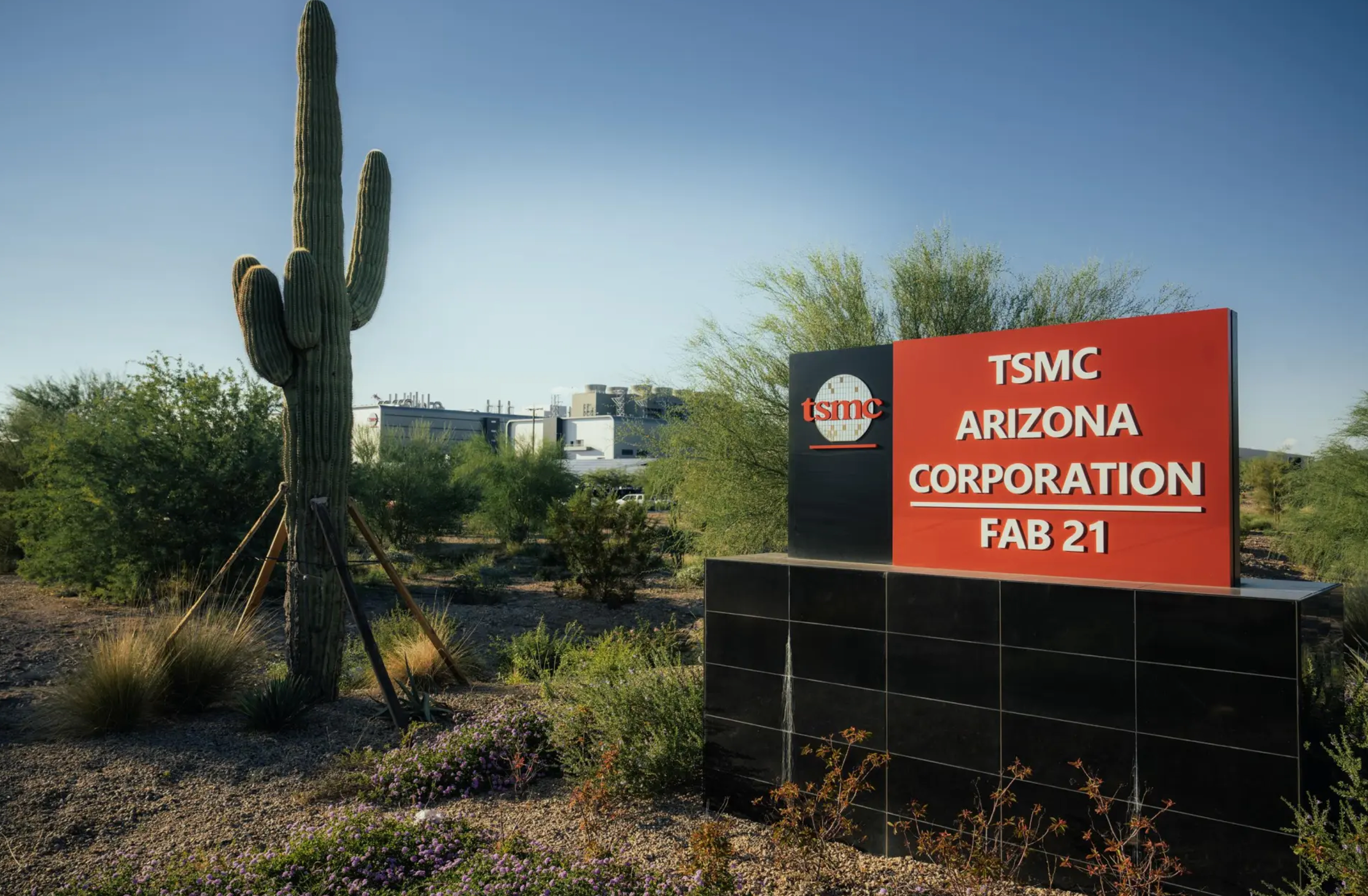
In Phoenix, beside the signage for TSMC’s Arizona headquarters, the semiconductor plant employs more than 3,500 people.
TSMC’s chip manufacturing complex in Phoenix takes about 4.75 million gallons of water a day from the municipal system, or roughly 18,000 cubic meters, because fabrication demands enormous volumes of ultrapure water and wafers are washed again and again.
Paul Westhoff, director of the Global Waters Technology Center at Arizona State University, told The Verge that a single chip passes through 50 to 250 washing steps, since the smallest particle or impurity can degrade performance.
Withdrawal and consumption, though, are not the same number. Sara Porter, a water policy expert at Arizona State University, noted that about 60% to 65% of the water used at TSMC’s first Arizona plant is recovered and reused, and that the company plans to raise that reuse rate to 90% by 2028.
The economic contribution is the other half of the explanation, and a reason local officials were willing to make room.
The Verge reported that TSMC has more than 3,500 employees in Arizona. As the fabs rose, the state also drew suppliers, restaurants and other support businesses. Real estate agent Rebecca Chen says the influx brought her more clients from TSMC and its supply chain.
Kristen Mackay, a Phoenix economic development official who helped recruit TSMC, compresses the question into the value created per gallon: the jobs and industrial activity, in her reading, justify the resource commitment.
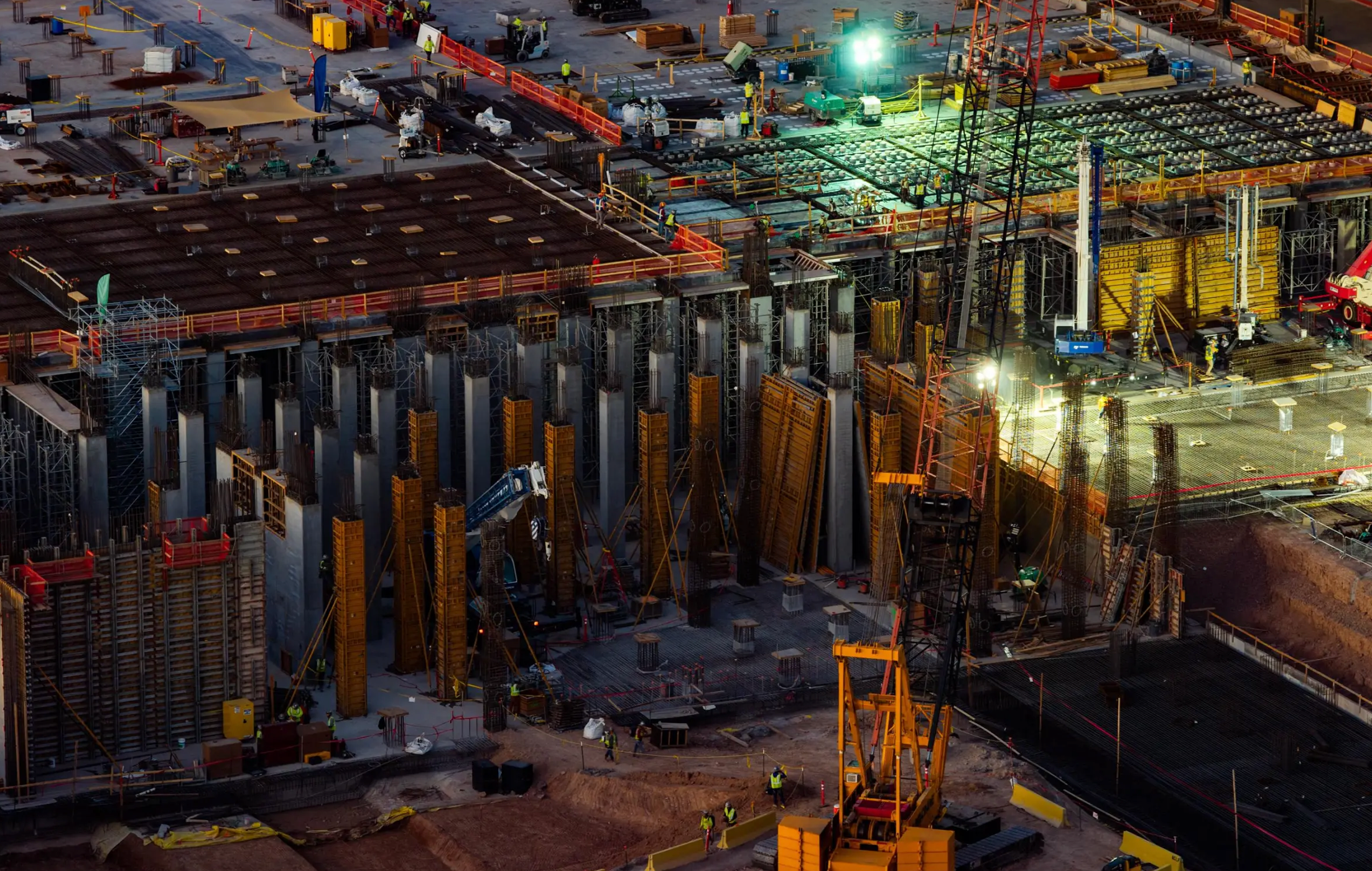
Construction at TSMC’s Arizona headquarters in Phoenix is still advancing.
Data center developers make the identical tax and investment argument. The difference is legible in the footprint: a sprawling facility that runs on a comparatively thin workforce is hard for residents already anxious about AI’s effect on jobs to welcome the way they welcomed a fab.
The three numbers side by side
| Facility | Water figure on the record | Regulatory outcome |
|---|---|---|
| Project Blue, Pima County | Up to 31 million gallons of groundwater a year, about 117,000 cubic meters, for construction | Cities’ land and water approval refused; wells approved by county; 120-day pause did not stop it |
| Marana campus, about 600 acres | About 6.6 million gallons a year once built | Town rules bar municipal water for cooling, plus design, noise and power conditions |
| TSMC, Phoenix | About 4.75 million gallons a day, roughly 18,000 cubic meters | Recruited by the city; 60% to 65% reuse, 90% targeted by 2028 |
| Fondomonte alfalfa, 2023 | About 11 billion gallons | Agricultural irrigation, an older and larger claim on the state’s supply |
The desert’s biggest thirst belongs to agriculture
The Verge observed that blaming data centers for Arizona’s shortage obscures a water user that is both older and far larger.
In this desert state, irrigated agriculture accounts for an estimated 70% of water use, with cotton, citrus and alfalfa for livestock all dependent on heavy watering.
According to the report, Saudi agricultural company Fondomonte grew alfalfa in Arizona and shipped the feed overseas; its water use in 2023 was about 11 billion gallons, dwarfing the 31 million gallons a year Project Blue is allowed to pump during construction.
Those figures come from different places, different sources, different purposes and different periods, so they cannot simply be summed or used to infer what any single data center does to a local supply.
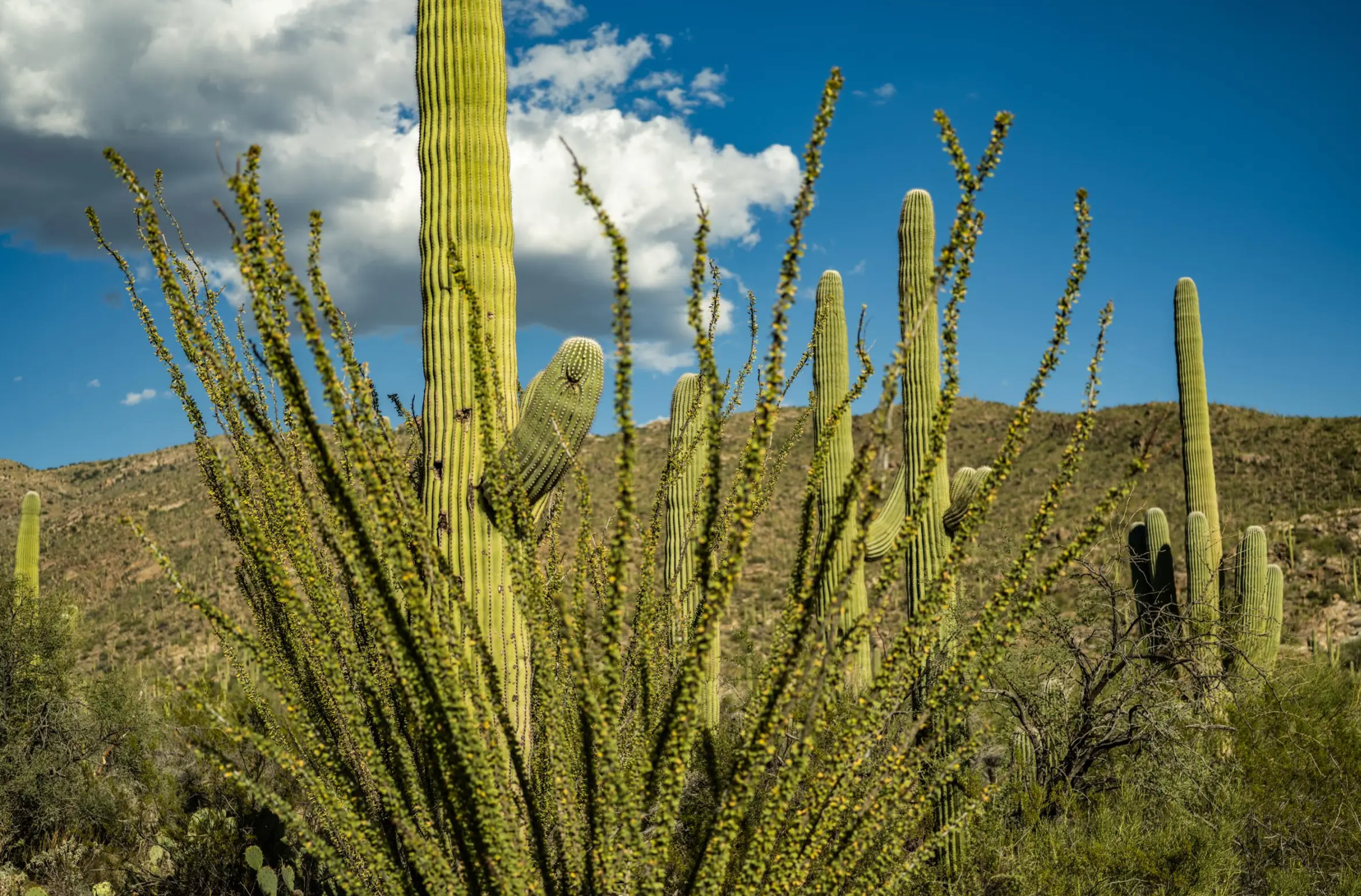
Arizona’s giant cacti need very little moisture — and are now slowly dying.
Porter’s view is that parts of Arizona’s long-standing agricultural water use are simply not sustainable, and that on the measure of economic output, data centers and chip manufacturing may be another way to spend the same resource.
For many residents, agriculture’s claim does not dissolve their worry about what is arriving next. Households have already cut their own consumption, only to be told that new large industrial users are coming. Even where projects promise conservation, the question people keep asking is whether supply will still be there over the coming decades.
Beyond volume, there is the question of what comes back out of the ground
Chip plants raise a dispute that water meters alone cannot describe.
The Verge noted that semiconductor manufacturing uses a range of fluorinated chemicals, some of them per- and polyfluoroalkyl substances, collectively PFAS, which resist breaking down in the natural environment. Such substances also exist in many everyday products, and exposure to some of them is linked to health risks.
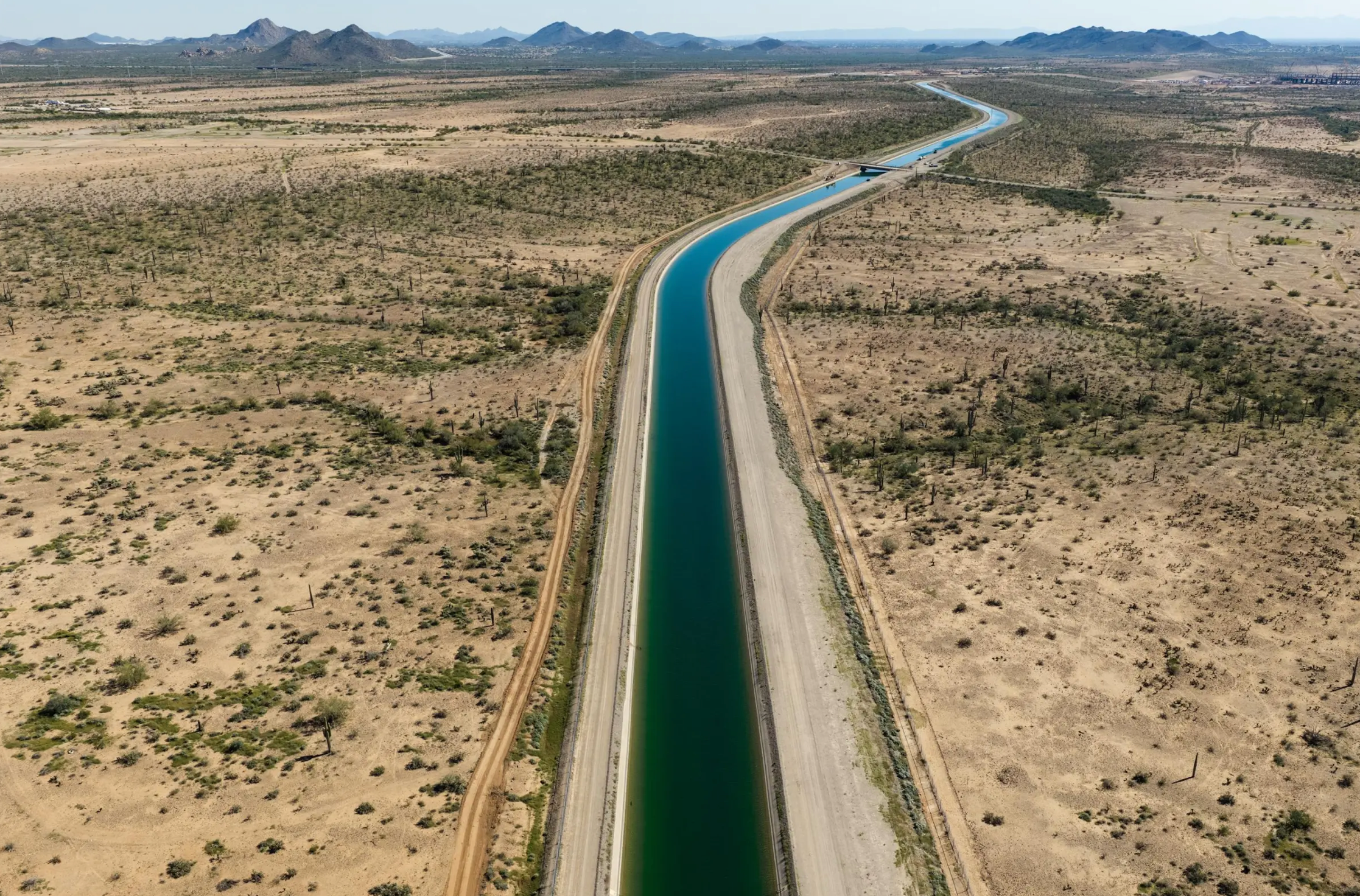
Irrigation channels built as part of central Arizona’s water works, carrying Colorado River water toward Phoenix.
Local environmental advocates worry that industrial wastewater, if improperly treated, could add to groundwater contamination. In Tucson and surrounding areas, military installations and manufacturing left pollution that is still being cleaned up today.
TSMC says it has been upgrading internal PFAS detection systems, developing technology to remove the substances from wastewater and researching alternative materials for its manufacturing process. Porter adds that Phoenix requires the company to treat wastewater before discharging it into the municipal sewer system.
Read together, the two verdicts suggest the deciding variable was never gallons. Communities appear ready to trade water with an industry that shows up as payrolls, suppliers and tax receipts, and reluctant to trade it with one that shows up as an undisclosed backer, a fenced site and a handful of permanent jobs. Until that arithmetic changes, the No Desert Data Center Coalition’s line — no data gets a drop — will keep reappearing wherever a desert town is asked to permit its next well.