
ItInsightsWorld Report: Apple Teases OLED Touchscreen MacBook Pro With Dynamic Island and Reworked Hinge
A short teaser released by Apple CEO John Ternus on local time October 28 has sharpened expectations that the company is about to introduce a touchscreen MacBook. The clip shows only the Apple logo projected against a dark wall before a nighttime city skyline; it does not reveal hardware or explicitly mention touch. Still, because Apple is expected to talk about an OLED touchscreen MacBook Pro that day, the clip reads like a lead-in to the announcement.
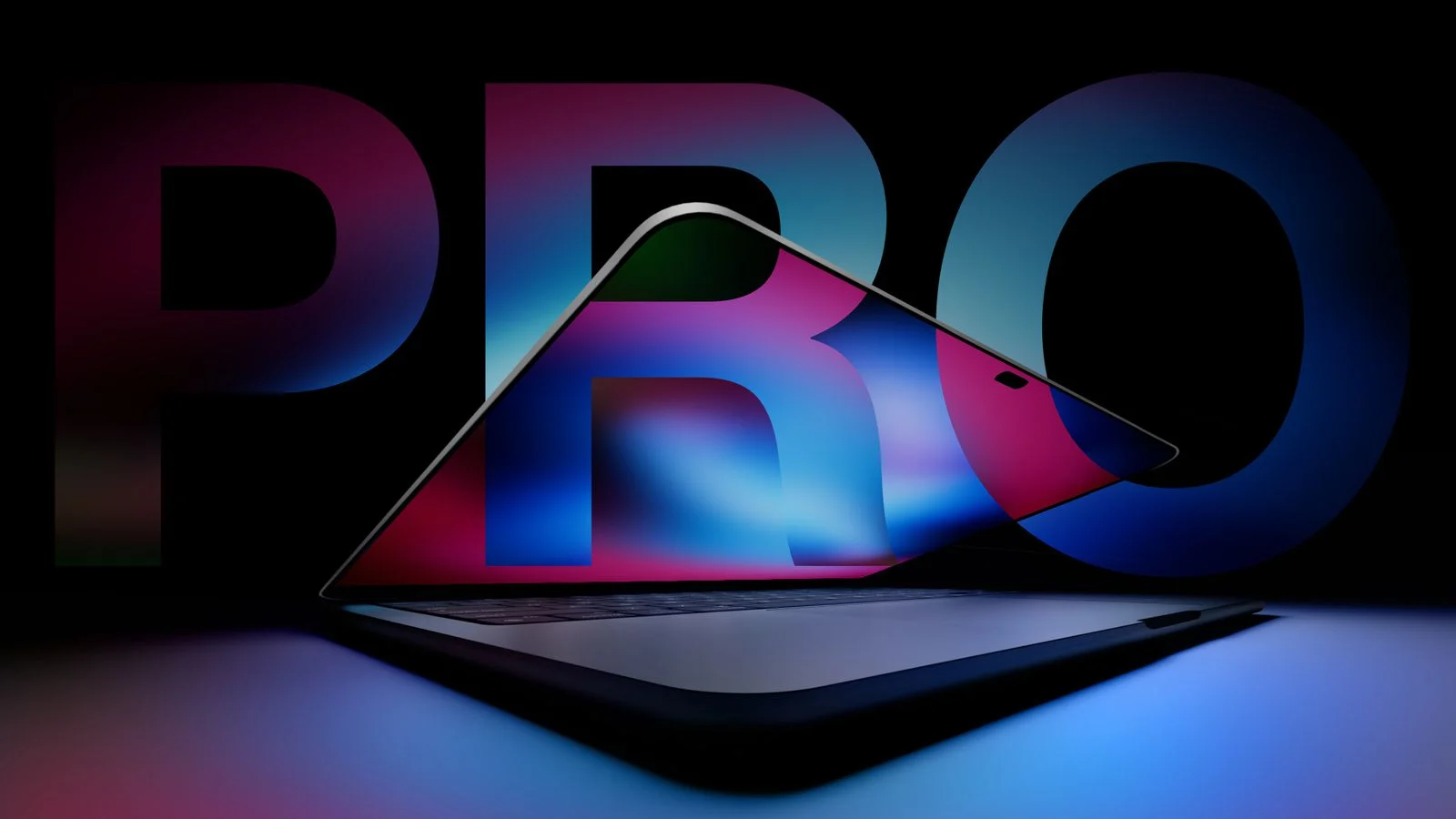
What the Los Angeles session may reveal
Apple has invited selected technology journalists and creators to a "Pro and tell" event in Los Angeles, scheduled for 10 a.m. local time. Attendees may try Apple's first touchscreen MacBook, along with a new iPad mini, iMac, and the 14-inch MacBook Pro shown earlier this week.
If the reports hold up, the move would mark Apple's first native touch input on the MacBook line, closing a long-standing reluctance to put fingers directly on notebook displays.
Screen size and the role of touch
The rumored lineup is expected to cover 14-inch and 16-inch sizes with OLED panels. Compared with Mini-LED or LCD, OLED turns pixels on and off independently, which may deliver deeper blacks, stronger contrast, richer color, and improved dark-scene rendering; peak brightness could also rise.
Physical keyboard and trackpad are expected to remain, so touch would be another option rather than a replacement. Apple is likely to keep macOS intact and add touch-specific refinements instead of turning the laptop into a larger iPad.
The result may blur the boundary between MacBook and iPad, but the products should remain separated: Macs focus on desktop applications, multi-window workflows, and familiar input, while touch gives a more direct way to interact with on-screen content.
Hinge, thermal design, and body details
Reports point to a stronger, redesigned hinge. The hinge connects display and base, so finger pressure on the screen is transferred through it; if support and damping are weak, the panel can rock during touch use.
The cooling layout is also said to be reworked to guide airflow through the hinge area. That matters because high-performance processors generate substantial heat during demanding applications and complex calculations, while Apple is trying to make the machine thinner and lighter. Whether the changes improve performance or noise still needs hands-on testing.
Visually, narrower bezels are rumored, and an iPhone-like Dynamic Island design may replace the traditional notch. The island could surface notifications, background activity, and live information, linking the camera region more closely with the software interface.
A thinner, lighter body could help professionals who carry the machine often. The harder question is whether Apple can reduce weight while preserving rigidity, battery life, and cooling.
Chips, macOS, and likely positioning
On performance, the touchscreen MacBook Pro may continue using existing M5 Pro and M5 Max chips rather than jumping to a newer professional processor generation. If so, the upgrade story centers more on display, interaction, and chassis than on raw CPU gains.
Software may run macOS Golden Gate with touch-optimized controls, menus, and gestures. The challenge is to make finger input feel natural inside an existing macOS workflow without degrading the keyboard and trackpad experience.
Pricing rumors collected by MacRumors place the 14-inch model in the United States at no less than USD 2,899, and the 16-inch model at no less than USD 3,399. Levels near those figures would target high-end professional buyers rather than replace the existing MacBook Pro as a default choice. These remain pre-release estimates, not Apple prices.
A long shift in Apple's thinking
Apple has historically been cautious about touch laptops. Steve Jobs argued in 2010 that putting a touchscreen on a traditional laptop created ergonomics problems, and Tim Cook questioned the value of forcibly combining different device categories. iPad has remained Apple's touch computing platform, while MacBook kept keyboard and trackpad as the main interface.
At the same time, Windows touch-enabled laptops have evolved over many years, and user expectations for consistent interaction across devices have changed. As Apple continues improving iPad and Mac software, it may be reassessing the place of touch in personal computers.
The practical test ahead
Acceptance will depend on whether touch adds real value. OLED can improve visuals, and direct finger interaction may help certain creative or browsing tasks. But if reaching a vertical screen remains awkward, or macOS is not fully adapted to finger use, the feature may not noticeably improve productivity.
More details may emerge during Apple's product experience session that day. The conversation is no longer only about whether Apple will make a touchscreen MacBook, but about how it can integrate hardware, macOS, and long-standing computer habits into an experience distinct from Windows touchscreen notebooks.