
Apple's Touchscreen MacBook Pro Endgame: Why the Non-Touch Premium Models May Not Last
By James Hartley, IT Insights — a plain-language read on a product-line decision that affects how you shop for a laptop this year.
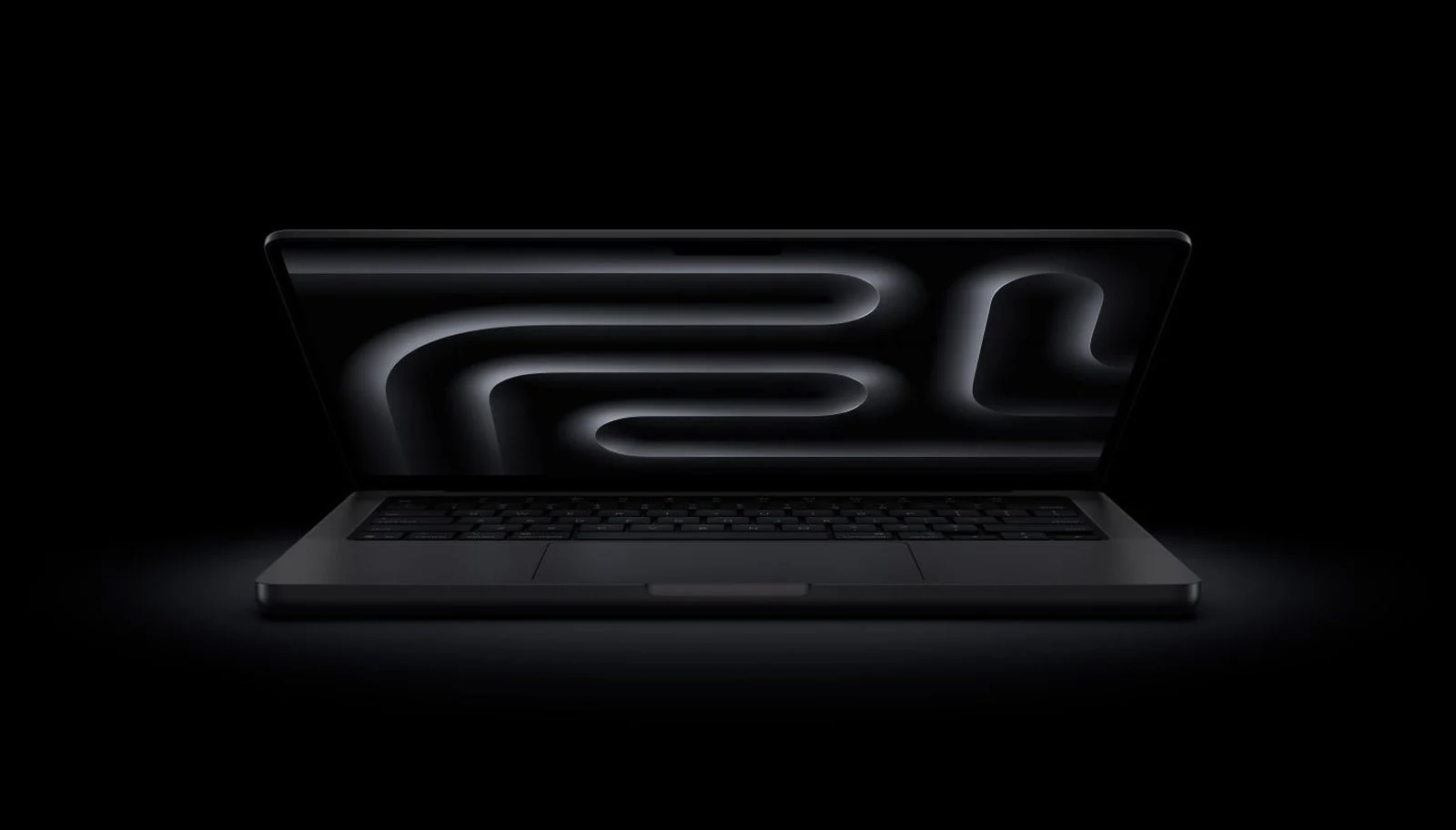
Short answer: Mark Gurman of Bloomberg expects Apple to rebuild the high-end MacBook Pro range around touchscreen models, with today's non-touch premium machines eventually leaving the market. The driver is business arithmetic rather than a technical breakthrough — the new touch versions are priced $400 above their non-touch equivalents, and running two parallel lines is costly.
That framing matters, because the version of this story being repeated everywhere — "Apple just killed the non-touch laptop" — is not what was actually reported. What appears in Gurman's Power On newsletter is a forecast of convergence, not a switch flipped on stage. Below we separate the confirmed launch facts from the projection, add the supply-chain and pricing context most coverage skips, and finish with a decision framework you can actually use.
What exactly was reported, and what was only forecast?
Conclusion first: the dual line-up is real today; the end of the non-touch branch is a prediction with no date attached.
In the latest Power On newsletter, Gurman says Apple currently keeps the traditional MacBook Pro models — the ones with M5 Pro and M5 Max chips and mini-LED displays, launched in March this year — on sale while also shipping brand-new touchscreen versions. Those new touch machines cost $400 more than the matching non-touch configuration. His argument is that maintaining two parallel product lines indefinitely demands heavy spending on development, manufacturing and marketing, so on cost and operational grounds the two groups are more likely to merge over time. Crucially, he did not say when Apple would stop developing non-touch versions of the MacBook Pro.
The launch itself is not in dispute. Last week Apple released its first touchscreen MacBook Pro models. They still use the M5 Pro and M5 Max chips released in March this year, but add a substantial design overhaul: OLED displays, a Dynamic Island at the top of the screen, a lighter and thinner enclosure, and a redesigned thermal system that routes hot air away from the display to improve cooling.
Why does a $400 price gap point toward a single line?
Conclusion: a permanent $400 premium on an otherwise similar chassis is a transition price, not a steady-state price.
Two overlapping premium lines create three familiar problems. First, cannibalisation risk: buyers who do not value touch keep the cheaper line alive, so Apple must keep producing a mini-LED panel family it is trying to graduate out of. Second, message dilution: retail pages, education quotes and enterprise contracts all have to explain why two laptops with the same M5 Pro chip differ by $400. Third, component leverage: panel, battery and cooling suppliers give better terms when volumes are concentrated in fewer designs.
The reference prices make the gap concrete. Apple's own newsroom lists the 14-inch touch MacBook Pro with M5 Pro starting at $2,899 in the United States (with education pricing at $2,749), and Macworld's buying guide puts the top 16-inch M5 Max configuration of the new range at a $4,799 starting point. That is a wide ladder for a product family that, before last week, did not offer touch at all.
Add the market backdrop, and consolidation looks even more logical. IDC expects global PC shipments to fall 11.3% in 2026, with a persistent memory shortage pushing prices up and squeezing vendor portfolios; the firm does not see price relief before the end of 2027. In that environment, redundancy in a flagship line is expensive. This is our analysis, not a statement from Apple.
What is coming in 2027, and where does the entry model fit?
Conclusion: the next generation is defined by silicon and AI hardware, and the entry-level machine inherits the design even if it sits outside the premium tier.
Gurman reports that Apple plans a new generation of touchscreen MacBook Pro in 2027, built on M7 Pro and M7 Max processors and adding more hardware capability aimed at artificial-intelligence workloads. He had previously expected that chip upgrade to arrive in late 2027. The same new design language is also planned for the entry-level 14-inch MacBook Pro: Gurman says Apple intends an M7 version of that model with a lighter body, a thinner shell and narrower display borders, aligning its look with the high-end machines already released. Back in July this year he reported the redesign plan for the base MacBook Pro, then expecting an unveiling in the first half of 2027 — so the reported windows differ by model, which is itself a hint that the line-up will be refreshed in stages rather than all at once.
| Product group | Status today | Reported direction |
|---|---|---|
| Touchscreen 14-inch and 16-inch MacBook Pro | Released last week; M5 Pro and M5 Max, OLED, Dynamic Island, lighter body, redesigned cooling | Second generation planned for 2027 with M7 Pro and M7 Max and more AI-focused hardware |
| Non-touch high-end MacBook Pro | Still sold alongside the new models; mini-LED displays, M5 Pro and M5 Max, $400 cheaper per tier | Likely phased out as the line-up is reorganised around touch, with no announced date |
| Entry-level 14-inch MacBook Pro | Current base configuration of the professional range | M7 version with a lighter, thinner chassis and narrower borders, matching the new high-end design |
Why did Apple resist touch on laptops for so long — and what changed?
Conclusion: the objection was ergonomic, and the reversal came from panel engineering, not from a change of taste.
In 2010 Steve Jobs described touchscreen laptops as "ergonomically terrible", arguing that reaching up to touch a vertical surface tires the arm quickly — the phenomenon designers call "gorilla arm" — and saying that user testing showed touch surfaces "don't want to be vertical". Tim Cook made a similar point in 2012 about hybrid machines, and Craig Federighi repeated the stance in 2014. The company's public history on this is unusually well documented, which is why last week's launch reads as a reversal.
Two things moved. First, hardware: the new models use tandem OLED panels, thinner and brighter than the previous design, and reporting from Apple's hands-on event describes touch as built into the display stack rather than layered on top, with touch able to be switched off in Accessibility settings — a strong signal that Apple still treats the trackpad and keyboard as the primary input. Second, supply: panel makers have finally been able to build a laptop-sized OLED to Apple's tolerances. TrendForce reports that Samsung Display is the exclusive OLED panel supplier for the 14-inch and 16-inch models, with roughly 2.5 million panels expected through 2027.
That exclusivity is the part of the story most coverage misses. A single-source panel supply is a throttle on how fast Apple can retire non-touch machines: if the mini-LED option disappears before touch volumes are secure, a yield problem at one plant becomes an availability problem across the whole professional notebook line. Expect consolidation to lag the technology, not lead it.
Five misconceptions worth dropping
- "Apple announced the end of the non-touch MacBook Pro." It did not. The discontinuation is Gurman's projection based on cost and operations, and he gave no date.
- "Touch means the Mac becomes an iPad." Touch is described as an additional input for specific tasks; the Accessibility toggle and the unchanged trackpad workflow say otherwise.
- "The cheaper non-touch model is the safe choice." It is cheaper today, but a line heading toward consolidation may see thinner future updates and a shorter support runway than the architecture Apple is betting on.
- "Waiting for 2027 costs nothing." With memory-driven price pressure lasting into 2027 per IDC, a deferred purchase may be a more expensive one.
- "The $400 premium is permanent." Transition premiums normally shrink once the incumbent architecture disappears — which is precisely why the current gap is read as evidence of the endgame.
Buy now or wait: a six-question checklist
- Do you edit colour-sensitive work on the road? OLED, a Dynamic Island and a lighter chassis are direct quality gains, independent of touch.
- Would you physically touch the screen more than twice a day? If not, the $400 delta buys a feature you can switch off — and the non-touch model does the same work.
- Is your machine on a three-year replacement cycle? Buying now means the 2027 generation with M7 Pro and M7 Max lands mid-cycle, which is normal and rarely a problem.
- Is your cycle four years or longer? Then the AI-focused hardware in the next generation is more likely to matter to you, and waiting is defensible.
- Are you buying during 2026? Component costs are forecast to stay elevated; compare today's price against your budget, not against a hypothetical future discount.
- Do you need the cheapest 14-inch option? The entry model is the one slated for M7 and a lighter, thinner redesign, so it is the configuration most likely to change visibly.
Frequently asked questions
Is the non-touch MacBook Pro being discontinued?
Not announced as discontinued. It remains on sale alongside the new touchscreen versions, and Bloomberg's Mark Gurman says the two lines are more likely to merge over time because running both is expensive.
How much more does the touchscreen model cost?
$400 more than the corresponding non-touch configuration, according to Power On. Apple's newsroom puts the entry 14-inch touch model with M5 Pro at $2,899 in the United States.
Should I wait for the 2027 models?
Wait if your current machine is already around four years old or you want the strongest on-device AI hardware; the 2027 generation is expected to bring M7 Pro and M7 Max. Buy now if you need a laptop today, since prices are under upward pressure through 2027.
Does touch replace the trackpad?
No. Reporting from the launch positions touch as a supplement, and the touchscreen can be disabled in system settings while the keyboard and trackpad keep working as before.
Which will be the last non-touch high-end MacBook Pro?
Unknown. Gurman's account says Apple still sells the M5 Pro and M5 Max mini-LED machines but has not said when it will stop developing that branch — anyone giving a firm date is guessing.
Key takeaways
- Confirmed: touch MacBook Pro models shipped last week; non-touch M5 Pro and M5 Max mini-LED machines stay on sale at $400 less per tier.
- Forecast, not fact: the premium line reorganises around touch, with a second generation planned for 2027 on M7 Pro and M7 Max.
- Watch the throttle: single-supplier OLED panel volumes, not software, will decide how quickly the non-touch branch exits.
- Shop on chassis quality and price today, not on the touchscreen as a novelty.
References
- Apple Newsroom — announcement of the MacBook Pro with PROLED XDR Display: https://www.apple.com/newsroom/2026/10/apple-unveils-groundbreaking-macbook-pro-with-proled-xdr-display/
- Macworld — Touchscreen MacBook Pro buying guide (pricing, continued availability of non-touch models): https://www.macworld.com/article/2931833/touchscreen-macbook-pro-guide-design-processor-specs-release.html
- TrendForce — Samsung Display as exclusive OLED panel supplier: https://www.trendforce.com/news/2026-10-29/news-apple-debuts-first-touchscreen-oled-macbook-pro-tsmc-foxconn-samsung-in-supply-chain-spotlight/
- IDC — PC market outlook, 11.3% shipment decline in 2026 and memory shortage through 2027: https://www.idc.com/resource-center/blog/pc-market-enters-volatile-territory-as-memory-shortage-persists-through-2027/
- The Korea Herald — why Samsung Display was chosen for the OLED MacBook Pro: https://www.koreaherald.com/article/10917647
- Stuff — Steve Jobs's 2010 objections to vertical touchscreens: https://www.stuff.tv/features/steve-jobs-once-called-vertical-touchscreens-ergonomically-terrible-heres-why-theres-one-in-the-next-macbook-pro/
Have a question about this analysis? The IT Insights editorial team can be reached at contact@itinsights.com.