
ItInsightsWorld General Explainer: Apple AI Leadership Shake-Up and What Mike Rockwell's 2027 Question Means for Siri
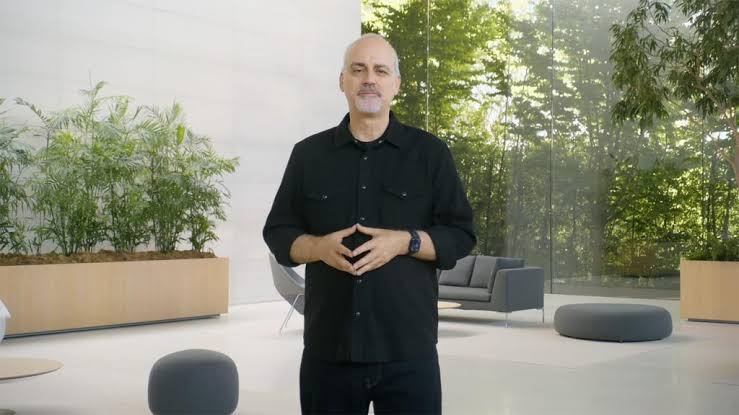
Mike Rockwell's possible 2027 exit matters because it could trigger another Apple leadership reshuffle around Siri, disrupt the AI roadmap after the June 2026 Siri AI launch, and test whether the Apple company can keep product continuity while competing with OpenAI, Google and Anthropic. The immediate question is not only who leaves, but who inherits the unfinished work.
What is actually being reported about Mike Rockwell?
According to Bloomberg and Mark Gurman's Power On newsletter, the Apple executive who now leads Siri AI is seriously weighing his next move. The reported window is 2027, when he could step down as the person responsible for Apple's assistant project, or even leave the company. The story is not a resignation letter; it is a signal that one of the most delicate leadership posts in Apple's AI effort may change again.
Earlier in 2026, MacRumors summarized a Power On report saying Rockwell had considered reducing his role but was unlikely to walk away before completing the Siri overhaul expected to arrive with iOS 27. The later possible-exit framing keeps 2027 as a credible risk window without confirming a departure. For readers, the useful conclusion is simple: the uncertainty is real, while the exact timing remains official Apple silence.
Why did Apple move Vision Pro's Mike Rockwell into Siri AI?
Apple has been trying to turn a long-running assistant project into a credible AI platform. Before taking charge of Siri AI, Mike Rockwell led work on Vision Pro, the company's spatial-computing headset. That background made him a natural choice for an assistant that must connect software, hardware, voice, screen context and on-device privacy expectations.
The decision also reflected a recovery plan. Apple had promised deeper assistant behavior with iPhone 16, but multiple advanced features slipped. The Personalized Siri project became a symbol of the gap between announcement and shipped experience. Moving Rockwell into the role, then rebuilding the team for several years, was meant to convert a research vision into a product schedule.
How the management puzzle changed in the last year
Over the past year, Apple's AI leadership chart was redrawn several times. In December 2025, Apple said John Giannandrea would retire in spring 2026, and Amar Subramanya would take over foundation-model, machine-learning research and AI safety evaluation duties. Subramanya had spent 16 years at Google, worked on Gemini Assistant engineering, and previously served as a Microsoft AI executive. After joining Apple, he reports to Craig Federighi.
At the same time, Apple moved more of the assistant's work closer to Craig Federighi, services chief Eddy Cue and chief operating officer Sabih Khan. The idea was to tie AI development to software delivery, cloud services and infrastructure, instead of leaving it inside a single research organization.
The pressure was not only organizational. Several Apple AI staff left for competitors such as Meta, including Ruoming Pang, who worked on foundation models, and Ke Yang, associated with AI search. In August 2026, reports also pointed to workforce changes in Siri and Vision Pro teams affecting more than 200 roles.
Who could take over Siri AI, and what would change?
Two names stand out in the coverage of Rockwell's possible replacement: Amar Subramanya and Sebastien Marineau. They are not interchangeable. Each would pull the assistant project toward a different center of gravity.
| Executive | Background | What Apple gains | Open question |
|---|---|---|---|
| Mike Rockwell | Led Vision Pro and later Siri AI | Hardware-software integration instincts | Whether he stays through 2027 |
| Amar Subramanya | Former Google AI executive, joined Apple in December 2025 | Research credibility and model evaluation experience | Can he translate model strength into user-visible Siri quality? |
| Sebastien Marineau | Apple engineering veteran reporting to Craig Federighi | Software shipping discipline | Would AI become more of a platform service than an assistant product? |
Sebastien Marineau is an Apple veteran who also reports to Craig Federighi. Some internal discussions have treated him as a possible successor to Federighi, but no reliable sign suggests Federighi plans to retire recently or leave in the near term.
Why the June 2026 Worldwide Developers Conference raises the stakes
At the Worldwide Developers Conference in June 2026, Apple introduced Siri AI as a more capable assistant. The product can hold more natural conversations, interpret on-screen content, search the web, and draw on information from a user's emails and messages. Apple also said a GoogleGemini model supports some of the new assistant's capabilities.
Apple's official newsroom release on June 8, 2026 framed the moment as the next generation of Apple Intelligence and Siri AI, while TechCrunch's conference coverage stressed the same point: the assistant is now being positioned as a system-level capability rather than a standalone voice widget.
That makes leadership risk more expensive. If Rockwell leaves, Apple is not merely changing an org chart. It is changing the manager responsible for a product that has just received its most important public launch in years, but still needs deeper app permissions, more reliable task handling, and clearer privacy boundaries.
What this means for users, developers, and competitors
For users: trust is the product
Siri's value is not measured only by model size or benchmark scores. Users judge whether a request works on the first try, whether the assistant remembers context, and whether sensitive content is handled according to Apple's privacy promises. A leadership change can influence how aggressively Apple expands the assistant into mail, messages, health, payments and on-screen data.
For developers: interface stability matters more than slogans
Developers need clear rules for how Siri interacts with apps, how much context a model can see, and whether Apple exposes its own services first. If the assistant team is repeatedly reorganized, third-party builders may delay deep integration until the API path becomes stable.
For competitors: Apple's problem is continuity, not intelligence alone
OpenAI, Google and Anthropic are racing to make assistants useful across devices and services. Apple has distribution, hardware integration and privacy credibility, but leadership churn can slow the operational rhythm needed to turn those advantages into everyday habits.
Common misconceptions about Apple's AI leadership churn
- Misconception 1: A possible exit means the product is failing. Not necessarily. The 2026 Worldwide Developers Conference launch shows Apple can ship an assistant upgrade, but shipping once is easier than sustaining yearly improvements.
- Misconception 2: The successor will simply copy the old leader. Amar Subramanya brings research depth, while Sebastien Marineau brings software delivery experience. Apple may also split responsibilities across Craig Federighi, Eddy Cue and Sabih Khan.
- Misconception 3: Hiring from Google or Microsoft automatically solves Apple's AI problem. It can improve model quality, but product taste, privacy architecture and release cadence remain harder to transfer.
- Misconception 4: Rumors are decisions. The 2027 timing comes from reporting about a consideration, not confirmed plans.
Action checklist: how to judge the next Apple AI update
- Watch the owner, not only the announcement. If Siri AI leadership remains unstable for another year, expect delays in feature integration.
- Look for task reliability. A convincing assistant should handle multi-step requests across apps without resetting context.
- Read the privacy explanation. Expanded screen understanding and cross-app memory need clear user controls, not just model marketing.
- Compare release cadence with rivals. OpenAI, Google and Anthropic update their assistants frequently; Apple must match the rhythm, not just the launch date.
- Separate hardware rumors from AI progress. Leadership uncertainty does not confirm every product change; hardware debates, such as the iPhone button tradeoff, follow separate timelines.
FAQ: What readers are asking about Mike Rockwell and Siri
Has Mike Rockwell confirmed he will leave Apple?
No. Bloomberg's Mark Gurman reported through Power On that Rockwell is considering his future and could step down in 2027, but Apple has not confirmed a departure.
Why is his role tied to Vision Pro?
Rockwell led Vision Pro before taking over Siri AI. His hardware-software background made him useful for an assistant that must work with devices, apps, on-screen content and privacy expectations.
Who are the two likely internal successors?
Reporting highlights two executives: Amar Subramanya, whose background includes Google, Gemini Assistant, Microsoft and Apple foundation-model work, and Sebastien Marineau, an Apple engineering leader who reports to Craig Federighi.
Did the 2026 Worldwide Developers Conference launch solve Apple's AI problem?
No. It introduced Siri AI with more natural conversation, screen understanding, web search and personal data access, but Apple still needs to expand permissions responsibly, improve complex-task handling and balance privacy with cloud computing.