
Step into the light vs. Two Regional Deepavali Ads: What Apple's iPhone 18 Pro Film Really Buys
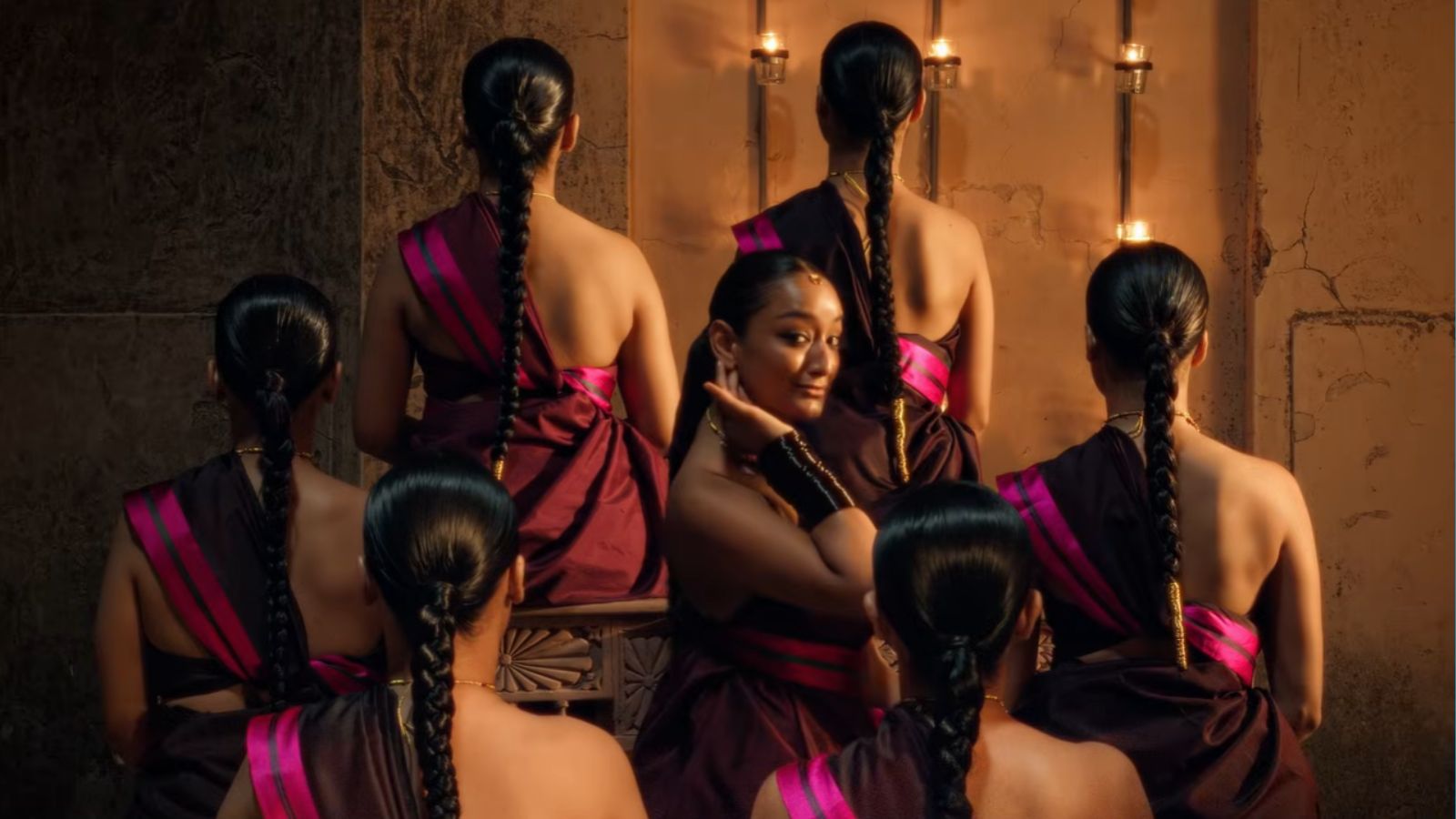
Apple's Deepavali film, Step into the light, is a camera demonstration wearing a cultural costume: shot entirely on the iPhone 18 Pro at Tijara Fort, it trades a story you could act on for proof that the phone can hold detail and focus in darkness. Beside MR D.I.Y.'s Two blue ticks in Malaysia and gov.sg's Family assemble! in Singapore, Apple's film asks the least of its viewer and shows the most hardware.
Here is the dilemma most marketing teams hit in festival week: one approved budget, three masters. The finance lead wants a sales link. The brand lead wants cultural credibility. The product team wants the new feature proven on screen. Apple's Deepavali film puts all three demands on one plate, while the two regional films around it each pick one and go quiet. If you are choosing a phone, or approving festive spend, that difference is worth ten minutes of your time.
What did Apple and Raw Mango actually release?
Short answer: a festival film with a fashion house's name on it, distributed through Apple's own channels rather than paid media alone.
“Step into the light” is Apple's latest Deepavali campaign, made with the contemporary Indian fashion brand Raw Mango to celebrate the festival through dance, textiles and the movement from darkness into light. Trade coverage credits TBWA\Media Arts Lab India as the agency behind it (Campaign Brief Asia, 6 November).
Raw Mango founder Sanjay Garg directed the film, which was shot entirely on the iPhone 18 Pro and set against Tijara Fort, a restored 19th-century royal palace in Rajasthan, India. Records of the fort-palace project put its foundation stone in 1835, before work stalled; the building was later revived as a heritage stay, which is why its courtyards are filmable at night without a lighting rig on every wall.
At the heart of the film sits a folk interpretation of Anu Malik's 1990s song “Roop suhana lagta hai” (“This form looks beautiful”), carried by dance performances staged as a transition from dark to light. Big Dance Centre created the choreography, mixing traditional and contemporary styles, and the performers wear garments drawn from textile traditions across the Indian subcontinent, including Mashru, Varanasi brocades and Chanderi, in colours chosen to complement the iPhone 18 Pro's finishes.
Timing matters for anyone judging reach. The film debuted on 4 November across Apple's global Instagram account and Apple India's YouTube channel, with a behind-the-scenes cut released on Instagram Stories that walks through Garg's process. For Garg, the assignment was personal: “Deepavali, for me, is the biggest festival of the year,” he said. “It represents a change in weather where we welcome winter in the company of people we love.”
Raw Mango was founded in 2008 by Garg and built its reputation on reading Indian textile traditions through fashion, design and cultural experience. The Apple collaboration follows the label's first international runway show at London Fashion Week earlier this year, which press coverage dated to 23 February 2026.
Is this a cultural film or a camera test?
It is both, and only one of the two can be checked.
The camera half is documented. Because light is the central symbol of Deepavali, the production deliberately worked in low-light conditions to exercise the iPhone 18 Pro's 48MP Fusion Main camera and its new variable aperture, along with smart focus tracking that uses on-device intelligence to keep dancers sharp as they move through synchronised choreography and leave and re-enter frame.
Apple's own specification page lists the variable aperture as four stops: ƒ/1.48, ƒ/1.8, ƒ/2.8 and ƒ/4.0. In an interview with PetaPixel published in September 2026, Apple's camera engineers described the feature as an answer to low-light image quality rather than a bid for a professional look, which is a useful correction: a festival film is a demonstration of that stated intent, not an independent lab result. The same interview explains why a dance sequence is a harder test than a still life: stop the aperture down for depth and you give back the light you gathered.
The cultural half is interpretation, not measurement. Craft, music and costume can be appreciated; they cannot be verified as “better” than the alternative treatment a rival brand chooses. Judge the film on the parts with a spec sheet.
How do the three Deepavali campaigns compare?
Read side by side, the three films split along one clean line: who is paying, and what the viewer is expected to do afterwards.
| Campaign and market | Story focus | Job the film is hired to do | Release window |
|---|---|---|---|
| Apple, “Step into the light”, shot with Raw Mango | Dance, textiles and folk music move from darkness into light inside a 19th-century Rajasthani fort palace. | Prove a device capability while borrowing cultural authority; no price, no store, no instruction. | 4 November, Apple's global Instagram plus Apple India's YouTube |
| MR D.I.Y., “Two blue ticks”, Malaysia | Kavya ignores the daily “good morning” messages forwarded by her grandmother, Paati, until an incident involving Paati's close friend changes how she reads them. | Reputation work for a value retailer: sell warmth and habit, not a product; the store never becomes the plot. | 29 October, per the company's own festive announcement |
| gov.sg with DSTNCT, “Family assemble!”, Singapore | Parameshwari Paatti, fed up with a house full of screens, threatens to spend the festival with her friends, and the family has to put devices down. | Public-behaviour nudge in Tamil-language comedy; the ask is a change in habits, with nothing for sale. | 26 October, on gov.sg channels plus broadcast and digital |
Two observations fall out of that grid. First, only Apple's film has a product that must survive scrutiny; the other two can be judged purely as stories. Second, the calendar is not neutral: the government film and the retail film went live in the final week of October, while Apple's landed on 4 November, close enough to the festival to ride conversation but late enough that its job is brand memory rather than store traffic.
What is the festive window actually worth?
None of the three campaigns discloses a budget, so any number attached to production cost would be invention. What can be sized is the market around them.
The US Department of Agriculture's Global Agricultural Information Network reported that total Diwali spending in India rose to roughly $69 billion in 2025, from about $48 billion in 2024, with food, grocery and gifting categories driving the jump and premium electronics prominent on festive wishlists. Against that backdrop, a festival film is a small ticket priced against a very large moment, which explains why three very different institutions all bought one.
For Apple, the durable asset is the platform rather than the single film: Shot on iPhone has been running for more than a decade, moving from user-submitted billboard photography to long-form festival pieces, and trade coverage notes the programme's effectiveness honours at Cannes Lions in 2025. For Raw Mango, the film is a second international stage after its London debut, and fashion coverage of that show frames the label's move as craft credibility rather than volume. Worth noting too: when people argue about Apple's numbers in this region, the real argument is accounting, as our breakdown of Apple's country-by-country tax filings explains — not this film.
Five misconceptions that ruin this comparison
- “The film proves the camera will shoot my family at night.” It proves a rehearsed, single-location shoot with wardrobe colours matched to the phone's finishes. Your courtyard has no colourist.
- “Cultural sincerity is a measurable advantage.” It is a reception question, not a metric. A folk reading of a 1990s Bollywood song will land warmly with some viewers and feel assembled to others.
- “A festival film without a price is wasted money.” Apple's film has no call to action and no need for one; the retail film in Malaysia sells nothing on screen either.
- “Government and brand campaigns are the same genre.” gov.sg's piece asks for screen-time behaviour change; Apple asks for belief in a camera. Same festival, different employer.
- “Shot on a phone means produced like a phone video.” The capture device and the final grade are separate decisions, and the campaign does not pretend otherwise.
Should a festival film change how you buy a phone?
Only where the claim is comparable. Night photos of people moving, in mixed light, are one of the few camera tasks a demo film can genuinely stand behind, because the failure modes are familiar to anyone who has photographed a festival: smeared faces, hunting focus, blown-out lamps. Everything else in the film — choreography, costume, sentiment — belongs to the brand, not to your shopping list.
The same rule applies if you approve campaigns rather than handsets. Once comparison work is delegated to AI assistants, claims that can be lined up side by side beat claims tuned to a single persona; that is the argument we make on comparison-ready brand claims. Apple's film is easy to line up because it makes one checkable promise.
Reader questions
Was Step into the light really filmed on a phone?
Apple states the film was shot entirely on the iPhone 18 Pro, with a behind-the-scenes piece on Instagram Stories covering the production. Post-production tools are not part of the claim, and the campaign does not assert otherwise.
Which feature is the film actually demonstrating?
Three of them: the 48MP Fusion Main camera, the variable aperture across ƒ/1.48 to ƒ/4.0, and smart focus tracking that keeps performers in focus as they move.
Why shoot a Deepavali film in the dark at all?
Because the festival is about light, low-light footage is the most direct way to make that theme and the hardware point in the same direction. It also happens to be the most demanding lighting condition for any small sensor.
Do the Malaysia and Singapore films compete with Apple's?
Not for the same outcome. MR D.I.Y.'s Two blue ticks works on affection for a household retail brand, and gov.sg's Family assemble! targets family screen-time habits. Apple needs camera confidence.
What would make this comparison actionable for a small brand?
Pick one job before you commission anything. Two of these three campaigns succeed because they only had one, and no product close-up to defend.
What to do next
If you are buying: shoot your own low-light test before you trust a festival film. Take one moving subject at ƒ/1.48 and one group shot at ƒ/2.8 or ƒ/4.0, in the room you actually celebrate in. If both come back clean, the marketing has told you something true.
If you are approving festive spend: decide which of the three jobs your film has to do — capability proof, affection, or behaviour change — and cut the brief that asks for two. Publish a week earlier than you think you need to; the October slots in this year's field were the crowded ones, and Apple's 4 November debut bought conversation rather than foot traffic.
Most brands do not have a festival film problem. They have a decision problem: nobody in the room is willing to say what the film is supposed to fix. The three campaigns above already chose. The next step is to choose yours before the calendar chooses for you.
Sources cited
- Campaign Brief Asia on Apple and TBWA\Media Arts Lab India's Diwali film: https://campaignbriefasia.com/2026/11/06/apple-and-tbwamedia-arts-lab-india-capture-diwali-in-new-shot-on-iphone-film/
- Apple iPhone 18 Pro camera specifications: https://www.apple.com/iphone-18-pro/
- PetaPixel interview with Apple on the iPhone 18 Pro variable aperture (19 September 2026): https://petapixel.com/2026/09/19/apple-explains-why-the-iphone-18-pro-has-a-variable-aperture/
- MR D.I.Y. Deepavali announcement, Kuala Lumpur, 29 October: https://www.mrdiy.com/more-than-a-message-mrdiy-celebrates-everyday-love-this-deepavali
- Marketing-Interactive on gov.sg and DSTNCT's Family assemble!, premiering 26 October 2026: https://www.marketing-interactive.com/this-deepavali-gov-sg-wants-to-bring-family-screen-time-to-a-halt
- USDA FAS GAIN report on India's 2025 Diwali spending: https://www.fas.usda.gov/data/gain/2026/01/india-diwali-sales-lit-indian-consumer-market-2025
- Archello on the Tijara Fort-Palace restoration and its 1835 foundation stone: https://archello.com/project/restoration-for-adaptive-reuse-as-heritage-hotel-tijara-fort-rajasthan-india
- Wallpaper* on Raw Mango's London Fashion Week debut: https://www.wallpaper.com/fashion-beauty/raw-mango-aw-2026-london-fashion-week-debut