
Case Review: Apple's OLED Process Shift and the Two-Supplier Race to Brighter iPhone and iPad Screens
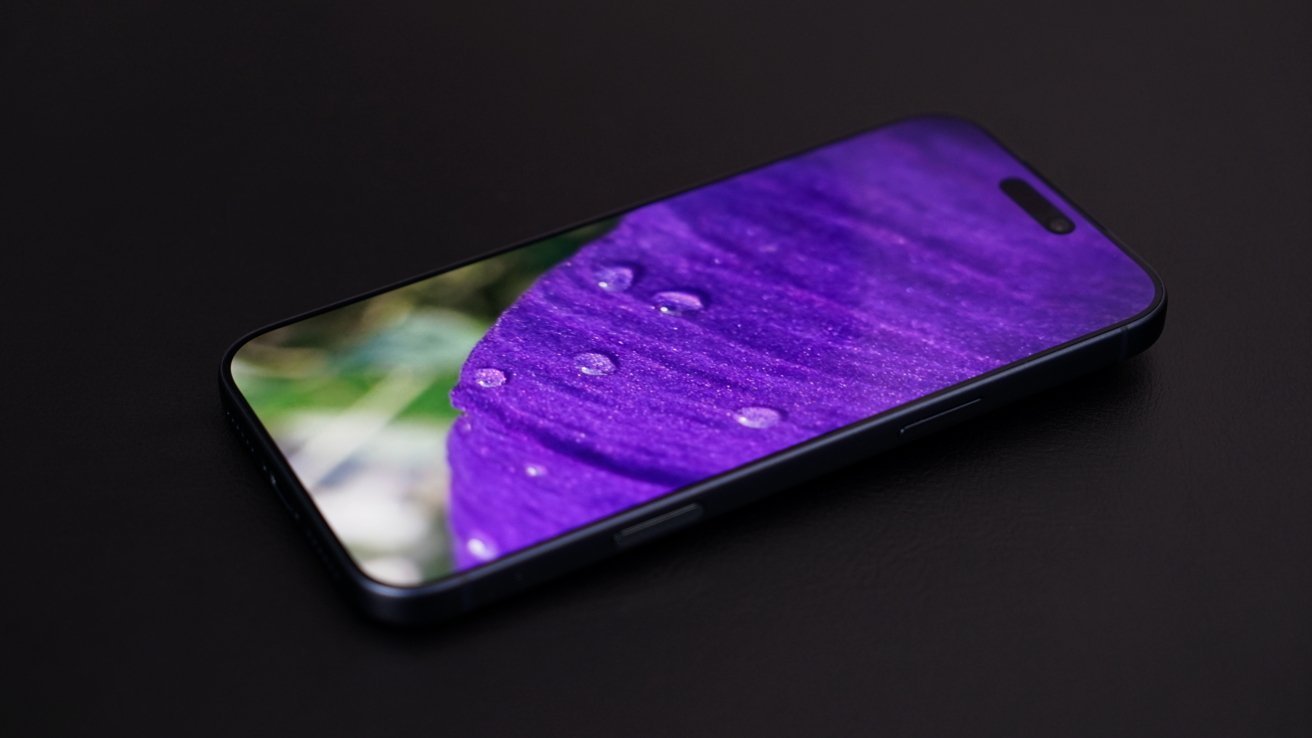
Some technology changes appear on a stage with a finished product. Others begin quietly in a factory, where a supplier is asked to make a screen brighter, more consistent and easier to mass-produce. The current Apple display story belongs to the second category: reports describe a possible OLED manufacturing route built around high mobility oxide, commonly shortened to HMO, and two candidate deposition methods - sputtering and atomic layer deposition, or ALD.
This ItInsightsWorld review treats the story as a case: what has been reported, what has not been confirmed, and how ordinary readers can judge the impact on iPhone and iPad displays without assuming that a future product has already been fixed. The main takeaway is simple: the article is not a product launch, but it points to a supply-chain decision that may shape future Apple OLED screens.
Case snapshot: the reported change in one page
| Layer | Reported fact | Reader interpretation |
|---|---|---|
| Device scope | Apple is exploring a new OLED panel process that could improve screens for devices such as iPhone and iPad. | The benefit is user-visible: brightness, contrast and color depth. |
| Supplier structure | Samsung Display and LG Display are the two key panel partners mentioned in the report. | Two established suppliers give Apple options, and each supplier has commercial reasons to prove its technology. |
| Manufacturing choice | Apple is said to prioritize sputtering for HMO-based panels, while Samsung Display and LG Display develop ALD and related sputtering solutions. | Process choice affects cost, line compatibility, yield and timing. |
| Known limit | Mass-production timing and the first product are not disclosed. | Treat the story as a development signal, not a confirmed launch date. |

What HMO, sputtering and ALD actually mean
The technical terms may sound specialized, but they can be reduced to three practical questions: what material controls electron movement, what method deposits that material, and whether the method can move from a lab to a line.
- HMO stands for high mobility oxide. In a display backplane, it is an oxide semiconductor approach that is being evaluated as part of future OLED panel production.
- Sputtering is a deposition method already associated with existing manufacturing. The appeal in the report is that Apple appears to prioritize this route for HMO panels.
- ALD, or atomic layer deposition, is the more precise-looking alternative. Samsung Display and LG Display are developing it together with related sputtering technology for future production use.
Outside reporting from The Elec and MacRumors suggests the existing sputtering route could make HMO easier to integrate into production environments that are already running, rather than requiring every supplier to build a completely new way of making panels.
Process comparison: the two candidate routes
| Route | What makes it interesting | What still needs proof | Where it stands in the report |
|---|---|---|---|
| Sputtering for HMO | Uses a familiar manufacturing idea and may fit existing lines better; Apple is described as giving it priority. | The HMO layer must meet brightness, reliability and mass-production requirements when used on future panel sizes. | The more practical route being weighed. |
| ALD for HMO | Promises fine film control and may become valuable if Apple needs higher consistency or a different material path. | Production speed, cost, complexity and line compatibility must be proven. | Under development alongside sputtering by Samsung Display and LG Display. |
| Combined supplier strategy | Keeping two paths alive gives Apple room to test performance, durability and factory compatibility before commitment. | Final selection is not disclosed, so readers should not treat either path as confirmed. | Both suppliers are researching new OLED production options. |
The comparison is important because a manufacturing choice is not only a technical question. It is also a commercial question. A route that looks better in a lab may lose to a route that can deliver stable brightness and yield at larger scale.
Why this matters for iPhone and iPad screens
For iPhone, iPad and other Apple devices, the expected user-facing effect is not an exotic term such as "ALD". It is a visible change in the screen. According to the report, the proposed process can improve the emissive performance of individual OLED pixels. When pixel brightness rises, the panel's overall brightness can rise as well. Higher emissive efficiency may also help contrast, color expression and image layering.
That is the practical reason general readers care. Brighter screens matter in sunlight. Better contrast matters in video and text readability. Improved color layering matters in photos, games and streaming. The report also notes that Apple has long pursued OLED adoption across devices, and this supplier-side work may be part of that larger transition.
Case review: the sequence behind the supply-chain signal
The story becomes more useful when read as a sequence rather than a single headline.
- Requirement forms: Apple wants OLED screens to improve, especially brightness and visual quality.
- Partners respond: Samsung Display and LG Display, the two key suppliers in this report, explore production methods that could satisfy that requirement.
- Technology branches: HMO is evaluated through sputtering and ALD routes, with sputtering given priority in the reported account.
- Line reality checks: A process must fit mass-production lines, not just demonstration panels.
- Result is still open: The report says timing of mass production and first product use are not disclosed.
Two outside data points make the industrial context clearer. First, reporting by TechTimes says LG Display had verified HMO OLED on a Gen-6 line using sputtering, while Samsung Display was pursuing ALD on Gen-8.6. Second, OLED-info reported that Samsung Display's A6 8.6-generation IT OLED line was moving toward commercial yields above 90%. These details do not prove that a specific iPhone or iPad model is ready, and they do not alter the master article's statement that the timeline remains unknown. They show, however, that the larger OLED ecosystem Apple depends on is not theoretical: suppliers are already testing, scaling and comparing different paths.
Common misconceptions to avoid
- Misconception 1: This is a product announcement. It is not. The report discusses a possible panel process, not a confirmed Apple device.
- Misconception 2: The two suppliers have made the same choice. The report says Samsung Display and LG Display are researching new production solutions, and they are developing ALD and related sputtering technologies. The final route is not stated.
- Misconception 3: Brighter pixels automatically mean a better phone. Display quality also depends on power, heat, lifetime, color calibration and software behavior.
- Misconception 4: HMO means OLED itself. OLED is the emission structure; HMO is a backplane/material approach that can influence how the panel is driven and manufactured.
Checklist: how to judge future OLED headlines
Readers who want a simple way to evaluate technology news can use this checklist:
- Does the report name a product, or only a component process?
- Does it quote a supplier statement, an industry report, or anonymous supply-chain information?
- Is the process at prototype, line verification, trial production, or confirmed mass production?
- Are both Samsung Display and LG Display mentioned because they are partners, competitors, or alternative sources for the same order?
- Does the claimed benefit match the user's experience - brightness, contrast, power, durability - or does it stay at the factory level?
Action suggestions for different readers
For iPhone and iPad users:
- If your current device works well, there is no evidence here that a display-process story alone requires an immediate upgrade.
- If you are waiting for an OLED iPhone or iPad purchase, treat this as a reason to watch official announcements, not as a reason to buy on rumor.
- When a future Apple display is announced, pay attention to peak brightness, sustained brightness, color accuracy and refresh behavior rather than only the panel brand.
For business and technology readers:
- Map the supply-chain pressure: a new material may need a deposition method that fits existing equipment.
- Track whether the story moves from research to line verification, then to qualified mass production.
- Watch how the two suppliers differentiate: one route may emphasize compatibility, while another may emphasize performance precision.
What readers can reuse from this case
The reusable lesson is not "Apple will launch a better OLED screen soon." The lesson is that consumer-device upgrades often start with manufacturing decisions long before users notice them. In this case, the decision chain runs from Apple's display goals, to Samsung Display and LG Display's process research, to HMO deposition choices, to the possible user benefits of brighter and more layered OLED images.
Another reusable lesson is the value of keeping two options open. A supplier that only pushes one path may look decisive, but it also raises risk if the path fails line testing. Apple's reported interest in sputtering does not close the door on ALD, and the development of both methods may be a way to compare quality, compatibility and timing before committing.
FAQ: the quick answers general readers ask first
Does this mean a new iPhone has been confirmed?
No. The report does not disclose the product that would use the panels first. The discussion concerns future OLED panel technology for devices such as iPhone and iPad.
Why are Samsung Display and LG Display both mentioned?
They are the two main Apple OLED panel partners referenced in the report. Both are working on future production methods, including ALD and related sputtering technology.
Is sputtering better than ALD?
Not necessarily. Sputtering is reported as the priority path because it may fit existing production needs, while ALD may offer a different route for future panel requirements. The article does not say one has already won.
Will iPad screens improve in the same way as iPhone screens?
The report discusses both iPhone and iPad screens as potential beneficiaries of future OLED improvements. The exact product timing remains unconfirmed.
Should consumers change their buying plans now?
No. This is a supply-chain and manufacturing signal, not a launch statement. Buying decisions should wait for official Apple product information or confirmed supplier mass-production news.
Final read
The most honest summary is not a simple one. The technology direction is credible: Apple, Samsung Display and LG Display are examining OLED processes that may help panels become brighter and more visually consistent. But the practical answer is still incomplete: the first device, the final manufacturing route and the mass-production date are not disclosed.
For general readers, that uncertainty is actually useful. It teaches a better way to follow display news. Look for the point where a material idea, a line-compatible process and a confirmed product meet. Until then, this story should be treated as a case of Apple pushing its OLED supply chain forward, not as a guarantee that the next iPhone or iPad has already chosen its screen.