
ItInsightsWorld Choice Guide: Which Apple November 6 Purchase Makes Sense - OLED iPad mini, M6 iMac or MacBook Pro
A buyer choosing after Apple Inc.’s launch day should compare by role, not brand: the November 6 sale adds the OLED iPad mini, M6 iMac, 14-inch MacBook Pro M6 version, and new MacBook Pro lineup touch models; each solves a different problem. Use this guide as a decision framework rather than a spec list.

What is changing on Apple’s November 6 sale day?
Apple’s release day is a channel event, not just a product announcement. From today, customers can order through the Apple official website and the Apple Store app, while first preorder buyers receive devices and Apple Store retail stores plus Apple authorized reseller channels carry stock. The same day completes a larger Mac and iPad products refresh cycle that Apple has been building toward the end of 2026.
Is the eighth-generation iPad mini the best low-cost OLED option?
Yes, if your priority is a very small screen-first device; no, if smooth motion matters more than portability. The OLED iPad mini, the OLED version of the eighth-generation iPad mini, is the first compact iPad to bring OLED display technology to an 8.5-inch Super Retina XDR display. It reaches peak brightness of 1200 nits, a 2000000:1 contrast ratio, and a 1 nit minimum brightness mode. The 256GB and 512GB versions also offer nano-texture glass as a first for this line, reducing reflections. The tablet uses the A20 Pro processor and Apple N1 wireless chip, adding Wi‑Fi 7 and Bluetooth 6. At 5.4mm thick and about 255g, it is Apple’s thinnest and lightest iPad product yet; it is also the first iPad with an IP67 rating, giving the tablet an IP67 level of dust-and-water protection.
Sound changes too: Apple introduced the Acoustic Display sound solution, which uses the display to emit audio and removes traditional speaker openings. The 12-megapixel, 12000000-pixel front camera moved to the landscape edge for video calls. Stylus support covers Apple Pencil Pro and Apple Pencil (USB‑C). The main trade-off is refresh rate: the panel stays at 60Hz and does not use ProMotion adaptive high refresh rate technology, so fast scrolling and stylus motion will not feel as fluid as on OLED phones.
In the US market, pricing is the clearest buying signal: 128GB Wi‑Fi starts at $699; 256GB is $799; 512GB is $999. The nano-texture option adds $100. Wi‑Fi+Cellular models start at $849, while education pricing starts from $649. Apple’s own Newsroom release, titled “Apple gives iPad mini its biggest update ever,” frames the changes as display, performance, size, and durability.
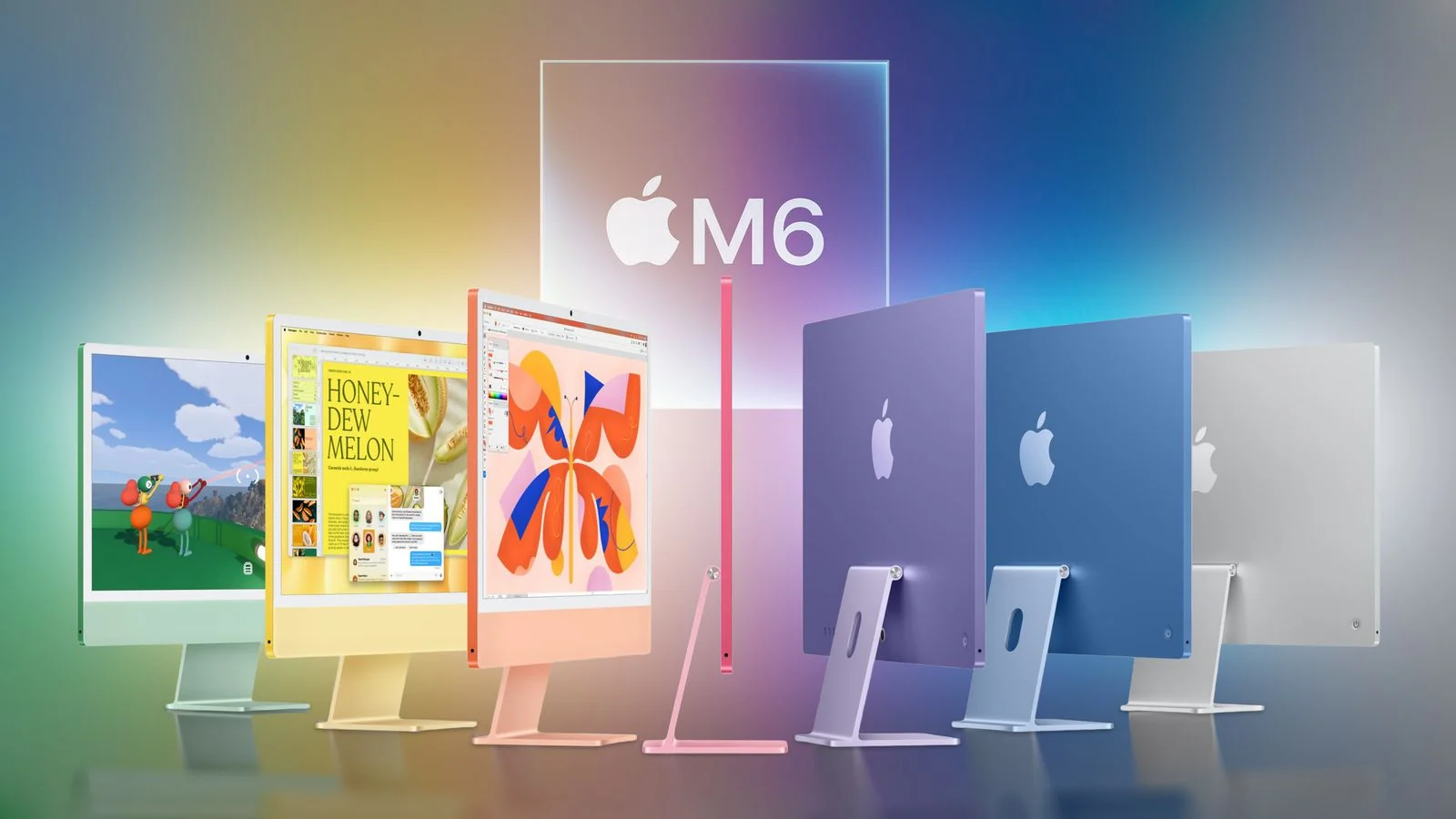
How does the M6 iMac compare with the previous M4 iMac?
The M6 iMac, or M6 version of iMac, is the first major update to the all-in-one line since the M4 iMac, so its value depends on whether you need a desktop upgrade rather than a laptop. The M6 chip, built around the M6 processor, is offered with up to 12-core CPU and 12-core GPU configurations. Apple states graphics performance can be up to twice that of the prior generation. The machine also gets Wi‑Fi 7 and Bluetooth 6, with an optional 2.5Gb Ethernet interface integrated into the power adapter.
Price separates the two upgrade stories: the 10-core CPU and 10-core GPU M6 iMac starts at $1499, while the 12-core CPU and 12-core GPU configuration starts at $1699. Education pricing starts from $1449. Apple’s iMac Newsroom post presents M6 as a performance and AI-capability update for everyday desktop work.
Should you choose the M6 MacBook Pro or the OLED touch MacBook Pro?
Choose the 14-inch MacBook Pro (M6 version) when you want the simplest M6 laptop upgrade; choose the MacBook Pro touch-enabled models when the PROLED XDR touchscreen and new display form matter more than cost. Today, the 14-inch MacBook Pro (M6 version) starts at $1999 and includes a 12-core CPU and 12-core GPU, plus the N1 wireless chip for Wi‑Fi 7 and Bluetooth 6.
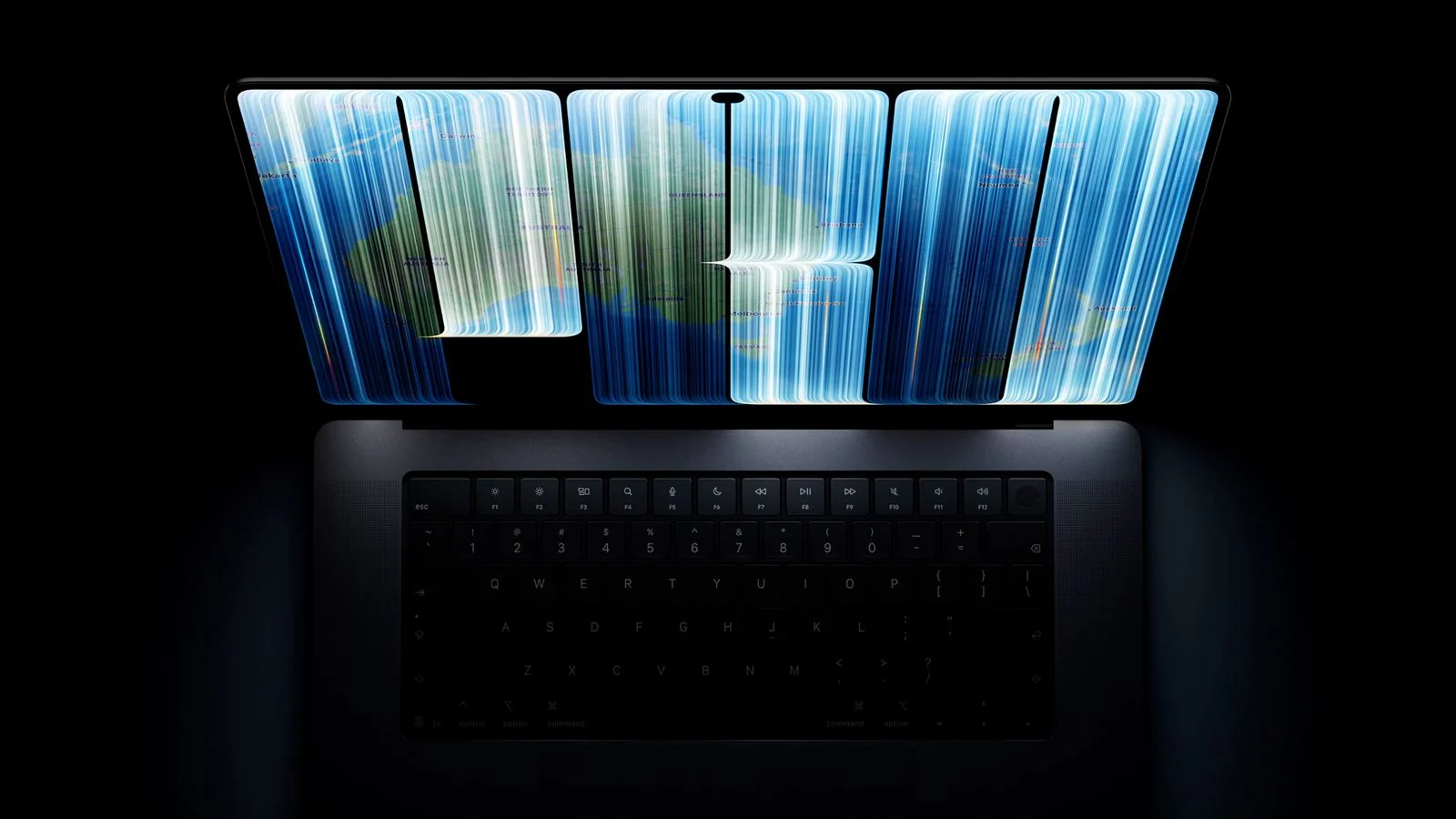
The new MacBook Pro lineup includes 14-inch and 16-inch MacBook Pro touch-enabled models starting at $2899 and $3399. They use M5 Pro or M5 Max processors and the first touch-enabled PROLED XDR display. Apple removed the earlier notch design and introduced the Dynamic Island approach. In the next-generation MacBook Pro lineup, peak brightness reaches 2000 nits for both SDR and HDR content.
Availability is the real differentiator. Currently, the Apple online store shows some Silver and Space Black configurations of the 14-inch and 16-inch MacBook Pro touch-enabled models with shipping extended to 2 to 3 weeks. For readers who need hardware this week, checking Apple Store retail stores or Apple authorized reseller channels can be faster than ordering online.
How do the three product groups compare?
| Device | Best for | Strong point | Trade-off | Entry price |
|---|---|---|---|---|
| Eighth-generation OLED iPad mini | Reading, notes, commuting, light media | 8.5-inch OLED display, 5.4mm, 255g, IP67 rating | 60Hz and no ProMotion adaptive high refresh rate technology | $699 in US market |
| M6 iMac | Desk-bound productivity, family Mac, creative desktop | Twice graphics on top config, 2.5Gb Ethernet interface | Not portable; price jumps from $1499 to $1699 | $1499 |
| 14-inch MacBook Pro M6 version | Students, writers, general Mac laptop buyers | 12-core CPU, 12-core GPU, Wi‑Fi 7, Bluetooth 6 | Lower tier than touch OLED | $1999 |
| MacBook Pro touch-enabled models | Video, design, touch-first editing | PROLED XDR display, Dynamic Island, 2000 nits SDR/HDR | Shipping may be 2 to 3 weeks currently | $2899 for 14-inch, $3399 for 16-inch |
What are the most common buying mistakes?
- Assuming OLED always means high refresh: the eighth-generation iPad mini remains 60Hz.
- Buying the cheapest M6 iMac and expecting the best graphics headroom; the top M6 chip configuration uses 12-core CPU and 12-core GPU.
- Choosing the MacBook Pro touch-enabled models only because they are newer; if you do not use touchscreen editing, the 14-inch MacBook Pro M6 version may be enough.
- Ignoring channel stock: from today, online order times can be longer than in-store pickup.
- Overpaying for education-eligible devices by skipping education pricing such as $649 for iPad mini or $1449 for M6 iMac.
What should different users do next?
- Note-takers and commuters: compare the 128GB model at $699 with education options; add nano-texture glass only if you use it near windows.
- Desktop upgraders: choose the 12-core CPU and 12-core GPU M6 iMac if you need sustained graphics and 2.5Gb Ethernet interface access.
- MacBook Pro buyers: if delivery matters, call Apple Store retail stores before ordering online; wait for Silver or Space Black availability if you prefer that finish.
- Ecosystem buyers: if you are also planning a smart-home purchase, the follow-up window around November 13 may matter for HomeView and fourth-generation Apple TV 4K, according to reporting by Bloomberg’s Mark Gurman as summarized by IT Home.
- Early reviewers: treat shipping delays as inventory risk, not a sign of product quality.
Frequently asked questions
Does iPad mini support ProMotion?
No. The eighth-generation iPad mini uses a 60Hz display and does not support ProMotion adaptive high refresh rate technology.
Is the M6 iMac a big jump?
It is the first major update since the M4 iMac. Apple says graphics performance can be up to twice the previous generation, with 12-core CPU and 12-core GPU options.
Which MacBook Pro should I buy on launch day?
Buy the 14-inch MacBook Pro (M6 version) for a balanced laptop upgrade. Buy the MacBook Pro touch-enabled models only if the PROLED XDR display, 2000 nits, and Dynamic Island approach justify the higher price.
Why do some MacBook Pro orders take 2 to 3 weeks?
Currently, the Apple online store lists certain Silver and Space Black MacBook Pro touch-enabled configurations with extended delivery, while Apple Store retail stores and Apple authorized reseller channels may have in-store stock.
Where can I buy these products?
From today, they are available through the Apple official website, Apple Store app, Apple Store retail stores, and Apple authorized reseller channels.
Reference sources
- Apple Newsroom iPad mini update: https://www.apple.com/newsroom/2026/10/apple-gives-ipad-mini-its-biggest-update-ever/
- Apple Newsroom iMac M6 announcement: https://www.apple.com/newsroom/2026/10/apple-unveils-new-imac-with-m6/
- Apple Newsroom 14-inch MacBook Pro M6 announcement: https://www.apple.com/newsroom/2026/10/apple-introduces-the-new-14-inch-macbook-pro-with-m6/
- IT Home summary of Mark Gurman reporting: https://www.ithome.com/1/014/621.htm