
iPadOS vs macOS in 2026: Apple Rules Out a Merger — A Practical Comparison for iPad and Mac Buyers
No. Apple has no plan to fold iPadOS and macOS into a single operating system. On the fiscal 2026 fourth quarter earnings call, CEO John Ternus said Apple currently has no intention of fundamentally changing how Mac and iPad are positioned, even though the two platforms have been drifting closer for the past several years. This comparison looks at what Apple confirmed, why the lines still blur feature by feature, and how to choose between an iPad and a Mac today.
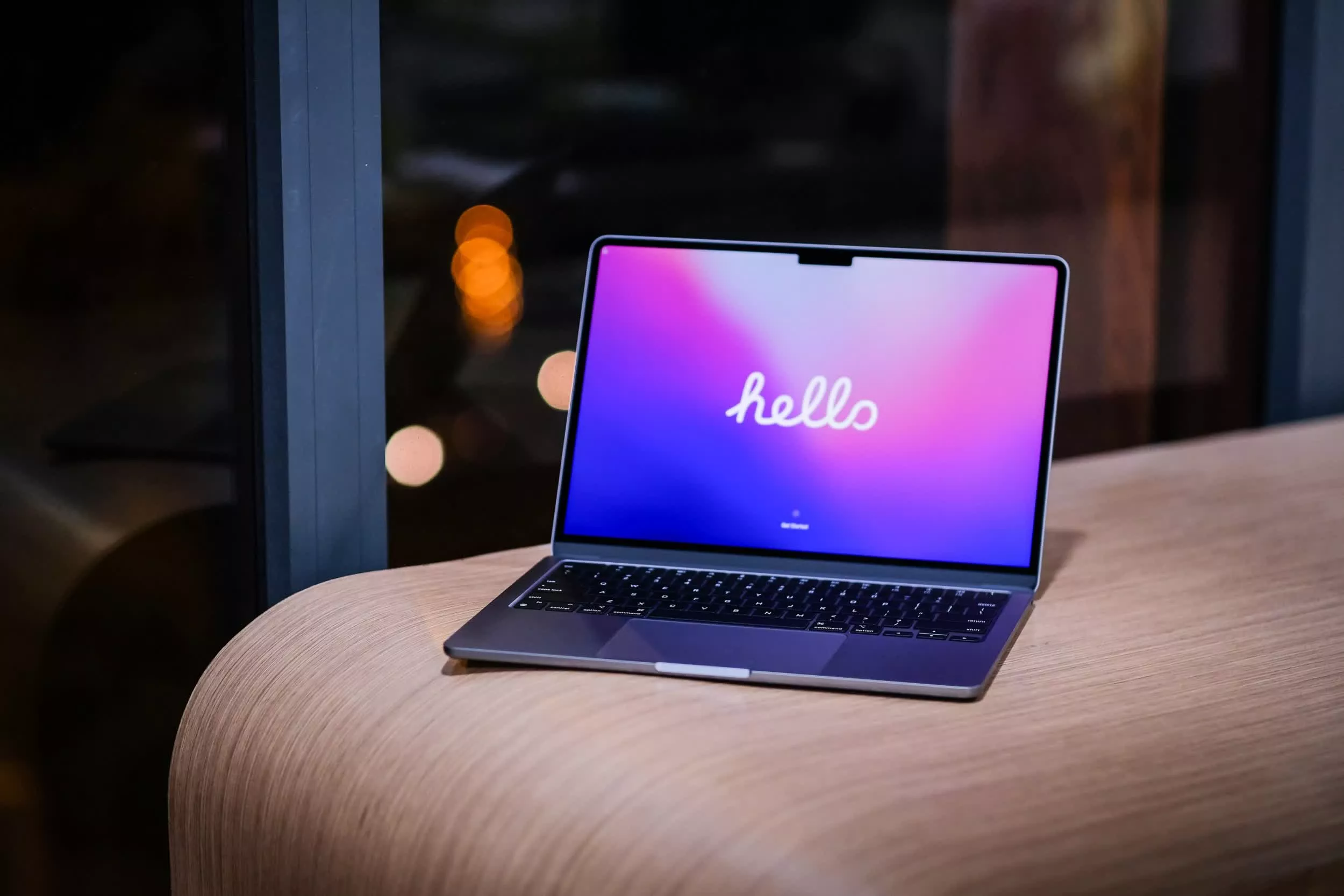
Is iPadOS merging with macOS? The short answer
Conclusion first: expect shared capabilities, not a shared system. Ternus said recently, while answering analysts on the fiscal 2026 fourth quarter call, that Apple has no plan for a fundamental adjustment to the positioning of Mac and iPad and no wish to combine the two operating systems into one. The company, he stressed, is proud of both product lines and keeps pursuing the best possible version of each category while advancing cross-device collaboration.
The supporting logic is the distinction between coordination and consolidation. For years, Apple has pushed features and capabilities across its ecosystem — Handoff between iPhone, iPad and Mac being the flagship example, along with other continuity experiences. In Ternus' framing, that is evidence of integration between products, not a roadmap toward a single platform: Apple cares more about the quality of the experience than about changing what each device fundamentally is.
What Apple said — and the numbers behind its patience
The remark landed in an unusually comfortable moment for Apple. Alongside the call, the company reported results for its fiscal 2026 fourth quarter ended September 26, 2026: quarterly revenue of $114.5 billion, up 12 percent year over year, with record iPhone revenue for the September quarter and an all-time high for services. In the accompanying results release, Ternus pointed to that revenue record as the headline of what he described as Apple's best fiscal year to date.
Our analysis, not a claim from the call: a vendor with two profitable, separately positioned product lines and record cash generation has very little incentive to spend that positioning on a risky unification. Apple can absorb the engineering cost of cross-device features while avoiding the far more expensive cost of rewriting an app ecosystem.
Why iPad and Mac keep looking more alike
- Last year: iPadOS 26 introduced Mac-style window management and multitasking, and Apple software engineering chief Craig Federighi pushed back at that time against merging iPad and Mac. His analogy was the spork — the cutlery hybrid: force two tools into one and you may end up with something that is neither a good spoon nor a good fork, and that serves no scenario well.
- In recent years: Mac and iPad now broadly share the same M-series processor architecture, and some entry-level Mac products even use chip technology that originated in iPhone.
- Today: with a keyboard and mouse attached, an iPad delivers an experience close to a laptop, and iPadOS interface design and multitasking increasingly resemble a desktop system. Reviewers at MacStories noted that Apple rebuilt the iPad's windowing from the ground up for iPadOS 26 rather than adapting the desktop engine.
- Last week: Apple released its first touchscreen MacBook Pro, adding an OLED touch display and design ideas such as Dynamic Island that were previously associated with mobile devices — the change many observers cite as proof that the two lines keep trading hardware and software traits.
iPadOS vs macOS: a side-by-side comparison
| Comparison dimension | iPad with iPadOS | Mac with macOS | Where it lands |
|---|---|---|---|
| Primary input | Touch first; keyboard and pencil are add-ons | Pointer and keyboard first; touch absent | Decides the device, not the software |
| Windowing and multitasking | Mac-style windows arrived only with iPadOS 26 | Native, decades-deep desktop windowing | Mac still more flexible |
| Professional applications | Tablet builds of selected pro creative apps | Full desktop creative, engineering and development tools | Mac wins on app coverage |
| App distribution | Long dependent on App Store distribution, with strict platform control | App Store plus direct downloads under Gatekeeper checks | Mac offers more freedom |
| Files and peripherals | Files app plus limited drive and display handling | Full file system, multi-display by default | Mac wins for heavy workflows |
| Silicon | M-series across the lineup | M-series, plus iPhone-derived chips in entry models | Effectively a common engine room |
| Ecosystem bridges | Handoff, Continuity and iPhone pairing | Same Handoff and Continuity set, plus deeper integration | Tie — the reason a merger is unnecessary |
The other approach: how Microsoft and Google handle the same problem
Microsoft has spent years asking one OS, Windows, to play both tablet and laptop. Its current implementation is a mode switch rather than a merge: Windows turns tablet mode on automatically when it detects the keyboard detaching or the device folding into tablet form, and off again when a keyboard reconnects, according to Microsoft's own support documentation. The cost of that design is a constant negotiation between two input models inside one interface.
Google is attacking convergence from the phone side. It has published developer guidance for extending Android devices to connected displays, and its large-screen tooling now defines explicit window size classes so apps resize like desktop windows — a programme that puts much of the convergence burden on third-party developers. Recently, Google has also begun promoting Android laptop products, another route to the tablet-plus-computer blend.
Industry observers argue that Apple actually owns the most complete and mature tablet and desktop software ecosystem, and is therefore theoretically best placed to build a genuinely successful two-in-one platform. It is also arguably the least willing: keeping separate platforms preserves clear product positioning, separate business models and separate app economies. The iPad ecosystem in particular depends long-term on App Store distribution, and Apple has consistently kept tight control over its mobile platform.
Market reality: shrinking volumes, rising component costs
Two external data points explain why an operating-system merger solves nothing right now.
- Volume is falling on both sides. IDC reported worldwide tablet shipments of 33.6 million units in the second quarter of 2026, down 12.3 percent year over year, and PC shipments of 68.2 million units in the same quarter, down 4.9 percent.
- Component costs are rising. Gartner estimated in February 2026 that a combined DRAM and SSD price surge of about 130 percent by the end of 2026 would lift PC prices by roughly 17 percent, while IDC expected average PC prices to rise by up to 8 percent in 2026 because of memory shortages.
Risk note for buyers: waiting for a hypothetical unified system means waiting through a pricing cycle that is pushing device costs up, not down. Convergence is a margin conversation for the industry; it is not a reason to postpone a purchase.
Which should you buy: a six-step decision framework
- Name your dominant input. If most sessions are fingers on glass — reading, sketching, annotating, presenting — the iPad decision is already made.
- List the three applications you use longest each day. If any requires a desktop-only build, a file-system dependency or a specific plug-in host, buy the Mac.
- Count your hours away from a desk. Portability and one-handed capture favour iPad; long docked sessions favour Mac.
- Add up accessory cost. An iPad that reaches laptop-like ergonomics usually means a keyboard, a pencil and often a hub or display.
- Check the longevity of your workload. Projects that grow in file size, track count or virtualisation needs scale better on macOS.
- Buy for the software that exists today, not for a rumored merge that Apple has now publicly ruled out under a new CEO.
Scenario cheat sheet
- Choose iPad: students and note-takers, illustrators and photographers on location, anyone whose day is meetings, markup and capture rather than builds and exports.
- Choose Mac: developers, video and audio professionals, finance and ops work driven by desktop-class spreadsheets, and anyone juggling several displays.
- Choose both: creators and founders whose capture happens on the couch and delivery happens at a desk — and who lean on Handoff to make the pair behave like one workflow.
Common misconceptions
- Shared silicon means a shared OS. Common M-series architecture lowers engineering cost, but it does not decide product positioning.
- iPadOS 26 windows are step one of a merger. Apple's own framing is that a better tablet window manager is a tablet improvement, not a desktop takeover.
- A touchscreen MacBook Pro is a disguised iPad. It imports touch and Dynamic Island styling into Mac hardware while macOS stays macOS.
- Ecosystem features equal one platform. Handoff and continuity features exist precisely because the devices remain distinct.
- Rivals converged, so Apple must follow. Microsoft and Google pursue fusion for reach and cost reasons that do not map onto Apple's product economics.
Frequently asked questions
Will Apple ever merge iPadOS and macOS?
Not on the current plan. Ternus said on the fiscal 2026 fourth quarter call that Apple has no plan to change the fundamental positioning of Mac and iPad or to unite the two operating systems, and that its focus stays on making each product the best version of its category.
Should I delay buying a device until the platforms merge?
There is no merge to wait for, and the near-term price picture argues against delay: IDC and Gartner both expect memory-driven cost pressure to lift device prices during 2026.
Can an iPad replace a Mac for real work in 2026?
For touch-first, capture-first and communication-first work, often yes — iPadOS 26 closed the window-management gap. For desktop-only applications, complex file and peripheral handling, or multi-display work, a Mac remains the safer single device.
Why did Craig Federighi talk about a spork?
It was his shorthand for the risk of forced fusion: a hybrid utensil that is neither a good spoon nor a good fork. He made the point last year, at the time iPadOS 26's desktop-like windowing renewed speculation about the two platforms converging.
What to watch next
- Which iPadOS features appear in the next macOS release, and in the reverse direction.
- Whether external-display and multitasking behaviour on iPad keeps closing the desktop gap.
- Any change to App Store policy that would let iPad applications behave more like desktop software.
- Whether future Mac hardware adds more mobile-origin design elements beyond the OLED touch display and Dynamic Island of the first touchscreen MacBook Pro.
Sources and further reading
- Apple — "Apple reports fourth quarter results", fiscal 2026 fourth quarter ended September 26, 2026: https://www.apple.com/in/newsroom/2026/11/apple-reports-fourth-quarter-results/
- Apple Investor Relations — FY 26 Fourth Quarter Results and conference call webcast: https://investor.apple.com/investor-relations/default.aspx
- Apple Newsroom — "iPadOS 26 introduces powerful new features that push the capabilities and versatility of iPad even further": https://www.apple.com/newsroom/2025/06/ipados-26-introduces-powerful-new-features-that-push-ipad-even-further/
- Apple Support — Use Handoff to continue tasks on your other Apple devices: https://support.apple.com/en-us/102426
- Microsoft Support — Turn tablet mode on or off in Windows: https://support.microsoft.com/en-us/windows/hardware/input-devices/turn-tablet-mode-on-or-off-in-windows
- Android Developers — Android devices extend seamlessly to connected displays: https://developer.android.com/blog/posts/android-devices-extend-seamlessly-to-connected-displays
- IDC — "The Tablet Market Hits a Wall" (Q2 2026 tablet shipments): https://www.idc.com/resource-center/blog/the-tablet-market-hits-a-wall/
- Gartner — Surging memory costs to reduce global PC and smartphone shipments in 2026: https://www.gartner.com/en/newsroom/press-releases/2026-02-26-gartner-says-surging-memory-costs-will-reduce-global-pc-and-smartphone-shipments-in-2026
- MacStories — "iOS and iPadOS 26: The MacStories Review": https://www.macstories.net/stories/ios-and-ipados-26-the-macstories-review/9/
Written by James Hartley for ItInsightsWorld, General desk. This piece is a comparison and buying guide built around Apple's own statements; the analytical readings are labelled as such. For corrections or editorial questions, reach the IT Insights team at contact@itinsights.com.