
Apple's J595 Home Robot, Dissected: A Nine-Year Case Study in Scope Creep, a Thin Talent Bench and a ~$1,000 Price Tag
Conclusion first: the stalling of Apple's first home robot is not a tale of a gadget that failed to work. It is a tale of a modest product brief being rewritten mid-build, of a discipline so niche that some people inside rate the company's genuine robotics experts at around 10, and of a machine whose hardware was largely frozen about two years ago while its software team spent the past year deleting things. Apple's new CEO John Ternus wants the company to be serious about robots; the progress of the first device intended for open sale tells you why that will be a hard fight. Read as a case rather than as gossip, J595 yields lessons for anyone who runs a project, funds one, or is simply deciding whether to wait for this product.
Case file: what is on the workbench
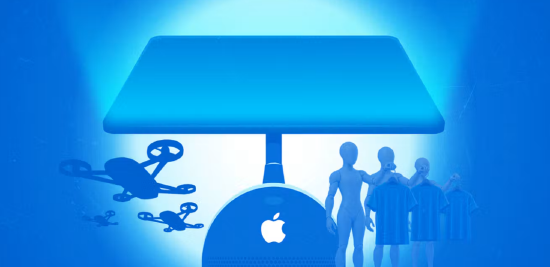
The project carries the internal codename J595 and was opened by Apple in 2019, close to what its participants now describe as a nearly a decade build. Its form is visual before it is technical: a 9-inch screen carried on an articulated robotic arm, shaped so much like a Pixar lamp that the comparison has outlived every prototype. Early hardware people were blunter about the first mule, calling it "an iPad on a stick"; one retelling preserves the even rougher version, "an iPad stuck on a stick".
Its current functions follow a simple logic: read the room, then act without being asked. Cameras and a sensor suite let the device sense its surroundings and move on its own, so lights come on when someone walks in, it will try to shoo a cat off the table, and built-in obstacle avoidance stops the arm from knocking over what stands nearby. The commercial plan is a price of about $1,000, with the component market able to push the final figure higher. Former employees say the likely naming is Home View Ultra, borrowing the scheme of Home View, the fixed desktop device Apple put on sale last month. The calendar is the unstable part: Apple originally hoped for next year, the launch could slip to 2028, and the hardware team initially wanted it out this year.
The drift starts at the brief. In 2019 this was a conservative idea — a video-call appliance whose arm existed only to follow a person from room to room. When management asked for AI to be layered on top, the target inflated, and the gap between what the hardware could do and what the software could do opened.
Seven checkpoints that shaped the delay
- 2018. The earliest prototype is finished. Bloomberg had already disclosed parts of this robot story earlier, which is one reason the timeline is unusually well documented for a product that has never been announced.
- 2019. Apple formally starts the J595 programme. Tim Cook watched a prototype demonstration the following year and approved it to continue; that first mule was bigger than today's design.
- Two teams, two pedigrees. Hardware went to Matthew Costello, who previously ran Beats, the headphone brand Apple bought in 2014. Software went to Apple's Special Projects Group, the unit then occupied with the Titan plan — the company's self-driving car programme. For a long stretch the veteran engineer Brian Lynch, an iPod-era employee, ran the car cockpit and J595 at the same time, and he pictured the robot sitting on an Apple car dashboard as happily as on a kitchen counter.
- 2021. Doug Field had been running the Special Projects Group before that year, then left for Ford; Kevin Lynch replaced him. Lynch is famous for building health tracking on Apple Watch and rescuing that line, but most of his attention stayed on the car, so the robot was mostly run by Chris Sarilly, who had led Apple Watch software.
- 2022. ChatGPT arrived and the AI boom began. Even in the early phase the team had known a machine at this price could not be only a fancy FaceTime device; after 2022 it started adding AI capability and far more complex experiences, wanting proactive agent functions that complete varied tasks on their own. A dedicated agentic-AI research branch was created inside the robotics group under Vladan Kortuen, who had run AI work at Intel and joined Apple in 2021.
- 2024. Apple stopped the car programme. Lynch finally moved his full weight onto the home robot and a large block of former car staff was reassigned to it — many bringing computer-vision, navigation and motion-control experience. Three people connected to the project say longer-serving robot staff were disappointed by his management, describing little communication and little listening to the floor.
- Then the last two years. Most hardware was settled about two years ago; software never caught up. Over the past year the software team has been trimming the original feature set toward FaceTime calls plus simple home automation such as switching on lights. Meanwhile ownership kept consolidating: last year Kevin Lynch and the Special Projects Group reporting line moved from senior vice-president John Giannandrea, who once ran Apple AI and left earlier this year, to Ternus. In April Apple confirmed Ternus would take the CEO seat within the year, and even during the handover he attended nearly every J595 and other robot demonstration and planning meeting.
Why a finished-looking robot still cannot ship
A scope that outran its calendar
People on the project describe a plain split: the hardware team on J595 wanted to speed up and release; the software team argued for delay. Lynch's answer was to lower the first-generation expectation and ship a base version, then grow it with updates — the same route taken by the original Apple Watch, released in 2015 and only later given the health and fitness sensors that made it a genuine success. That logic explains why feature cuts are not treated as defeat inside the company. It also explains why project members are already discussing a second-generation model, planning to move some of the cut capabilities into that next device.
A bench you can seat in one meeting room
Team size is the quiet variable. Ternus has pushed a company-wide strategy of leaner teams and faster delivery, yet the robotics group remains small: some people estimate the true robotics experts at around 10. Lynch's software organisation is about 300 people, of whom roughly 30 do research. Building a category is harder for a company that is excellent at annual iteration on iPhone and Mac and far less practiced at inventing a category from zero.
Two roadmaps pulling in opposite directions
Because Apple's own AI capability lags its rivals, the team was authorised to use outside models, including open-source models and a model licensed from Google. A tie-up with Siri was planned for later, but in the early days the Siri team and the robot team ran separately, and Siri's own iteration pressure was already heavy. Hardware that is complete cannot compensate for an assistant that is still being rebuilt. Ternus inherited a company where the Siri overhaul has taken years and, even with new AI features shipping this year, Apple sits behind Meta's Muse and OpenAI's Dots in the agent race.
Attrition of the people who knew the design
A batch of early engineers has gone. Hardware lead Brian Lynch left for the fitness hardware maker Oura; the robotics research lead Zhang Jian went to Meta. Their departures remove exactly the institutional memory a long-running programme cannot easily rewrite, and they happened while competitors were buying Apple talent outright.
The competitive clock, in one table
| Player | What it has in the home-robot race | Speed signal |
|---|---|---|
| Apple | J595 desktop robot on a movable arm; plus a wheeled follow-me robot, an indoor flying robot and a device aimed at single chores such as folding laundry | Hardware frozen about two years ago; software cuts over the past year; hoped next year, possible 2028 |
| OpenAI | A donut-shaped smart speaker with moving parts and a camera that senses the user and the room, planned for next year, on top of a hardware line built with Jony Ive | Acquired the startup co-founded by Apple's former chief design officer Ive a year ago; has drawn more than 400 Apple engineers into related work |
| Meta | AI glasses and VR headsets, plus the pocket AI device Charm | Charm reportedly went from concept to shipping order in under a year, with deliveries expected in December |
| Tesla | The Optimus humanoid | Musk says it will help with household chores |
| 1X | The Neo humanoid | Walked into public view last year in viral clips of washing-up and folding; the company had planned to place humanoids in homes this year |
| Samsung (outside the Apple story) | Ballie, a rolling ball-shaped home assistant | Reported by Bloomberg as indefinitely shelved for consumers and narrowed to internal use after years of slips |
In theory a robot limited to a handful of fixed chores is far easier to develop than a general-purpose humanoid juggling everything, and meeting records show Ternus took strong interest in the chores-only direction. That is the strategic logic behind the J595 cuts. The mood on the floor is captured by one engineer who worked on the project, who said Apple has been "torn apart trying to catch the AI wave".
Second act: Apple's own recent record
Tim Cook postponed several product launches to line them up with Ternus's start in September. What followed — Home View, the foldable iPhoneDuo and a touch-screen MacBook — drew mixed verdicts: the $2,899 MacBook was attacked on price; Duo carried real heat but repeated complaints of cracked screens; Home View was criticised as an enlarged Apple Watch that leans heavily on a Siri whose performance still falls short. Vision Pro is the closest structural comparison: about eight years of polishing, launched two years ago, met with a flat response. If J595 arrives next year, its development runway will be about as long. Some J595 members want it out quickly; others fear the same cold reception Home View got — and every month of delay raises the bar, because industry AI capability keeps climbing and outside expectation climbs with it. Before his promotion, Ternus himself was sceptical of many new programmes, from the aborted car project to Vision Pro, yet three people familiar with the robot work say he expects far more from this category.
Three datapoints the Apple version of this story usually leaves out
Established owners are stepping back, not only Apple
Samsung put a rolling home assistant on stage years before Apple's device took shape, and its consumer release kept sliding. Bloomberg reported in January 2026 that Ballie had been shelved indefinitely as a consumer product and reduced to internal use. A category-wide retreat matters for readers because it means a delayed Apple robot is evidence about the market's difficulty, not only about one company's tempo.
A home robot can win every living room and still fail as a business
iRobot, the Roomba maker, filed for Chapter 11 protection with more than $260 million of debt outstanding, after Amazon's roughly $1.4 billion takeover offer collapsed in early 2024 under American and European regulatory pressure. Coverage of the case notes that regulators treated the mapping and camera data a home robot collects as a security question. That is the exact liability Apple's camera-and-sensor robot carries at a far higher sticker price, and it is a reason to read the ~$1,000 plan as a business-model risk as much as a pricing choice.
The expectation line moves faster than the launch date
Goldman Sachs valued the humanoid market at about $38 billion by 2035 back in 2024; by September 2026 the bank had raised its 2035 shipment estimate to roughly 6.5 million units and the market to about $138 billion. So the arithmetic inside Apple's own worry is sound: shipping later means a first-generation device is judged against a benchmark the rest of the industry has meanwhile moved.
Common misconceptions
- "Hardware done means product done." Most of the hardware was frozen about two years ago, and the device still has no firm date — the constraint is software, agents and assistant quality.
- "Feature cuts mean the project failed." The Apple Watch playbook from 2015 shows a thin first generation that later gained the sensors that made it a hit.
- "A robot must handle everything to be worth buying." A machine narrowed to fixed chores is technically far easier, and that is the direction Ternus is said to favour.
- "J595 is a humanoid." It is a desktop screen on an arm; Tesla Optimus and 1X Neo are the humanoid side of this race.
- "The price is settled." About $1,000 is the plan; component-market conditions can move the final number upward.
- "Home View Ultra is just Home View with a new badge." Home View, launched last month, is a fixed desktop device; the Ultra naming would signal a separate, mobile product line.
If you run projects: the reusable checklist
- Freeze the brief, not only the bill of materials. Ask which single sentence changed when the AI requirement arrived, and who signed off on it.
- Count specialists before counting budget. Around 10 robotics experts and roughly 30 researchers inside a 300-person software group is a scope constraint, not a staffing footnote.
- Ship a defensible base version. Decide in advance which two jobs the first generation must do well, and write the upgrade path for everything else.
- Put the platform dependency on the schedule. If your product waits on another team's assistant or model, that team's roadmap becomes yours.
- Price against the moving benchmark. Assume rivals will improve during your delay, and state the value your device offers at launch, not at the next model.
- Retain the memory. Exits to Oura and Meta show how quickly a decade-long design history leaves a small programme.
If you are the buyer: what to do before this thing ships
- Set your own decision date. If the product slips toward 2028, decide today whether you keep waiting or buy a fixed-chores device now.
- Ask the compatibility question first: whether the robot can drive the lights it promises to switch on. The Matter standard now runs to version 1.5, released on 20 November 2025, with a growing catalogue of certified devices, so "is it Matter-certified" is the shortest useful test for any hub-style product.
- Budget above the sticker. About $1,000 is the plan, with component costs able to raise it.
- Judge the first generation on two jobs only: video calls and simple automation. Anything richer is promised for later models.
- Read the privacy answer as a feature. Cameras, microphones and a map of your rooms are precisely the data regulators weighed in the iRobot case.
FAQ
How long has Apple been building this?
Prototype work goes back to 2018, and the J595 programme started in 2019 — a nearly a decade runway that mirrors Vision Pro's about eight years.
Why do the teams disagree about the date?
Hardware was ready enough that its owners wanted to accelerate and release; software, facing an under-staffed agent and assistant stack, argued for delay and spent the past year cutting scope.
What does it cost, and what is it called?
The planned price is about $1,000, possibly higher because of components. Former employees expect Home View Ultra, in line with the naming of Home View from last month.
Is the delay a sign Apple is losing the AI race?
It is one symptom among several: Siri's overhaul has taken years, and Apple trails Meta's Muse and OpenAI's Dots in agents. It is also not unique — Samsung shelved its own home robot, and the category's business economics have already punished an established player.
What happens to the features cut now?
Project members are already discussing a second-generation model and moving some of the removed functions into that next device.
The takeaway
Strip away the Pixar-lamp charm and what remains is a lesson almost any reader can reuse: a project that lets its definition grow faster than its specialist pool ends up shipping less than it promised, later than it said, at a price the market may not accept. Apple's hardware is nearly finished; its argument for buying is not. For anyone watching from outside, the sensible move is to treat the ~$1,000 tag, the 2028 risk and the FaceTime-sized first generation as the real disclosures — and to test any new home robot against what it does on day one, not what its roadmap promises.
Case file compiled for ItInsightsWorld by James Hartley, IT Insights. Corrections and reader questions: contact@itinsights.com