
Apple's iPhone 18 Battery Gambit: Why Interior Space, Not Chip Speed, Is the Real Upgrade in 2027
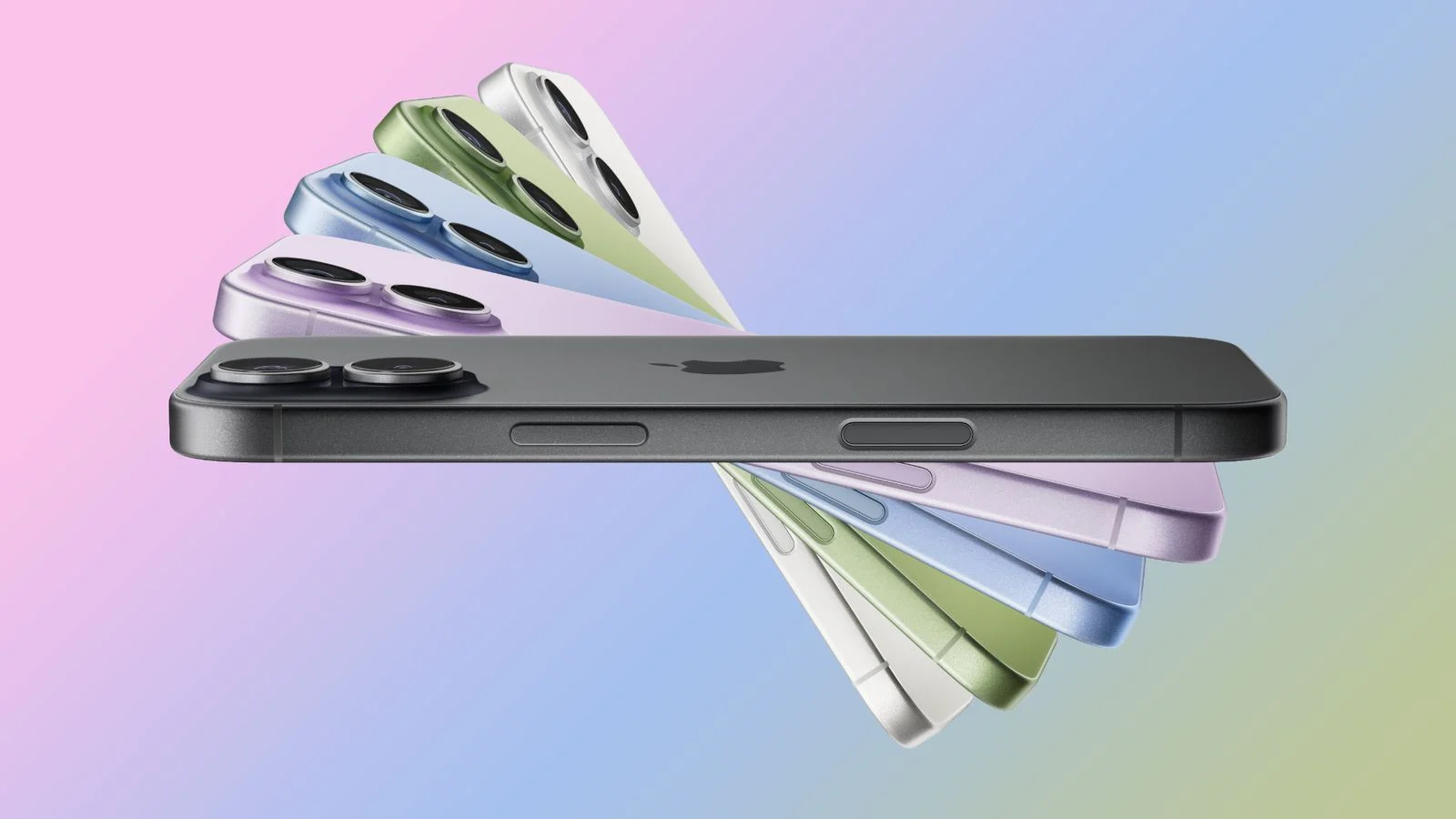
The short version first: the most consequential iPhone change reportedly in preparation is not a faster processor, a new camera stack or a brighter panel. It is an emptied-out, re-stacked interior in which the battery gets a larger share of the box. Supply-chain analysts say Apple is evaluating new internal layouts that reserve extra volume for the battery assembly, and that the reshuffle is expected to surface first in the iPhone 18 series arriving in 2027, with capacity rising versus current models. Apple has confirmed none of it. What the report does hand readers is a clean signal of priority: as on-device intelligence and always-on high refresh-rate displays push power demand upward, the company appears willing to reopen a decision it treated as settled years ago - how much physical room a cell deserves inside an iPhone.
What the Report Claims - and What It Deliberately Leaves Open
Separating the claimable from the speculative is the first step with any hardware leak, because the two travel at very different speeds.
- The claim: Apple is assessing a re-planned internal layout whose stated purpose is to free up volume for the battery component.
- The window: that adjustment is expected to appear first in the 2027 product line, the iPhone 18 series, rather than in a mid-cycle refresh.
- The direction of travel: people close to the supply chain describe a capacity figure above today's models, without naming a number for the iPhone 18.
- What is missing: no confirmation of cell size, no published body-design change, no runtime target. Everything beyond those four points is engineering inference, not a statement from the company.
Why Efficiency Alone Stopped Covering the Gap
In recent years, Apple's battery-life story has been a chip story. Architectural redesign, advanced process nodes and software-level power management lifted performance per watt across the A-series chips, so each generation of iPhone could last longer on a cell that barely changed. That approach had an elegant property: it cost the buyer nothing in thickness, weight or shipping classification.
Three loads have since grown faster than those efficiency gains. First, Apple Intelligence and the device-side model work that accompanies it: summarisation, transcription, image cleanup and background indexing all burn cycles on the neural engine and the memory subsystem. Second, high refresh-rate displays and permanently brighter panels, which draw power every hour the screen is awake rather than every task. Third, sustained connectivity - always-on location, radio scanning and the compute overhead of assistant features that keep running after you put the phone down. Efficiency still matters enormously, but it now behaves like a floor rather than a ceiling, which is exactly the moment at which adding stored energy becomes the logical next lever.
Four Ways to Buy More Run Time, Compared
| Route | What physically changes | What it buys | Where it runs out | Standing today |
|---|---|---|---|---|
| Silicon and software efficiency | Smaller process node, better power gating, smarter scheduling on A-series chips | Longer run time with no new mass inside the phone | Diminishing returns once the display and radio dominate the draw | Reported to be Apple's primary tool in recent years |
| Re-packaged interior (the iPhone 18 report) | Motherboard, shielding and component placement rearranged so the cell occupies more volume | More stored energy, headroom for sustained AI workloads | Cost, re-validation, thermal redesign, and less room for other parts | Under evaluation, unconfirmed |
| Cell chemistry | Silicon-carbon anodes replacing pure graphite anodes | Roughly 800-1200 Wh per litre versus about 700 Wh/litre for conventional graphite cells, so more energy in the same footprint | Volume expansion across charge cycles, cycle-life tuning, and materials costing several times graphite | Shipping in Android flagships since 2025-2026; Apple's use is unannounced |
| Cell form factor | Stacked or laminated electrodes instead of a wound jelly-roll, plus shaped cut-outs | Better corner usage; teardowns of Apple's ultra-thin model show a stainless-cased laminated cell at 3,149 mAh and 12.263 Wh, only 2.79 mm thick, with a notch carved to clear the motor and connector | Tooling expense and lower volumetric efficiency in roomier bodies | Already visible in Apple hardware, so incremental rather than speculative |
Read side by side, the table explains why the rumour is credible even without a milliam-hour figure: the efficiency route is mature, the form-factor route is partly done, and chemistry is a supplier decision. That leaves packaging - the unglamorous rearrangement of space - as the fastest lever Apple can pull on its own.
Apple Intelligence Cuts Both Ways
The reflex reading of "AI needs a bigger battery" is only half right, and the missing half is worth stating because it changes how a future iPhone should be judged. Research summarised by the World Economic Forum found that running inference locally on a handset rather than sending the same request to a data centre can lower energy per query by one to three orders of magnitude. Industry studies on on-device model execution put the saving in the region of ninety per cent for individual queries. In other words, moving intelligence onto the phone can be the more efficient choice.
The catch is that those savings accrue to the network, while the cost lands squarely on a 4,000 mAh-class battery and a sealed slab of metal and glass that has no fan. A local model also tends to run in bursts that heat the chassis, and thermal load is what throttles both performance and charging speed. So a larger cell is best understood not as a ticket to a heavier workload but as a buffer: it lets Apple Intelligence keep indexing and generating in the background without the user feeling the drain, and it buys thermal tolerance during those bursts. Analysts who argue that capacity growth and efficiency work are substitutes are misreading the design problem; in this case they are dependencies.
Three Outside Forces That Will Shape the 2027 Answer
1. A Twenty-Watt-Hour Line That Is Cheap to Cross Only Once
Capacity is not just an engineering variable; it is a logistics one. Air-cargo rules built on the IATA Dangerous Goods Regulations classify lithium-ion cells above twenty watt-hours per cell under materially stricter handling, and forwarder guidance repeats the same threshold for batteries contained in equipment. That has two consequences worth watching. A flagship model pushing past the threshold moves into a more restricted cargo category, which lengthens lead times and raises unit freight cost at exactly the moment a launch needs volume. It also means the biggest cell Apple can fit becomes visible to readers months before a keynote, through shipping paperwork and carrier notices rather than through Apple's own slides.
2. Europe's Removability Clock Points at the Same Year
Article 11 of the EU Batteries Regulation (EU) 2023/1542 sets a general requirement, from 18 February 2027, that portable batteries incorporated in products be removable and replaceable by end users, with defined derogations where sealing is necessary - the European Commission publishes those exemptions and their conditions. Since the current iPhone 18 window is 2027, a volume increase and a serviceability change arrive on Apple's desk simultaneously: bigger cells are easier to fit if you are already reopening the chassis, but a removable cell usually costs volume, weight and waterproofing margin. The 2027 layout is therefore a three-way trade, not a two-way one. A related pressure is disclosure: the EU energy-label regime that took effect in June 2025 obliges Apple to publish rated capacity, charge-cycle endurance and repairability grades for models sold there, so specs increasingly surface through official filings rather than analyst notes.
3. Silicon-Carbon Pressure From Rival Flagships
Competitor hardware has already shifted the baseline. Handsets from OnePlus, Xiaomi, Honor, OPPO and vivo have shipped silicon-carbon anode batteries since 2025, with published pack sizes climbing past 6,000 mAh and, in mid-range models, beyond 7,000 mAh, while body thickness stayed near eight millimetres. The theoretical gap explains the marketing: silicon holds around 4,200 mAh per gram against roughly 372 mAh per gram for graphite, and commercialised composites reach 1,000-2,200 mAh per gram. Apple does not have to answer that chemistry to sell phones, but the comparison sets user expectations about what "all-day battery" should mean, and efficiency alone is a hard story to tell against it.
Five Misconceptions Worth Clearing Up
- More milliamp-hours always means more hours of screen time. Runtime is energy per task, not the number on the cell. The EU label measures endurance per charge cycle separately from rated capacity, which is precisely why the two figures can disagree.
- A bigger battery forces a thicker phone. Packaging gains are real: shaped, laminated cells use corners that a rectangular wound cell cannot reach, as the teardown of Apple's thinnest model shows.
- A rumour is a roadmap. Apple routinely changes configurations late in development; nothing about the 2027 line is committed publicly.
- On-device AI means constant drain. Much of the assistant workload runs in short bursts or while the phone is idle and charging, which is why capacity and charge strategy matter more than raw background draw.
- Extra capacity arrives free. A larger cell adds mass, extends charge time, generates more heat per cycle, and may trigger stricter transport classification.
What to Do With This Before You Spend Money
- Measure your own draw before you blame capacity. Check Settings, then Battery, and look at screen-on time, 5G share and which apps hold the top slots. If display time is short and a single app dominates, no hardware upgrade will change your day.
- Treat battery health as the real upgrade test. If your current device reports maximum capacity below roughly eighty per cent and it is three years old or more, a cell replacement buys back most of the improvement a new phone would - for a fraction of the price and without waiting for 2027.
- Do not pre-order on a capacity rumour. The credible signals to wait for are an EU energy-label entry, certification filings and teardown-grade evidence, not analyst forecasts.
- Judge the future line on endurance and serviceability, not on milliamp-hours. Once the label regime applies, published charge-cycle endurance and repairability grades are the comparable numbers across brands.
- If you rely on assistant features today, watch heat rather than percentage. Throttling, not capacity, is what usually ruins a sustained local-AI session.
- Keep a decision date. Rumour cycles run eighteen months; set a point at which you buy what exists rather than what is expected.
FAQ
Has Apple confirmed a larger battery for the iPhone 18?
No. Currently the only public statements come from supply-chain analysts describing an internal layout under evaluation. Apple has not disclosed cell specifications, body redesign or a runtime target for the iPhone 18 series.
Why would Apple touch the interior at all if efficiency keeps improving?
Because efficiency lowers the cost of each task while AI features, brighter always-on displays and background indexing raise the number of tasks. When the two curves cross, stored energy becomes the remaining lever that a design team controls directly.
Does the 2027 timing mean this lands everywhere at once?
The reports describe the change arriving first in the iPhone 18 series, which implies a phased rollout rather than a fleet-wide redesign. Regional variants may diverge, since removable-battery and label rules differ between Europe and other markets.
Would a bigger cell break the phone's water resistance?
It pressures it. Sealing, glued battery adhesives that release under electric current and removable-cell requirements compete for the same millimetres, which is why the European regulation and the layout report should be read together rather than separately.
Should readers wait for this upgrade?
Only if your device is healthy and you are not fighting a thermal or capacity problem today. An unconfirmed 2027 change is not a reason to keep running a phone whose battery has already degraded to under eighty per cent.
The Bottom Line
Strip away the missing numbers and the report says something coherent: Apple's next battery step is likely to come from geography, not from chemistry lectures or chip charts. Reassigning interior volume in the iPhone 18 series would mark a rare upgrade narrative built on stored energy rather than on silicon, and it reflects a company re-balancing performance, intelligence and endurance for a future in which the phone does more thinking on its own. The same 2027 window, however, carries a removability deadline, a freight threshold and an official publication channel for battery data. Expect the argument to move from "how many milliamp-hours" to "how much energy you can actually use, and how easily you can replace it". Treat every figure until then as engineering direction, not product fact.
Written by James Hartley for ItInsightsWorld. Found an error in this analysis or have a correction about the underlying reports? Contact IT Insights editorial at contact@itinsights.com.