
ItInsightsWorld General Brief: Apple iPad mini Update Brings 2 nm A20 Pro, N1/C2 Connectivity, and OLED
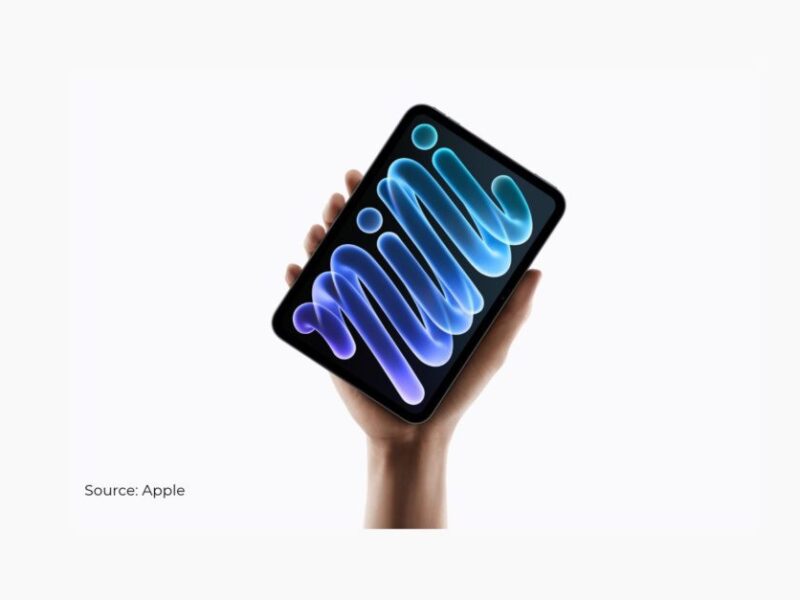
The refreshed iPad mini is less a cosmetic revision than a platform reset. Apple has moved the small tablet to a 2 nm A20 Pro silicon path, introduced N1 and C2 connectivity components, and shifted the viewing surface to an 8.5-inch Super Retina XDR OLED panel while keeping the device in a compact role.
For readers tracking component-level change—the angle previously emphasized by eeNews Europe—the meaningful story is inside: processor architecture, neural processing resources, memory bandwidth, wireless radios, and power efficiency all move together.
A20 Pro and Neural Pathway: Where the Upgrade Concentrates
The tablet uses Apple's newest 2 nm process node. Its A20 Pro package is described as having a CPU with up to six cores plus a seven-core GPU. Neural Accelerators are placed in every GPU core, and Apple states that AI workloads can run up to 4.5 times faster than the earlier iPad mini.
Apple also reports graphics throughput up to 2.7 times higher, supported by dynamic caching, hardware-accelerated mesh shading, and ray tracing. For multithreaded CPU work, the company cites gains of up to 60% faster.
The 512 GB tier is positioned as the more compute-heavy option. It adds a Dual 16-core Neural Engine, which totals 32 cores across the two 16-core units. Apple also says unified memory bandwidth is more than double the prior generation, helping Apple Intelligence and Siri AI in iPadOS 27 use personal context and onscreen information.
Display, Radios, and Chassis Changes
Apple replaces the prior LCD with an 8.5-inch Super Retina XDR OLED display. Even though the visible area increases, the body remains comparable because the surrounding bezels are 24% thinner.
Peak brightness is listed at 1,200 nits, contrast reaches 2,000,000:1, and a nano-texture finish remains optional for glare control.
Wireless changes are split between short-range and cellular. N1 supports Wi-Fi 7, Bluetooth 6, and Thread. Cellular variants move to C2. Apple claims C2 can provide up to 50% faster cellular data speeds versus the prior generation and improves power efficiency.
The chassis is 5.4 mm thick and lighter than before, with IP67 water and dust resistance. Apple introduces an Acoustic Display system: woofers are tuned through the display, while tweeters sit between the glass and aluminum enclosure.
Imaging hardware stays focused on compact utility. A 12 MP Center Stage front camera is on the landscape edge, and a 12 MP rear camera records 4K video at up to 60 fps.
Buying Window
Preorders begin October 28, and retail availability is set for November 6. Entry pricing starts at $699 in the United States, with storage choices of 128 GB, 256 GB, and 512 GB.