
Apple Intelligence in China: An ItInsightsWorld Guide to the iOS 27.3 Developer Beta, Clean Up and What Arrives This December
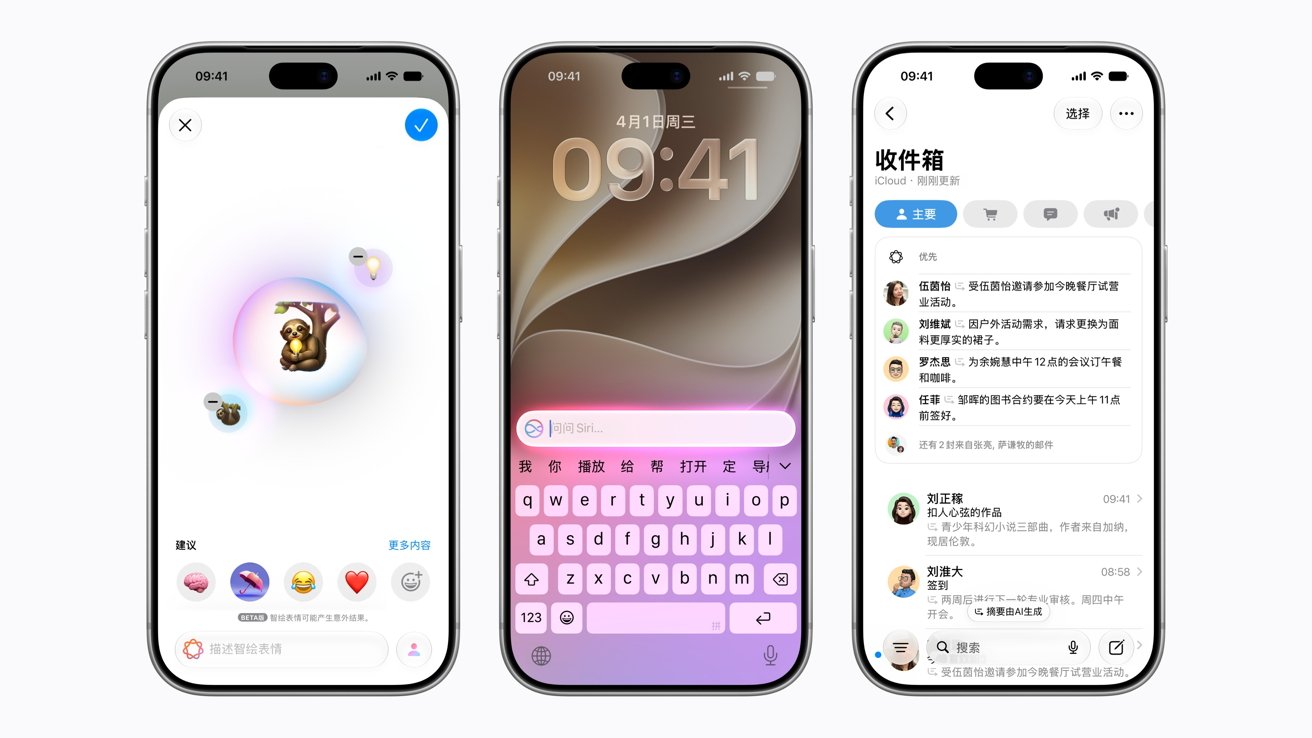
Bottom line first: Apple Intelligence has officially entered the China region. The opening move is a limited first batch carried by the iOS 27.3 developer beta — closer in scope to the platform's early international version than to what longest-served markets enjoy today — while the complete rollout for users in China is scheduled for this December, when the iOS 27.3 official release ships. The AI version of Siri is deliberately absent. On the engine side, Apple states that the current system runs on generative AI models it built itself, and that a partnership with Alibaba is intended to fold Tongyi Qianwen (Qianwen) capability into Siri later.
For a general reader the useful question is not "did Apple finally arrive?" but a practical trio: what can I switch on today, which handset can run it, and what is genuinely worth waiting for. This guide answers in that order.
Why the China region waited until 2026
Apple Intelligence debuted in the United States in 2024 and then spent roughly two years spreading outward. iPhone and iPad users in the European Union gained access for the first time in the spring 2025 wave delivered with iOS 18.4, and that same expansion put Simplified Chinese on the supported-language list. The missing ingredient was therefore never translation; it was clearance. Apple's own device-support note said it in plain terms: the features could not be enabled on handsets bought in mainland China, yet previously purchased supported devices would be able to activate them once Apple Intelligence became available in the China mainland market.
The reason sits in procedural rules. Under China's generative AI framework — described by Stanford University's DigiChina project and summarised for operators by international counsel such as Latham & Watkins — a provider that wants to offer a generative AI service to the general public must first pass a security assessment and complete a filing or registration workflow with the Cyberspace Administration of China, with the underlying generation algorithm registered as part of that process. A foreign platform cannot satisfy that on its own through software alone; it needs an approved local model and a local counterparty. Read that way, the distance between the 2024 United States launch and the 2026 China region entry is not an engineering backlog but a compliance queue.
What the first batch actually unlocks
The initial feature set is best understood as four everyday clusters rather than one headline AI product.
| Scenario | What opens up now | How to judge day-one usefulness |
|---|---|---|
| Photo library | Clean Up removes unwanted objects from a frame, Memories movies can be generated automatically, and natural-language search finds images and moments | Highest immediate value, because it works on pictures you already own |
| Camera and physical world | Visual Intelligence turns the iPhone camera into a recognition and analysis entry point | Most useful while travelling, shopping or studying an unfamiliar object |
| Text and inbound noise | Writing Tools proofread, rewrite and summarise; the system generates notification summaries and email summaries | A time-saver for inbox-heavy and group-chat-heavy users |
| Messages, notes and calls | Smart Reply proposes context-aware responses, Notes gains audio transcription, and Phone supports call transcription with generated summaries | Largest payoff for meetings, deliveries and long voice messages |
| Personal expression | Intelligent emoji generation for more personalised replies | A light feature with high social visibility |
Secondary coverage of Apple's China product page adds live translation across Messages, FaceTime and Phone, including face-to-face translation on noise-cancelling AirPods models. Apple has not documented that item with the same granularity as the clusters above, so verify it inside Settings on your own build before planning around it.
What is deliberately missing
- The AI version of Siri. Apple's launch material excludes the AI version of Siri from this China-region release and states that the update does not carry the other next-generation capabilities announced at WWDC 2026. Since that assistant upgrade only began reaching other countries and regions in 2026, it was never going to appear in this test build.
- The complete Apple Intelligence experience. This is a first batch, not parity with the longest-served markets.
- Other platforms in the same wave. The described scope centres on the iPhone; iPad and Mac availability in the China region has not been published with the same dates.
Can your handset run it? A 60-second eligibility check
Treat the hardware floor as a hard boundary, not a suggestion. Apple's published device list puts the line at A17 Pro-class silicon and its accompanying memory, because a large share of these features runs on-device inference.
- In scope for the China region: iPhone 15 Pro, iPhone 15 Pro Max, the iPhone 16 family and later models, plus iPhone Air and the foldable iPhone Duo.
- Out of scope: the standard iPhone 15 and iPhone 15 Plus, and every iPhone 14 or earlier — the plain versions fall short on chip and memory, so no settings trick changes that.
- Account and region: the sign-in region must match the China mainland context for the entry point to appear.
- Storage and battery headroom: local model deployment needs free space; clear tens of gigabytes before updating.
- Rollout reality: availability can be staged, so the "Apple Intelligence and Siri" panel may not appear the same day on every eligible device.
Developer beta now versus the iOS 27.3 official release this December
| Dimension | iOS 27.3 developer beta (test access from November 4) | iOS 27.3 official release (this December) |
|---|---|---|
| Who it is for | Registered developers validating their apps | Every supported user through a normal update |
| Stability | Bugs, battery and thermal variance, occasional app misbehaviour | Production hardening and QA |
| Feature scope | First batch only; the AI version of Siri is not included | Full China-region introduction as Apple has planned it |
| Reasonable advice | Right for a spare device and early documentation work | Where ordinary users should actually start |
Four misconceptions worth dropping
- "Updating iOS turns this on automatically." Update is necessary but not sufficient: model eligibility, sign-in region and staged availability all gate the switch.
- "This is the same assistant people use abroad." It is closest to the platform's early international version, and the AI version of Siri is the clearest gap.
- "Alibaba's model has taken over." Apple's position is that the system today uses Apple-built generative models; the Tongyi Qianwen integration described for Siri is forward-looking, not a switch already flipped.
- "Older iPhones can be forced in." There is no official route around the hardware floor, and unofficial tutorials put accounts, warranty status and data at risk.
Action plan for the next 30 days
- Back up the iPhone first — iCloud or a computer — before joining any beta channel.
- Check eligibility against the device list above; if you are outside it, do not install anything.
- Free storage, confirm your sign-in region, then look for the Apple Intelligence entry in Settings after updating.
- Benchmark three workflows only: Clean Up on a cluttered photo, Smart Reply in a long thread, and one real call transcript and summary.
- If Apple Intelligence matters to you, make the chip-and-memory floor a buying criterion at your next upgrade rather than trying to retrofit an old handset.
- For developers: test how summaries, transcription and Smart Reply render inside your own interfaces, and note any localisation gaps before the December release.
FAQ
Is what just arrived the full Apple Intelligence?
No. The iOS 27.3 developer beta exposes a first batch concentrated in photos, writing and messaging; Apple plans the full China-region introduction this December with the iOS 27.3 official release.
Does the AI version of Siri work in the China region now?
It is not part of this release. That capability was still rolling out in other countries and regions during 2026, which is why it is absent from the test build.
Will Siri eventually use Alibaba's model?
Apple says it is working with Alibaba and plans to integrate Tongyi Qianwen, also called Qianwen, into Siri. Treat the timeline as unannounced.
Should an ordinary consumer install the developer beta?
Rarely. A developer beta is a testing instrument; the sensible starting point for daily use is this December's official release.
What should readers watch next?
Three signals: whether Apple holds its two-step cadence of beta then official release for later features; the date the AI version of Siri reaches the China region and with which local model; and whether iPad and Mac are folded into the same compliance path.
The editorial view
The news is not a model, a benchmark or a partnership headline — it is that a system-level AI entry point now exists on compliant, eligible devices in the China region. First versions of platform features are usually thin; the value shows up when third-party apps inherit the same summaries, transcription and image handling. For readers, the practical frame is simple: if your hardware clears the floor, wait for this December, test three workflows, and only then decide whether AI features are worth a device upgrade. If your hardware does not clear it, no workaround is worth the risk.
Written by James Hartley, IT Insights. Questions or corrections: contact@itinsights.com.