
Apple vs Epic at the U.S. Supreme Court: A Side-by-Side Look at the January 2027 App Store Fight
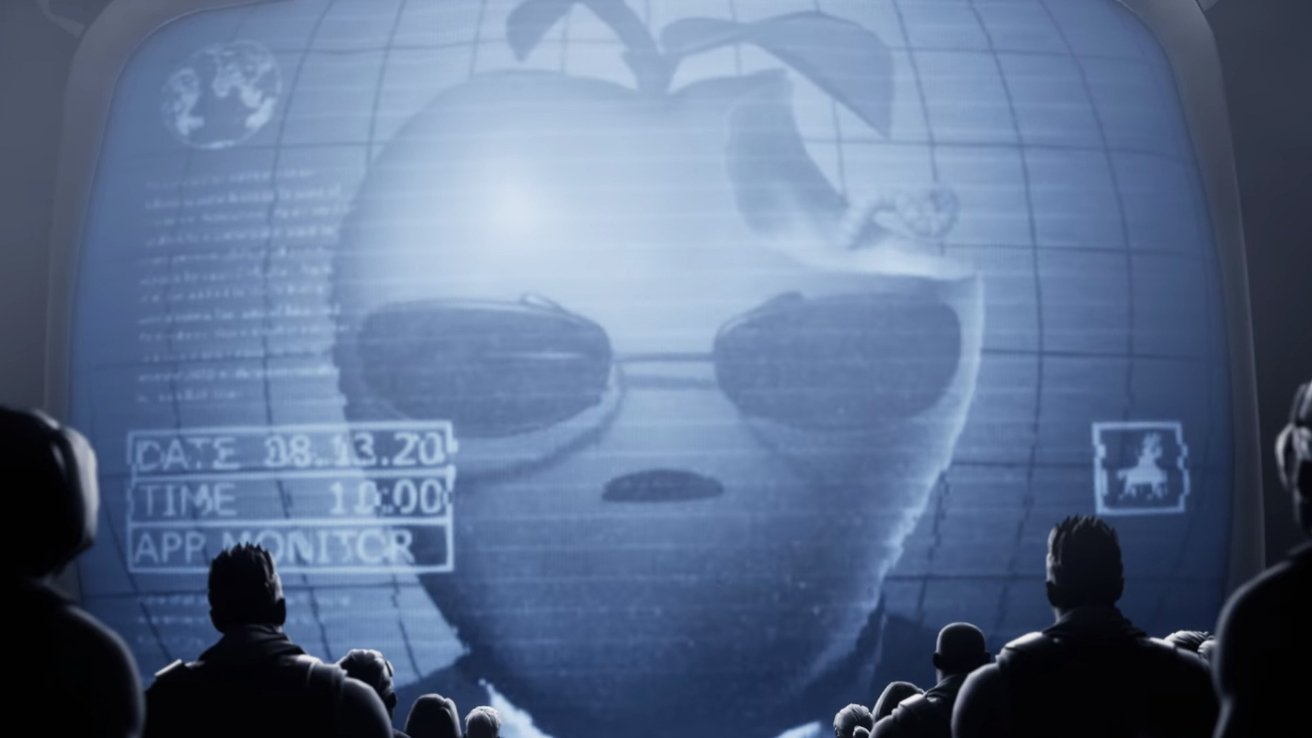
The short answer: the dispute now in front of the Supreme Court is not really about app stores. It is about whether a lower court may declare a company in contempt for disobeying the spirit of an order instead of the letter of it. The App Store commission question that Apple and Epic are arguing over is the visible symptom; the deeper stake is how much leeway any regulated business keeps while it is complying with a court order. Oral argument in the case is set for the January 2027 window, and a final ruling could land either right after it or later in 2027 — nobody inside the litigation is promising which.
For general readers this matters for one concrete reason: the outcome will shape the price of digital goods bought on iPhones in the United States, the commission Apple collects on App Store sales, and the template that every other platform borrows when a judge tells it to open its gates.
The one binary question the Supreme Court justices agreed to decide
Strip away six years of filings and the case reduces to a single legal switch.
- Letter-based contempt: a violation must be found in the exact words of the order. If the text does not mention a fee, charging a fee is not disobedience.
- Spirit-based contempt: a violation can be found in the purpose of the order. If a fee makes the allowed behaviour pointless, the fee breaks the order anyway.
Apple argues the first rule is the only lawful one and says the ruling below crossed the boundary of what courts are allowed to interpret. Epic argues the second, insisting Apple's design ran against what the ban was actually meant to achieve. Most courts outside the U.S. Ninth Circuit Court of Appeals have historically read orders narrowly, which is precisely why this split attracted so many outside briefs.
Positions on one page: Apple vs Epic
| Point of comparison | Apple's position | Epic's position |
|---|---|---|
| What the order actually said | It barred blocking buttons, links and calls to action pointing to other payment options; it never stated which commissions were allowed or forbidden. | A steering ban with a price tag attached is not a steering ban; the intent of the ruling governs. |
| Test for contempt | Only a clear, explicit breach of the written words qualifies. | Behaving around an order is still disobeying it. |
| How courts should behave | Interpret orders like contracts — inside the four corners of the text. | Interpret orders like remedies — ask what they were supposed to fix. |
| Reading the litigation record | It prevailed against nearly all of Epic's original antitrust claims. | It won the one claim that changes everything: the end of anti-steering rules. |
Sources: the parties' filings and the lower-court findings as described in the case record on the Supreme Court docket for Apple v. Epic Games (supremecourt.gov; case summary at scotusblog.com).
Two core arguments Apple brought — and the one that did not travel
Apple's appeal rested on two core arguments:
- Interpretation. Courts must decide violations from legal text, not from inferred purpose.
- Scope of relief. A separate matter referred to as CASA would narrow how far a court may extend an injunction like this one.
Only the first survived. The Supreme Court had already turned down the CASA-flavoured argument and agreed to hear the contempt standard alone. Practical read: even a total win for Apple in January 2027 would not reopen the underlying duty to let apps point users elsewhere — it would only change how compliance is policed.
Procedural scorecard: how this reached the bench
- August 2020 — Epic's suit is filed; the first trial ends with Epic losing on most of its major claims.
- 2021 — the permanent injunction behind this fight is issued, forbidding Apple from blocking external payment links and related calls to action.
- 2024 — Apple asks the Supreme Court to review the contempt ruling; the justices decline to take it at that stage (docket history for case 25-1311).
- April 2025 — the district court finds Apple in civil contempt over the commission it applied to purchases completed after users followed a link out, and bars any charge on those purchases.
- May 2025 — Apple updates the App Review Guidelines for compliance with the U.S. court decision (details below).
- Mid-2026 — the Court grants review, limited to Question 1 on the docket (scotusblog.com).
- Sept–Dec 2026 — Apple's opening brief on 14 September, Epic's response due 13 November, Apple's reply due 14 December; outside briefs keep arriving, including one from the U.S. Department of Justice urging reversal of the contempt ruling (9to5mac.com, 22 September 2026).
- January 2027 — the first formal oral argument in this case, with the ruling window left open.
Meanwhile the money question does not wait for the bench: Apple has returned to the district court to work out the commission calculation. If the higher court does not undo the contempt finding and the anti-steering order attached to it, whatever scheme emerges will take effect first.
Cost comparison: the checkout routes as they stand today
Prices are not set by this article; they come from Apple's published fee pages and the court record. Treat them as the baseline that any 2027 ruling may move.
| Route a buyer takes | Who processes payment | Apple commission today (United States) | Main risk after a ruling |
|---|---|---|---|
| Classic in-app purchase | Apple | 30%, or 15% for developers in the Small Business Program (developer.apple.com) | Unaffected — this stays the default path for any developer. |
| Button or link inside the app that opens a web checkout | The developer | 0% while the contempt ban on charging for link-out purchases stands | Could become a "reasonable" fee if Apple wins on the contempt standard or the district court sets one. |
| The same link-out route before the contempt ruling | The developer | Up to 27%, the rate Apple applied and the courts treated as violating the ban | History, not a current option — but the closest preview of a losing outcome for Apple. |
| A website that no app points to | The developer | 0%, because no App Store transaction occurs | Low; its weakness is reach, not price. |
Read as a decision tool, the table says something simple: the entire economic case for link-out checkout in the United States currently rests on a temporary 0%. Developers pricing those flows are making a bet on a court decision, not on a stable fee schedule.
The paperwork side: what the rules require right now
Compliance detail is where most explainers stop, yet it decides whether a link-out button is even allowed. From Apple's developer news page dated 1 May 2025 (developer.apple.com):
- Guideline 3.1.1(a): on the United States storefront there is no prohibition on including buttons, external links or other calls to action — and no entitlement is required.
- Guideline 3.1.3(a): the External Link Account entitlement is not required for U.S. apps to add those links or calls to action.
- Outside the United States storefront, the older in-app-purchase restriction still applies unless local rules provide otherwise.
Translation for non-specialists: today the barrier to steering is commercial (fees, checkout friction, refunds), not gatekeeping paperwork. A 2027 ruling that changes the fee side would not automatically re-impose the approval step.
Who actually benefits — three scenarios
- Apple wins on the letter rule: the contempt finding is erased, link-out fees return to some negotiated number, and App Store economics drift back toward their pre-2025 shape. Consumers lose part of the discount pattern developers built to route around commissions.
- Epic holds the line: steering stays free of Apple commission, and the "pay on our website and save 15–20%" offers that developers such as Epic have run on other storefronts become a durable U.S. habit.
- Narrow or split outcome: the Court endorses text-based contempt but leaves the anti-steering duty untouched — the middle path many observers quietly price in. Fees stay contested, just in the district court rather than on appeal.
Three regions, three rulebooks
Comparative context explains why a U.S. ruling is not universal. In the European Union, the Digital Markets Act produced its own Apple terms under regulator pressure; in Japan, App Store rules were rewritten after platform-specific legislation took effect in 2025, allowing external payments on Apple's own terms. Those regimes came from statutes and regulators rather than from contempt findings, which is why they keep running whatever the Supreme Court decides about Apple and Epic.
Common misreadings of this case
- "This is a retry of the antitrust verdict." It is not. The 2020-era monopoly claims were largely settled in Apple's favour; only the anti-steering remedy survived, and today's fight is about enforcing it.
- "A ruling will follow the January 2027 argument." Timing is genuinely unsettled — the Supreme Court may release its answer soon after argument or later in 2027.
- "If commission reaches zero, checkout is free." Developers still pay card processing, fraud checks, currency handling and refund risk on any payment they collect themselves.
- "Whatever the Court says applies worldwide." The order governs the U.S. storefront; other regions run on their own regulatory tracks.
Frequently asked questions
What exactly is before the Supreme Court?
One question: whether a lower court may find a party in contempt by measuring conduct against the purpose of an injunction rather than its written words. Everything else, including the commission rate itself, is being handled below.
Do App Store commission rates change overnight?
No. Until the Court rules, the district-court orders remain in force, and the current zero-commission status for link-out purchases in the United States continues.
Does this affect Android or other app stores?
Not directly. It affects something broader: how enforceable any court-ordered remedy becomes, which is a template other platform cases borrow.
As a shopper, what should I do?
Nothing special. Check whether the service you buy is cheaper if you subscribe on its website instead of inside the app — that price gap is the most visible consumer benefit of this litigation.
If Apple loses, does the App Store commission vanish?
No. A loss would confirm that orders can be policed by intent; it would not remove commissions on ordinary in-app purchases.
Action list: what to do while the calendar runs to 2027
If you build or price an app for the U.S.
- Model two fee states for every link-out flow: 0% today and a positive "reasonable commission" tomorrow. Ship only if both pencil out.
- Keep in-app purchase as the default path; treat web checkout as a margin-recovery channel, not as the primary funnel.
- Confirm the guideline text for your storefront before promising a button to your marketing team — the U.S. carve-out does not travel.
- Track three dates: Epic's 13 November brief, Apple's 14 December reply, and the January 2027 argument slot.
If you just read tech coverage
- Ask whether a story is about liability (guilty or not) or about remedy (what Apple must do). Most confusion in this case comes from mixing the two.
- Ignore any figure quoted without a source, since fee numbers have been re-set by the courts several times since 2021.
By the time the bench warms up for argument, each side will be selling the same facts as two different warnings: Apple arguing that compliance becomes a guessing game when intent overrides text, Epic arguing that text without intent lets a company obey an order in name and defeat it in practice. Whichever story wins, App Store economics in the United States will not settle on a single number, and anyone doing the math on external checkout should keep budgeting for 2027 rather than for a permanent rule. Questions or corrections about this report can be sent to IT Insights at contact@itinsights.com.
Written by James Hartley, IT Insights · https://itinsightsworld.com