
ItInsightsWorld General: AI Labs and Religious Traditions Meet as Anthropic and OpenAI Face a Vatican Dialogue Debate
Across meetings between AI laboratories and religious authorities, the central question has shifted from what machines should avoid saying to how centuries of moral reflection can be heard without being compressed into a set of training inputs.
The Vatican Discussion and the Limits of a Laboratory Ethics
At an event organized by the Vatican earlier this year, Anthropic co-founder Chris Olah said AI laboratories were unlikely to answer such questions independently, because religious traditions had reflected on them for thousands of years.
The scene shows Cardinal Victor Manuel Fernandez, prefect of the Dicastery for the Doctrine of the Faith, theologian Anna Rowlands and Anthropic co-founder Christopher Olah speaking.
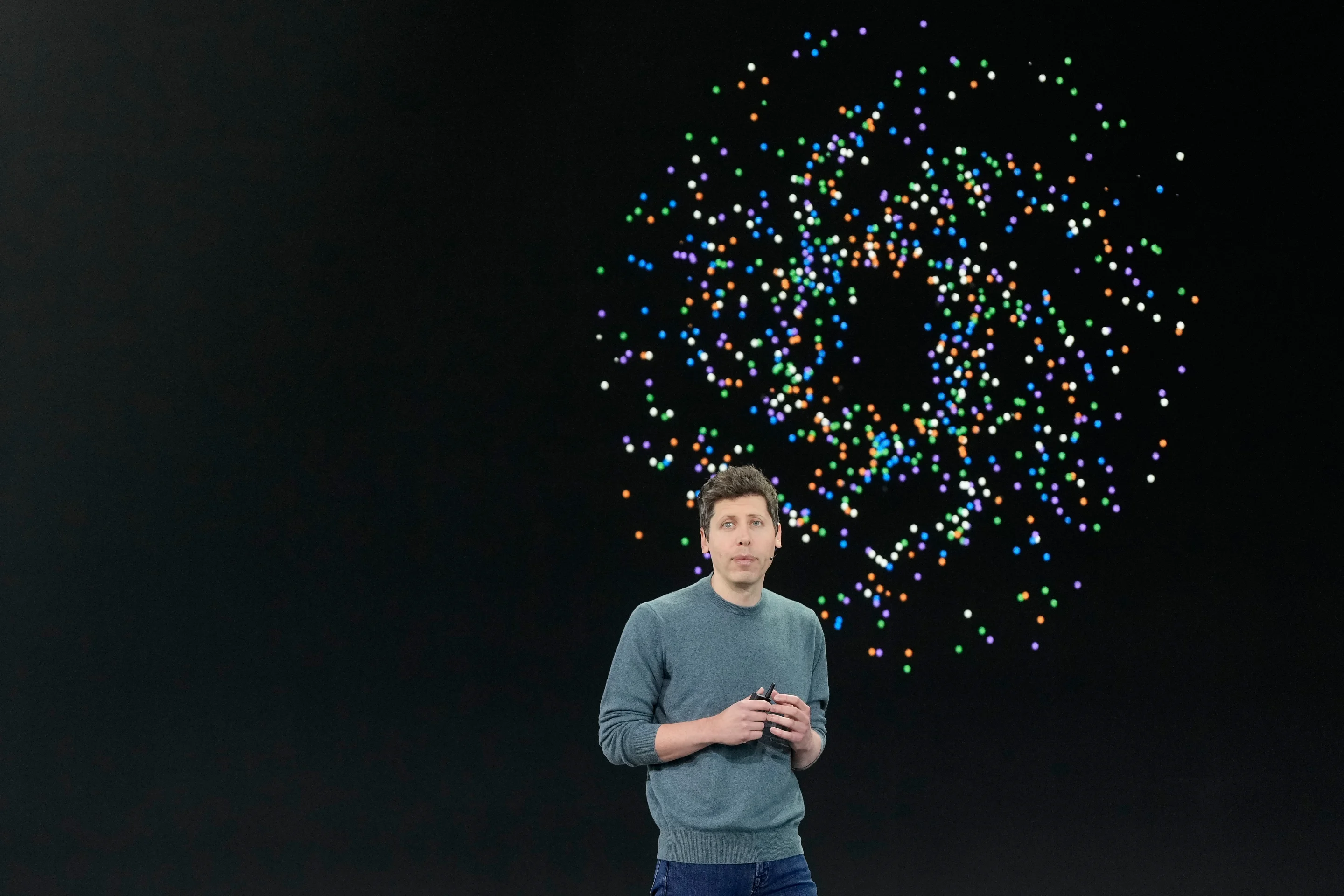
The image shows 0penAI Chief Executive Sam Altman.
Can Morality Be Averaged?
Coverage of the debate notes that technology companies often do not belong to a specific religion, so they try to assemble moral guidance by drawing on different traditions. OpenAI Chief Executive Sam Altman said last year that ChatGPT should express something like a weighted average of human moral views.
That proposal has met objections. Webb Keane, an anthropologist at the University of Michigan, argues that if religion is treated as a bundle of separately extractable rules or principles, everyday religious practice may disappear, along with the weight of doctrine, ritual and relationships.
Keane adds that once companies assume each religion can yield a portable set of moral principles for training AI, some traditions may receive preferential expression while others may be distorted, especially traditions that do not primarily see themselves as ethical systems. The “rulebook” idea of religion, he notes, often fits scripture-centered traditions, especially Abrahamic traditions.
Anthropic's Religious Conversations
Some participants have also acknowledged the efforts of technology companies. Anthropic said in a blog post published this May that it had met scholars, clergy, philosophers and ethicists from more than 15 religious and cross-cultural groups, and that it planned to widen participation; it did not list those traditions individually.
Meghan Sullivan, a philosopher of religion at the University of Notre Dame, took part in an Anthropic meeting this year that included Christians from different denominations. She said Anthropic's serious examination of religious questions impressed her more than exchanges with other technology companies.
Sullivan described the session as beginning with a plain-language explanation of the model by the company, followed by feedback and discussion from religious participants. The agenda included whether human beings have souls and whether third-grade students should use chatbots to learn reading and writing.
The Associated Press reported that representatives from Meta, Google and Amazon had also met with the Vatican, and that Microsoft was also advancing exchanges with religious communities.
Classification, Eclecticism and the Shape of Claude's Learning
Tomoko Masuzawa, a scholar of religion and author of The Invention of World Religions, says that sorting diverse faiths into clear, comparable, separate systems is a modern idea. Using Buddhism and Hinduism as examples, she says local practitioners did not necessarily understand their own traditions through the later fixed categories before European scholars arrived.
Some scholars therefore worry that even inclusive invitations may reproduce Western classification habits and miss the ways different cultures understand religion.
Anthropic said in the same blog that it does not want a model to follow only one tradition's worldview. It said Claude should engage religious, secular and political perspectives with equally deep and rigorous understanding, and learn from longstanding debates about how good character forms.
Paolo Carozza, a member of Meta's independent oversight board who studies Catholic social thought and technology, fears that assembling many voices may smooth away what is distinctive in each tradition and lead toward eclecticism or a Western religious bias. Mature traditions, he says, develop by absorbing new knowledge through outside interaction; AI may mix ideas too directly and fail to understand any of them properly.
For ItInsightsWorld, the exchange is ultimately about whether AI ethics can listen to religious life without turning its practices, categories and histories into another adjustable input.