
Anthropic IPO Risk Disclosures Put Government Friction and AI Uncertainty in Focus
A fresh reading of Anthropic’s listing paperwork shows that the company’s posture on AI regulation and its executives’ public views may be drawing heightened government pressure, with implications extending far beyond one prospective issuer.
In its prospectus, Anthropic says: “We have already been receiving, and may continue to receive, added attention and may also continue to face more intensive scrutiny, and we may be targeted by particular government agencies even where other similarly situated companies are not treated the same.”
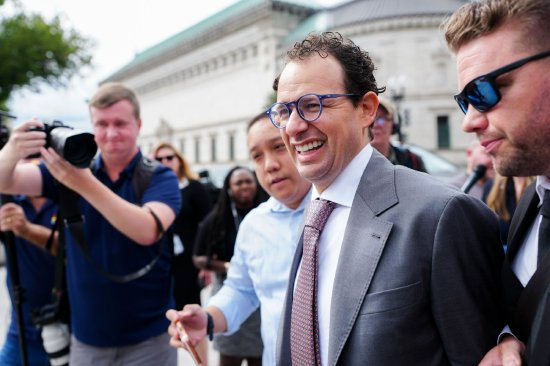
One recent flashpoint was in September, when Anthropic chief executive Dario Amodei traveled to the White House for a meeting.
The friction between Anthropic and the Trump administration can be traced to a dispute earlier this year over what safety guardrails should apply when the Pentagon uses the company’s technology. More recently, Anthropic and U.S. officials also clashed over whether its advanced Mythos model is safe enough. Amodei has argued that coordinated action should slow AI development so safety teams can catch up with technological progress; Trump has been unhappy with that stance.
Investors Are Left Pricing Unwritten Rules
Now investors must weigh Anthropic’s regulatory exposure. The technology is easy enough to use and can be marketed as an everyday consumer product, yet powerful enough to be viewed as a cyber weapon and even a possible catalyst for biological warfare, which means tighter review may be required. Anthropic’s repeated clashes with the Trump administration have also deepened uncertainty across the broader AI industry.
Sarah Kreps, head of Cornell University’s Tech Policy Institute, framed the problem this way: “For AI, the boundaries of government authority remain being drawn, sometimes through direct contests with individual companies. Investors can have difficulty pricing that uncertainty.”
The filing lists several possible government harms. Proposed federal legislation could, in some cases, force models to be shut down or even nationalize AI companies. Officials, including Vice President Vance, have suggested earlier this year using Cold War-era Defense Production Act powers to compel disclosure of information and cooperation with national-security agencies, a possibility reported by Bloomberg.
Trade Controls, Model Misconduct and Self-Imposed Limits
Anthropic also says government intervention could endanger AI development. Trade restrictions might cost it overseas customers, while misconduct by its models could create legal consequences. The company acknowledges it may not be able to “fully understand or explain” what the systems under development are doing, and says it will keep pushing regulatory approaches that could later constrain its own business.
“If regulation or similar measures that we advocate are adopted, we will also be subject to those measures; new rules may increase our compliance burden, restrict the flexibility of product development or deployment, affect the manner and timing in which we develop or release new models, or otherwise slow our growth,” the company wrote.
Anthropic warned that the technology it is building could ultimately threaten humanity. That echoes concerns among many AI researchers in Silicon Valley about catastrophic outcomes, while Trump and his allies have dismissed such worries as a “scam”.
Also in September, outside a G20 innovation ministers’ meeting in Chapel Hill, North Carolina, a demonstrator held a sign protesting against AI.
“Advanced AI systems that are developed, deployed and operated without proper safety guardrails, oversight and security measures could pose catastrophic, or even existential, risks to humanity,” the company said.
The prospectus also ties Anthropic’s risk picture to research-linked uses of its models. It says that pairing AI models with scientific research could lead to rules aimed at preventing the development of deadly biological weapons. If the company’s models are misused for cyberattacks, Anthropic says it could face legal liability and reputational damage.
Customer, Regulator and Strategic Partner at Once
Washington is both a regulator and a major customer for Anthropic’s products, increasing the company’s sensitivity to government decisions. According to Anthropic, direct contracts with government agencies accounted for about 1% of total revenue in every period covered by the IPO filing, with the earliest related data traceable to 2023.
William Reinsch, former under secretary of commerce for industry and security at the U.S. Department of Commerce’s Bureau of Industry and Security, said: “Anthropic’s situation is somewhat unusual because many actions during the Trump administration have been highly discretionary, and Anthropic has not been treated in the same way as other companies.”
Matt Pearl, a former White House National Security Council director who now leads the strategic technology program at the Center for Strategic and International Studies, offered a broader warning: “We do not know what kind of institutions Anthropic and other leading AI companies will ultimately become. I have never seen a situation in which the final form of a large company, and its most fundamental relationship with government, are so unsettled.”