
Cuzco on Hold, AI in Front: A Plain-English Decision Guide to the Andes RISC-V Reset
Open instruction sets rarely lose to closed ones because of a weaker idea. They lose on timing — and timing is precisely what a very senior chip architect has just renegotiated. Speaking to EE Times from TAIPEI, Taiwan, Charlie Su, CTO of Andes Technology, laid out a deliberate slowdown on Cuzco, the company's high-end data-centre RISC-V CPU project, with engineering capacity redirected to an AI business that now represents the larger half of company income.
Here is the verdict up front, for readers who want the frame before the facts: nothing about the flagship RISC-V CPU ambition has been cancelled. It has been demoted in the queue, and that distinction matters for anyone choosing silicon IP, tracking a chip stock, or planning an AI accelerator.
Three conclusions before the detail
- The pivot is sequencing, not surrender. After identifying a future market need for a high-end data-centre CPU based on RISC-V, Andes spun out Condor to build Cuzco, then pulled the technology back in-house earlier this year.
- Cash flow, not pride, decided it. Su put the AI business at roughly half of revenue, growing 30% last year and likely to grow 50% this year — a trajectory that already showed up in the company's own 2024 disclosure of record revenue near $42 million, with AI customers contributing 38%.
- The high-end market is still open, just unsolved. Su described the team as working on Cuzco "slowly, while looking for signs we should speed up," and expects it to eventually ship, perhaps under another name.
Question 1: What exactly is being slowed down?
A processor core aimed at the top of the performance ladder. Public write-ups of the launch appearance at Hot Chips 2025 — including coverage from Chips and Cheese and SemiWiki — described Cuzco as a wide, out-of-order, RVA23-compatible design with a 256-entry reorder buffer and clock targets in the region of 2 GHz to 2.5 GHz on a TSMC 5nm-class node. That is an ambitious, capital-hungry profile, and it explains why a pause is a rational financial choice rather than an engineering capitulation.
The commercial signal, though, was soft. Su said the spinout attracted many inquiries after that debut, but those conversations converted to licences slowly — which is exactly the kind of feedback loop that makes an IP house re-check its order book.
Question 2: Why did AI outrank the flagship CPU?
Su's framing was ecosystem-first: "The ecosystem needs to gradually go there before you have the hardware, otherwise you cannot catch the opportunity," he said, adding, "We started, but as time went on, we found the AI part of our business continued to grow very strongly."
The money sits in an unglamorous place. Andes has a small deep learning accelerator with its own compiler, rated up to around 4 TOPS at 1 GHz, but the bulk of AI revenue comes from AI chip companies that license Andes CPU cores to handle control, orchestration and data movement — among them Meta, d-Matrix, Fractile and Axelera. Meta is the clearest public illustration: its MTIA accelerator family embeds Andes RISC-V cores inside each processing element, a pattern also described in EDN's analysis of custom RISC-V extensions. Many of these deals cover custom cores, and Su noted delivery schedules can be extremely demanding.
Su's summary was blunt: "We decided to consolidate and slow down [Cuzco], so we could put more resources on the immediate revenue generation part," the CTO said.
Question 3: Is this a retreat from high performance?
Read it as portfolio discipline. When the need to reallocate resources emerged, Condor was an obvious target because Cuzco had not yet taken off commercially. "We could have put more effort into finishing Cuzco and maybe get one or two customers, but it’s not enough—we need to wait for bigger momentum," Su said, before adding: "So we decided to scale it back and move a little bit slower."
Trade press coverage has placed the move in a wider context, with EE Times reporting that the Condor closure came amid a broader cost-cutting effort after a period of aggressive expansion. The learning is general: a design house with a hot adjacent market will usually fund it by trimming the speculative flagship, not by trimming the payroll of the profitable core.
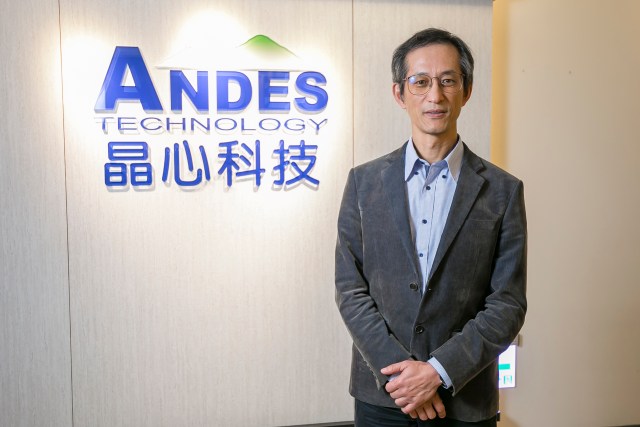 Andes Technology CTO Charlie Su (Source: Andes)
Question 4: What has Arm got to do with any of this?
Competitor behaviour changes the risk calculus for buyers. "Arm changed its business model, and that has certainly affected customer trust, especially at the high end," Su said, noting that "[Embedded] customers also don’t know when it will hit their market."
The change he is pointing at is observable outside this interview: Arm has moved from purely licensing IP toward supplying its own production silicon for AI infrastructure, and Counterpoint Research has characterised that shift as a bid to capture silicon value directly, with early adopters including Meta and OpenAI. For IP vendors that never compete with their own licensees, that is an opening.
Question 5: Will someone else fill the high-end gap?
Possibly, and with more cash. The broader market discussion includes SiFive's $400M round, which Reuters reported was led by Atreides Management with Nvidia participating, at a valuation of $3.65 billion — a very different balance-sheet posture from Andes's consolidation. Su's comments, however, stayed on Andes's own priorities and the momentum Cuzco needs.
He also disputes the assumption that first-to-market wins in IP. Winning is slower and weirder than it looks: embedded customers may run the same cores for 10 years or more, across different process nodes. "The core that brings us the most revenue today is one we designed more than 10 years ago," Su said, arguing that "We want to do it right, make it reusable, instead of getting to market first."
Meanwhile the near-term roadmap has been re-ordered around where demand already exists: a main processor core for storage is high on the priority list, with 10 customers already in production using smaller controller cores, plus focus on automotive and robotics.
Su closed the loop himself: "The bottom line is that the market Cuzco tried to address is still there and will continue, so that’s where we want to hit next in terms of our performance level," he said.
Question 6: Where does agentic AI fit into the picture?
The rise of agentic AI in the early part of 2026 is, according to Su, a key driver behind productivity gains and headcount reduction across the business this spring. He said the entire engineering team now uses AI agents to accelerate progress, with humans reviewing everything, and that consolidating Condor was connected to that strategy. In other words, the same technology reshaping demand is also reshaping the cost base of the company serving it.
The trade-off, side by side
| Dimension | The Cuzco bet (high-end CPU IP) | The AI control-path business | What a buyer should conclude |
|---|---|---|---|
| Time to revenue | Long; inquiries after Hot Chips 2025 converted slowly | Immediate; half of total revenue | Fundable now, provable later |
| Ecosystem readiness | Needs software, boards and hyperscaler buy-in first | Customers already own their stack | Sequencing beats ambition |
| Design intensity | Wide out-of-order core, cutting-edge node | Small DSA plus customised control cores | Tight schedules are the norm |
| Life of a design-in | Unproven; one or two customers would not change the curve | Embedded cores run 10 years or more | Longevity is the real moat |
| Competitive air cover | Well-capitalised rivals raising $400M-scale rounds | Arm trust shifts push some buyers to look elsewhere | Openness plus patience wins deals |
The numbers at a glance
| Signal | Reported reading | How to interpret it |
|---|---|---|
| AI share of revenue | About half of company revenue | Adjacent demand now sets priorities |
| AI growth, last year | growing 30% | Momentum predates the 2026 AI wave |
| AI growth, this year | likely to grow 50% | Resource pull, not optional |
| In-house accelerator | up to around 4 TOPS at 1 GHz | Edge-scale, not data-centre-scale silicon |
| Storage line | 10 customers in production | Proven beachhead while the flagship waits |
| Product lifetime | a core designed more than 10 years ago still leads revenue | Reusability beats being first |
| Base-year AI share (our addition) | 38% of a record $42 million in 2024, per Andes's own release | The move to half is a trend, not a surprise |
Five misconceptions worth dropping
- "Cuzco is dead." Su's account is delay and possible renaming, not cancellation.
- "AI killed the CPU roadmap." The pull came from revenue mix and ecosystem timing, not from a change of faith in RISC-V.
- "Slow conversion means no interest." Inquiries were plentiful after the launch; enterprise CPU deals simply take a long time to become licences.
- "First to market wins IP." The opposite is true in embedded: the longest-lived cores earn the most.
- "Bigger raises beat quieter consolidation." A $400M round buys run rate, not design-in trust.
Checklist: seven questions to ask any CPU IP supplier
- Which of your cores actually pays your salaries today — and is that the one you are pitching me?
- How many customers are in production on this core, not in negotiation?
- What is your realistic delivery schedule for a custom variant, given AI-accelerator demand?
- How does your software ecosystem mature relative to the hardware you are promising?
- Does your parent IP supplier compete with you in silicon, and has that changed since 2025?
- What is the expected life of a design-in on my process node — five years or 10 years or more?
- What signals would make you accelerate or cancel this programme?
FAQ
Does this hurt RISC-V's data-centre credibility?
Less than it looks. Volume forecasts published by SHD Group on the RISC-V International blog point to 35.9 billion RISC-V SoC units by 2031, with revenue in the hundreds of billions of dollars — growth driven mostly by embedded and edge parts, exactly where Andes is doubling down.
Should I abandon a high-end RISC-V CPU plan?
No. Shorten the dependency on a single supplier: keep a well-funded alternative in the evaluation set and gate any design-in on production-proven cores.
What should I watch next?
Three tells: the AI share of Andes revenue after this year; whether a Cuzco-derived product reappears under another name; and how many storage controller customers convert into a full application core.
Is the Arm-to-silicon shift good for buyers?
It depends on your exposure. If you are a licensee building competing product, trust now carries a price, which makes second-sourcing to open-ISA suppliers a rational hedge.
Why does headcount reduction belong in this story?
Because Su links them directly: AI-agent-assisted engineering this spring raises output per head, and consolidation of Condor is part of that same efficiency drive.
Action advice
- If you are a chip buyer: treat flagship CPU roadmaps as options, not commitments; ask for production customers' names and tape-out evidence before you sign.
- If you are an investor or analyst: weight the durability of legacy cores over headline launches; the most valuable IP in this sector is often a decade old.
- If you are an engineer: expect control-plane and orchestration roles on AI accelerators to be the most stable open-ISA jobs for the next few years.
- If you follow the trend generally: watch for the moment ecosystem maturity catches up with hardware ambition — that is the trigger Su says would restart acceleration.
The wider lesson reaches beyond one company: a great architecture still has to wait for the market that can use it. Sequencing a dream behind a cash engine is not capitulation — it is how long-lived IP businesses survive cycles that burn out better-funded challengers.
Written by James Hartley for IT Insights. For story ideas or corrections, reach our editorial desk at contact@itinsights.com.