
ItInsightsWorld Explainer: AMD Zen 7 Grimlock and RDNA 5+ Put 2029 at the Center of APU Rumors
If a new APU is supposed to matter, it usually has to land in the right device window: not just faster silicon, but faster silicon that partners can actually put into laptops, handhelds and creator machines. That is why the latest rumor around AMD Zen 7 “Grimlock” deserves a careful read. Hardware leaker Kepler_L2 suggests an early 2029 debut, with the integrated graphics block described as RDNA 5+. The claim is not official, but it gives a rare view of how AMD may sequence its CPU generations, GPU architectures and mobile platforms between now and the next decade.
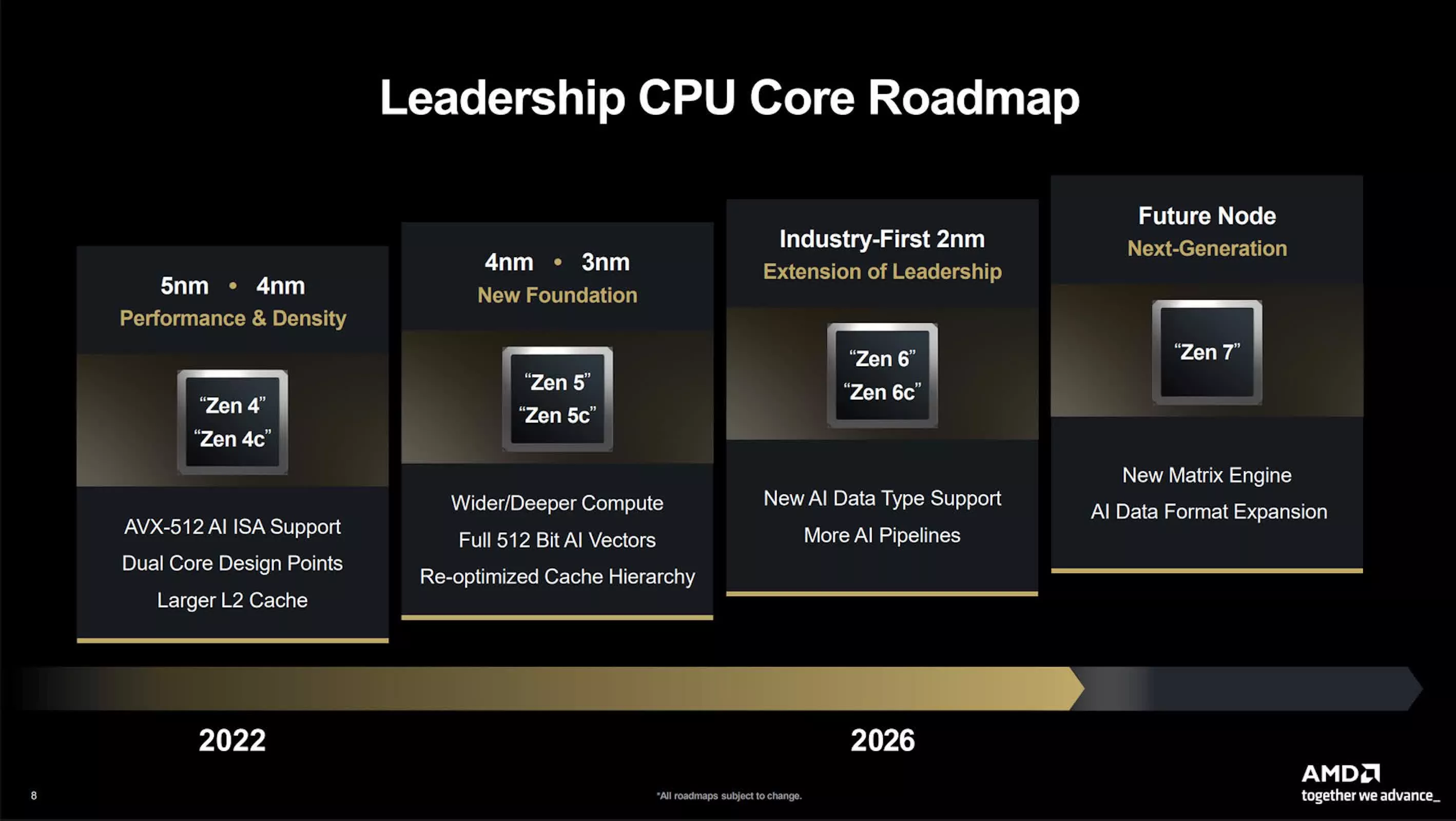
What the Rumor Is Really About
At first glance, the headline is a 2029 APU. The deeper story is about three separate clocks running at once: CPU architecture timing, GPU architecture timing, and partner readiness. In an APU, the CPU side and the graphics side do not simply add up; they shape what devices can be built, what batteries must last, and what price points become realistic. Grimlock, as described in the leak, sits at the intersection of Zen 7 and a graphics architecture that could finally move high-end RDNA 5-class integrated graphics into mainstream consumer systems.
Background: RDNA 5 Looks Like a Narrow Mobile Path at First
Kepler_L2 earlier told Digital Foundry that Sony's Canis handheld chip may be the only mobile product currently anchored on AMD's RDNA 5 graphics architecture. The broader claim is that AMD has not been treating RDNA 5 as an open platform for every PC device maker, including Valve, ASUS and MSI, because those partners may not satisfy AMD's large shipment threshold. This framing matters: it suggests RDNA 5's early footprint could be concentrated in strategically important devices rather than spread evenly across the handheld and laptop ecosystem.
Core Concept: What “RDNA 5+” May Mean
Kepler_L2 says RDNA 5+ is expected to appear with the Zen 7 Grimlock platform in 2029. In naming convention, a “+” version usually points to optimization and enhancement of an existing architecture rather than a completely new design. In practice, that may look like the transition from RDNA 3 to RDNA 3.5: not a reset, but a tuned generation that improves efficiency, features or scaling for the next wave of products.
| Rumored element | What it may represent | Why it matters for everyday devices | Confidence level |
|---|---|---|---|
| RDNA 5 | The next-generation AMD graphics architecture discussed in leaks | Could define high-end mobile and console-class performance later, but may not spread quickly | Leaker-driven, no AMD product confirmation |
| RDNA 5+ | A refined RDNA 5 variant, comparable to an optimization cycle | Would likely target better efficiency and platform fit rather than a wholesale redesign | Rumor, but naming convention supports this reading |
| Zen 7 Grimlock | Consumer APU family built around Zen 7 | Potentially brings the CPU and GPU leap to laptops and handhelds together | Early leak, timing uncertain |
| Ryzen Z3 | Bridge platform for handhelds before Grimlock arrives | Keeps the gaming handheld market supplied while future chips mature | Rumor-based, but part of the reported transition plan |
| Canis | Sony handheld chip said to use RDNA 5 and Zen 6c | A console-side reference point, not necessarily a mainstream PC platform | No official timing from Sony |
Common Scenarios Where This Changes Decisions
- Handheld PC buyers: the most useful takeaway is not that a 2029 chip exists, but that several years of products may still rely on intermediate platforms.
- Thin laptop buyers: if RDNA 5-class graphics stays tied to premium partners and large-volume programs, mainstream efficiency improvements may arrive gradually, not all at once.
- Desktop GPU watchers: the rumored APU timeline may also hint at how AMD separates discrete desktop launches from integrated graphics transitions.
- Server-to-consumer watchers: server roadmaps often influence manufacturing priorities, packaging, and feature sets before they become visible in Ryzen notebooks.
The Handheld Bridge: Ryzen Z3 Until 2029
For products launching before 2029, including rumored Microsoft handheld devices, the report says AMD's future Ryzen Z3 series may still carry the burden. This platform is said to combine Zen 6, Zen 5 and RDNA 4m elements to meet demand during the gap. In other words, the handheld market may not wait for a single clean Zen 7 plus RDNA 5+ generation; it may run on a mixed roadmap designed to keep devices shipping while the larger platform is prepared.
Sony Canis, PlayStation 6 and the Bigger Console Clock
Sony's Canis handheld chip remains one of the most concrete-sounding RDNA 5 references in the rumor. It is expected around late 2027, reportedly using Zen 6c processor cores with frequencies up to 2.2GHz and a thermal design power of about 15W. The positioning, as described, is as an important companion device for the PlayStation 6 ecosystem rather than a general-purpose PC platform. The future PlayStation 6 console itself is also rumored to use RDNA 5 graphics and Zen 6 technology, although Sony has not published an official release schedule.
Discrete Graphics: One RDNA 5 Card Next Year
The leak package also includes a desktop clue: AMD is expected to offer only one RDNA 5-based independent desktop graphics card next year, aimed at the high-end or near-flagship segment. That card is said to compete with NVIDIA's future 24GB version of RTX 5080. The limited number is notable because it suggests AMD may not flood the market with RDNA 5 cards at launch; instead, it may use one flagship-adjacent product to test response before broader rollout.
For context, AMD's own RDNA 4 launch shows that consumer GPU architectures can move from announcement to retail availability quickly. AMD said the RDNA 4-powered Radeon RX 9070 series became available beginning March 6, 2025, with the RX 9070 carrying a $549 suggested price. That history helps explain why rumors around RDNA 5 timing attract so much attention: the gap between architecture and actual purchasable hardware can be short for one product, but much longer for a whole ecosystem of devices.
Server Anchor: Florence and Ravenna Give the Timeline Some Weight
The clearest public reference point remains the server side. AMD has confirmed that the next-generation EPYC processor codenamed Florence will arrive in 2028 and move to TSMC A16 and A17 advanced manufacturing processes. That is a useful anchor because it suggests where future Ryzen systems will land in the transition to angstrom-era fabrication. As reported by TrendForce, the disclosed roadmap places Zen 7 EPYC Florence in 2028 and Zen 8 Ravenna in 2030, giving the Grimlock rumor a broader generational ladder to stand on.
TSMC's A16 technology page describes the platform as combining nanosheet transistors with a backside power rail solution to improve logic density and power delivery. That technical direction is not a consumer product claim, but it explains why a 2028 server launch could eventually matter to laptops: advanced packaging and power delivery often shape thermal and performance envelopes before they reach mobile platforms. According to AMD's stated direction, Zen 7 architecture will focus on stronger artificial intelligence computing, lower system overhead and improved security, while the codenamed Ravenna Zen 8 EPYC processor is currently planned for 2030.
Common Misconceptions to Avoid
- “2029 means the rumor is reliable.” Not necessarily. A date can be a planning target, a leak interpretation, or a product-window estimate that changes before tape-out.
- “RDNA 5+ must be a brand-new GPU family.” The naming pattern, as discussed by Kepler_L2, more likely suggests a refined RDNA 5 generation.
- “Handheld PCs will stall until 2029.” The reported existence of Ryzen Z3 suggests a bridge strategy, not a vacuum.
- “One RDNA 5 desktop card means RDNA 5 is immediately everywhere.” Desktop graphics and integrated mobile graphics follow different partner, power and cost constraints.
Action Advice: How to Use This Information Without Overreacting
- Do not delay a handheld purchase solely for Grimlock. If current devices meet your needs, the 2029 rumor is not yet a reason to wait indefinitely.
- Watch the official AMD roadmap, not only leak wording. Product names, launch timing and platform scope can move without changing the underlying direction.
- Separate CPU and GPU expectations. Zen 7 may be known through server plans long before a consumer APU with RDNA 5+ appears in a store.
- Treat Canis as a useful but non-PC reference. It helps show RDNA 5 exists, but it does not prove a broad consumer APU rollout.
- Expect the first real confirmation to come from manufacturing, pricing or OEM adoption, not from a single forum post.
FAQ
Is AMD Zen 7 Grimlock officially confirmed?
No. Most Grimlock details come from Kepler_L2 and secondary reporting. AMD has not officially confirmed the product name, full specification or launch date.
What is RDNA 5+ supposed to be?
In the rumor, RDNA 5+ is an enhanced version of RDNA 5 graphics expected to appear with Zen 7 Grimlock in 2029. The “+” suffix generally suggests optimization rather than a fully new architecture.
Will the next handheld PCs still use AMD chips?
According to the report, products before 2029 are expected to continue on AMD platforms, including the rumored Microsoft handheld and devices based on Ryzen Z3.
How can the 2029 APU story feel more grounded than other leaks?
Because AMD has already provided a server reference: EPYC Florence is scheduled for 2028, and Zen 8 Ravenna is planned for 2030. Those dates do not prove the consumer timeline, but they make Zen 7 less mysterious.
Should users avoid RDNA 5 desktop GPUs?
Not necessarily. The rumor says only one RDNA 5 desktop card may appear next year, targeting the high-end or near-flagship market and competing with NVIDIA's future 24GB RTX 5080. Buyers should still wait for AMD's official product pages and independent reviews.
Bottom Line
The Grimlock rumor is most valuable as a map, not a promise. It connects AMD's CPU generations, GPU architecture updates, handheld transitions, Sony's console-side ambitions and a server roadmap that has already shown how long advanced process nodes can take to reach consumer devices. The key point is simple: high-end RDNA 5-class integrated graphics may not become a mainstream APU reality until after 2029. Until AMD confirms details, buyers should treat 2029 as an early planning window, not a guarantee.