
ItInsightsWorld Review: Ring Drone Cam vs Ring Rover Cam — Which Security Robot Fits Your Risk?
Ring’s Tuesday launch asks a practical question: how much robotics can ordinary buyers justify? The $250 Ring Drone Cam is one indoor drone that moves from one room to another room in daytime or nighttime light. The $1,000 Ring Rover Cam is a wheeled robot for offices. Choice depends on coverage, staffing, rules, and alert risk.
What Ring actually launched on Tuesday
On Tuesday, Ring introduced one flying indoor security camera, the Ring Drone Cam, and one patrol robot, the Ring Rover Cam, as the opening set for a Ring Robotics lineup, according to Amazon’s own launch summary. The home drone is book-sized. It flies a preset route when sensors on doors, windows, or Ring alarm devices trigger. Users can also send it manually.
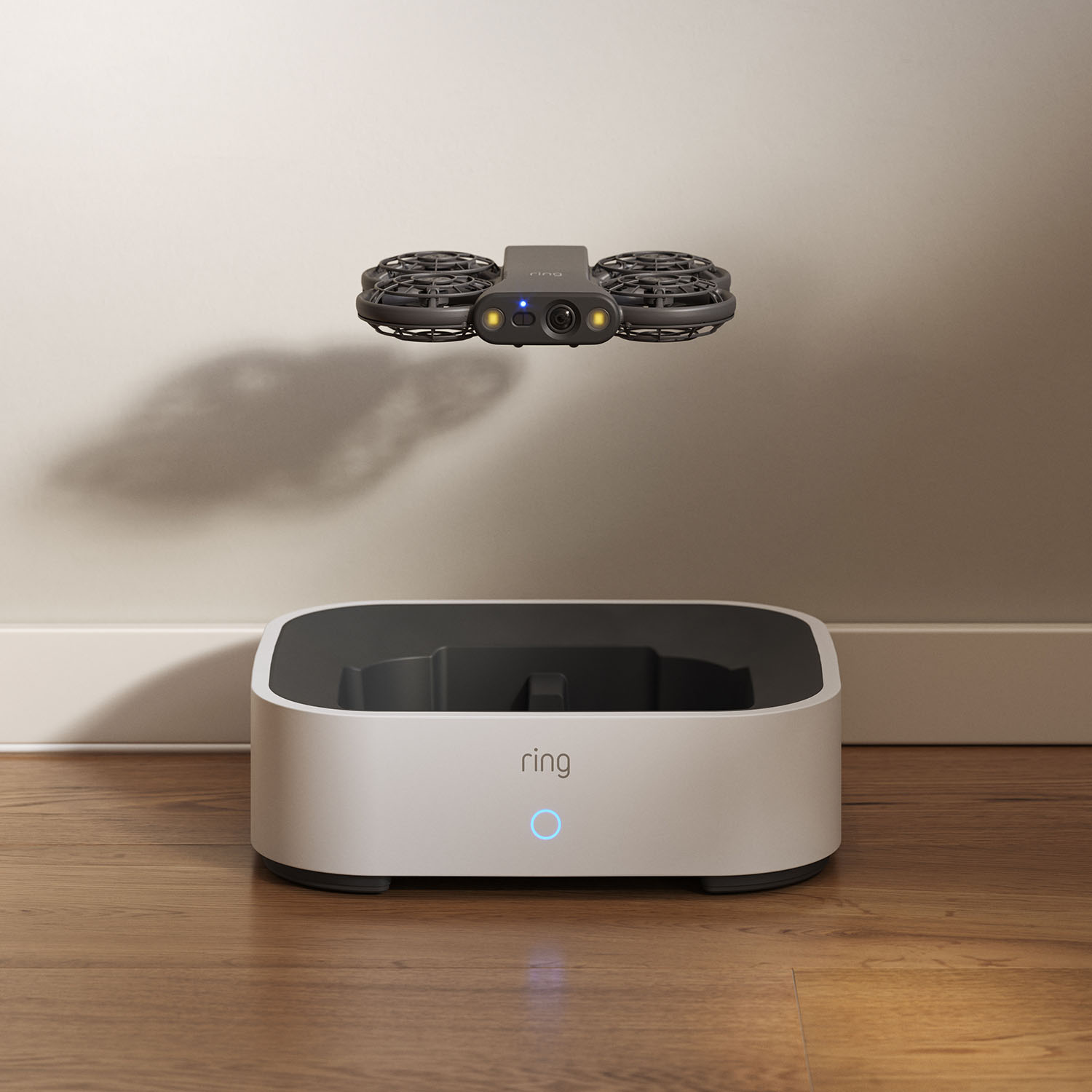
At a demonstration on Monday in New York, Ring chief executive Jamie Siminoff framed the drone as both monitoring and deterrence, pointing to built-in LED lights. His example was blunt: “If someone is walking around your house in the evening and your Ring doorbell motion detector goes off, imagine seeing a spotlight and something flying past the window,” Siminoff said. “You probably wouldn’t go into that house.”
The drone flies for a maximum of eight minutes per flight, then returns to its charging dock. It has two propellers wrapped in plastic and produces a loud buzz. That matters in a house with sleeping children or open-plan spaces; it is not a silent alarm check.
Why Amazon is pushing this category now
Ring devices give Amazon another way to expand in smart homes, beyond Echo smart speakers and Eero routers. Grand View Research estimates the market will sell more than $200 billion this year. Apple and Google are also chasing that category, so Ring’s robotics entry is a defensive move as much as an offensive one.
Amazon bought Ring in 2018. The brand is known for doorbells, but it has carried privacy criticism, especially around police collaboration. Earlier this year, one controversial Super Bowl ad for an AI pet-finding tool called Search Party brought scrutiny back. Ring later ended an integration with Flock Safety, a technology provider whose automatic license plate readers have also drawn backlash.
The drone is not new either. Ring previewed it in 2020 as the Always Home Cam. Siminoff said he held the launch until Amazon could improve the design, sensors, and data handling. At that time, the plan was to show a flying camera, but the product category was immature. The current Ring Drone Cam is smaller, lighter, and shaped by several years of delay.
How Ring Rover Cam differs from Astro
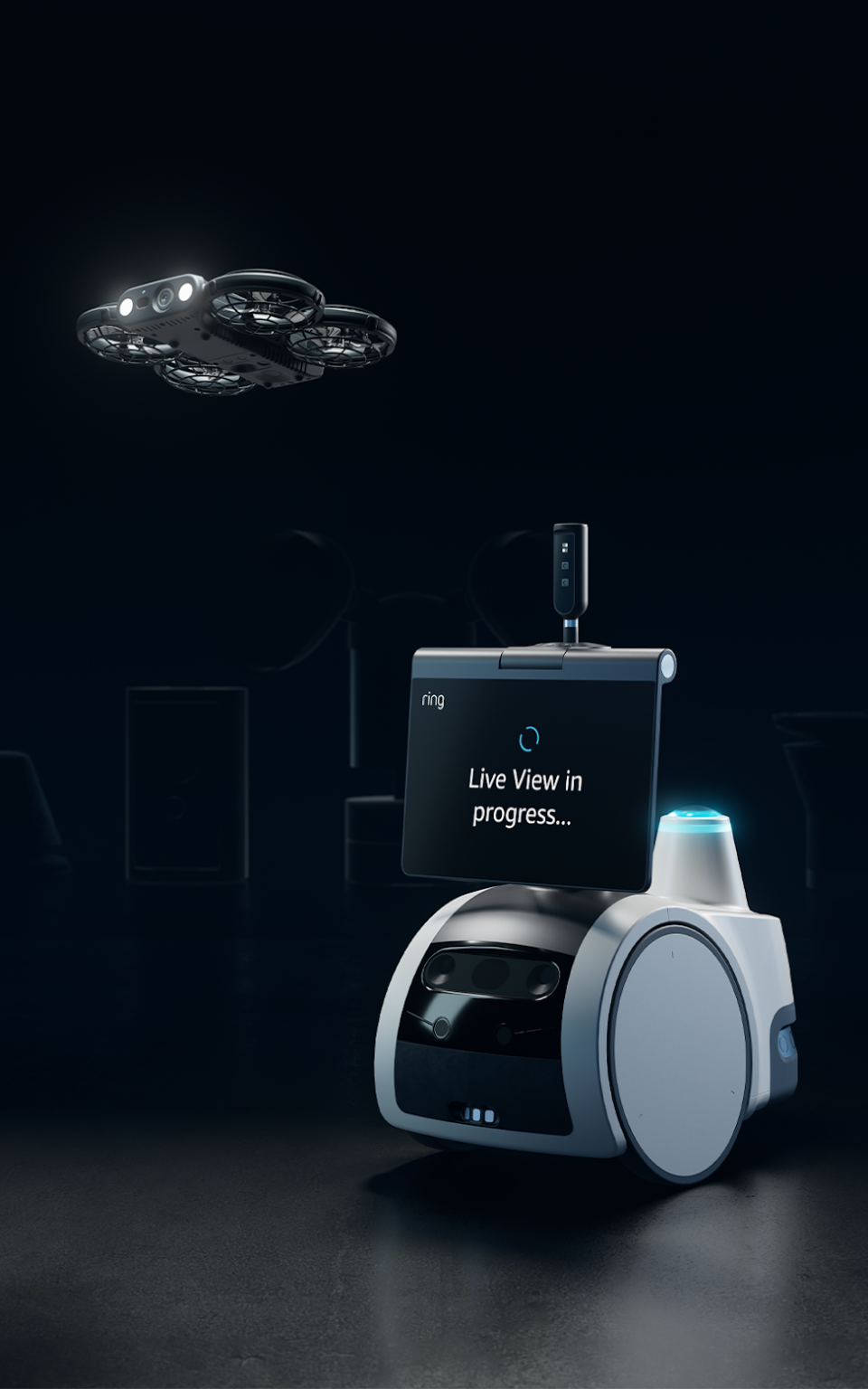
Ring Rover Cam takes Amazon’s older Astro home robot and turns it toward business work. Ring says it “borrowed the best parts of Astro” and calls the result “a robot built for security.” Astro appeared in 2021 as a home robot, but it had a short commercial life and little upgrade follow-through; the broader Astro story is what we tracked in our earlier analysis of Amazon's second try at the home robot.
Like Astro, Rover Cam is a screen mounted on a two-wheel base, with a retractable periscope camera. Ring adds a built-in siren, two-way audio, and a light column that shines upward so owners can locate it in a dark room or warehouse aisle.
Siminoff said the value is breadth, not density. “People like indoor cameras, but they don’t necessarily want them everywhere in the house,” he said. With one device, users can cover multiple rooms or floors instead of buying separate cameras for every entrance and corner.
Ring Drone Cam vs Ring Rover Cam: the decision table
| Decision factor | Ring Drone Cam | Ring Rover Cam | Practical reading |
|---|---|---|---|
| Price | $250 | $1,000 | The drone is cheap enough to test; the robot is a real infrastructure purchase. |
| Movement | Flies from one room to another room | Rolls on a two-wheel base | Use flight for alert follow-up, ground patrol for presence. |
| Capture | Daytime and nighttime video | Periscope camera, audio, siren, light column | Drone sees more corners; robot can interact. |
| Availability | January 27 in the United States after U.S. Federal Communications Commission (FCC) approval | December 16 | Buyers should confirm FCC status before marketing promises. |
| Legal limit | No outdoor flight under FAA rules | Indoor business use | Do not buy the drone expecting yard patrol. |
Three buyer mistakes to avoid
- Mistaking deterrence for investigation: a spotlight and buzz may scare a casual intruder, but they do not stop a determined one.
- Assuming the drone replaces cameras: it is triggered by existing sensors and returns after its eight-minute ceiling.
- Treating price as total cost: businesses need route mapping, noise testing, escalation roles, and privacy settings.
Legal and privacy limits matter more than the price tag
The FAA is the practical boundary. Ring’s home drone cannot fly outdoors because U.S. Federal Aviation Administration rules restrict drone operation unless a pilot keeps the aircraft within direct line of sight.
“We have told customers not to do that because it is illegal,” Siminoff said. “We also built guardrails into it so it won’t fly outdoors.”
Ring also says privacy is a default for both robots: they flash LED lights while recording. The harder question is who can access the recordings after the light turns off. Buyers should ask whether cloud retention, employee access, police requests, and third-party integrations can be switched off.
Which device should a general reader buy?
- For a home, start with the $250 Ring Drone Cam only if you already have a trusted alarm and want a faster response to a nighttime alert. If your property is mostly ground-floor rooms with wide sightlines, a fixed camera is cheaper and quieter.
- For a small office, the $1,000 Ring Rover Cam is more plausible when one manager must check multiple areas and wants a visible deterrent plus audio. It is not a replacement for human security judgment.
- For a warehouse, measure aisles, ramp grades, and battery access before buying. A two-wheel robot needs clear paths and someone to review evidence.
FAQ: Ring Drone Cam and Ring Rover Cam basics
Can Ring Drone Cam fly outside?
No. Siminoff said FAA rules make outdoor flight illegal without direct line of sight, and Ring built guardrails to prevent it.
When will each device ship?
Ring Drone Cam is scheduled to ship in the United States on January 27, pending FCC approval. Ring Rover Cam begins shipping December 16.
Do the robots work all day?
No. The Drone Cam flies for a maximum of eight minutes per flight and returns to a charging base. Buyers should treat it as an alert responder, not continuous patrol.
Is Ring Rover Cam just renamed Astro?
It uses the Astro hardware lineage, but Ring positions it as a business robot built for security with patrol-related features such as siren, audio, and a light column.
Should buyers wait?
Yes, if privacy controls, FCC status, and enterprise support are not yet documented. No, if you need a low-cost proof-of-concept for a single floor and can accept limited flight time.
Next steps before buying
Do not start with the robot. Start with the failure mode: map where an alarm will actually be triggered, write who receives the alert, decide what to do when the device shows a suspicious person, then check whether the price saves a real risk. For most households, the honest answer is that a drone is useful only if the rest of the security system already works.
Reference sources
- Amazon newsroom, “Ring announces Ring Robotics, ushering in a new era of security”: aboutamazon.com
- CNBC, “Amazon’s Ring unveils flying drone, robot to patrol homes and businesses”: cnbc.com