
Case Review: How an Amazon DGX Spark Order Turned Into an AI Hardware Risk Lesson for ItInsightsWorld
When a buyer places an order for AI hardware, the usual risk is waiting for delivery. The @nicksaraev case shows a different risk: the order itself can become a signal that an automated account-review system treats as abnormal, especially when products such as NVIDIA DGX Spark are scarce, expensive, and sought by both developers and resellers. The broader lesson from ItInsightsWorld's review is simple: in a shortage, buying behavior must be managed like an operational risk, not just a consumer purchase.
What happened in the Amazon GPU order case
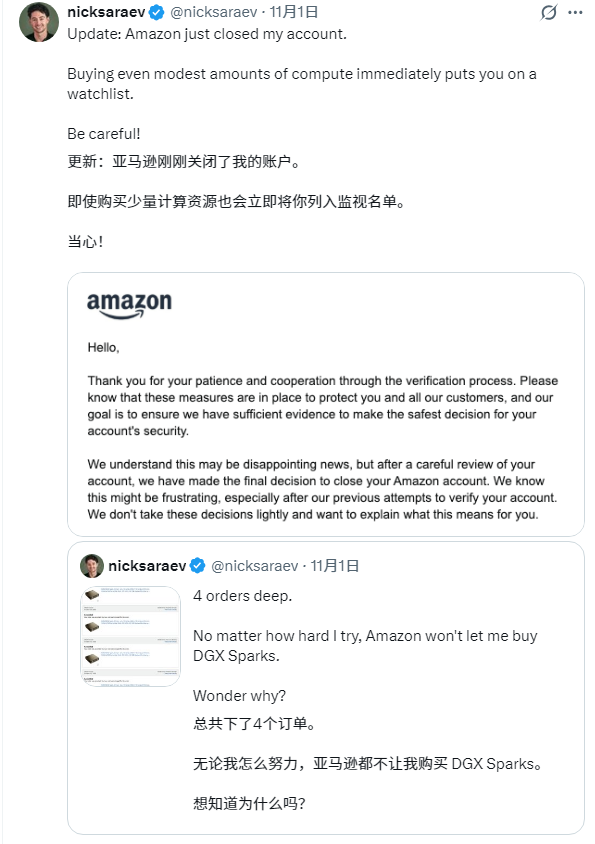
The reported sequence is short but consequential. On October 31, @nicksaraev submitted 4 orders for DGX Spark. Each order was canceled. He then tried to place the purchase again, but the platform did not simply reject the later attempts. After a verification process, the account itself was closed. The email he shared said the closure was decided after a careful review, while his own summary was that the account had never been affected like this before.
The result was not only a lost chance to buy hardware. According to his report, the account closure also made his Prime membership inaccessible, blocked his gift card balance, and locked him out of his order history. That is why this case deserves attention beyond a single failed checkout.
The Tim Sweeney signal: hardware actions can affect unrelated orders
Epic Games CEO Tim Sweeney became part of the same story, though with a different outcome. His account was not closed. Instead, he said that after ordering two NVIDIA GPUs, later regular orders began to be canceled even when they were unrelated to GPUs. The pattern was not that the order could not be placed; it could. It was canceled before delivery.
For a case review, this second detail matters. It suggests that the platform may be doing more than limiting a specific product category. It may be attaching a risk label to an account, then applying that label to ordinary commerce. The available report cannot prove whether this is intentional purchase restriction, a temporary system error, or a broader anti-scalper mechanism. But it shows the uncertainty itself is a problem for buyers.
Why DGX Spark is different from an ordinary gadget purchase
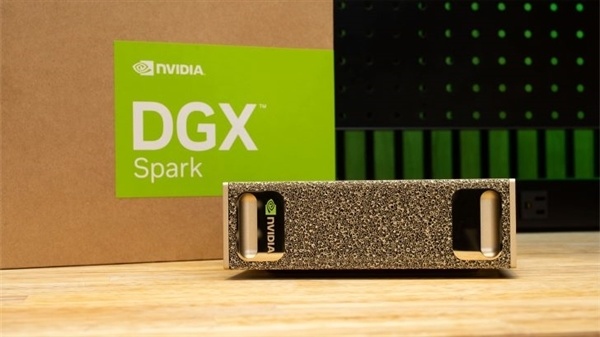
One reason the story resonates is that DGX Spark is not just a trendy accessory. NVIDIA's marketplace page describes DGX Spark as a personal AI supercomputer designed for local work with large AI models, including a 128GB unified-memory configuration. In other words, the buyer is often a developer, researcher, or small studio, not someone casually buying a consumer device. A request for multiple units may reflect a real project, not resale intent.
The price and supply pressure make the situation sharper. The Register reported that a 64GB DGX Spark model priced at $4,999 appeared amid memory constraints, while the 128GB configuration had reached $6,950. When a compact dev machine is both scarce and costly, platforms may treat high-quantity behavior aggressively. That can catch legitimate buyers.
What the case teaches about AI hardware supply risk
The episode is really a supply-chain story told through a shopping cart. AI hardware demand is not evenly distributed. A small group of serious users can concentrate orders because they have both budget and urgent need. When retail inventory is thin, any repeated purchase looks suspicious from a distance. Yet, from the buyer's side, ordering multiple identical units may be the easiest way to test a project, run a small cluster, or replace a failed device quickly.
This creates a false-positive zone. If a platform uses rules based on velocity, quantity, item category, and repeat attempts, a legitimate developer can be treated as a reseller. If the rule then escalates to account closure rather than just item-level rejection, the cost to the buyer becomes disproportionate. The @nicksaraev case is useful because it makes that escalation visible: the problem moved from can I buy this item to do I still control my account data and service benefits.
Common misconceptions about GPU order cancellations
| Misconception | Why it can mislead buyers | Better reading |
|---|---|---|
| Every canceled order means the buyer is a reseller | AI development users may need multiple units for labs, testing, or deployment. | Quantity alone is not proof; context and account history matter. |
| Only the canceled hardware order is affected | @nicksaraev's report shows membership, stored value, and history could become inaccessible. | Platform account lockouts can create data and service risk beyond shopping. |
| Regular orders are safe after the first GPU purchase | Sweeney's account was not closed, yet unrelated orders were canceled. | A category flag may spread to normal purchases if the review logic is broad. |
A reusable checklist for buying scarce AI hardware
- Before ordering, read the seller, shipping, and cancellation terms for high-demand hardware. If the item is scarce, treat the purchase as a project risk, not a routine checkout.
- Use one buyer account and one payment method. Repeated attempts from multiple sessions or accounts can look like coordinated resale even when they are not.
- Document the intended use. For small teams, save the reason for each unit: evaluation, lab cluster, backup, client demo, or production test. This information can help if an account review is triggered.
- Consider a small initial order. For hardware such as DGX Spark, one unit may be enough to verify seller reliability, warranty handling, and software compatibility before scaling up.
- Keep receipts and support tickets outside the platform. Order history can become inaccessible, so email copies are practical evidence.
- Escalate through official channels if available. Some Amazon help pages for closed-account situations indicate that users can appeal through a contact route, but the @nicksaraev report described an email with no clear violation explanation and no useful appeal path.
FAQ: what the Amazon account closure story does and does not show
Did Amazon prove @nicksaraev was a reseller?
No. The reported facts are limited to 4 canceled DGX Spark orders and an account closure after a verification process. A reseller hypothesis may explain part of the pattern, but it does not prove the user's intent.
Was Tim Sweeney's account banned?
The reported answer is no. Sweeney said his account remained open, but later regular orders were canceled after he ordered two NVIDIA GPUs. That distinction matters: not every affected buyer faces the same enforcement outcome.
Does this mean people should stop buying NVIDIA DGX Spark?
Not necessarily. The device remains a tool for local AI development, and its value is real for teams that need a compact environment. The safer answer is to buy with more process: one unit first, clear records, and no repeated order attempts without review.
What is the most actionable risk for ordinary readers?
The risk is not only losing a product purchase. It is losing access to the account layer that contains Prime membership, gift card balances, and past orders. For high-demand hardware, readers should think of that account layer as part of the transaction risk.
Action advice from ItInsightsWorld
For individuals, the practical rule is to separate ordinary shopping from speculative hardware buying. If you do not urgently need multiple units, do not submit parallel orders. If you buy one unit, keep communication simple, use your normal account, and avoid creating suspicion through repeated checkout attempts.
For small teams, add a procurement layer to the purchase process. A brief internal note explaining why 2, 3, or more units are needed may sound excessive, but it is cheap insurance. When the device costs thousands of dollars and its supply is uneven, documentation becomes part of buying hygiene.
For platforms, the bigger lesson is explainability. A system designed to stop resale can still damage legitimate users if it moves too quickly from item rejection to account closure. In a market where AI hardware scarcity blurs the line between enthusiast demand and commercial speculation, clear review reasons and usable appeal paths are not cosmetic features. They are part of fair commerce.
The final takeaway is straightforward: a canceled GPU order is no longer only a checkout issue. It is a reminder that in a shortage economy, the buyer's identity, payment record, membership history, and data access can all be pulled into the supply-chain problem. @nicksaraev's case, along with Sweeney's account of later order cancellations, gives readers a compact warning: buy scarce AI hardware with the same care you would give any high-value, high-friction purchase.