
ItInsightsWorld General: AI Server Orders Are Absorbing PCB Capacity and Raising Risk for Consumer Hardware
In the General section of ItInsightsWorld, the current risk for personal-computing makers is framed less by sales growth than by board access. The companies preparing 2027 lineups are encountering a supply chain whose most prized customer is no longer the mainstream consumer, but the AI server programme.
A Demand Paradox for PC Makers
Even with expectations that global PC shipments may fall next year, manufacturers cannot assume parts pressure will ease. HP and Dell are cited by Nikkei Asia among firms whose product planning depends on enough PCBs, while a manager at a United States PC manufacturer says the company cannot secure enough boards to meet production needs.
Why AI Boards Displace Ordinary Motherboards
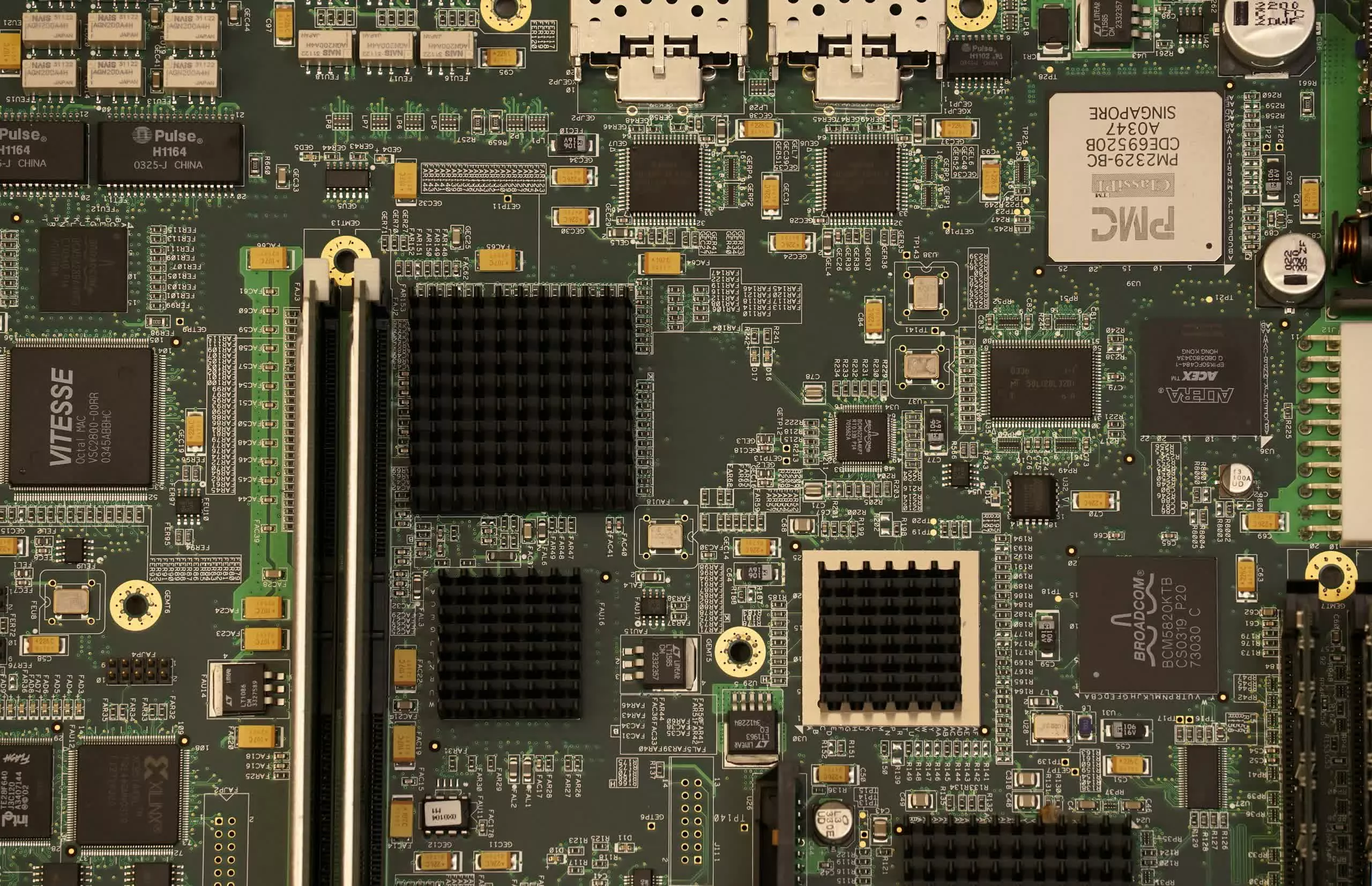
AI servers are not simply larger PCs. They host dense GPU, CPU and memory arrays plus high-speed interconnects, requiring signal integrity, thermal performance and electrical margins beyond typical multilayer desktop mainboards. Many high-end boards use dozens of layers, low-loss copper-clad laminate and special glass-fibre materials. Those features consume more machine time and materials, and command higher prices, so factories prioritize AI infrastructure customers. As a result, capacity once used for desktop mainboards, notebook boards and graphics-card PCBs is being redirected.
CCL Costs and Backlogs Tighten the Upstream Chokepoint
Copper-clad laminate (CCL), a glass-fibre, resin and copper-foil base material, sits near the root of the constraint. According to a Taiwan PC maker quoted by Nikkei Asia, CCL prices are now at least 12 times July levels. One major global supplier's orders are already queued to 2030, even as plans aim to triple capacity before 2028. Board makers also cite longer waits: one says a significant share of deliveries has doubled, while another says new orders placed now may arrive in the second half of 2028, making lead times of 30 months visible for some products. This affects PC companies trying to schedule 2027 and 2028 launches.
Capacity Expansion Is Constrained by People as Well as Equipment
Adding factories is not a fast fix. Buyers need new equipment, buildings and upstream inputs, but PCB expertise is scarce. Companies hiring to expand have competed for experienced engineers and production technicians, and salary costs for relevant technical roles have risen by 20% to 30%. Even completed expansions may not reach intended output immediately.
Spillover from PCs to Graphics Cards and Medical Equipment
Japan's Canon Inc. said this week that production has been limited since August this year because AI-driven shortages have reached boards and related components. The medical-device segment is affected; Canon expects about ¥90 billion in this year's medical-device sales to be lost because of the constraint. The episode shows that products needing complex board assemblies, from PCs and graphics cards to medical and industrial electronics, are exposed.
Board scarcity is also compounding memory pressure. Since 2026, DRAM and NAND flash prices have continued to rise, forcing vendors to revisit configurations and pricing. Gartner has previously predicted that PCs below $500 may gradually disappear by 2028, because higher component costs make low-price machines harder to sustain.
Discrete graphics pricing also illustrates the squeeze. Some retail listings for Nvidia's GeForce RTX 5080 are already near $2,000, well above the original official MSRP. With PCBs joining the list of constrained and costlier inputs, total PC bills of materials face a wider upward push.
PCB value may not dominate a computer's total parts bill, but no substitute exists for the board. Mainboards, graphics cards and notebooks depend on PCBs to connect chips, memory, power delivery and other components. Without them, completed systems cannot be assembled, even when CPUs, GPUs and memory are available.
Nvidia has been moving early to secure packaging and chip-substrate capacity through partnerships with specialist makers. Japan's Ibiden, South Korea's Samsung Electro-Mechanics and Taiwan's Unimicron are part of this arrangement; Unimicron plans to expand related capacity to 2.5 times within the next three years. Such substrates are technically related to PCBs but not wholly interchangeable, so AI chip demand also heightens competition across the wider board industry.
The 2027 Signal for Electronics Manufacturing
The warning for 2027 is that a softer consumer market does not automatically translate into cheaper sourcing. AI infrastructure buyers can keep high-end PCB demand strong enough to crowd out mainstream devices, while memory, storage and graphics parts already absorb cost pressure.
For ItInsightsWorld readers, the broader lesson is structural: AI expansion competes not only for leading-edge GPUs, HBM and wafer capacity, but also for foundational electronic components that rarely dominated supply-chain headlines. When capital and production capacity lean toward data centres, a PC maker with mature designs and retail routes can still be stopped by the availability of ordinary boards.