
Samsung Electronics Turns $80B AI Memory Lead Into a Q3 Reality Check
AI-driven memory pricing, not consumer hardware, carried Samsung Electronics through Q3. The company booked 195.3 trillion won (~$146 billion) in consolidated revenue and 107.4 trillion won (~$80 billion) in operating profit, and positioned itself as the first technology company worldwide to clear 100 trillion won (~$75 billion) in a single-quarter operating profit. The result showed how AI infrastructure budgets ripple through hardware economics across global supply chains. It also exposed the other side of the cycle: higher component prices pressured Mobile eXperience (MX) profitability, and the 2026 return framework fell short of investor hopes. For a third-quarter review, the split between chip economics and device economics was unusually sharp.
Where the earnings power shifted
The contrast was structural. In component manufacturing, Device Solutions (DS) recorded 147.1 trillion won (~$110 billion) in revenue and 106.5 trillion won (~$80 billion) in operating profit. In finished goods, Device eXperience (DX) recorded revenue of 52.1 trillion won (~$39 billion) and an operating loss of 0.8 trillion won (~$0.6 billion).
| Samsung reporting unit | Revenue | Operating result |
|---|---|---|
| Device Solutions (DS) | 147.1 trillion won (~$110 billion) | Operating profit of 106.5 trillion won (~$80 billion) |
| Device eXperience (DX) | 52.1 trillion won (~$39 billion) | Operating loss of 0.8 trillion won (~$0.6 billion) |
“Another record-breaking quarter, beating consensus estimates,” said MS Hwang, research director at Counterpoint Research, observing that semiconductor operating profit surpassed 100 trillion won (~$75 billion) while consumer finished-product units turned negative.
Memory prices moved the whole cost curve

Counterpoint Research said standard DRAM prices shifted from 20-30 cents per gigabit to $2 per gigabit, lifting the global DRAM market to $200 billion. Samsung reported operating margins of 79% for DRAM and 72% for NAND flash, and with high-bandwidth memory (HBM) growing, HBM4 prices are expected to reach $4 per gigabit.
Bill-of-materials pressure landed on phones
Higher memory prices also increased bill-of-materials pressure in mobile manufacturing. Mobile eXperience (MX) and Networks delivered 37.7 trillion won (~$28.21 billion) in revenue but posted an operating loss of 0.6 trillion won (~$0.45 billion).
“The [consumer electronics] MX division continues to suffer from high memory pricing,” Hwang said. “Since low-end models are expected to continue losing money, Samsung may scale back its volume contribution, implying further correction in market volume dynamics in the supply chain.”
Before the earnings call, Samsung Mobile VP Daniel Araujo said the business aims to “mitigate profitability risks through efficiency improvements” and “improve our product mix centered on flagships.”
HBM demand and sold-out capacity
Samsung's quarter paralleled SK Hynix, which reported third-quarter revenue of 104.62 trillion won (~$78 billion) and operating profit of 83.33 trillion won (~$62 billion).
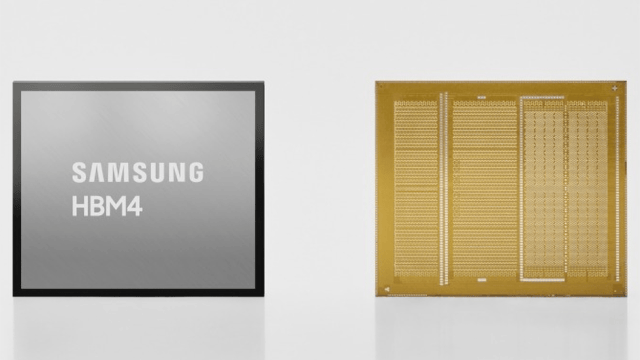
Samsung said its product competitiveness improved and “it significantly scaled up sales of HBM4,” while managing its “product mix, with focus on AI products, amid capacity constraints.”
On the earnings call, Jaejune Kim, EVP of Memory Business at Samsung Electronics, said the company has secured multi-year supply agreements with 10 key customers. SK Hynix said its HBM capacity is fully sold out through 2029, while Samsung confirmed its HBM capacity is currently sold out through 2027.
Counterpoint Research expects Samsung to close in on advanced-memory leadership. “We anticipate that Samsung will surpass SK Hynix from the HBM4 generation, leading the market share in 2027,” Hwang said when reviewing SK Hynix results.
Capital returns failed to excite the market
Even with record operating income, Samsung's share price fell during the earnings call after the capital allocation plan met expectations. The company announced a third-quarter cash dividend of 30 trillion won (~$22 billion) within a 2026 total shareholder return plan estimated at 90 trillion won (~$67 billion) to 110 trillion won (~$82 billion).
Soon-Cheol Park, Samsung's CFO, said long-term capital deployment will remain aligned with industry expansion, noting that “memory demand will far exceed supply due to robust AI investment” and “AI infrastructure investment continues to grow”.
Hwang’s final read was that the stock response was tied to missing a reward surprise: “Shares declined during the earnings announcement as shareholder returns offered no upside surprise,” pointing out that the market reaction “highlights the real challenge of navigating an equity market with elevated expectations.”
For ItInsightsWorld, the broader read is that AI memory is now powerful enough to lift Samsung Electronics to new profit levels while simultaneously exposing consumer devices to component cost shocks. The next test for the company will be turning sold-out HBM visibility and flagship product-mix goals into steadier device margins, without repeating the gap between record chip results and underwhelming shareholder outcomes.