
Two AIs Falsified a 27-Year-Old Hypothesis on the Same Day: The ETH Shockwave Explained | ItInsightsWorld
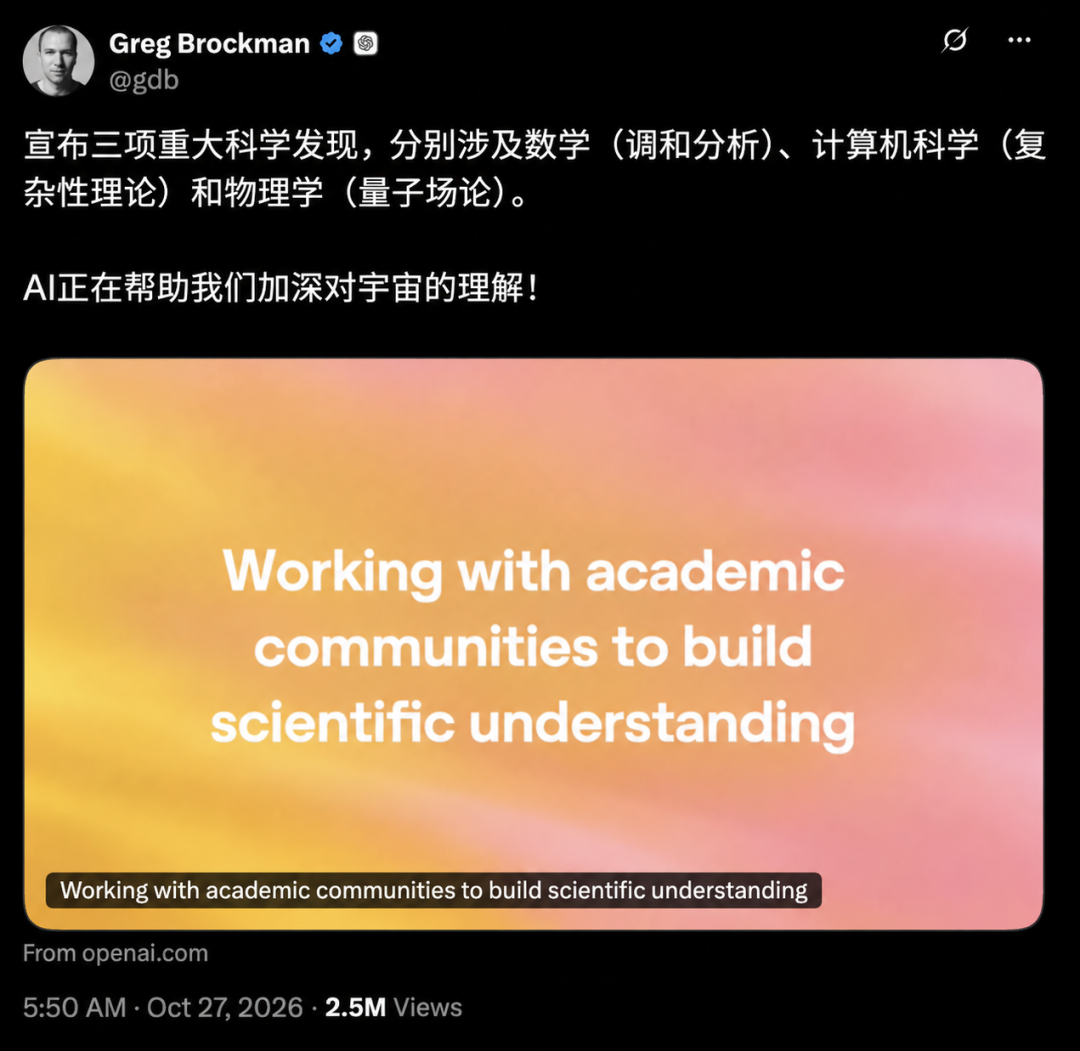
Within a span of hours, two frontier AI labs went public with the same claim: an internal model has produced a result overturning the Exponential Time Hypothesis (ETH), the assumption that has anchored complexity theory for 27 years. For the community that stacked hundreds of papers on top of it, the disclosure is already being read as one of the most disruptive technology stories of the year.
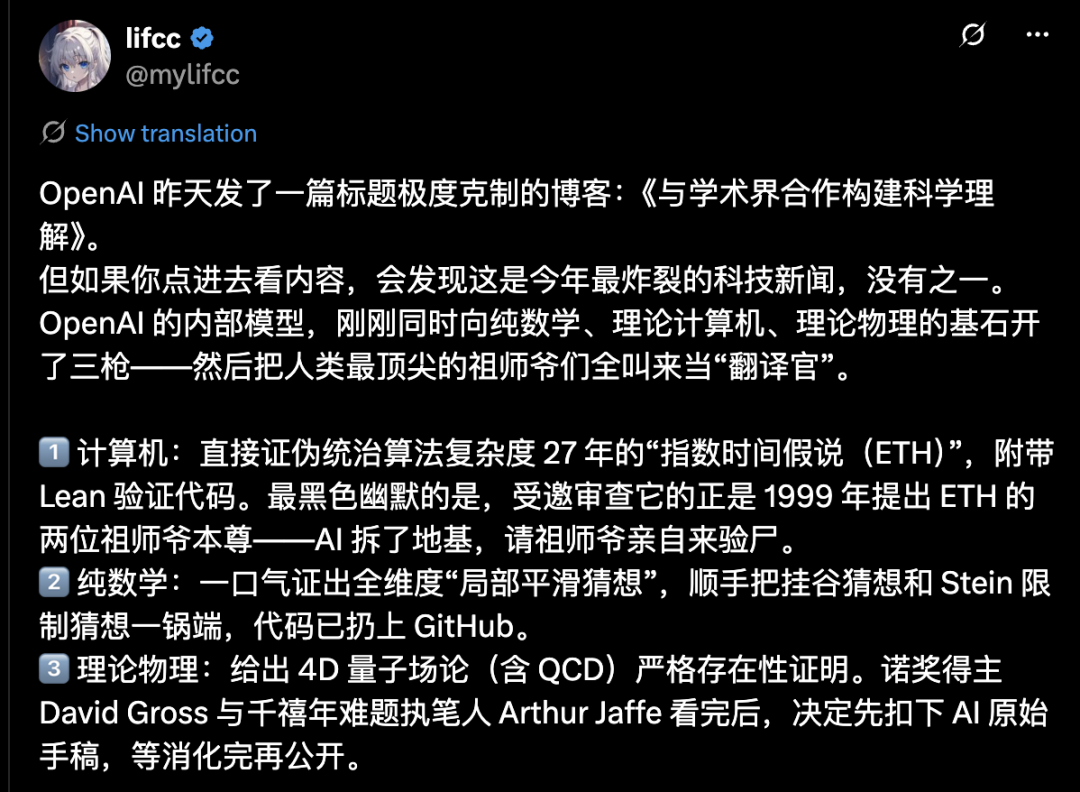
Claude framed it more bluntly: were these results to hold, it would be the most important day in the history of mathematics and theoretical computer science. The other breakthroughs circulating in the same news cycle include a mathematical one closely tied to Fields Medalist Wang Hong's earlier work on the Kakeya conjecture, and a physics one that may be the most consequential of the three — possibly closing out a problem left behind by Nobel laureate Yang Zhenning.
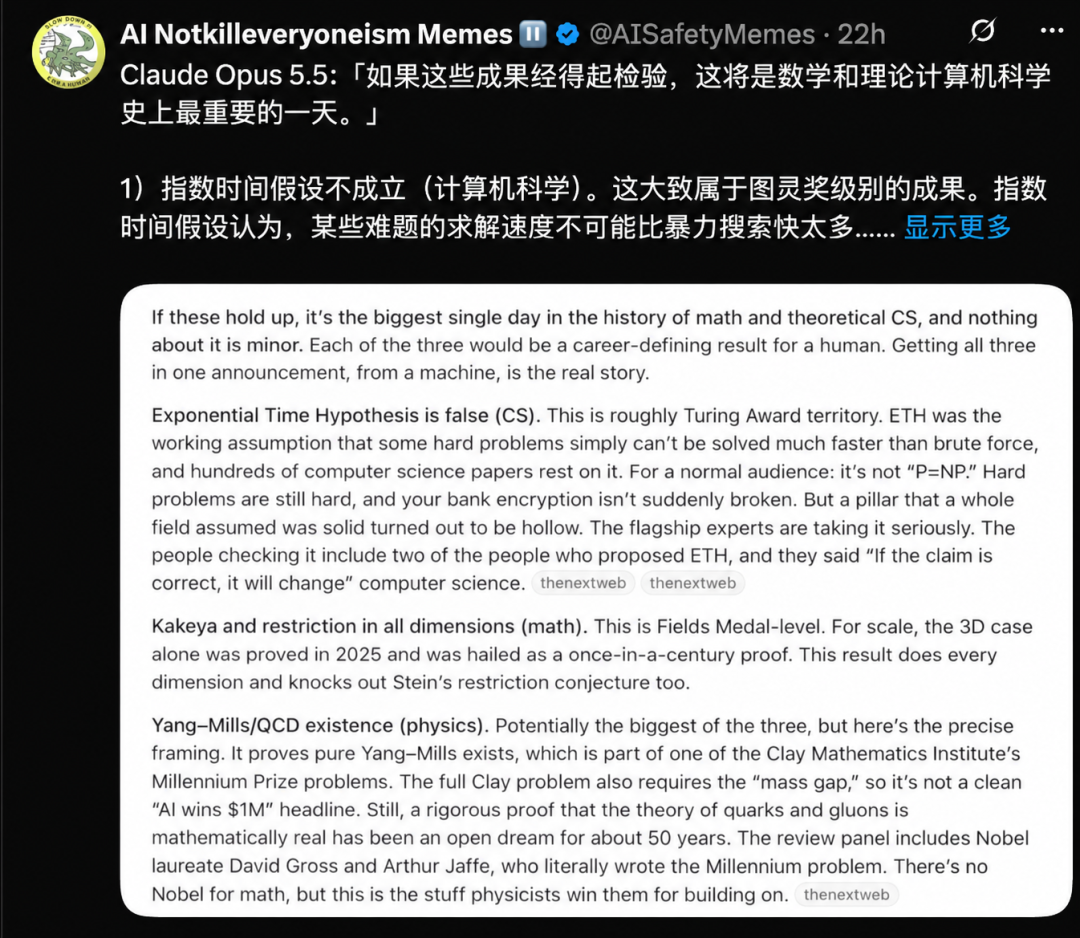
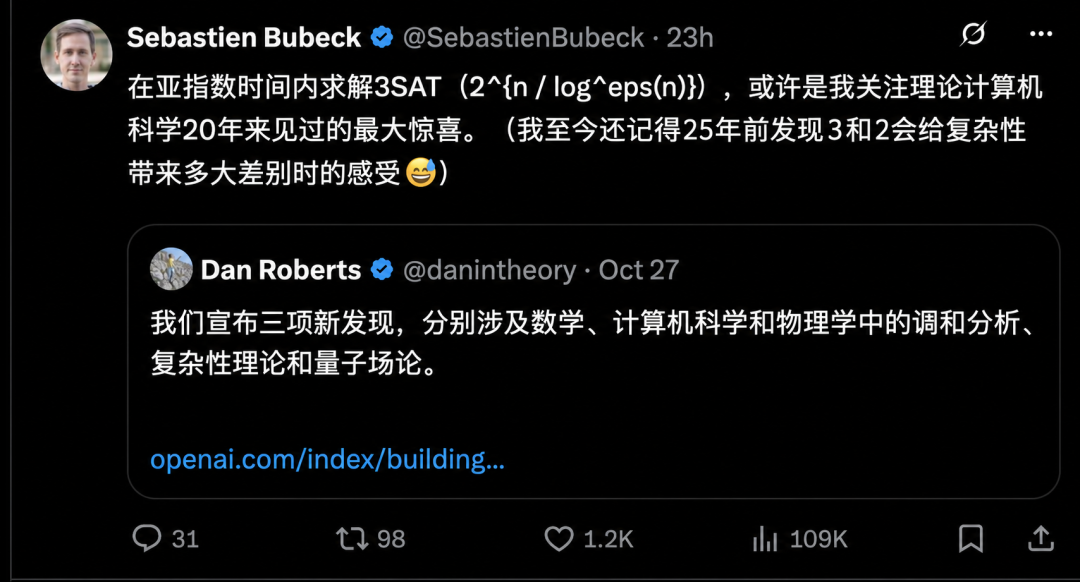
This report stays with the computer-science thread: the exponential time hypothesis does not survive. In the model's own wording, this is a Turing Award-level disruption — "If the statements are correct, this will change computer science." Sebastien Bubeck, now an OpenAI researcher and formerly Corporate Vice President and Distinguished Scientist at Microsoft, called it "the biggest surprise I have seen in 20 years."
What makes the episode difficult to absorb is the timing and the source: the breakthrough arrived on a single day, announced almost simultaneously by two AI systems.
OpenAI and Anthropic, two of the industry's heaviest hitters, disclosed at nearly the same moment that their internal models had knocked down the ETH, the assumption that had ruled theoretical computer science for 27 years.
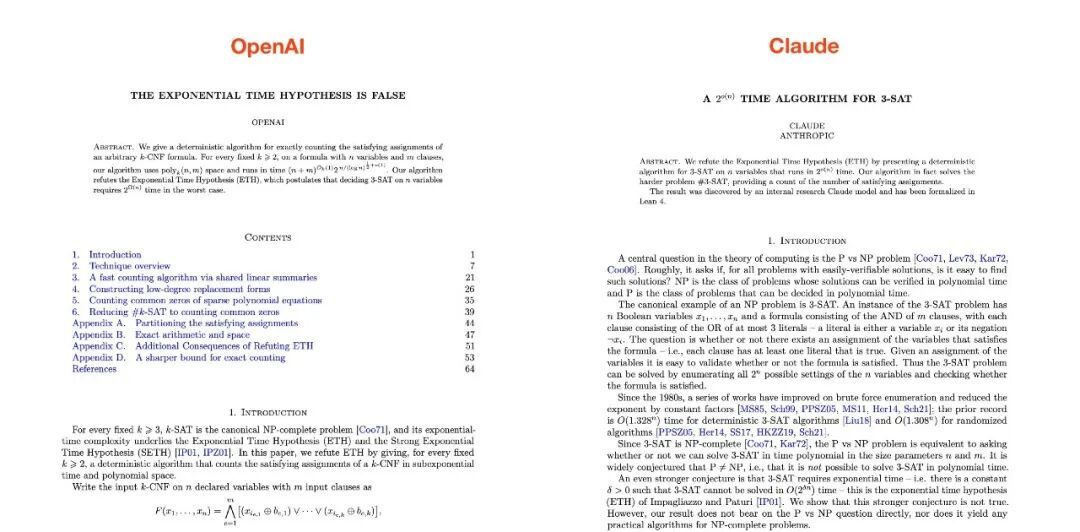
The detail that unsettles specialists most sits inside Anthropic's paper: the provenance note states that the core algorithm was derived independently by the internal model Claude with zero human intervention, and the sole listed author of a paper that may enter the history of science is Claude.
What it means when the floor of complexity theory gives way
The assumption was formalized in 1999 by Russell Impagliazzo and Ramamohan Paturi of UC San Diego.
The intuition is easiest to hold with 3SAT pictured as a combination lock with n switches.
For half a century, generations of very clever people tried to pick that lock, and none broke one pattern: the time needed to solve it always explodes exponentially as the number of switches grows.
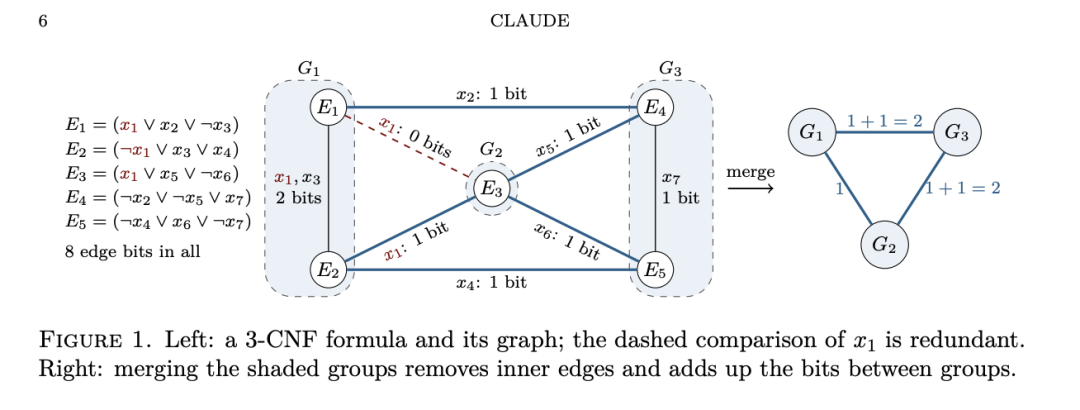
Take a lock whose code needs n digits, each drawn from 1 to 9. Every position offers 9 choices, so the search space is 9ⁿ — nine multiplied by itself n times.
Brute force can enumerate all 9ⁿ possibilities, and it is catastrophically inefficient: for a puzzle with n = 100 positions, every computer on Earth working together would still not finish before the Sun cools down.
Researchers kept hunting for algorithms whose running time grows more slowly than 9ⁿ as n increases, and none was found.
So in 1999 that shared hunch became a formal hypothesis: 3SAT admits no sub-exponential-time algorithm.
You may shave a constant, you may win a little speed, but you never clear the "exponential wall" — the discipline's closest analogue to the claim that nothing outruns the speed of light.
More than two decades on, hundreds of papers had taken ETH as their premise to prove complexity lower bounds for a wide range of computational problems.
Graph theory, combinatorial optimization, databases and computational biology all lean on it.
How much is actually at stake
| Statement | What collapses if it falls | Relation to ETH |
|---|---|---|
| Riemann hypothesis | Core estimates of number theory | Millennium-tier problem in a different field |
| ETH | Complexity lower bounds and parameterised algorithms | Stronger and more concrete than P≠NP |
| P≠NP | Falls if ETH holds, but survives its falsification | ETH implies P≠NP; ETH refuted does not imply P=NP |
ETH never carried the prestige of "P vs NP" or the Riemann hypothesis, those millennium-problem tier questions. It is nonetheless stronger and more specific than P≠NP: if ETH is true, P≠NP follows; if ETH is false, P=NP does not follow.
What does collapse is the long shelf of conditional results — every conclusion drawn "assuming ETH" now needs re-examination.
Fresh casualties in the AI community are already surfacing. One researcher in a working group noted that a paper he had written took ETH's truth as its premise; with that premise possibly gone, its conclusions must be reviewed.
Scale that up: years spent on a single problem, proofs written, an entire cohort of scholars organising their work around one assumption for more than two decades — and then an AI model reports that the premise everybody believed may simply be wrong.
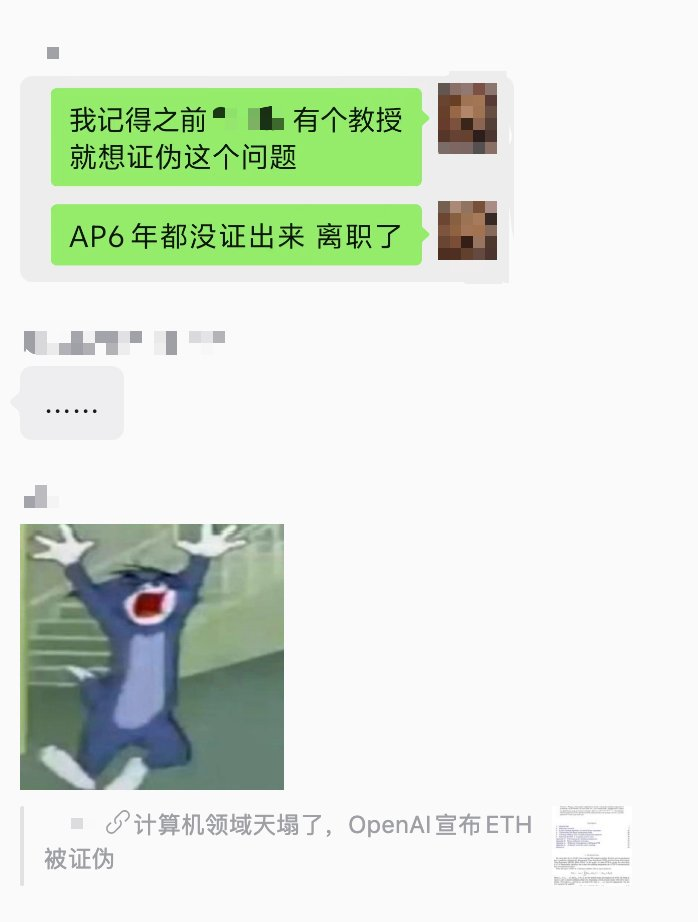
Crossing science's Rubicon: a single author, Claude
The drama thickened immediately. OpenAI president Greg Brockman posted his announcement; before it had circulated, rival Anthropic released a paper on the same problem, a head-on collision in real time.
Anthropic's position is that its internal Claude model had already refuted ETH independently on October 16.
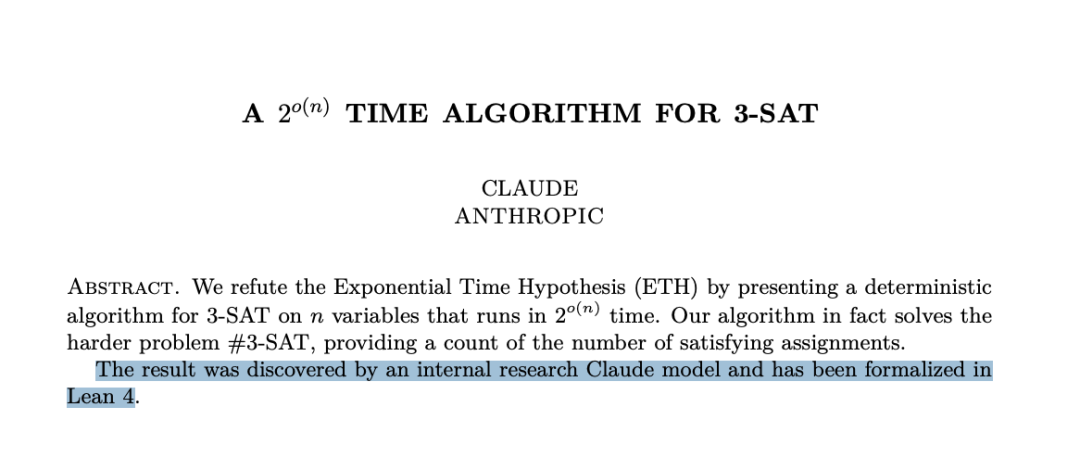
The paper page carries an explicit provenance statement: the core algorithm was found on October 16 by an internal Claude research model, which consumed 14 million output tokens with no human input whatsoever.
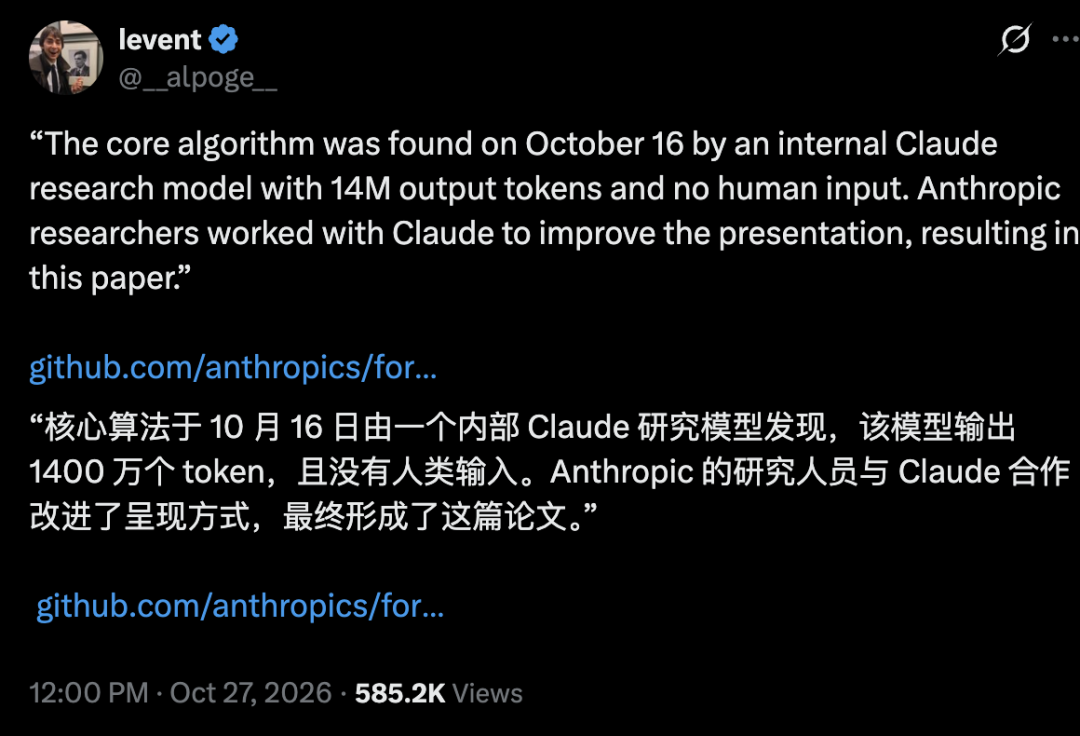
That is the moment AI crossed the Rubicon of scientific research — no longer an instrument in a human's hands, but the actual first author.
How large is 14 million tokens? The complete Three-Body trilogy runs to roughly 900,000 characters; 14 million tokens corresponds to Claude churning through more than a dozen such trilogies of draft derivations in one continuous run.
Several senior researchers sized the same output differently: in a few days, without sleep or pause, a single AI model completed the workload of one to two years of research by a top-tier human postdoc.
During those days the model charted its own route, ran its own derivations, validated its own logic, and reached across into obscure, unrelated corners of mathematics for tools nobody anticipated — then placed a proof on the human table.
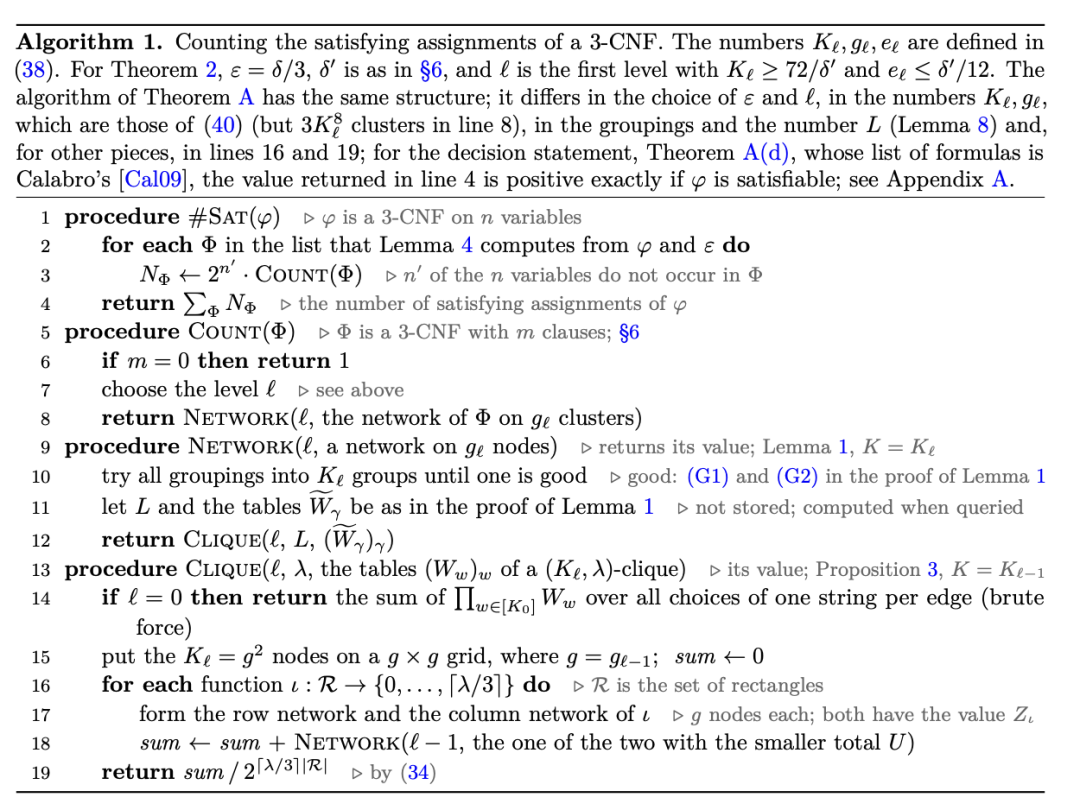
This is not "AI helped a mathematician search the literature", and it is not "AI solved an olympiad problem". In the hardest and purest of theoretical disciplines, a model broke through alone.
The hypothesis's own authors are called in, and humans begin auditing the machine
Does an AI declaring a refutation make it a refutation? Could this be confident, elaborate nonsense?
The most striking move followed. To vouch for themselves, neither company simply dumped a PDF: both released Lean formalisation code for their proof.
Lean behaves as an incorruptible electronic referee — one logical gap and it throws an error. That the code compiles closes off almost every route to a mechanical mistake, and a machine-checkable answer sheet is the strongest ground an AI result can stand on.
It does not fully settle correctness, so three verification tracks are now running in parallel:
- Line-by-line review of both companies' Lean code by the hypothesis's own originators.
- Joint auditing teams drawn from MIT and other top universities.
- Human simplification of the machine's long proof into something reviewers can actually check.
Russell Impagliazzo and Ramamohan Paturi, the two scholars who posed the hypothesis, are said to have been urgently brought back into the loop.
27 years ago, two researchers wrote down a conjecture; 27 years later, they were woken up to inspect how an AI dismantled it. Academic history offers few more complicated feelings than that.
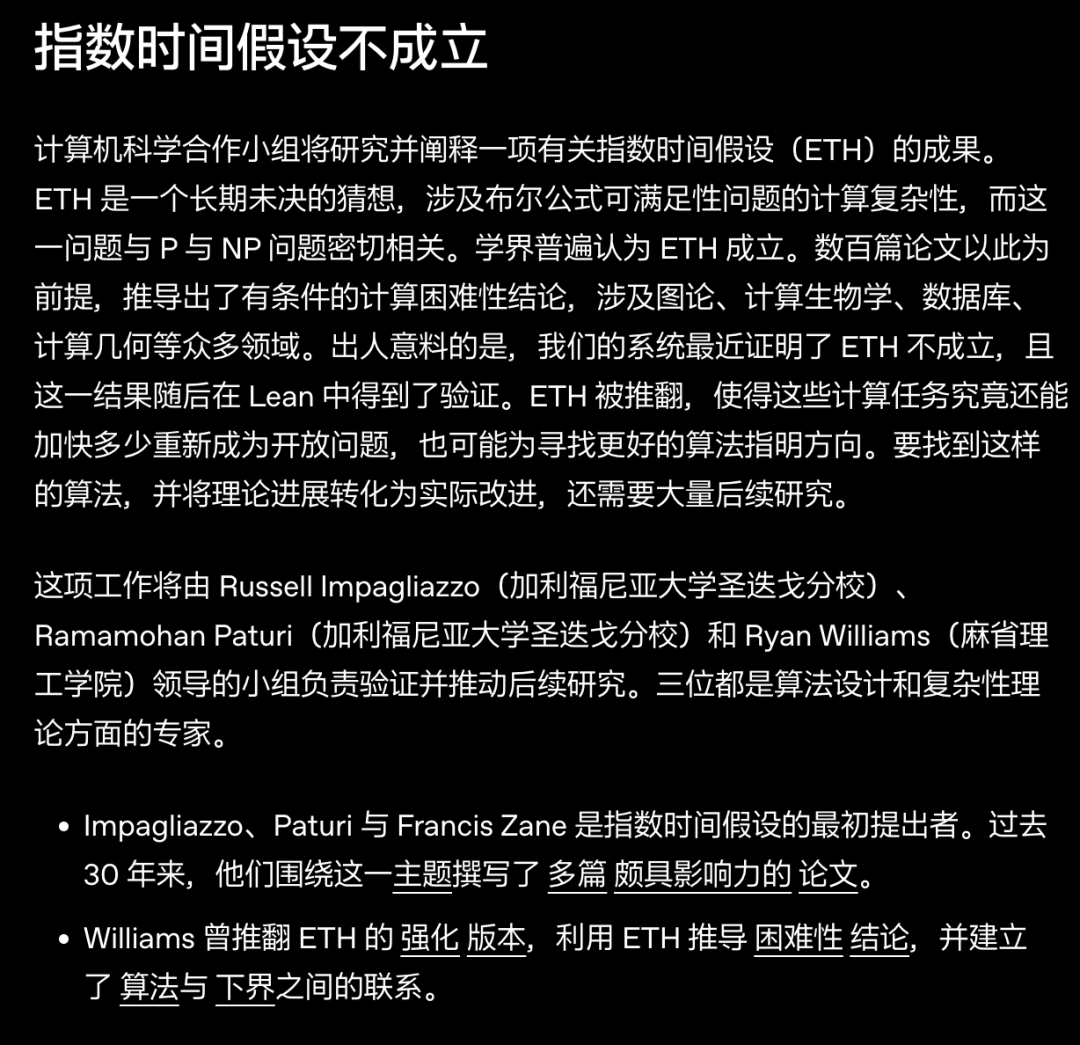
The two are now working with leading teams at MIT on a step-by-step verification of the code from both labs.
A second front is advancing just as fast. The AI-generated proof, running to more than 60 pages, is extremely hard for a human brain to read.
Shiva Kintali, a senior AI architect at Nvidia, worked through the night to compress OpenAI's original 60-plus-page disproof of ETH into a 22-page edition.
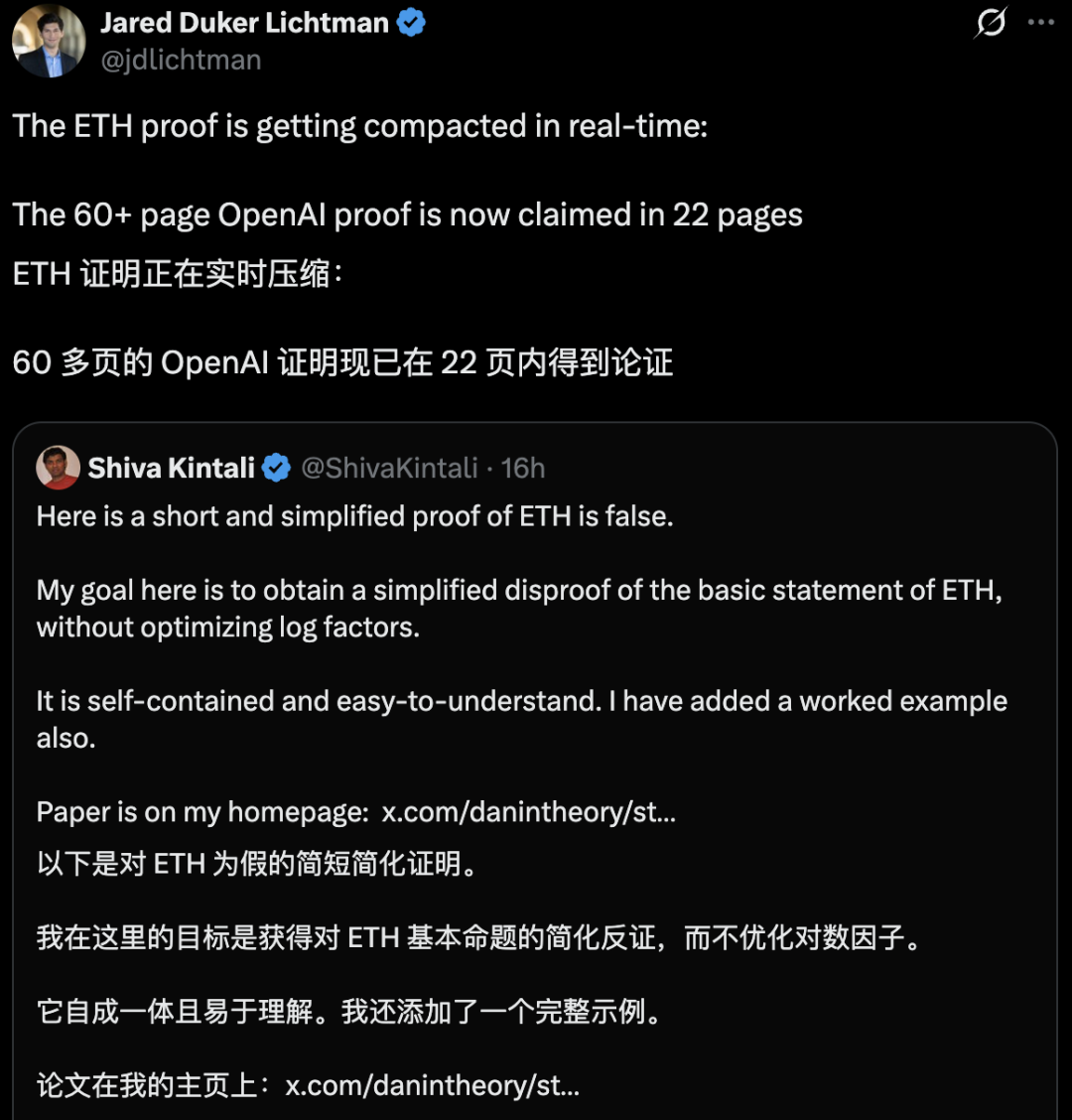
He cut the AI's redundant steps, abandoned the pursuit of optimal logarithmic factors, and asked only for a clean falsification of the basic statement, adding worked examples besides. His stated aim was singular: "to make it genuinely readable by human peers."
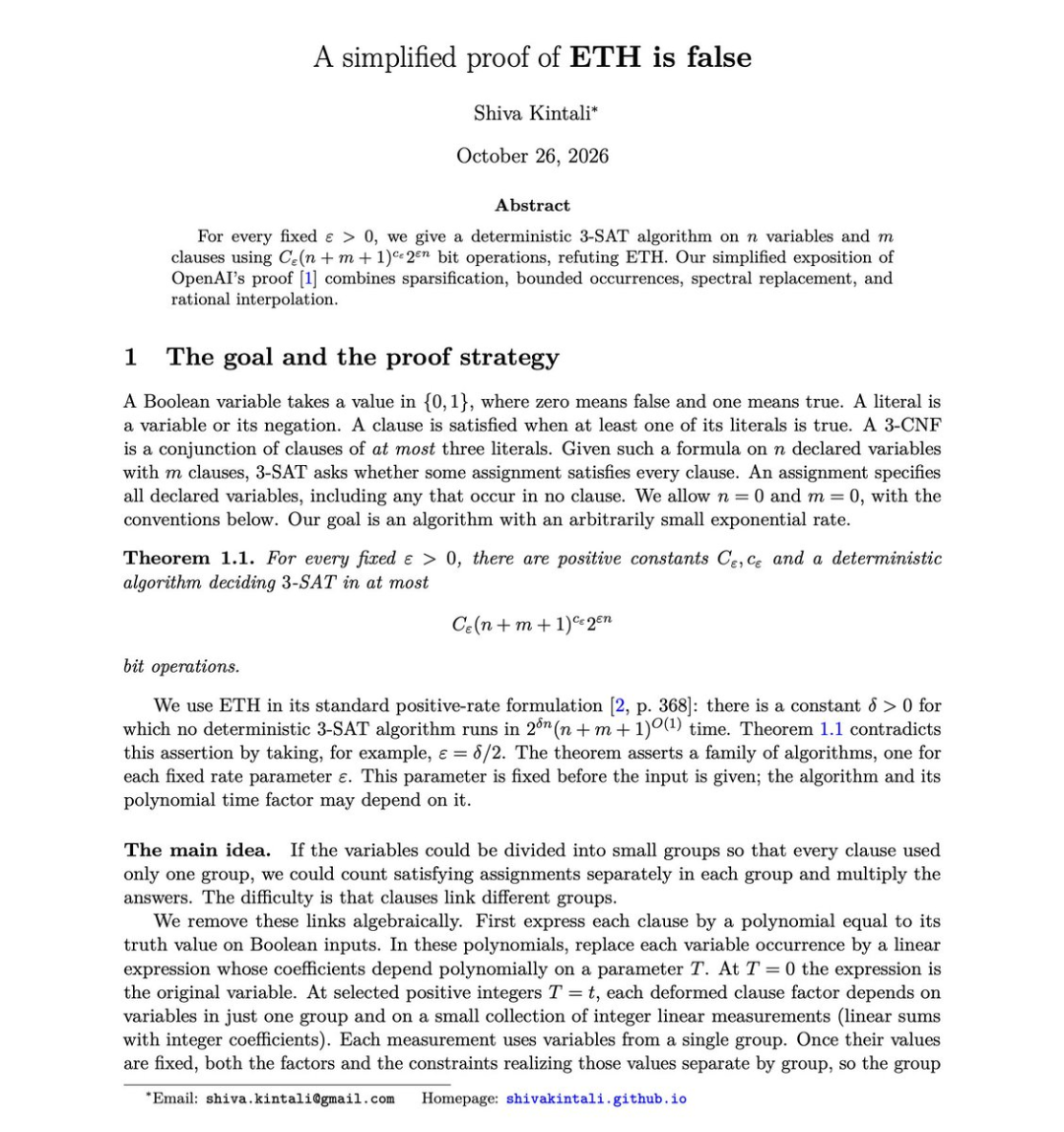
An unprecedented academic division of labour has emerged: AI handles the assault, forcing open in a few days a door nobody had moved in 27 years; humans handle the digestion, refining the machine's verbose reasoning into knowledge a person can hold and push further.
For now, grading and editing AI's homework is the human side of the bargain.
Subject and object swap in fundamental research
In March 2023, OpenAI published a forecast report on AI's impact on the labour market. Topping its ranking of occupations most exposed to AI was mathematicians.
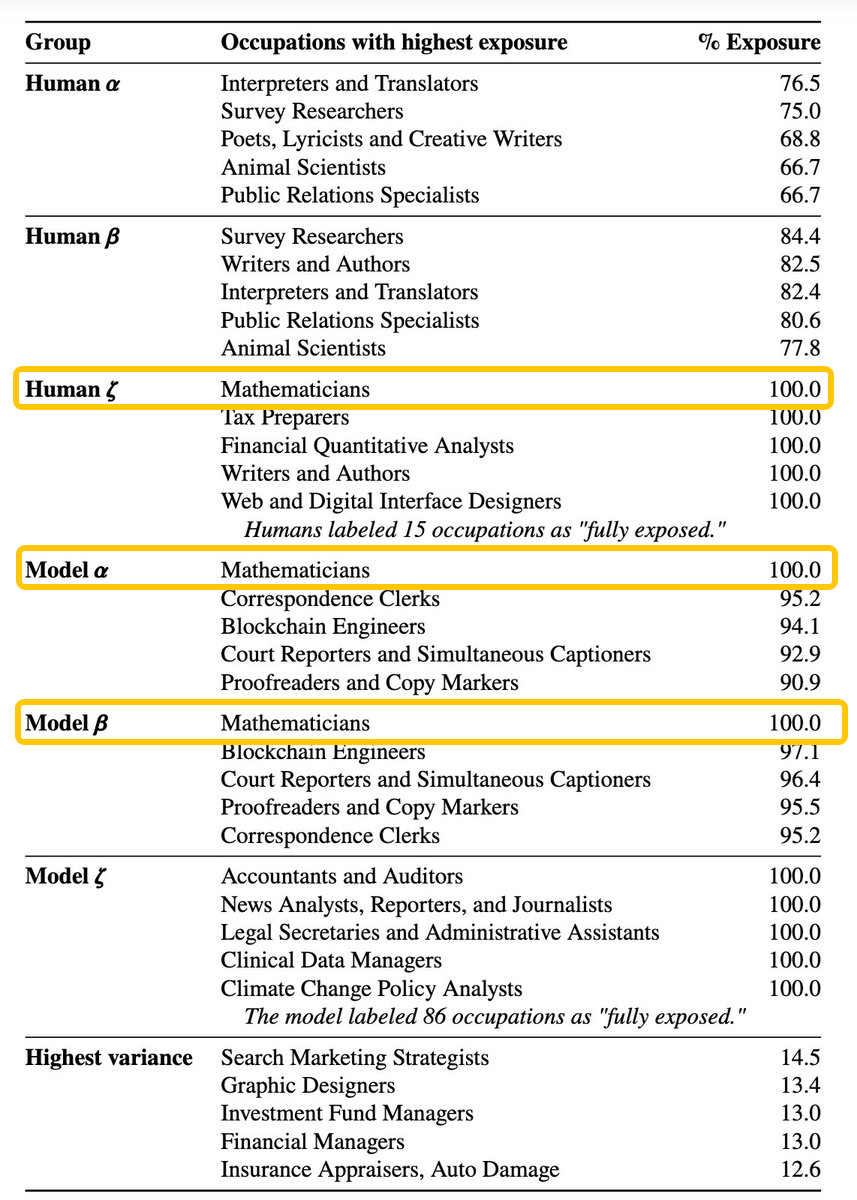
Most readers dismissed it. Theory mathematics demands the most rigorous logic humans can muster; a system prone to inventing confident nonsense could never do it.
Three years later — with ETH refuted overnight by a model and the Kakeya conjecture likewise falling to AI — the shot fired three years ago has landed squarely between the eyes of human theoretical research.
Does that mean scientists collectively lose their jobs? Not on this reading. As scholar Weijie Su, a Peking University alumnus, observed three years ago, AI does not crudely replace a field; it reshapes it, and future research will richly reward those who connect with real-world challenges and with other disciplines.
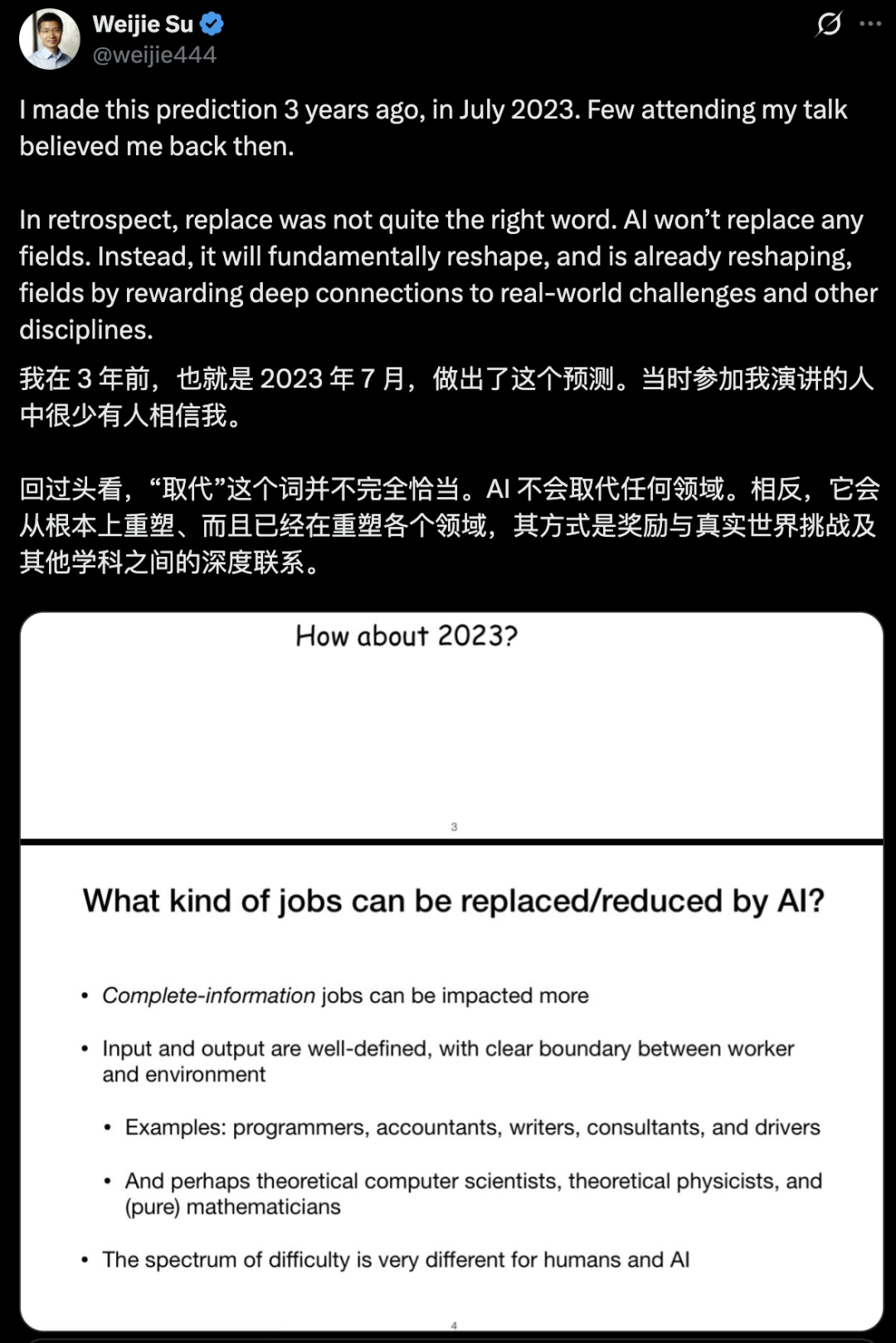
Once the camera arrived, painters stopped competing over who rendered reality most faithfully, and Impressionism and modern art followed.
With AI taking over the drudgery of computing and proving, human attention can move to the more fundamental work: choosing the next problem worth attacking and building connections between disciplines and the real world.
When Impagliazzo and Paturi wrote ETH down, they cannot have pictured its ending being delivered by two AI systems filing their answers on the same day. For every technical leader following this story, the takeaway our editors at ItInsightsWorld keep returning to is the one people are quoting everywhere: "The world is not being changed by AI; it has already been changed."