
Case Review: How Advantech's Founder Handover Splits Direction From Execution Before January 1, 2027
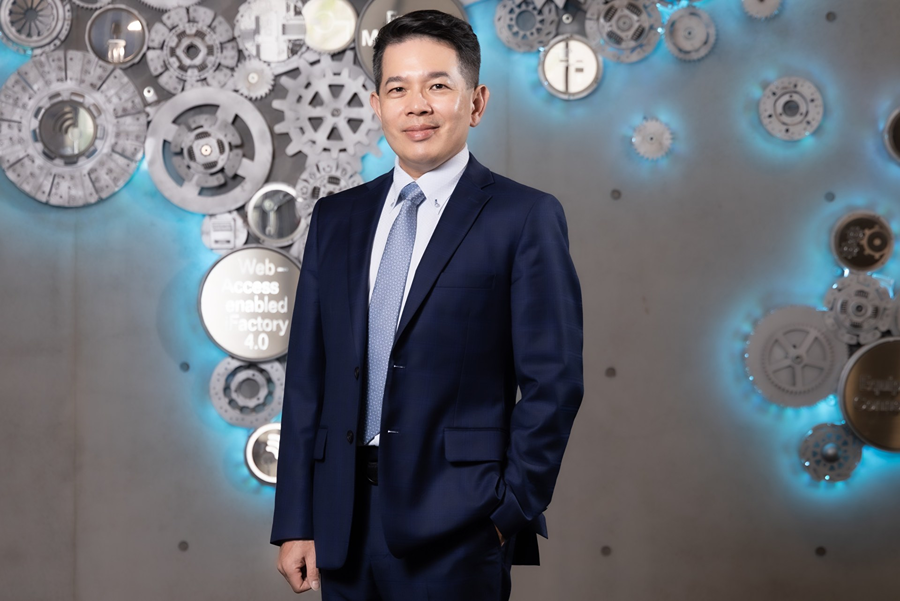
Advantech has disclosed a generational leadership plan. Effective January 1, 2027, founder K.C. Liu moves into a full-time chairman seat, while Miller Chang, president of Advantech’s Embedded Sector, steps up as chief executive officer. The transferable lesson is not who leaves the front of the room — it is that the company has separated the job of setting direction from the job of running the business. Below is the sequence, the evidence behind it, and a checklist for judging any founder transition.
What exactly changes on January 1, 2027?
Two titles move, and the operating logic moves with them. Miller Chang, who today runs Advantech’s Embedded Sector as president, takes responsibility for group-wide operations and the next growth plan on the effective date. K.C. Liu, the company's founder, shifts to a chairman job whose stated scope is corporate governance, long-term corporate development and new business investments. Day-to-day authority — group operations, business integration, resource allocation and annual performance objectives — sits with the CEO alongside the chief operating officer and the chief financial officer.
The connective tissue is a process rather than a person. Advantech says cross-business-group and cross-region cooperation, together with decision-making efficiency, will run through its Worldwide Business Operations frame, commonly abbreviated as WWBO. Put in plain language: the company is trying to guarantee that a leadership change does not have to pass through one founder's inbox before it reaches a plant floor on another continent.
Why did the timing look obvious before the announcement?
Conclusion first: this reads as scheduled, not improvised. Three public signals point the same way.
- A bench already existed. At the investor conference held on August 5, 2026, the session was presided over by K.C. Liu together with three co-presidents — Eric Chen, Linda Tsai and Miller Chang. Promoting from an existing co-president team avoids the classic failure mode of dropping an outsider into a founder-built company.
- The numbers were at a high-water mark. At the same August 5, 2026 investor conference, Advantech reported first-half 2026 consolidated revenue of NT$46.512 billion, up 32% year on year, with gross profit of NT$17.825 billion and a 38.3% gross margin, driven mainly by accelerating customer AI deployments. Handing over during a record window is far cheaper than handing over during a repair.
- The founder's own arc invites a next chapter. Forbes's profile of K.C. Liu records that he co-founded the company in 1983 at age 29 with two colleagues from HP's Taiwan operation, and describes the result as the world's largest industrial PC maker. Four decades after that workshop, institutionalising the structure is often how a founder protects what he built.
What does the chairman / CEO split actually decide?
The interesting question is not who is boss. It is where each role touches real money and real schedules.
| Dimension | Chairman: K.C. Liu | CEO: Miller Chang |
|---|---|---|
| Time horizon | Multi-year direction, new business investments | Annual performance objectives |
| Stated scope | Corporate governance, long-term corporate development | Group operations, business integration, resource allocation with the COO and CFO |
| Coordination tool | Board process | Worldwide Business Operations, the WWBO framework |
| Test an outsider can apply | Does the firm still know what it wants to become? | Does the firm hit this year's targets without heroics? |
For a general reader, this table is the reusable part of the case. When a founder handover is announced, ask which column the incoming chief executive owns. If the answer is only "strategy", the transition is mostly cosmetic. If the answer includes resource allocation and yearly targets — as Advantech states here — authority has genuinely travelled.
How can you tell real delegation from a title shuffle?
Firms that advise on founder transitions keep arriving at the same two warnings. JM Search's guidance on founder succession argues that the outgoing founder's role must be defined tightly so it overlaps as little as possible with the new CEO's, because a loosely drawn relationship is where conflict starts. Spencer Stuart's advice to successor CEOs adds a timing warning: changing too little too slowly can stall the very agenda a board hired the new executive to deliver, even as changing too fast is punished in a founder's company.
Measured against that advice, the Advantech case scores on four checks:
- Boundaries written down. Governance, long-term development and new investments are publicly separated from operations, integration, resources and annual targets.
- An internal successor. Miller Chang already leads Advantech’s Embedded Sector, so his learning curve is governance, not the industry itself.
- A named process. WWBO gives cross-region decisions a route that does not depend on one individual's judgment.
- Low-overlap design. The founder keeps investments and governance — the two areas where his knowledge compounds and where a new CEO is usually weakest.
One caution: leadership signals do not always arrive as clean press releases. Our case review of reports that Mike Rockwell may step away from Siri by 2027 shows how readers can treat a personnel story as an organisational signal without over-claiming what it proves.
What do readers usually get wrong about handovers like this?
- "Founder stays as chairman" means the founder is still running things. Not automatically. What matters is whether operating authority — budgets, resource allocation and annual targets — is assigned to the new job description. Here it is on the CEO side of the line.
- A CEO change signals trouble. Often it signals scale: a business that has outgrown one-person decision-making. Record first-half 2026 revenue makes a distress reading implausible in this instance.
- One appointment rewrites strategy. Strategy travels through teams. The existing co-president structure means this handover buys continuity as much as it promotes an individual.
- Announcement date equals change date. Advantech's succession notice was published in its newsroom in early November 2026, months before the January 1, 2027 effective date. That runway is itself evidence of planning, not hesitation.
How does this case compare with other 2027 leadership changes?
| Comparison point | Advantech | HP Inc. |
|---|---|---|
| Effective date | January 1, 2027 | January 4, 2027 |
| Outgoing leader | Founder K.C. Liu remains as full-time chairman | Bruce Broussard leaves the CEO and board chair roles |
| Incoming leader | Internal promotion from the embedded business | External hire with prior big-company CEO experience |
| Dominant risk to watch | Founder–CEO role overlap | Outsider learning curve against board expectations |
| What success looks like in year one | Targets met under the CEO while new investments clear the chairman's review | Strategy narrative restated without operational stumbles |
Two handovers landing in the same week of 2027 form a useful natural experiment: one solves continuity from inside the building, the other imports credibility from outside. Our side-by-side read of the HP decision, why Emma Walmsley replaces Bruce Broussard, covers the counter-case and the board-vote detail.
What should you do with this case? Five actions
- Read the process, not just the org chart. Look for a named operating framework — here WWBO. It tells you whether decisions still need a single person to unblock them.
- Check the effective date against the disclosure date. A runway of months suggests sequencing; a same-day switch suggests the board was reacting.
- Ask who owns the budget after the change. Resource allocation is the tell; titles are not.
- Judge the successor's domain, not their résumé. An internal lift from a line business such as Advantech’s Embedded Sector usually signals strategy continuity rather than redirection.
- Watch the first full year of targets. If annual objectives clear under the new CEO while the chairman signs off new investments, the split is functioning as described.
Frequently asked questions
Is K.C. Liu retiring from Advantech?
No. Under the disclosed plan he takes a full-time chairman role scoped to governance, long-term corporate development and new business investments, while operating responsibility passes to the CEO.
Who is Miller Chang?
The current president of Advantech’s Embedded Sector, named to become CEO on January 1, 2027. The company's executive profile states he joined in 2007 and previously worked at Phoenix Technologies from 1996 to 2006.
What is WWBO?
Short for Worldwide Business Operations, the framework the company says it will use to strengthen cooperation and decision-making efficiency across business groups and global regions.
Does this change anything for customers right away?
Nothing in the disclosure alters products, contracts or service lines before the effective date. The visible change is governance: who signs off operating decisions from January 1, 2027.
Why should a general reader care about an industrial-computing firm?
Because it is a clean template for how founder-led companies change hands without breaking — a pattern that repeats across consumer brands, suppliers and platforms, and one you can reuse whenever a founder's name is in the headline.
Sources and further reading
- Advantech newsroom, leadership succession announcement: https://www.advantech.com/en-us/resources/news/advantech-enters-a-new-chapter-of-leadership-succession-as-miller-chang-assumes-ceo-role-in-2027
- Advantech investor conference, August 5, 2026 — first-half 2026 revenue NT$46.512 billion, up 32% year on year; gross margin 38.3%: https://www.advantech.com/en-us/resources/news/advantech-drives-industrial-ai-opportunities-with-integrated-wise-solution--station-iws-platform-strategy
- Advantech executive team profile, Miller Chang: https://www.advantech.com/en-us/about/executive-team/business-groups/miller-chang
- Forbes profile, K.C. Liu: https://www.forbes.com/profile/kc-liu/
- JM Search, principles of founder succession: https://jmsearch.com/article/how-founder-led-companies-can-get-succession-right-the-first-time/
- Spencer Stuart, advice for successor CEOs in founder transitions: https://www.spencerstuart.com/research-and-insight/from-founder-led-to-founder-inspired-advice-for-successor-ceos