
Adam Mosseri on the Deepening AI Backlash: No Automatic Demotion on Instagram, but Not Identical Treatment Either
Speaking on the podcast Colin and Samir recently, Adam Mosseri, the head of Instagram, offered an unusually frank read on the public mood toward artificial intelligence: distrust and resentment are broadening, and they are unlikely to cool off any time soon. His evidence was telling — at some university commencement ceremonies, graduates have openly heckled senior technology executives. That hostility, Mosseri argued, is no longer confined to young people or to creative professionals; it has spread through the wider population.
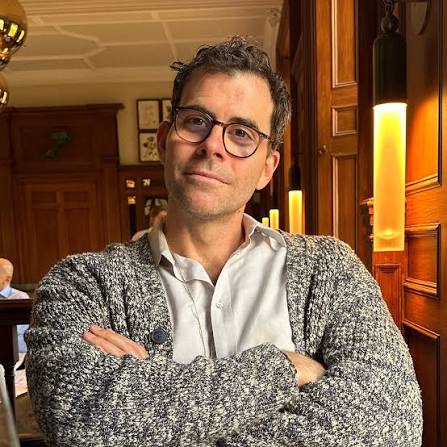
Anxiety, frustration and anger are still multiplying
The emotions circling AI — anxiety, frustration and anger — keep growing, with the creative sector absorbing the sharpest impact. Mosseri described the situation as "not only getting worse, but continuing to get worse" in the years ahead. Some of the criticism, he acknowledged, rests on solid ground; some of it does not. Either way, the pressure lands on a great many people, and the fallout is not limited to the technology industry.
Using AI is not a penalty; equal recommendation weight is not a promise
On how Instagram handles AI-generated material, Mosseri was precise. Creators will not see their content ranking lowered simply because AI was involved. Quality, however, is uneven — strong work sits alongside a flood of weak output — and when asked whether AI content should carry the same recommendation weight as non-AI content, his answer was "probably not."
"AI slop": a label stretched too far
In recent years, "AI slop" has become shorthand for machine-generated mediocrity, and Mosseri believes the tag is now overused. Plenty of shoddy AI output unquestionably exists, he conceded, but not every piece of AI-generated content deserves to be swept into that single category.
Disclosure and enforcement advance in step, while a blanket ban stays off the table
As generative AI spread, Instagram's governance push intensified alongside it. Earlier this year the platform shipped a labeling system aimed at AI accounts; since August this year it has applied tougher measures to accounts built around AI-generated characters. Misleading content — celebrity deepfakes chief among them — remains a live problem.
Mosseri disclosed that Instagram has begun urging AI accounts to declare what they are, so users can tell whether they are looking at a real person or a synthetic persona. The source of authenticity, in his telling, genuinely matters to users. He has already ruled out an outright ban on AI content: enforcing one is simply not practical, so the platform has to find other management paths rather than a blunt cutoff.
Three separate fears behind the unease
- Creators worry their work is being used to train AI models;
- users worry about safety risks;
- occupational groups worry their jobs will be replaced by AI.
The concern is not monolithic, Mosseri said: it surfaces among content creators, engineers and mathematicians alike, each for different reasons.
The dread of being left behind by the change
Beneath those specific grievances sits a broader one — the fear of not keeping pace. As AI capabilities expand, the worry of being displaced, sidelined or outcompeted keeps feeding the negative public mood.
Platform position at a glance
| Issue | Mosseri's position |
|---|---|
| AI content ranking | No standalone demotion for using AI |
| Recommendation weight | Probably not identical to non-AI content |
| Blanket ban | Not workable in practice |
| Identity labeling | AI accounts are now being pushed to self-label |
What emerges is a platform trying to draw two lines at once: refusing to punish the mere use of AI, while stopping short of guaranteeing it the same distribution as everything else — and doing so against a public mood its own leader expects to harden. For creators, the recurring themes in that calculus are disclosure, quality and authenticity rather than the tooling itself.