
3M's $7.35 Billion PFAS Settlement Compared: Who Benefits, Who Waits, and What to Do Next
Short answer: 3M has committed about $7.35 billion over the next nine years to settle personal-injury claims tied to PFAS — the "forever chemicals" once used in firefighting foam — a deal the company expects to clear roughly 99% of current claims from an estimated 115,000 to 120,000 eligible plaintiffs, while admitting no legal liability. In plain terms: it buys certainty for the company first and closure for injured claimants second.
That headline figure is only one line in a longer ledger of "forever chemical" settlements, court procedures and household decisions. Below, we compare this offer with the alternatives, unpack a payment clock that matters more than the total, and finish with a decision framework for three audiences: potential claimants, households worried about exposure, and investors.
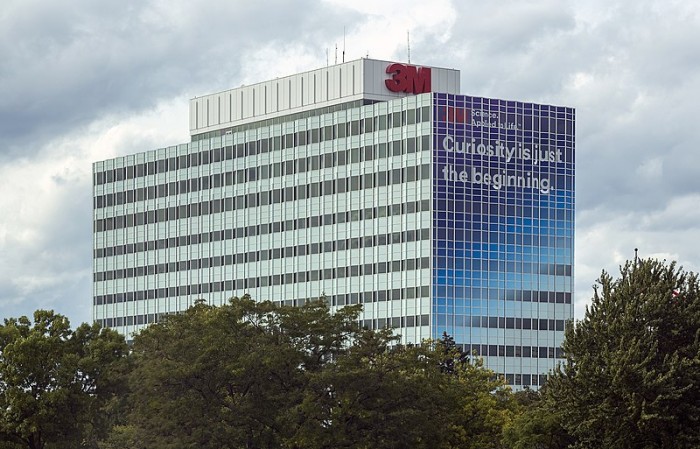
What exactly is 3M paying for — and what is it not admitting?
Conclusion first: this is a no-fault resolution. 3M agreed to a large sum specifically to avoid going to trial, and the company has been explicit that the arrangement does not constitute an admission of legal responsibility for the cancers and other illnesses alleged by plaintiffs.
The chemicals at the centre of the case, PFAS (per- and polyfluoroalkyl substances), earned the nickname "forever chemicals" because their carbon-fluorine bonds make them extremely slow to break down in nature and in the human body. For decades they were engineered into products that had to resist heat, oil, grease and water, and firefighting foam used at military bases and airports was one of the largest application areas. Research has linked exposure to liver damage, lower birth weight, weaker vaccine antibody responses, and increased risk of kidney and testicular cancer.
The scale of the health concern is not just a courtroom argument. The U.S. National Toxicology Program, after a systematic review of the evidence, concluded that two of the best-studied compounds — PFOA and PFOS — are "presumed to be an immune hazard to humans," with the strongest signal appearing in suppressed antibody responses (see ntp.niehs.nih.gov). That finding matches the vaccine-response harm cited by the plaintiffs.
Procedurally, the lawsuits were folded into a large consolidated multidistrict proceeding administered by a U.S. federal court, which is what made a single, court-supervised settlement architecture possible in the first place. 3M chief executive William Brown framed the deal as a milestone in closing out a legacy legal problem and sharply reducing litigation uncertainty, while noting that new claims emerging later will still be handled through separate mechanisms.
Why the payment schedule matters more than the headline number
Conclusion: the $7.35 billion is a nominal total stretched over a decade, not a cheque arriving next quarter. The staggered calendar is the part of the announcement that most readers — and most claimants — misread.
- Term: roughly $7.35 billion paid over the next nine years.
- Front end: only $50 million is scheduled for 2026, and nothing is scheduled for 2027.
- Back end: about 20% of the total payments are reserved for the final two years of the programme.
- Accounting: 3M expects to record a pre-tax charge of about $5.8 billion in the fourth quarter of 2026, reflecting the discounted present value of those future obligations, and says the charge does not change previously published guidance.
- Coverage: the company estimates the settlement captures about 99% of existing personal-injury claims, with 115,000 to 120,000 plaintiffs eligible to participate.
- Timing of the announcement: 3M set out the commitment in a statement released on 3 November.
The gap between the $7.35 billion headline and the $5.8 billion booked charge is the time-value of money: paying later is cheaper for the payer. Claimants should read the same structure from the other side — waiting longer for a payout is also a real cost. One more contractual catch: the agreement can collapse if participation falls short of a threshold set in the deal, although 3M management expects most eligible plaintiffs to sign on, which makes a smooth activation the likeliest outcome.
How 3M's offer stacks up against the other PFAS settlements
Conclusion: the market for PFAS compensation is now clearly split into two products — personal-injury settlements and water or economic-loss settlements — and they price exposure very differently.
| Deal or rule | When | Size | Who is covered | What it does not cover |
|---|---|---|---|---|
| 3M personal-injury settlement (this news) | Statement of 3 November; payments run over the next nine years | About $7.35 billion | Roughly 99% of current personal-injury claims; about 115,000 to 120,000 eligible plaintiffs | No admission of liability; future new claims and non-personal-injury disputes stay outside this pot |
| 3M settlement with U.S. public water systems | 2023 | More than $10 billion | Municipal water suppliers seeking cleanup and economic damages for PFAS in drinking water | Individual health claims by residents |
| DuPont, Chemours and Corteva — Ohio water-supplier litigation | Approved by a judge in February 2024 (asdwa.org) | $1.1 billion | Public water systems in the Ohio multidistrict case | Households as direct payees; personal injury |
| U.S. EPA drinking-water regulation (a benchmark, not a payout) | Final rule announced April 2024; two further proposals opened for public comment in May 2026 (epa.gov) | Enforceable limits, not compensation | Everyone served by regulated public water systems | Historic exposure already suffered by individuals |
Two comparisons are worth noting. First, the water-supplier track pays suppliers, not people — which is why individuals with diagnosed illnesses needed the personal-injury track that 3M has now settled. Second, 3M is not alone in the dock: DuPont, Chemours and Corteva continue to face similar litigation, so this settlement reduces one company's risk rather than resolving the sector's exposure.
Simple arithmetic on the published figures — and this is an IT Insights analysis, not an official estimate — puts the fund at roughly $61,000 to $64,000 per eligible plaintiff before legal fees, if the pool were divided evenly. In practice the court-supervised plan assigns values by injury type and severity, so individual outcomes will diverge widely from that average.
Is this a good deal? Three lenses, three answers
For an injured claimant
Likely trade-off: certainty and speed against the possibility of a larger trial verdict. Accepting means no years of litigation and no medical-causation fight, but you also surrender leverage. Declining means your case can proceed; the settlement is not a forced forfeiture of your rights.
For an investor
Likely trade-off: capped downside for a known cost. Investors broadly read the amount as below earlier expectations, and the shares moved to multi-year highs on the news. The catch is that "resolved" here means 99% of claims on file — not future claims, not water and property claims, and not the rest of the industry's lawsuits.
For a household worried about exposure
A settlement tells you nothing about your own tap water. Use the regulatory benchmark instead: the EPA set enforceable limits of 4.0 parts per trillion for PFOA and PFOS each, and 10 ppt for PFHxS, required monitoring and public notification by water systems, and says the rule is expected over many years to prevent PFAS exposure in drinking water for roughly 100 million people. Your annual Consumer Confidence Report, or the state and utility PFAS databases built on that reporting, is the fastest way to learn whether your supplier has detected these chemicals.
Five common misconceptions about the settlement
- "Paying means admitting guilt." It does not. 3M has stated it is not accepting legal liability, and no-fault settlements are standard in mass-tort litigation.
- "The PFAS problem is now closed." The deal covers about 99% of claims on file; new claims will still arrive, and other manufacturers such as DuPont, Chemours and Corteva remain in litigation.
- "Production has stopped, so exposure has stopped." 3M has said it wound down all PFAS manufacturing globally as planned by the end of 2025, but "forever chemicals" persist in soil, water and existing products.
- "A bigger total means a bigger cheque." Payouts depend on injury category, evidence and legal fees, and the cash is spread over nine years with very little at the start.
- "Boiling my water will remove PFAS." Heat does not destroy these compounds; only certain certified filter media reduce them, and only if independently tested.
Six-step checklist if you think PFAS exposure made you sick
- Map your exposure history: work at or near a military base, airport, fire department, chemical plant or a known contaminated well field is the pattern most commonly cited in these cases.
- Collect documentation before you contact anyone: diagnoses, pathology reports, employment and service records, and dates.
- Confirm whether you are already inside the lawsuit. Being an eligible plaintiff in the 115,000-to-120,000 pool is not the same as having filed, and participation is not automatic.
- Ask a specialist about the settlement's election deadline and about the option to opt out and litigate separately.
- Read the fine print on fees and on how your injury category is valued, rather than comparing against the headline total.
- Check your drinking water in parallel: look up your utility's PFAS monitoring results, and if levels are a concern, choose a filter certified to NSF/ANSI 53 or NSF P473 for PFOA and PFOS — reverse-osmosis systems and some solid activated-carbon blocks meet that test, while ordinary pitchers generally do not (nsf.org; epa.gov).
Frequently asked questions
Does the 3M settlement mean PFAS caused my illness?
No. A settlement resolves claims without determining causation, which is exactly why companies buy them. What science does support is that specific PFAS are immunotoxic and are linked to kidney and testicular cancer, liver damage and reduced birth weight.
Will I be paid automatically if I live in a contaminated area?
No. The money flows to eligible plaintiffs inside the personal-injury litigation, and the separate 2023 agreements covered public water systems, not individual households. Residents seeking compensation generally need their own claim.
How soon could a participating plaintiff receive money?
Slowly by design. Of the roughly $7.35 billion committed, $50 million is scheduled for 2026, none for 2027, and about 20% falls in the final two years of the nine-year programme, so distribution is front-light and back-heavy.
Is 3M's exit from PFAS manufacturing complete?
The company says it stopped producing all PFAS products worldwide as planned by the end of 2025, exiting the category rather than continuing it under a cleaner label.
What should I compare this deal with?
Compare it with the other compensation track, not with nothing. The 2023 agreement with U.S. public water systems, worth more than $10 billion, settled the cost of cleaning drinking water; this settlement prices personal injury. Different harm, different buyer, different price.
Bottom line
Read this as a risk-transfer transaction rather than a health programme. For 3M, it converts open-ended litigation into a scheduled, discounted obligation of about $7.35 billion over nine years and clears roughly 99% of current claims. For plaintiffs, it converts an uncertain trial into a defined but staggered payout. For everyone else, the actionable signals are elsewhere: the EPA's 4.0 ppt limits and your utility's monitoring data, plus certified filtration if your water is affected. Working out which of those three buckets you fall into is worth more time than debating the headline figure.
This analysis is published by ItInsightsWorld (IT Insights) and is written for general readers, not as legal or investment advice. Author: James Hartley. For corrections or questions, contact contact@itinsights.com.
References and further reading
- U.S. EPA — PFAS and the National Primary Drinking Water Regulation: https://www.epa.gov/sdwa/and-polyfluoroalkyl-substances-pfas
- U.S. EPA — Identifying drinking-water filters certified to reduce PFAS: https://www.epa.gov/water-research/identifying-drinking-water-filters-certified-reduce-pfas
- NSF — PFAS in drinking water and certification standards: https://www.nsf.org/consumer-resources/articles/pfas-drinking-water
- U.S. National Toxicology Program — immunotoxicity of PFOA and PFOS: https://ntp.niehs.nih.gov/research/assessments/noncancer/completed/pfoa
- ASDWA — court approval of the $1.1 billion DuPont, Chemours and Corteva settlement: https://www.asdwa.org/2024-02-16/judge-approves-settlement-requiring-dupont-chemours-and-corteva-to-pay-1-1-billion-in-pfas-contamination-suit/
- Cailian Press — report on 3M's 3 November statement committing about $7.35 billion to PFAS claims: https://www.cls.cn/detail/2524403